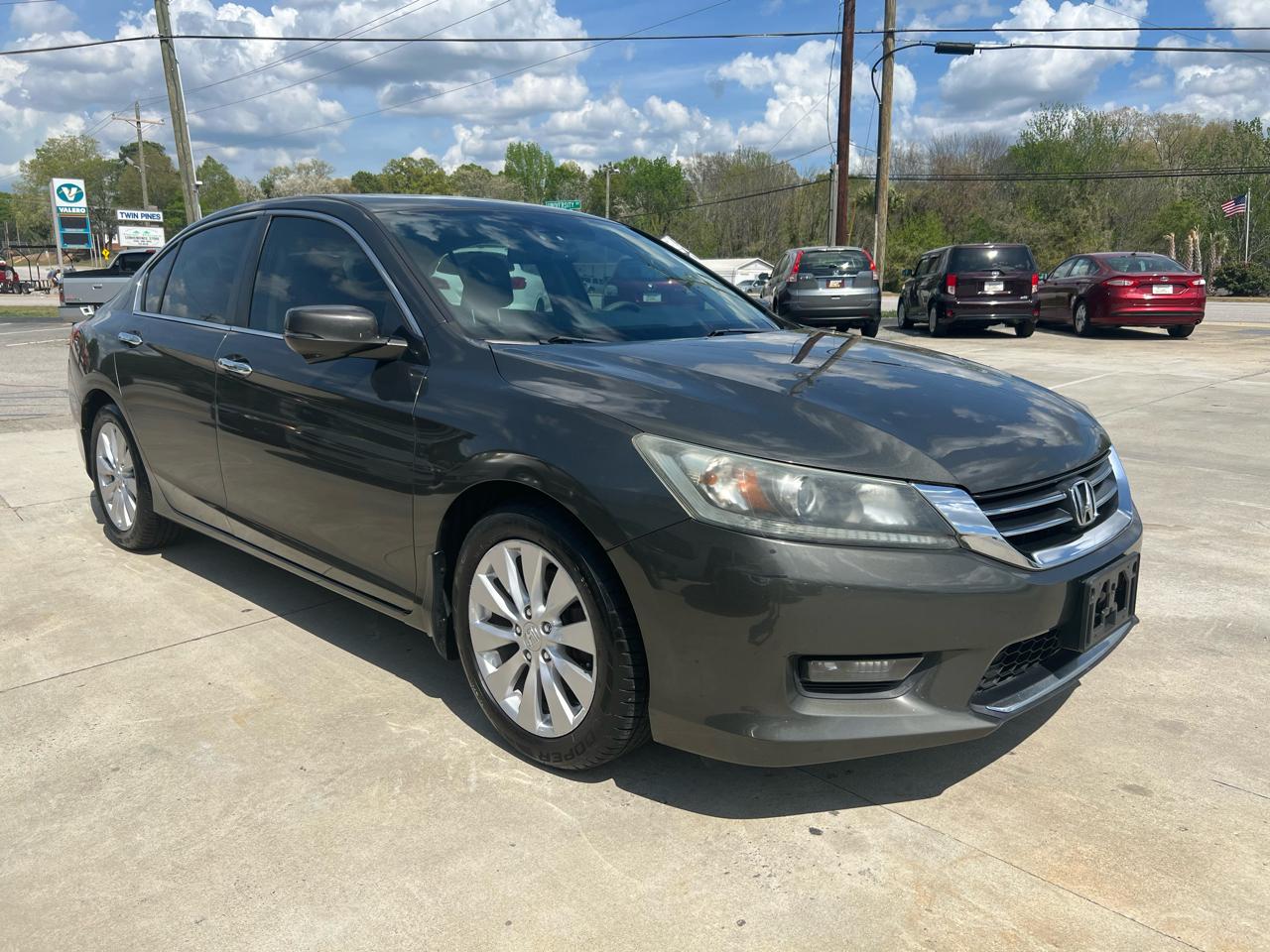
The 2014 Honda Accord equipped with the Continuously Variable Transmission (CVT) delivers responsive acceleration, exceptional real-world fuel economy (around 30 mpg combined), and proven mechanical longevity. While early CVTs often drew criticism for sluggishness, Honda's belt-driven system pairs effectively with the 2.4-liter engine, making it a reliable, high-value midsize sedan on the used market.
Technical Overview: The 2.4L Earth Dreams Engine and Honda CVT
When Honda redesigned the Accord for its ninth generation (2013–2017), the introduction of a Continuously Variable Transmission paired with the base four-cylinder engine marked a significant technological shift. For the 2014 model year, Honda refined this setup to balance lower emissions and improved fuel efficiency with acceptable driving dynamics.
- 2.4L Earth Dreams DOHC i-VTEC Engine (185 hp / 181 lb-ft direct injection)
- Torque Converter Clutch (Smoothes low-speed engagements)
- Honda G-Design Shift Logic CVT (Variable-width pulleys + steel push-belt)
- Driven Wheels (Front)
The 2.4-Liter Earth Dreams K24W Powertrain
The front-wheel-drive 2014 Accord four-cylinder models feature an all-aluminum 2.4-liter dual overhead camshaft (DOHC) direct-injected inline-4 engine. In the standard trims (LX, EX, EX-L), this engine generates 185 horsepower at 6,400 rpm and 181 lb-ft of torque at 3,900 rpm. The Sport trim utilizes a less restrictive dual-exhaust setup that bumps power output slightly to 189 horsepower and 182 lb-ft of torque.
Direct cylinder injection allowed Honda engineers to raise the compression ratio to 11.1:1 while maintaining standard 87-octane unleaded fuel compatibility. This engine also employs Honda's i-VTEC system, combining variable valve timing control with variable valve lift to optimize low-end torque production before transitioning to high-rpm airflow efficiency.
Honda's G-Design Shift Logic
Unlike conventional automatic transmissions that utilize planetary gearsets and clutch packs to switch between fixed ratios, Honda's CVT uses a pair of variable-width conical pulleys connected by a high-strength steel drive belt. Hydraulic pressure alters the width of each pulley, continuously shifting the effective drive ratio to keep the engine operating within its ideal efficiency or power range.
To address driver concerns regarding the disconnected "rubber-banding" sensation common in early CVTs, Honda developed proprietary control programming designated as G-Design Shift. This software monitors wheel speed, accelerator pedal position, and throttle rate-of-change. When the driver calls for sudden acceleration, the transmission locks into a rising ratio curve that mimics traditional gear transitions, building engine revs proportionally to road speed. Furthermore, Honda integrated a fluid-filled torque converter between the crankshaft and the drive pulley, which eliminates the jerky low-speed engagement common in dry-clutch automated manual transmissions.
Real-World Performance: Drivability, Acceleration, and Fuel Efficiency
Evaluating the 2014 Accord CVT requires separating everyday road manners from full-throttle track performance. In everyday traffic, this powertrain combination behaves smoothly and predictably.
Acceleration Benchmarks and Throttle Response
In independent testing, a 2014 Honda Accord 2.4L with the CVT records a 0-to-60 mph sprint in approximately 7.5 to 7.8 seconds. This placement makes it competitive with four-cylinder midsize rivals from the same production period, such as the 2.5-liter Toyota Camry and the 2.5-liter Nissan Altima.
From a standstill, the presence of the torque converter ensures immediate, linear pull without bogging down. Passing power on two-lane highways (45 to 65 mph) takes roughly 4.0 to 4.3 seconds. While the engine emits a distinct four-cylinder drone when held at 5,000+ rpm under sustained wide-open throttle, standard commuting profiles keep the tachometer resting between 1,200 and 1,800 rpm, yielding quiet cabin levels.
The Sport trim includes steering-wheel-mounted paddle shifters. These activate programmed virtual step ratios, allowing drivers to quickly select predetermined pulley spreads to mimic downshifts for engine braking on long descents.
EPA Estimates vs. Real-World Fuel Economy
Fuel conservation is the primary engineering justification for the CVT configuration. Official EPA ratings for the 2014 model year establish the benchmark:
- Accord LX, EX, EX-L (CVT): 27 mpg city / 36 mpg highway / 30 mpg combined
- Accord Sport (CVT, larger 18-inch wheels): 26 mpg city / 34 mpg highway / 29 mpg combined
On highway road trips driven at steady speeds between 65 and 70 mph, non-Sport trims frequently achieve 37 to 39 mpg. Dense urban driving featuring prolonged idling can depress figures to roughly 23 to 25 mpg, but the overall blended average hovers reliably around 29 to 31 mpg across varied climates.
Longevity and Reliability: The 2014 CVT Track Record
The ninth-generation Accord's CVT has demonstrated superior durability compared to several competing belt-driven transmissions of the same era (notably Nissan's Jatco-supplied units). However, sustained reliability depends on strict fluid maintenance.
Transmission Fluid Chemistry and Service Intervals
Honda's CVT relies on a specific friction profile to prevent the steel push-belt from slipping across the smooth steel faces of the drive pulleys. It mandates the use of Honda HCF-2 transmission fluid exclusively. Standard automatic transmission fluid (ATF DW-1) or generic multi-vehicle fluids lack the correct anti-shudder and sheer-resistance additives and will accelerate internal component wear.
- Factory Severe-Service Schedule: Drain and fill every 25,000 to 30,000 miles.
- Normal-Service Schedule: Maintenance Minder code "3" (typically 45,000 to 50,000 miles).
- Field Recommendation: Fluid changes should not exceed 30,000 to 40,000 miles. A standard drain-and-fill requires approximately 3.9 to 4.0 quarts of HCF-2 fluid. Unlike older stepped-gear automatics, running neglected, dirty fluid through high-pressure CVT control valves often causes stuck solenoids and belt scoring.
Known Transmission Quirks and Failure Modes
Long-term fleet data highlights specific mechanical symptoms buyers and owners should recognize:
- Low-Speed Judder or Shudder: A subtle vibration felt between 15 and 25 mph under light acceleration. This issue is almost universally traced to degraded fluid losing its friction coefficient. In most cases, completing a double drain-and-fill with fresh HCF-2 resolves the friction-induced chatter.
- Forward/Reverse Engagement Delay: A 1.5 to 2-second hesitation when shifting between Park, Reverse, and Drive. This can stem from worn internal selector seals or an aging shift cable linkage.
- High-Pitch Pulley Whine: A persistent whining noise that rises directly with vehicle speed indicates internal bearing wear or pulley face micro-pitting. Units exhibiting loud whine accompanied by metal particulate on the transmission drain plug magnet typically require replacement rather than servicing.
Broader 2014 Accord Mechanical Considerations
The transmission should not be evaluated in total isolation from the rest of the car. Other mechanical components specific to the 2014 model require verification:
- Starter Motor Failures: The 2013–2015 four-cylinder Accords experienced premature starter motor failure caused by manufacturing defects and misaligned ring-gear engagement. Honda issued technical service bulletins regarding updated replacement starter motors and ring-gear rotation procedures.
- Direct Injection Carbon Buildup: Because fuel is sprayed directly into the combustion chamber rather than across the backs of the intake valves, oil vapors from the positive crankcase ventilation (PCV) system can leave carbon deposits on the valves over 100,000+ miles, leading to rough cold idles.
- Electric Power Steering (EPS) Torque Sensors: Intermittent steering resistance or an illuminated EPS warning light can occur on higher-mileage models due to aging sensor contacts inside the steering rack assembly.
2014 Accord Four-Cylinder Trims Compared
The table below breaks down the technical variations, equipment specifications, and typical market prices for 2014 Honda Accord models factory-equipped with the CVT.
| Trim Level | Engine & Power | Distinctive Equipment | Curb Weight | Estimated 2026 Used Value (Fair to Clean) |
|---|---|---|---|---|
| LX | 2.4L I4 (185 hp / 181 lb-ft) | 16-inch alloy wheels, dual-zone climate, rearview camera, 8-inch i-MID display | ~3,254 lbs | $6,800 – $8,500 |
| Sport | 2.4L I4 (189 hp / 182 lb-ft) | Dual exhaust, 18-inch wheels, rear lip spoiler, paddle shifters, 10-way power driver seat | ~3,342 lbs | $8,000 – $10,200 |
| EX | 2.4L I4 (185 hp / 181 lb-ft) | 17-inch alloy wheels, moonroof, LaneWatch blind-spot camera, keyless Smart Entry | ~3,318 lbs | $7,800 – $9,600 |
| EX-L | 2.4L I4 (185 hp / 181 lb-ft) | Leather upholstery, heated seats, forward collision & lane departure warnings, premium audio | ~3,360 lbs | $8,800 – $11,500 |
Note: Pricing reflections assume typical odometer readings between 120,000 and 160,000 miles in clean mechanical condition. Well-maintained, lower-mileage examples trade at the top of these ranges.
Cost of Ownership and Value Assessment
When assessing the long-term value of a 2014 Accord CVT, the vehicle continues to represent one of the lower total-cost-to-own propositions in the used midsize segment.
Depreciation and Residual Resale
The 2014 Accord has already completed the steep portion of its depreciation curve. Between its 10th and 15th year on the road, value changes tend to be driven more by condition, localized rust status, and verifiable service records than by calendar aging. Because the Honda nameplate retains strong brand equity, well-kept Accords command higher trade-in and private-party prices than comparable domestic competitors like the Chevrolet Malibu or Ford Fusion.
Maintenance and Repair Projections
Routine wear-and-tear items for the 2014 Accord are widely available through both original equipment and aftermarket channels:
- Brake Pads and Rotors (Front): Standard floating-caliper design; pad and rotor sets range from $150 to $300 in parts, requiring approximately two hours of labor.
- CVT Fluid Service: Typically costs $120 to $220 at an independent automotive repair facility, covering four quarts of OEM HCF-2 fluid and a new crush washer.
- Valve Cover Gasket and Spark Plugs: The direct-injected K24 engine requires new iridium plugs around 100,000 to 105,000 miles. Replacing plugs alongside the valve cover gasket (which commonly seeps oil into the spark plug tubes by 120,000 miles) averages $200 to $350.
- Starter Replacement: A common failure item, costing between $450 and $700 parts-and-labor depending on whether remanufactured or OEM Denso units are installed.
Expected Repair Frequency Over 50,000 Miles (120k to 170k Range):
- CVT Fluid Service (x1 or x2) [$120 - $440]
- Front Suspension Struts/Bushings [$600 - $900]
- Starter Motor Replacement (if orig) [$450 - $700]
- Routine Oil Changes (0W-20, x7) [$350 - $500]
2014 Accord CVT vs. Key Segment Rivals
When deciding whether the 2014 Accord CVT represents the best value, consider how it stacks up against its two primary contemporary alternatives:
1. 2014 Toyota Camry (2.5L 4-Cylinder with 6-Speed Automatic)
The Camry represents the primary conservative alternative. It relies on a conventional six-speed torque-converter automatic transmission (U760E).
- Advantage Camry: Some buyers prefer the mechanical sensation of discrete gear shifts. The Toyota transmission fluid is more forgiving of delayed maintenance schedules.
- Advantage Accord: The Accord features a significantly more refined interior, superior steering precision, sharper handling, and delivers 2 to 3 higher real-world mpg on highway stretches compared to the 6-speed Camry.
2. 2014 Nissan Altima (2.5L 4-Cylinder with Xtronic CVT)
Nissan embraced CVTs earlier than Honda, pairing its QR25DE engine with the Jatco CVT8.
- Performance Comparison: The Altima offers similar straight-line acceleration and competitive fuel economy numbers.
- Reliability Comparison: The 2013–2016 Altima suffered high rates of premature transmission failure, belt delamination, and sudden limp-mode triggers due to fluid overheating. The Honda CVT platform has demonstrated a much lower failure rate under normal usage conditions.
Pre-Purchase Inspection: Checking the 2014 Accord CVT
If you are inspecting or test-driving a used 2014 Accord CVT, follow this structured diagnostic process to identify underlying mechanical wear before purchasing.
Inspection Steps:
- Engine Cold-Start Check: Listen for starter grind & VTC rattle
- Fluid Color/Odor Check: Confirm clear amber HCF-2 (not dark or burnt)
- Shifter Engagement Delay: Park to Drive/Reverse must engage under 1.5s
- Low-Speed Drive (15-25mph): Monitor for drivetrain shudder under light throttle
- High-Speed Merging: Confirm linear ratio adjustment without belt whine
1. Verify Fluid Condition First
Locate the transmission dipstick (accessible in the lower engine bay, fitted with a black rubber cap marked with a transmission symbol). Pull the dipstick and wipe it on a clean white cloth:
- Healthy HCF-2: Translucent amber to slightly darkened golden-brown.
- Degraded Fluid: Dark brown or opaque black. A distinct burnt-toast odor indicates severe thermal breakdown and potential belt-slippage heat cycles.
- Warning Sign: If the fluid shows fine silvery metallic particles suspended in the droplet, internal pulley or belt damage has begun. Do not purchase the vehicle without budgeting for a transmission replacement.
2. The Cold-Start and Cranking Test
Arrange to view the vehicle when the engine is completely cold:
- Listen closely during ignition. A metallic grinding sound lasting one to two seconds immediately after the engine catches points to a failing starter bendix gear or an issue with the variable valve timing (VTC) actuator sprocket, an established issue on early 2.4L Earth Dreams engines.
- Ensure the engine idles down steadily from 1,200 rpm to approximately 700 rpm as coolant temperatures rise, with no erratic hunting caused by direct-injection carbon buildup.
3. Drive-Cycle Testing Routine
During the road test, evaluate three specific driving scenarios:
- The 20-mph Shudder Test: Drive on a flat, smooth road. Bring the vehicle to 15 mph, then gently accelerate to 25 mph applying approximately 15% throttle. Pay close attention to the seat base and steering wheel. A rapid trembling or bucking sensation indicates transmission fluid degradation or torque converter clutch judder.
- The Aggressive Tip-In Test: From a rolling 10 mph, depress the throttle pedal halfway down. The engine revs should elevate quickly and smoothly, followed immediately by progressive forward acceleration. If the engine rpms spike upward sharply without a corresponding increase in forward momentum, the steel drive belt is slipping against the pulley sheaves.
- High-Speed Deceleration: Cruise at 60 mph, release the accelerator completely, and let the car coast down to 30 mph. Listen for droning, whining, or humming noises that correlate directly with road speed, which reveal damaged final-drive or countershaft bearings.
Frequently Asked Questions
Can you tow with a 2014 Honda Accord CVT?
Honda rates the 2014 Accord four-cylinder CVT to tow up to 1,000 pounds when properly equipped with an approved hitch receiver. However, towing near the maximum rating significantly increases transmission fluid operating temperatures. Continuous towing is not recommended, as heat is the primary cause of CVT belt wear and valve body failure.
How long does a 2014 Honda Accord CVT typically last?
With documented transmission fluid changes conducted every 30,000 to 40,000 miles, the Honda CVT can routinely exceed 200,000 to 250,000 miles without requiring an overhaul. Units that operate past 100,000 miles on original factory fluid are significantly more prone to shuddering, stuck pressure solenoids, and premature belt degradation.
Is the 2014 Accord Sport CVT faster than the LX or EX trims?
The Accord Sport features a minor power bump (189 hp versus 185 hp) and dual exhaust tips, but its measured straight-line acceleration is practically identical to the LX and EX. The primary performance distinction lies in cornering stability and steering response, as the Sport features larger 18-inch wheels, lower-profile tires, a stiffer front strut tower bar, and steering-wheel paddle shifters.
What should I do if my 2014 Accord CVT shudders at low speeds?
The first corrective step is a complete transmission fluid flush and refill using genuine Honda HCF-2 fluid. Mechanics often perform a "double drain-and-fill" (draining, refilling, driving briefly on a lift to circulate, and draining/refilling once more) to dilute residual dirty fluid held inside the torque converter. Most low-speed shudder complaints are resolved by this service without mechanical repairs.
Does the 2014 Accord V6 model use this same CVT?
No. The 2014 Accord V6 (featuring the 3.5-liter J35Y3 engine) does not use a CVT. V6 sedans and coupes were equipped with a conventional, stepped-ratio 6-speed torque-converter automatic transmission, while select V6 Coupes featured a 6-speed manual transmission. The CVT was reserved exclusively for the 2.4-liter four-cylinder lineup.
Final Recommendation: Which Model to Buy
The 2014 Honda Accord CVT is one of the most practical, well-engineered midsize sedans on the pre-owned market. It sidesteps the catastrophic failure rates that plagued many competitor CVTs from the mid-2010s while delivering steady 30-plus mpg fuel efficiency, spacious second-row passenger dimensions, and balanced road manners.
For the best blend of styling, interior amenities, and long-term resale potential, target the Accord Sport or EX trims:
- The Sport offers a more composed suspension setup, supportive seating, and durable cloth surfaces that withstand age better than unconditioned leather.
- The EX provides useful convenience hardware, including the passenger-side LaneWatch blind-spot camera and keyless proximity entry.
Prioritize purchasing examples accompanied by verifiable service history confirming regular Honda HCF-2 fluid renewals. If a seller cannot confirm that the transmission fluid has been serviced within the past 40,000 miles, factor the cost of an immediate fluid replacement and a comprehensive pre-purchase diagnostic scan into your initial budget.