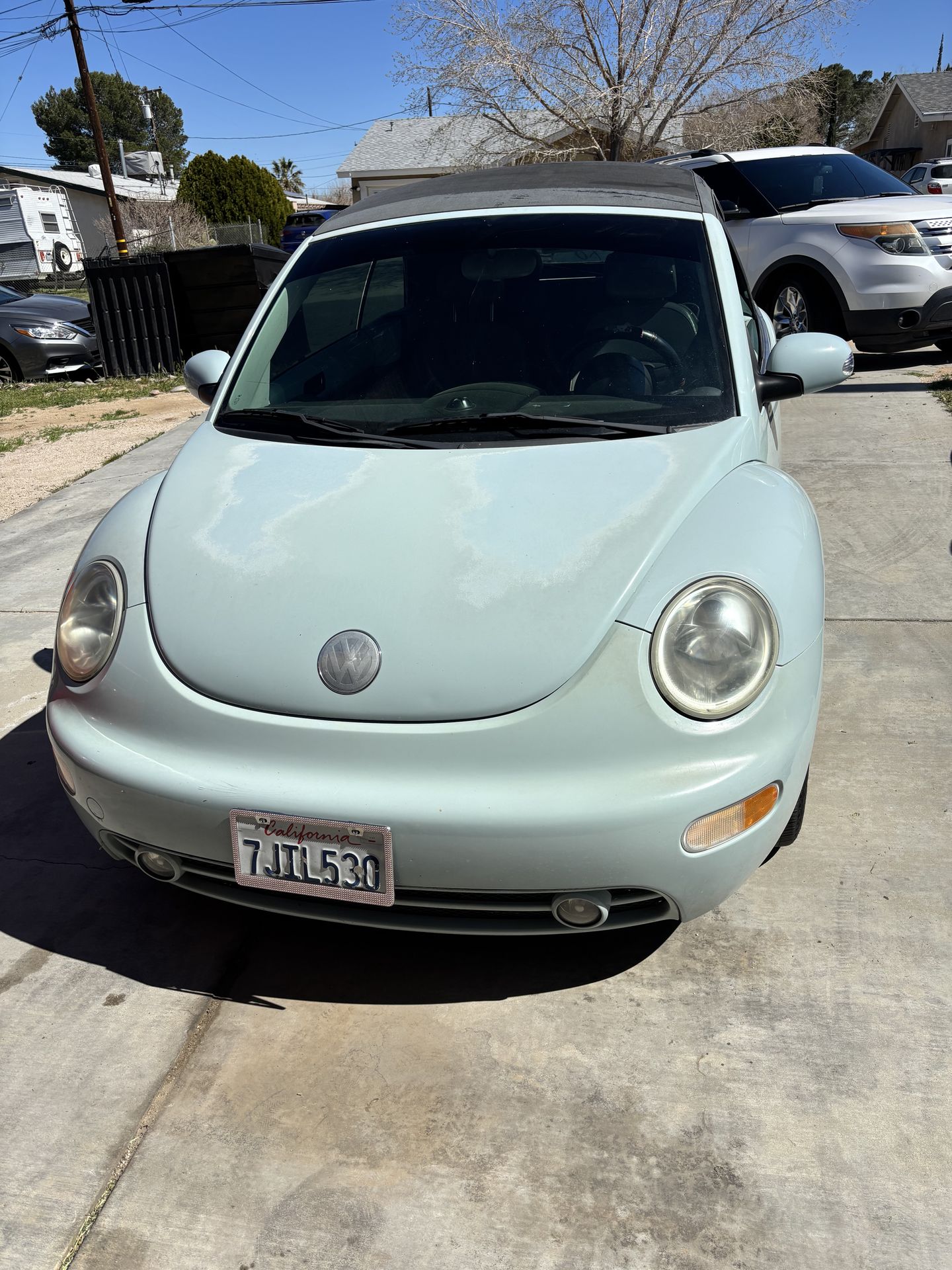
The 2003 Volkswagen Beetle Type 1 represents the definitive closing chapter of one of the longest continuous production runs in automotive history. Manufactured exclusively in Puebla, Mexico, and often celebrated globally as the "Última Edición," this final batch of air-cooled Type 1 Beetles preserved the legendary silhouette and mechanical architecture that originated in the 1930s, offering classic motoring charm infused with minor late-era refinements.
Understanding the 2003 Volkswagen Beetle Type 1
To understand the 2003 Volkswagen Beetle Type 1, one must separate it from the front-wheel-drive "New Beetle" that Volkswagen introduced in the late 1990s. While the New Beetle was a modern, water-cooled hatchback built on a Golf platform, the Type 1 was the original, rear-engine, rear-wheel-drive classic shape. By 2003, Volkswagen de México was the sole facility worldwide still producing the Type 1, affectionately known locally as the "Vocho."
As regulatory pressures, modern safety standards, and consumer demands for comfort evolved globally, the air-cooled Beetle became increasingly difficult to sell in international markets. However, strong domestic demand in Mexico for an affordable, reliable, and easily repairable vehicle kept the assembly lines moving. The year 2003 marked the absolute end of the road. Recognizing the historical weight of the moment, Volkswagen authorized a specialized send-off: the Última Edición package, designed to honor the heritage of the People's Car before the factory machinery was finally silenced.
Mechanical Specifications and Powertrain Architecture
The engineering foundation of the 2003 Type 1 Beetle remained fundamentally rooted in mid-century design principles, though decades of iterative updates yielded a remarkably sorted and reliable machine by its final year.
At the heart of the vehicle is an air-cooled, horizontally opposed four-cylinder Boxer engine displacing 1,600 cubic centimeters (1.6 liters). Unlike earlier carb-fed variants, late-model Mexican-built Type 1 engines utilized multi-point electronic fuel injection (specifically Digifant-derived systems), which significantly improved cold-start reliability, fuel efficiency, and emissions compliance compared to vintage units. This setup produced roughly 50 horsepower—modest by 2003 standards, but adequate for a lightweight chassis scaling around 900 kilograms (approx. 2,000 pounds).
| Technical Feature | 2003 Volkswagen Beetle Type 1 Specification |
|---|---|
| Engine Type | Air-cooled, rear-mounted flat-four (Boxer) |
| Displacement | 1,584 cc (1.6L) |
| Fuel Delivery | Electronic fuel injection |
| Transmission | 4-speed manual transaxle |
| Suspension | Front torsion bar / Rear semi-trailing arm |
| Brakes | Front discs / Rear drums |
| Top Speed | Approx. 130 km/h (81 mph) |
Power was routed to the rear wheels via a traditional four-speed manual transaxle. The suspension retained the classic front torsion bar and rear semi-trailing arm layout, providing a distinctively utilitarian ride quality. Steering was managed by an unassisted worm-and-roller setup, requiring physical effort at low parking speeds but rewarding the driver with direct, unfiltered feedback from the road surface.
The Última Edición: Features and Collectibility
For collectors and enthusiasts, the 2003 model year is synonymous with the Última Edición (Last Edition) trim level. Volkswagen produced a limited run of these commemorative vehicles, signaling that production was permanently concluding.
The Última Edición models were distinguished by several exclusive aesthetic details that set them apart from standard Mexican-market Beetles of the era:
- Exclusive Paint Colors: Available primarily in Harvest Moon Beige (Harvestmondunst) and Aquarius Blue (Blau), mirroring shades used on the modern New Beetle to bridge the gap between past and present.
- Chrome Accents: Generous use of chrome trim on the headlight rings, side mirrors, exterior door handles, hood handle, and hubcaps, reminiscent of classic 1950s and 1960s models.
- Interior Upgrades: Body-colored interior metal dashes, premium beige cloth upholstery, specialized door cards with map pockets, and a commemorative plaque mounted on the glovebox door.
- White-Wall Tires: Fitted standard with whitewall tires wrapped around body-colored steel wheels, enhancing the vintage aesthetic.
The very last Type 1 Beetle to roll off the Puebla assembly line on July 30, 2003, was painted Harvest Moon Beige and shipped directly to the Volkswagen AutoMuseum in Wolfsburg, Germany, where it resides today as a permanent historical artifact.
Driving Dynamics and Ownership Realities
Operating a 2003 Volkswagen Beetle Type 1 in modern traffic offers a driving experience radically different from contemporary automobiles. Because the vehicle lacks power steering, anti-lock braking systems (ABS), airbags, and modern electronic stability controls, it demands attentive, engaged driving habits.
Performance and Everyday Usability
- City Driving: The compact footprint and excellent outward visibility make navigating tight urban spaces remarkably easy. Parking does not require electronic sensors or backup cameras.
- Highway Cruising: The four-speed manual transmission features relatively short gearing. Sustaining speeds above 100 km/h (60 mph) results in high engine RPMs, cabin noise, and a sensitive response to crosswinds due to the Beetle's rounded aerodynamic profile.
- Climate Control: Late-model Mexican Beetles featured integrated heating systems utilizing engine-shroud heat exchangers, but air conditioning was a rare aftermarket addition rather than a standard factory feature, making summer driving an exercise in traditional ventilation via vent wings and pop-out rear windows.
Maintenance and Reliability
One of the primary reasons the Type 1 survived into the 21st century is its mechanical simplicity. For mechanics and DIY enthusiasts, the air-cooled boxer engine is famously accessible. Valve adjustments, spark plug changes, and belt replacements can be performed with basic hand tools in a home garage. Parts availability remains exceptionally strong, supported by a massive global network of aftermarket suppliers specializing in vintage Volkswagen components. However, body panels and model-specific late-era trim pieces unique to Mexican-market cars can require specialized sourcing.
Comparison: 2003 Type 1 vs. Contemporary New Beetle
Buyers often weigh the historical 2003 Type 1 against the contemporary water-cooled New Beetle. They share a badge and a thematic silhouette, but they are fundamentally distinct machines.
| Attribute | 2003 Volkswagen Beetle Type 1 | 2003 Volkswagen New Beetle |
|---|---|---|
| Platform | Classic rear-engine Type 1 chassis | Front-wheel-drive Golf A4 platform |
| Cooling System | Air-cooled | Water-cooled radiator |
| Safety Equipment | Minimal (lap/shoulder belts, no airbags) | Modern crash structure, dual front/side airbags, ABS |
| Interior Comfort | Spartan, metal dash, basic heating | Climate control, power windows, premium audio |
| Maintenance Profile | Simple DIY mechanics, high accessibility | Complex electronics, cramped engine bay |
Frequently Asked Questions
Were 2003 Type 1 Beetles sold new in the United States?
No. Due to tightening federal safety and emissions regulations, official sales of the air-cooled Beetle in the United States ended in 1977. The 2003 models were sold primarily in Mexico and select Latin American markets, though collectors have subsequently imported them under classic vehicle importation rules where applicable.
Is the fuel injection system reliable?
Yes. The electronic fuel injection system introduced on late-model Mexican Beetles is robust and generally trouble-free. It eliminates the vapor lock and tuning issues common with older carburetors, making the car much easier to start in varying weather conditions.
Can a 2003 Type 1 Beetle be used as a daily driver?
While mechanically simple and reliable, using a 2003 Type 1 as a daily driver requires accepting the safety limitations of a 1930s structural design. Most owners today treat them as weekend pleasure cars, classic collectors' items, or low-mileage hobby vehicles.
How can I verify a genuine Última Edición?
A genuine Última Edición will feature the specific factory paint codes (Harvest Moon Beige or Aquarius Blue), specific interior trim materials, the dash plaque on the glovebox, and matching engine/chassis identification numbers verified against Volkswagen de México production records.
Final Recommendations for Enthusiasts
Acquiring or maintaining a 2003 Volkswagen Beetle Type 1 is a rewarding endeavor for fans of air-cooled heritage. When evaluating a candidate vehicle, prioritize structural integrity over cosmetic condition; inspect the floor pans, heater channels, and spare tire well for rust. Ensure that the engine maintains proper oil pressure and cylinder head temperatures, as air-cooled units rely entirely on clean oil and clear cooling fins to prevent overheating. Whether preserved as an investment-grade Última Edición or enjoyed as a weekend cruiser, this final iteration of the Type 1 stands as an enduring tribute to automotive simplicity.