The 1994 US World Cup team was the definitive turning point for soccer in the United States, proving that the nation could both host a successful tournament and compete with global giants. Led by coach Bora Milutinović, the squad reached the Round of 16, a feat that catalyzed the formation of Major League Soccer (MLS) and established a permanent cultural footprint for the sport in America.
As we look back from 2026, the 1994 roster remains the most iconic assembly of talent in U.S. Men’s National Team (USMNT) history. They were a group of pioneers, many of whom lacked a professional domestic league to play in, yet they managed to capture the imagination of a skeptical nation. This article examines the roster, the tactical innovations of the era, the grueling residency program, and the matches that defined a generation.
The 1994 US World Cup Roster: Profiles in Pioneering
The 22-man squad selected by Bora Milutinović was a mix of college standouts, a few European-based professionals, and "residency" players who had spent the previous two years training together as a de facto club team.
The Defensive Pillars: Meola, Lalas, and Balboa
In 1994, the U.S. strategy was built from the back. Tony Meola, the charismatic goalkeeper with the signature ponytail, was the vocal leader and captain. His shot-stopping ability was crucial, but his role as a media figurehead was equally important in selling the sport to Americans.
Alexi Lalas and Marcelo Balboa formed perhaps the most recognizable center-back duo in history. Lalas, with his long red hair and goatee, became the face of the team, later parlaying his World Cup performance into a contract with Padova in Italy's Serie A. Balboa, known for his athleticism and spectacular bicycle-kick attempts, provided the recovery speed necessary for Milutinović’s defensive shell.
The Engine Room: Tab Ramos and John Harkes
The creativity of the 1994 team flowed through Tab Ramos. Born in Uruguay but raised in New Jersey, Ramos was the technical heartbeat of the squad. His ability to dribble out of pressure and find incisive passes gave the U.S. a "number 10" identity they had previously lacked.
Supporting him was John Harkes, the "Captain for Life" (a title later stripped in 1998, but held with pride in '94). Harkes had experience in the English Premier League with Sheffield Wednesday, bringing a level of professional grit and tactical awareness that was vital for a team often starved of possession.
The Goal Scorers: Eric Wynalda and Earnie Stewart
Offense was often hard to come by, but Eric Wynalda provided the magic. His curling free kick against Switzerland remains one of the most celebrated goals in USMNT history. Alongside him, Earnie Stewart—who would go on to become a key executive in the U.S. soccer pyramid by 2026—offered blistering pace and the clinical finishing required to punish teams on the counter-attack.
The Mission 94 Residency Program
One of the most unique aspects of the 1994 US World Cup team was how they prepared. Because there was no top-flight professional league in the United States (the NASL had folded in 1984), the US Soccer Federation created a "residency program" in Mission Viejo, California.
Under this program, the players were signed to central contracts by the federation. They lived together, trained twice a day, and played a staggering number of exhibition matches against international clubs and national teams. By the time the tournament began, the U.S. players knew each other’s movements instinctively. This cohesion was their greatest technical advantage over more talented but less "drilled" opponents.
Tactical Philosophy: "Bora-ball"
Bora Milutinović was a specialist in taking underdog nations through the group stages of the World Cup. His tactical approach, often criticized as "boring" or overly defensive, was precisely what the U.S. needed. He emphasized a compact 4-4-2 or 4-5-1 formation, focusing on:
- Zonal Marking: Moving as a unit to deny space.
- Set-Piece Efficiency: Maximizing corners and free kicks.
- Counter-Attacking: Utilizing the speed of Cobi Jones and Earnie Stewart.
Match-by-Match Analysis of the 1994 Campaign
The U.S. was drawn into Group A alongside Switzerland, Colombia, and Romania. At the time, Colombia was considered a dark horse to win the entire tournament, led by the legendary Carlos Valderrama.
USA 1-1 Switzerland (June 18, 1994)
Played in the sweltering heat of the Pontiac Silverdome—the first World Cup match ever played indoors—the U.S. fell behind to a Georges Bregy free kick. However, Eric Wynalda responded with a world-class free kick of his own into the top corner. The draw gave the U.S. the belief that they belonged on the world stage.
USA 2-1 Colombia (June 22, 1994)
This remains one of the most famous and tragic matches in soccer history. The U.S. played a perfect counter-attacking game. An inviting cross from John Harkes resulted in an own goal by Colombian defender Andrés Escobar. Later, Earnie Stewart doubled the lead after a brilliant sequence of passing. Though Colombia scored late, the U.S. held on for a historic victory. Tragically, Escobar was murdered in Colombia shortly after the team returned home, a dark shadow that remains linked to this match's legacy.
USA 0-1 Romania (June 26, 1994)
Facing a Romania side led by Gheorghe Hagi (the "Maradona of the Carpathians"), the U.S. struggled to break down a disciplined defense. A goal from Dan Petrescu secured the win for Romania, but the U.S. had already done enough to advance as one of the best third-place finishers.
Round of 16: USA 0-1 Brazil (July 4, 1994)
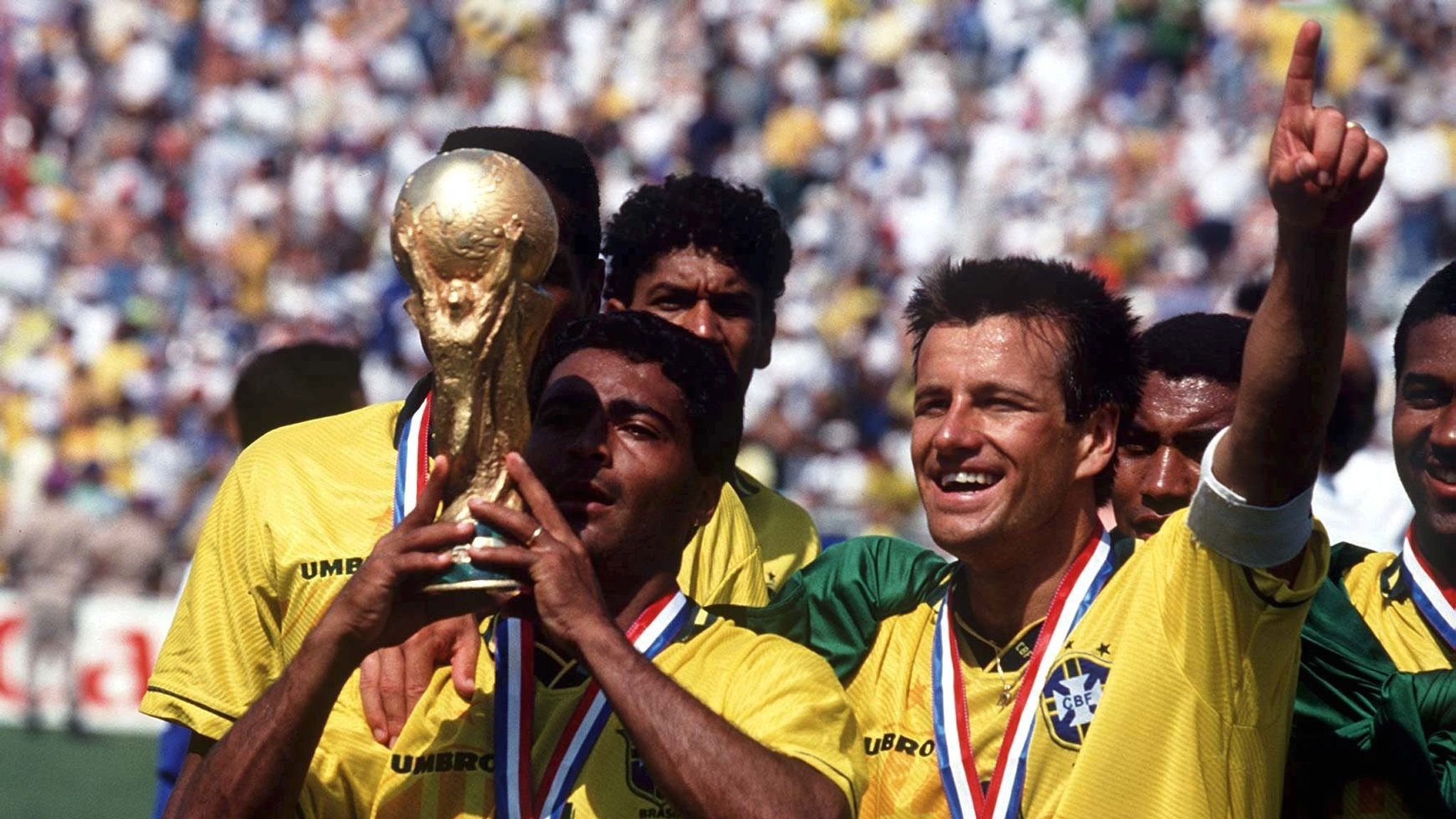
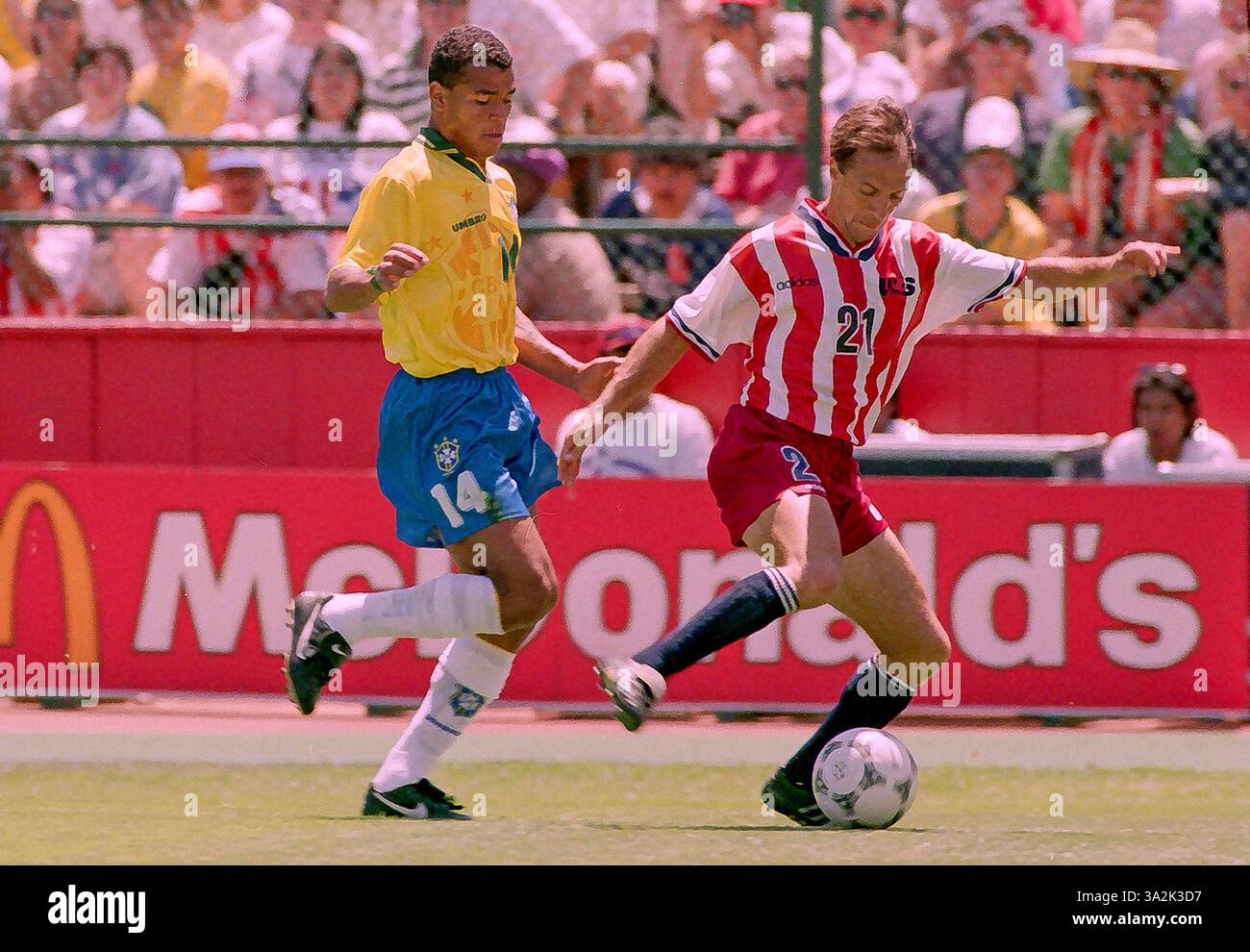
On Independence Day, in front of a massive crowd at Stanford Stadium, the U.S. faced the eventual champions, Brazil. Despite being heavy underdogs, the U.S. played heroically. The match turned violent when Brazil’s Leonardo elbowed Tab Ramos, fracturing his skull and earning a red card. Playing with a man advantage, the U.S. couldn't capitalize. Bebeto eventually scored the winner for Brazil in the 72nd minute, ending the American dream but earning the respect of the footballing world.
The Iconic "Denim" Kits and Cultural Impact
No discussion of the 1994 team is complete without mentioning the "denim" jerseys. Designed by Adidas, the away kit featured a faux-denim print with floating white stars. While initially mocked by traditionalists, these jerseys have become the most sought-after vintage items for American soccer fans in 2026.
Beyond the fashion, the 1994 team broke television records. The tournament still holds the record for the highest average attendance in World Cup history (approximately 69,000 per game), a testament to the infrastructure and the curiosity of the American public. The success of the team ensured that FIFA’s condition for hosting—the creation of a professional league—was met, leading to the launch of MLS in 1996.
Comparison of 1994 USWNT Key Contributors
| Player | Position | 1994 Club / Status | Key Contribution |
|---|---|---|---|
| Tony Meola | GK | USSF Residency | Captained the team; kept the U.S. in the Brazil match. |
| Alexi Lalas | DF | USSF Residency | Iconic personality; dominant in the air against Colombia. |
| Marcelo Balboa | DF | USSF Residency | Nearly scored a bicycle kick against Colombia; defensive anchor. |
| Tab Ramos | MF | Real Betis (Spain) | The creative engine; suffered a skull fracture vs. Brazil. |
| John Harkes | MF | Derby County (England) | Provided the cross for the Escobar own goal. |
| Eric Wynalda | FW | Saarbrücken (Germany) | Scored the crucial free kick against Switzerland. |
| Earnie Stewart | FW | Willem II (Netherlands) | Scored the winning goal against Colombia. |
| Cobi Jones | MF | USSF Residency | High-energy substitute; became the all-time caps leader. |
The Legacy of the 1994 Squad in 2026
In 2026, as the United States once again hosts the World Cup (this time as part of a joint bid with Canada and Mexico), the influence of the 1994 team is everywhere.
- Executive Leadership: Many 1994 veterans have moved into high-ranking positions. Earnie Stewart served as Sporting Director for US Soccer, and Claudio Reyna (who was on the '94 squad but didn't play due to injury) has managed several MLS clubs.
- Media Presence: Alexi Lalas remains one of the most prominent—and polarizing—soccer analysts on television.
- Youth Development: The "Residency" model, while no longer used in the same way, paved the way for the current academy systems that now produce world-class talents like those seen in the 2026 squad.
The 1994 team proved that soccer was not a "foreign" sport that would never take root. They were the bridge between the old NASL era and the modern professional era. Without the grit shown at the Rose Bowl and the Silverdome, the modern American soccer landscape would not exist.
Frequently Asked Questions
Who was the head coach of the 1994 US World Cup team?
The team was coached by Bora Milutinović. Known as the "Miracle Worker," he is one of the few coaches to lead five different nations to the World Cup. His tactical discipline was credited with helping a relatively inexperienced U.S. squad reach the knockout stages.
Did the 1994 US team win any games?
Yes, they won one game, tied one, and lost two. Their 2-1 victory over Colombia is considered one of the greatest upsets in U.S. soccer history. They also drew 1-1 with Switzerland and lost 1-0 to both Romania and Brazil.
Why didn't some players have clubs in 1994?
At the time, there was no top-tier professional outdoor soccer league in the United States. While some players played in Europe (like Wynalda and Harkes), many others were signed directly to the U.S. Soccer Federation and trained full-time in a residency program to prepare for the tournament.
What happened to Tab Ramos during the Brazil match?
In the Round of 16 match against Brazil, Tab Ramos was struck in the head by the elbow of Brazilian defender Leonardo. Ramos suffered a fractured skull and was hospitalized. Leonardo received a red card and a four-game suspension, while Ramos spent several weeks recovering before returning to professional play.
Where did the 1994 US team finish in the tournament?
They finished in the Round of 16. After advancing from the group stage as one of the best third-place teams, they were eliminated by the eventual champions, Brazil, in a narrow 1-0 defeat.
Practical Recommendation for Fans and Historians
To truly understand the impact of the 1994 team, fans should watch the documentary "The Summer of '94" or visit the National Soccer Hall of Fame in Frisco, Texas. Seeing the original "denim" jerseys and the artifacts from the residency program provides a profound sense of how far the sport has come. For those interested in the tactical side, reviewing the full match tape of USA vs. Colombia reveals the sophisticated defensive shape Bora Milutinović implemented, which remains a blueprint for underdog success in international tournaments.