British television has long defined the gold standard for psychological depth, atmospheric dread, and procedural precision in crime drama. From the rain-slicked cobblestones of Edinburgh to the grey, windswept marshes of East Anglia, UK crime series rely heavily on character-driven narratives, intricate plotting, and powerhouse performances rather than explosive action alone. For viewers navigating the vast landscape of international detective shows, sorting through decades of prestigious broadcasting can feel overwhelming. This definitive ranking explores the ten greatest British crime series ever produced, evaluating their structural integrity, cultural impact, narrative complexity, and enduring rewatchability.
Understanding the British Crime Drama Tradition
Before diving into the rankings, it is essential to understand what separates British crime fiction from its global counterparts. Unlike high-octane American police procedurals that often wrap up complex federal conspiracies in a tidy forty-two minutes, British television frequently embraces the miniseries format, serialized multi-episode arcs, or feature-length psychological puzzles.
British crime series generally fall into two distinct subgenres: the cozy-yet-dark village mystery and the uncompromising, gritty police procedural. While the former focuses on eccentric local characters and cerebral deduction in idyllic settings—often referred to as "tartan noir" when set in Scotland or classic English country-house mysteries—the latter leans into systemic corruption, institutional failure, and the psychological toll law enforcement takes on the investigators. Examining these structural nuances helps explain why certain series achieve iconic status while others fade into obscurity.
10. Luther
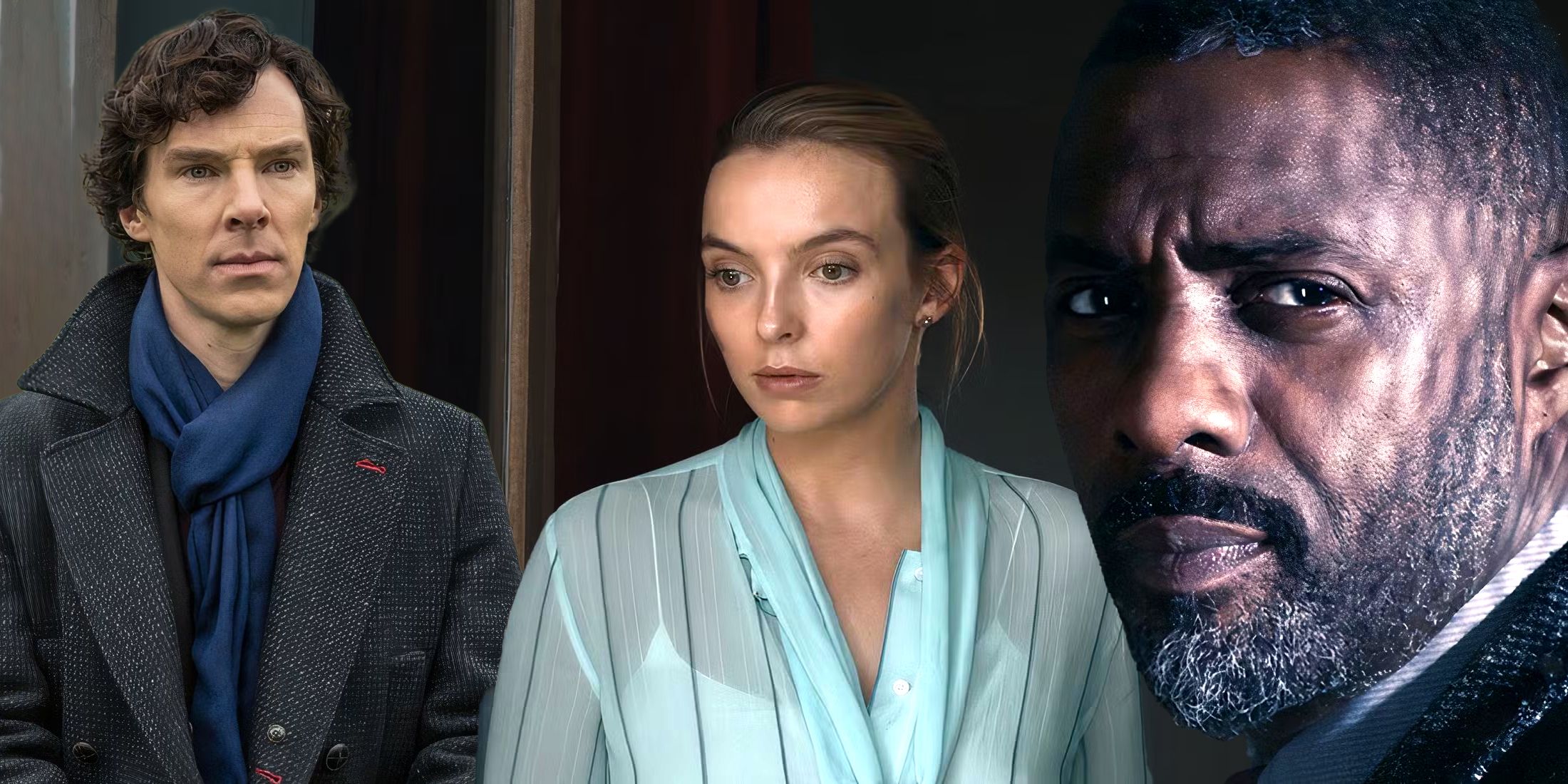
Created by Neil Cross and starring Idris Elba as the brilliant, impulsive Detective Chief Inspector John Luther, Luther operates on the absolute outer edges of psychological horror disguised as a police procedural. Set in a rain-soaked, brooding London, the series follows a man whose genius is matched only by his violent temper and propensity for bending ethical boundaries to breaking point.
The show earns its place on this list primarily through its relentless intensity and the electric, Hannibal-and-Clarice-style dynamic between Luther and psychological prodigy-turned-murderer Alice Morgan, played brilliantly by Ruth Wilson. While later seasons occasionally stretch plausibility into supernatural territory, the core of Luther remains a masterclass in high-stakes dramatic tension. It forces viewers to question whether the ends justify the means when society's worst monsters can only be caught by someone who understands their darkness from the inside.
9. Inspector Morse
No exploration of British crime drama is complete without acknowledging the foundational monolith that is Inspector Morse. Based on the novels by Colin Dexter and starring John Thaw as the erudite, opera-loving, real-ale-drinking Oxford detective, this series defined television standards during its run from 1987 to 2000.
Inspector Morse elevated the traditional murder mystery into high art. Set against the gothic architecture of Oxford University, each feature-length episode functioned as a complex, intellectual puzzle box. Morse’s intellectual arrogance, paired with the grounded, pragmatic patience of his partner, Detective Sergeant Lewis (Kevin Whately), created a timeless blueprint for the mismatched detective duo. Its literary pacing and classical framing continue to influence modern television creators decades after its conclusion.
8. Unforgotten
Written by Chris Lang and starring Nicola Walker and Sanjeev Bhaskar, Unforgotten takes a decidedly methodical approach to the crime genre. Rather than focusing on a fresh homicide, the series centers around the UK's historical unreviewed crime division, investigating cold cases where bodies are discovered decades after the original offense.
What sets Unforgotten apart is its structural brilliance in the opening episodes of every season. The writers introduce a sprawling ensemble of seemingly unrelated middle-aged characters living ordinary lives, only to slowly reveal how their past actions intersect with the unearthed skeleton. Walker’s portrayal of the empathetic, fiercely analytical DCI Cassie Stuart anchors the show with profound emotional gravity, making it a heartbreaking exploration of grief, time, and human frailty.
7. Broadchurch
Created by Chris Chibnall and anchored by transcendent performances from David Tennant and Olivia Colman, Broadchurch captures the suffocating claustrophobia of a tight-knit coastal community rocked by tragedy. When an eleven-year-old boy is found murdered on a Dorset beach, the idyllic seaside town becomes the epicenter of a media storm and mutual suspicion.
Tennant plays DI Alec Hardy, a cynical, health-compromised outsider, while Colman portrays DS Ellie Miller, a local officer whose personal life and friendships are violently upended by the investigation. The first season is a masterclass in atmospheric pacing, meticulously examining how grief ripples through families, friendships, and local institutions. While subsequent seasons expand the scope to judicial and legal fallout, the initial exploration of community trauma remains unforgettable.
6. Happy Valley
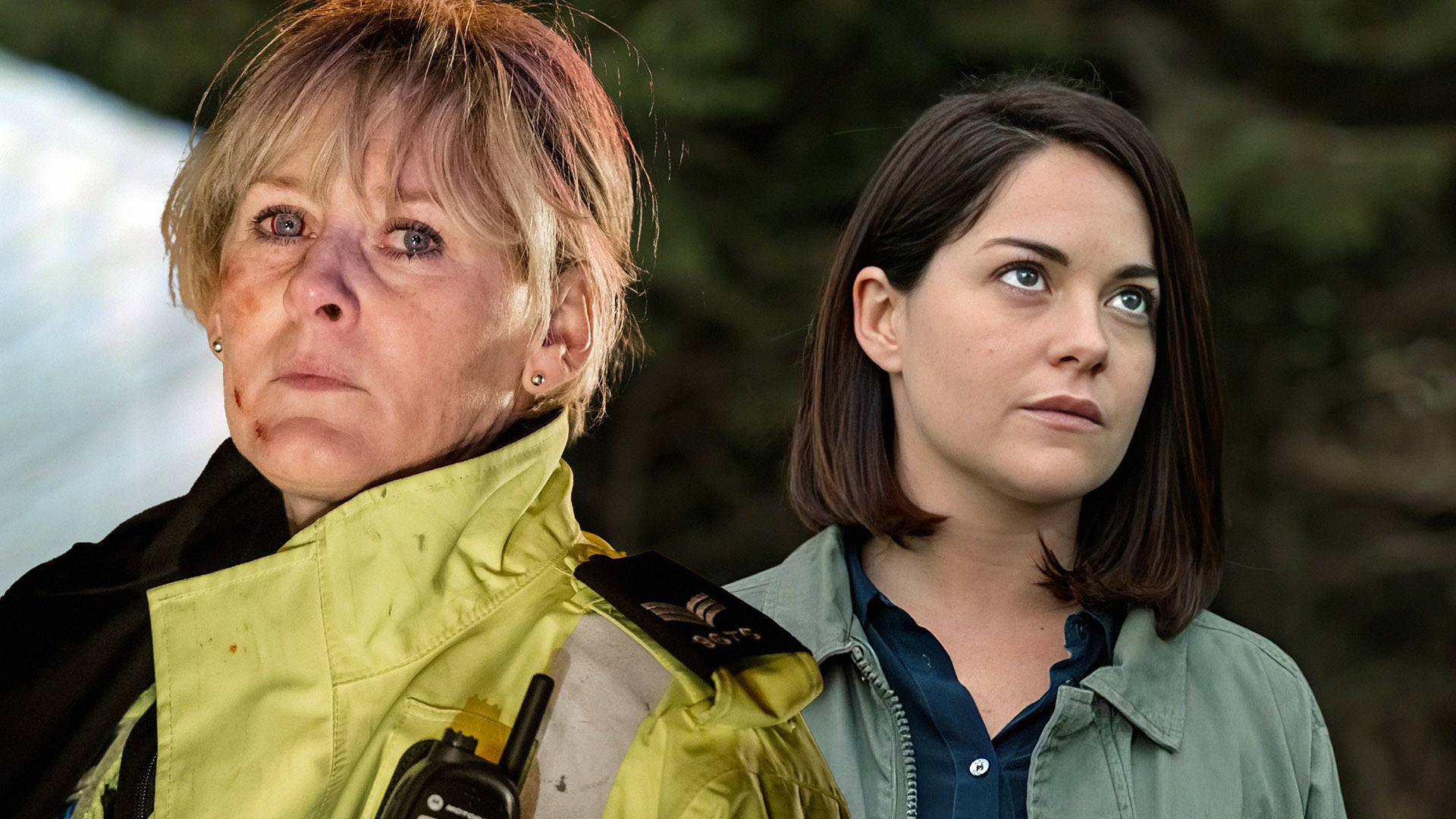
Created by Sally Wainwright and starring Sarah Lancashire as Sergeant Catherine Cawood, Happy Valley is a raw, unflinching look at rural policing in West Yorkshire. Unlike slick metropolitan detectives, Cawood is a salt-of-the-earth veteran dealing with intense personal trauma—including the suicide of her daughter—while managing the chaotic drug epidemics and everyday crimes of her local valley.
The series achieves extraordinary tension through its primary antagonist, Tommy Lee Royce (played with terrifying charisma by James Norton), a sociopathic criminal whose life is inextricably linked to Cawood's family tragedy. Lancashire’s performance is nothing short of legendary, balancing bone-deep vulnerability with ferocious maternal protection. Happy Valley avoids police procedural clichés entirely, choosing instead to focus on systemic poverty, family dysfunction, and moral resilience.
5. Cracker
Written by master scribe Jimmy McGovern and starring Robbie Coltrane as the abrasive, brilliant forensic psychologist Dr. Edward "Fitz" Fitzgerald, Cracker represents British television at its most psychologically bruising. Aired during the 1990s, the series predated the golden age of American prestige TV yet matched its narrative sophistication beat for beat.
Fitz is an unapologetic disaster of a human being—a heavy-drinking, chain-smoking, compulsive gambler whose personal life is perpetually on fire. Yet, when brought in by Manchester police to interview brutal murderers, his peerless understanding of human pathology cracks open the most impenetrable minds. Coltrane’s towering performance won numerous accolades, turning Cracker into a landmark exploration of the socio-economic and psychological roots of violent crime.
4. Prime Suspect
Launching Helen Mirren into global superstardom, Prime Suspect follows DCI Jane Tennison as she battles institutional misogyny, institutional cover-ups, and brutal serial killers within the Metropolitan Police. Created by Lynda La Plante, the series debuted in 1991 and fundamentally changed how female law enforcement officers were represented on screen.
Tennison is not a likable character by design; she is ambitious, cold, obsessive, and occasionally ruthless because she knows that showing weakness will instantly cost her career in a male-dominated environment. The show's early storylines, particularly the iconic first investigation into a mutilation murderer, remain textbook examples of procedural tension. Prime Suspect does not just solve crimes; it dissects the corrosive nature of power and prejudice within the British justice system.
3. Line of Duty
Created by Jed Mercurio, Line of Duty is the undisputed king of high-stakes institutional thrillers. Following AC-12, a fictional police anticorruption unit dedicated to catching "bent coppers," the series transformed administrative police disciplinary hearings into pulse-pounding, edge-of-your-seat drama.
The show is famous for its extended, meticulously choreographed interrogation scenes that often stretch across entire episodes, relying entirely on razor-sharp dialogue, psychological warfare, and sudden reversals. With career-defining performances from Martin Compston, Vicky McClure, and Adrian Dunbar—alongside legendary guest antagonists played by Lennie James, Keeley Hawes, and Stephen Graham—Line of Duty maintains a relentless level of narrative paranoia where no character is ever truly safe from suspicion.
2. Shetland
Based on the acclaimed novels by Ann Cleeves, Shetland transports viewers to the remote, hauntingly beautiful Scottish archipelago. Starring Douglas Henshall as DI Jimmy Pérez (later succeeded by Ashley Jensen), the series blends traditional procedural investigation with a deep reverence for island culture, local folklore, and claustrophobic community dynamics.
What makes Shetland a masterwork is its unique atmosphere. The freezing winds, stark coastlines, and isolated communities create an organic pressure cooker for crime. Unlike gritty urban dramas, Pérez approaches policing with empathy, patience, and profound local knowledge. The intricate plotting ensures that every suspect has a complex backstory, making the ultimate resolution as emotionally resonant as it is intellectually satisfying.
1. Sherlock
Topping our ranking is Steven Moffat and Mark Gatiss’s modern-day adaptation of Arthur Conan Doyle's immortal characters. Sherlock redefined contemporary television by transplanting the Victorian consulting detective and Dr. John Watson into 21st-century London, complete with smartphones, cabs, and modern forensic science.
Benedict Cumberbatch and Martin Freeman exhibit peerless on-screen chemistry, capturing the friction, deep loyalty, and intellectual sparring of the literary originals. The series stands apart for its dazzling visual style, innovative use of on-screen text to visualize Sherlock’s rapid deduction processes, and cinematic production values. By turning classic literary tales into high-concept psychological thrillers—while anchoring them in a rich emotional core—Sherlock remains the absolute pinnacle of British crime television.
Comparison of Top British Crime Series
| Series Title | Primary Setting | Lead Investigator | Distinctive Style | Recommended For |
|---|---|---|---|---|
| Sherlock | London, England | Benedict Cumberbatch | High-concept, cinematic, intellectual | Fast-paced puzzle lovers |
| Line of Duty | Unspecified UK City | Martin Compston & AC-12 | Institutional corruption thrillers | High-tension interrogation fans |
| Shetland | Shetland Isles, Scotland | Douglas Henshall / Ashley Jensen | Atmospheric, scenic, methodical | Atmospheric mystery enthusiasts |
| Prime Suspect | London, England | Helen Mirren as Jane Tennison | Groundbreaking, gritty, social commentary | Historical drama & procedural purists |
| Happy Valley | West Yorkshire, England | Sarah Lancashire as Catherine Cawood | Raw, character-driven, emotional | Fans of deep psychological realism |
Frequently Asked Questions
Where can I stream these British crime series?
Streaming availability varies depending on your geographical location and licensing agreements. In the UK, most of these titles are available on BBC iPlayer or ITVX. In international markets like the United States, platforms such as BritBox, Acorn TV, BBC America, and Netflix frequently house these specific series. Always check local streaming catalogs for current availability.
Are British crime series usually based on books?
Many of the most celebrated British crime dramas originate in literature. Series like Inspector Morse, Shetland, and Sherlock draw directly from beloved book series. However, modern masterpieces like Line of Duty, Happy Valley, and Unforgotten are entirely original screenplays written specifically for television by acclaimed showrunners.
Why are British crime seasons so short compared to US shows?
British television historically prioritizes quality over quantity, opting for miniseries or shorter seasonal runs ranging from three to six episodes rather than the twenty-two-episode American network television model. This allows writers and directors to maintain cinematic production values, tight pacing, and intricate, filler-free plotting throughout the entire run.
What is "Tartan Noir"?
Tartan Noir is a specialized subgenre of crime fiction and television set in Scotland. It utilizes the distinctive cultural identity, dark humor, and brooding landscapes of Scottish cities and rural regions to create a uniquely atmospheric backdrop for complex criminal investigations, exemplified by shows like Shetland.
Do I need to watch these series in any specific order?
No. Because most British crime series operate as standalone anthologies or feature self-contained serialized investigations each season (with the exception of character growth arcs), you can explore them in any order based on your preferred setting, tone, and narrative style.
Final Recommendation
If you are new to the genre and want a masterclass in modern television, begin your journey with Sherlock for its dazzling intellect and cinematic flair. If you prefer grounded, institutional corruption and breathless pacing, dive straight into Line of Duty. Ensure you clear your schedule, as these gripping narratives are notoriously difficult to turn off once the first investigation begins.