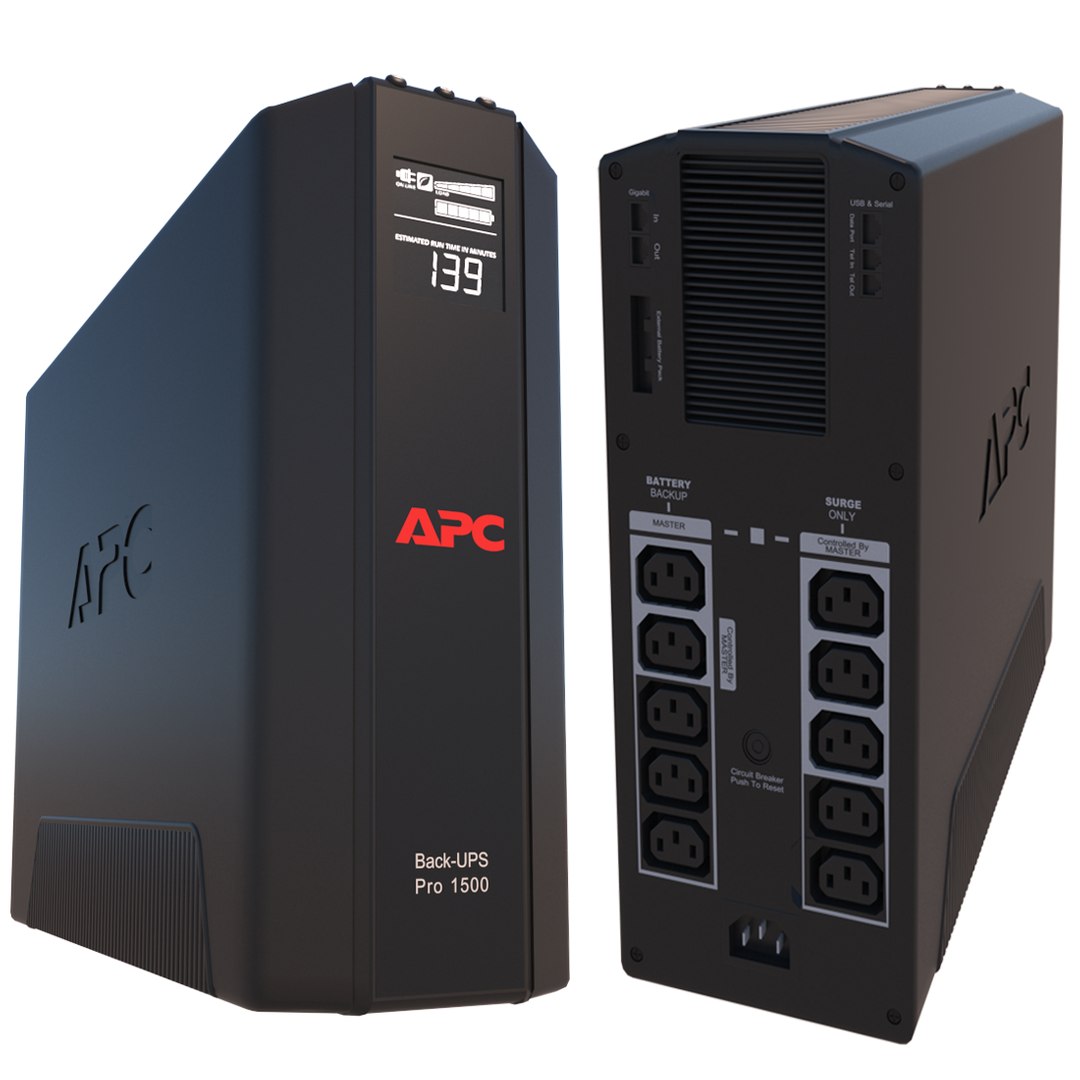
To replace the battery in an APC 1500 UPS, you can choose between genuine APC Replacement Battery Cartridges (RBC), pre-assembled third-party kits, or individual lead-acid cells for a DIY approach. The specific battery depends on your model: Back-UPS Pro 1500 units typically use RBC124, while Smart-UPS 1500 units generally require RBC7 or APCRBC155.
Identifying Your Specific APC 1500 Model
The term "APC 1500" refers to the volt-ampere (VA) rating of the Uninterruptible Power Supply (UPS), not a specific model number. As of 2026, there are several generations of APC units still in active service, ranging from legacy beige desktop units to modern rack-mounted lithium-ion systems. Before selecting a battery option, you must identify the exact model number found on the white barcode sticker, usually located on the rear or bottom of the chassis.
The two primary categories are the Back-UPS series and the Smart-UPS series. The Back-UPS 1500 (e.g., BR1500G, BX1500M) is designed for home and small office use, utilizing a consumer-grade charging circuit. The Smart-UPS 1500 (e.g., SMT1500, SMC1500, SMTL1500) is an enterprise-grade line-interactive or double-conversion system. These categories use entirely different battery form factors and connectors. For instance, a Smart-UPS SMT1500 typically uses a large, heavy RBC7 module, whereas a Back-UPS BR1500G uses a smaller, slimmer RBC124. Choosing the wrong battery based solely on the "1500" rating will result in a physical mismatch or incompatible electrical connectors.
Understanding Battery Options and Market Categories
When shopping for replacement options in 2026, the market is divided into three distinct tiers. Each tier offers a different balance of cost, reliability, and ease of installation. Understanding these distinctions is critical for maintaining your UPS's warranty and ensuring the safety of your connected equipment.
Genuine APC Replacement Battery Cartridges (RBC)
OEM (Original Equipment Manufacturer) batteries are the gold standard. When you purchase an APC RBC, you receive a pre-assembled module that includes all necessary wiring, fuses, and connectors. These are "plug-and-play" solutions. The primary advantage of OEM batteries is the guarantee of compatibility and the inclusion of a fresh warranty from Schneider Electric. Furthermore, APC provides a pre-paid shipping label in many regions to return the old battery for proper recycling, which simplifies environmental compliance.
Pre-Assembled Aftermarket Kits
Several reputable third-party manufacturers, such as Gruber Power Services or Mighty Max Battery, offer kits specifically designed to replace APC RBCs. These kits come pre-wired and ready for installation, much like the OEM versions, but usually at a 30% to 50% lower price point. While these are generally reliable, the quality of the internal cells can vary. It is essential to verify that the aftermarket manufacturer uses high-quality Absorbent Glass Mat (AGM) cells and that the wire gauge matches the original specifications to prevent overheating during high-current discharge.
Individual Cell Replacement (DIY)
For users comfortable with basic hand tools, the most cost-effective method is purchasing individual 12-volt Lead-Acid cells and "rebuilding" the existing battery cartridge. Most APC 1500 units use a pair of 12V cells connected in series to create a 24V DC bus. For example, an RBC124 is essentially two 12V 9Ah batteries taped together with a specific bridge connector. By peeling back the labels and reusing the original wiring harness, you can save significant money. However, this requires careful attention to polarity and secure terminal connections.
| Feature | OEM APC RBC | Pre-Assembled Aftermarket | Individual DIY Cells |
|---|---|---|---|
| Ease of Installation | Extremely High (Plug & Play) | High (Plug & Play) | Moderate (Requires Rebuilding) |
| Initial Cost | High ($150 - $250) | Moderate ($80 - $130) | Low ($40 - $70) |
| Warranty | 1-2 Year Manufacturer | 1 Year Third-Party | 1 Year Cell Warranty Only |
| Connectors Included | Yes, All New | Yes, All New | No, Must Reuse Old Cables |
| Recycling | Prepaid Label Included | Usually Not Included | User Responsibility |
Technical Specifications: Chemistry and Capacity
Most APC 1500 models rely on Valve Regulated Lead-Acid (VRLA) technology, specifically Absorbent Glass Mat (AGM) batteries. AGM batteries are preferred for UPS applications because they are spill-proof, maintenance-free, and capable of delivering high burst currents. As of 2026, while Lithium-ion (LiFePO4) technology is becoming more common in newer "L" series models (like the SMTL1500), you cannot simply swap a lead-acid battery for a lithium one in an older chassis. The charging profiles are fundamentally different; attempting to charge a lithium battery with a lead-acid charger can lead to fire or permanent damage.
Voltage and Amp-Hour Ratings
The capacity of the battery is measured in Amp-Hours (Ah). For a Back-UPS Pro 1500, the standard is 9Ah. For a Smart-UPS 1500, the standard is often 17Ah or 18Ah. While it might be tempting to install a battery with a higher Ah rating to gain more runtime, you are limited by the physical dimensions of the UPS battery compartment. In the UPS world, power density is finely tuned. A 12V 9Ah battery is the same physical size as a 12V 7Ah battery, so upgrading from 7Ah to 9Ah is a common and safe "boost." However, jumping to an 18Ah battery would require an external battery pack (XL models) because they will not fit internally.
Internal Resistance and Discharge Rates
UPS batteries are "High Rate" discharge batteries. Unlike a deep-cycle battery used for solar storage, a UPS battery must be able to dump a massive amount of energy in a very short window (5 to 15 minutes). When choosing third-party options, ensure the cells are rated for "High Rate" or "UPS Standby" use. Using general-purpose alarm system batteries may lead to premature failure or the UPS shutting down under heavy load due to excessive voltage drop across the battery's internal resistance.
The Impact of Temperature on Battery Longevity
The lifespan of an APC 1500 battery is typically 3 to 5 years, but this is highly dependent on the operating environment. The chemical reactions within an AGM battery are sensitive to heat. According to the Arrhenius equation, for every 10°C (18°F) increase in temperature above the ideal 25°C (77°F), the life of the battery is effectively cut in half.
In many server rooms or home office closets, ventilation is poor. If your APC 1500 is running at a constant 35°C, your 5-year battery will likely fail in 2.5 years. In 2026, many modern APC units include internal temperature sensors that adjust the "float voltage" (the constant voltage applied to keep the battery full) based on heat, but this only mitigates the damage; it does not prevent it. Ensuring at least two inches of clearance on all sides of the UPS for airflow is the simplest way to protect your battery investment.
Safety and Installation Procedures
Replacing the battery in an APC 1500 is generally considered a "hot-swappable" procedure, meaning you do not have to turn off the connected equipment. However, this applies primarily to the Smart-UPS line. For Back-UPS models, check your specific manual; while most are hot-swappable, some older or budget versions may recommend a cold swap.
- Accessing the Compartment: On the BR1500G, the battery door is on the bottom. On the SMT1500, you must usually pull off the front plastic bezel and unscrew a metal plate.
- Disconnecting: When pulling the old battery out, you will encounter a high-current connector (often an Anderson Powerpole style or a specialized APC plastic clip). Pull firmly but do not yank the wires.
- Inspecting for Damage: If the old batteries are swollen or leaking (a sign of overcharging or extreme age), wear gloves. If the battery is so swollen it is stuck, do not use metal pry bars that could puncture the casing.
- Connecting the New Battery: You may see a small spark when connecting the new battery. This is normal; it is the "inrush current" filling the capacitors on the UPS control board.
- Securement: Ensure the wiring is tucked away and not pinched by the door or cover. A pinched wire can cause a short circuit or a fire hazard over time.
Calibration and Software Updates
Once the new battery is installed, the UPS does not immediately know its exact health or runtime capacity. The internal microprocessor uses a "gas gauge" algorithm based on the last known discharge cycle. To ensure accurate runtime reporting in PowerChute or the SmartConnect dashboard, you should perform a Runtime Calibration.
A calibration involves charging the new battery to 100%, then applying a steady load (at least 30% of the UPS's capacity) and allowing it to discharge until the UPS shuts down or reaches a low-battery state. The UPS then records the new discharge curve. Note that you should not perform calibrations frequently, as deep discharges put stress on the lead-acid chemistry. Once per year or upon battery replacement is sufficient. For Smart-UPS models, this can be triggered via the front LCD menu under the "Diagnostics" section.
Proper Disposal and Environmental Responsibility
Lead-acid batteries are highly recyclable, with nearly 99% of the lead and plastic casing being recoverable. In 2026, environmental regulations regarding "e-waste" have become stricter in many jurisdictions. It is often illegal to dispose of UPS batteries in standard trash bins.
If you purchased an OEM APC battery, use the included return label. If you purchased a third-party option, you can take the old cells to local automotive parts stores, metal scrap yards, or dedicated recycling centers like those managed by Call2Recycle. Many retail locations that sell lead-acid batteries are legally required to accept old ones for recycling, often for free or a small "core charge" credit.
Frequently Asked Questions
Can I use a 12V 7Ah battery instead of 9Ah in my Back-UPS 1500?
Yes, it will physically fit and work electrically because the voltages match. However, you will experience a roughly 20-25% reduction in total runtime during a power outage. Since the price difference between 7Ah and 9Ah is usually minimal, it is generally recommended to stick with the 9Ah original specification for a 1500VA unit.
Why is my UPS still chirping "Replace Battery" after I installed a new one?
The UPS needs to be told the battery has been replaced. On Smart-UPS models, go to the "Main Menu" > "Configuration" > "Battery Install Date" and update it. On Back-UPS models, you may need to perform a "Brain Dead" reset: turn off the UPS, unplug it from the wall, disconnect the battery, hold the power button for 10 seconds to drain the internal capacitors, then reconnect everything and restart.
Can I upgrade my lead-acid APC 1500 to Lithium-ion?
Generally, no. Standard APC 1500 units designed for lead-acid batteries have charging circuits that provide a constant float voltage of approximately 13.5V to 13.8V per battery. Lithium-ion (LiFePO4) batteries require a specific Constant Current/Constant Voltage (CC/CV) charging profile and a Battery Management System (BMS) that can communicate with the UPS. Unless you have an "L" series model (like SMTL1500) specifically designed for lithium, you must stick with AGM lead-acid cells.
Is it safe to buy "refurbished" batteries for my UPS?
It is not recommended. "Refurbished" lead-acid batteries are often just old batteries that have been chemically "zapped" to remove sulfation. Their reliability is significantly lower than new cells, and they are prone to sudden failure under load. Always buy "New" cells with a fresh date code (look for a hot-stamped date on the plastic case).
How long can I store a replacement battery before installing it?
Lead-acid batteries self-discharge over time. If stored at room temperature, you should not keep them on the shelf for more than 6 months without giving them a "freshening charge." If the voltage of an AGM battery drops below roughly 10.5V during storage, permanent sulfation occurs, and the battery may never reach full capacity.
Final Recommendation for 2026
For users seeking the highest reliability and minimal hassle, the Genuine APC RBC is the best option, particularly for businesses where downtime costs exceed the price of the battery. For home users or hobbyists with multiple units, High-Rate 12V 9Ah (for Back-UPS) or 12V 18Ah (for Smart-UPS) individual cells from reputable brands like CSB, Yuasa, or Panasonic offer the best value. Always verify your specific model number and perform a runtime calibration post-installation to ensure your APC 1500 is ready for the next power event.