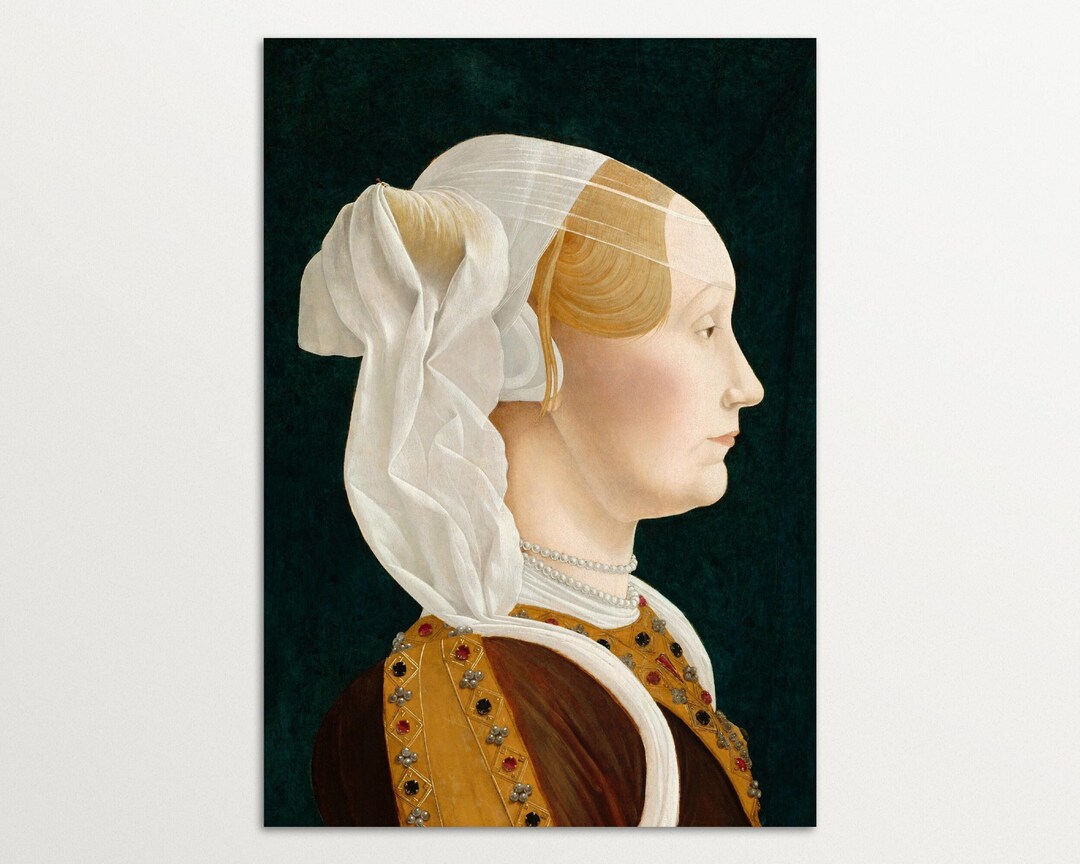
A modern Renaissance woman—often described as a female polymath or multipotentialite—is an individual who acquires masteries, active competencies, and creative pursuits across distinct, seemingly unrelated disciplines. Rather than adhering to narrow specialization, she synthesizes knowledge from arts, sciences, technology, and leadership to solve complex problems, adapt to rapid industrial shifts, and lead an intellectually diverse, self-directed life.
The Evolution of the Polymathic Ideal
The archetype of the Renaissance person originated during the European Renaissance, framed around the ideal of the uomo universale—the universal human who cultivated all aspects of intellect, art, physical capability, and civic duty. Historical figures such as Leonardo da Vinci embodied this drive. However, women throughout history also realized polymathic excellence despite substantial structural constraints. Figures like Hildegard von Bingen (mystic, composer, writer, and natural philosopher), Laura Bassi (physicist and academic administrator), and Ada Lovelace (mathematician, writer, and computing visionary) demonstrated that cross-disciplinary synthesis was never exclusive to one gender.
In the contemporary landscape, the modern Renaissance woman represents a deliberate departure from the 20th-century economic demand for hyper-specialization. For decades, traditional educational and corporate structures rewarded individuals who dedicated their entire careers to a single, narrow niche. While specialization remains valuable in specific technical domains, the modern economy increasingly demands adaptive, interdisciplinary thinkers.
Sociologist and author Emilie Wapnick coined the term "multipotentialite" to describe people with no single burning passion, but rather multiple intellectual curiosities and creative pursuits. When applied through a contemporary gender lens, the modern Renaissance woman combines multipotentiality with deliberate skill acquisition, active career agency, and systematic synthesis. She operates at the intersection of diverse domains—such as bioethics and visual arts, software architecture and classical philosophy, or venture finance and creative writing—transforming disparate skills into a cohesive, highly resilient intellectual and professional identity.
Core Characteristics and Mindset
Understanding the modern Renaissance woman requires examining her cognitive habits, career structures, and approach to lifelong learning. She is defined not merely by a broad list of hobbies, but by specific foundational traits.
- CROSS-DOMAIN SYNTHESIS: Connecting disparate insights to create novel, innovative solutions
- COGNITIVE AGILITY: Rapid domain translation & mental model flexibility
- AUTODIDACTIC CAPABILITY: Structured self-education & rapid skill acquisition
Cognitive Agility and Mental Model Transfer
The primary cognitive strength of a polymathic woman is her ability to transfer mental models across boundaries. A mental model derived from evolutionary biology (such as adaptation or natural selection) can be applied to organizational strategy or software architecture. By building a rich library of cross-disciplinary mental models, she recognizes structural patterns that hyper-specialists often overlook.
Autodidactism and Systematized Curiosity
Modern Renaissance women are fundamentally autodidacts—self-directed learners who take agency over their educational pathways. Rather than relying solely on formal institutional degrees, they leverage open-access research, specialized certifications, mentorship networks, and self-directed project building. Curiosity is approached not as a passive distraction, but as an actionable research agenda.
Adaptive Resilience in an Automation-Driven Economy
The integration of advanced artificial intelligence tools and automated workflows across industries underscores the necessity of interdisciplinary skills. Deep specialist tasks that follow predictable, repetitive patterns are increasingly susceptible to automation. Conversely, roles requiring cross-domain synthesis, contextual judgment, empathetic leadership, and holistic problem framing are highly resilient. The modern Renaissance woman thrives because her value lies in integrating disparate inputs, an ability that remains distinctly human.
Non-Linear and Portfolio Career Design
Rather than following a traditional linear ladder, her career trajectory frequently takes the form of a portfolio career or a "slash career" (e.g., Data Scientist / Documentary Filmmaker / Board Director). She views distinct career chapters not as disjointed pivots, but as cumulative layers of expertise that enhance her overall leverage and creative output.
Specialist vs. Generalist vs. Modern Renaissance Woman
To clarify how a modern Renaissance woman navigates skills and career architecture, it is helpful to contrast her approach with traditional specialist and generalist models.
| Characteristic | Traditional Specialist | Traditional Generalist | Modern Renaissance Woman (Polymath) |
|---|---|---|---|
| Depth of Knowledge | Extremely deep in one narrow field; shallow in others | Moderate to shallow across many fields | High proficiency across 2–4 distinct domains; functional literacy in several others |
| Problem-Solving Approach | Applies deep, domain-specific tools to known problems | Applies broad surface-level understanding to coordinate tasks | Synthesizes core concepts across disparate fields to create novel frameworks |
| Career Architecture | Vertical ladder climbing within a single industry | Horizontal administrative or operational management roles | Portfolio career, skill-stacked entrepreneurship, or interdisciplinary leadership |
| Adaptability Strategy | Relies on deep technical mastery remaining relevant | Relies on broad flexibility and general management skills | Relies on cross-industry translation, continuous learning, and skill compounding |
| Risk Profile | High vulnerability to domain displacement or technology shifts | Vulnerable to lack of specialized technical leverage | Low vulnerability; diversified skill assets allow rapid pivots |
| Primary Output | Domain-specific research, expert execution, or micro-innovations | Project coordination, operations, and cross-team communication | Hybrid inventions, interdisciplinary ventures, and system-level solutions |
Architectural Frameworks for Building a Renaissance Life
Operating across multiple disciplines requires deliberate framework design. Without clear systems, broad interests can lead to cognitive exhaustion, surface-level execution, or professional fragmentation.
- Depth in Primary Discipline — Vertical Stem (e.g., Software Engineering)
- Domain A — Horizontal Crossbar (e.g., Art, Ethics, Finance)
- Domain B
- Domain C
1. Skill Stacking and the T-Shaped Profile
Skill stacking is a concept popularized by author Scott Adams and refined by modern career strategists. Instead of trying to reach the top 1% globally in a single, highly competitive domain (such as elite violin performance or pure mathematics), an individual aims to enter the top 15–20% in three or four distinct, complementary fields.
When these skills are combined, the resulting intersection creates a unique value proposition. For instance:
- Skill A: Senior-level proficiency in machine learning engineering.
- Skill B: High-level competency in public policy and regulatory law.
- Skill C: Advanced fluency in narrative storytelling and media production.
Individually, each skill is useful. Combined, they position an individual as an ideal candidate to lead AI governance initiatives, produce policy documentary series, or advise venture capital funds specializing in emerging technology ethics.
This model relies on building a T-shaped or M-shaped skill profile. A T-shaped profile features deep mastery in one core discipline (the vertical stem) supported by broad working knowledge across many adjacent areas (the horizontal bar). An M-shaped profile expands on this by cultivating deep expertise in two or three distinct anchor fields simultaneously.
2. Time-Blocking and Sequential Focus Strategies
A common pitfall of multipotentiality is attention fragmentation—trying to practice every interest simultaneously every day, leading to cognitive fatigue. Successful Renaissance women often employ sequential focus or seasonal prioritization:
- Micro-level (Daily/Weekly): Assigning dedicated, uninterrupted deep work blocks to specific domains. For example, mornings focused on analytical code architecture, afternoons dedicated to client strategy, and evenings reserved for creative writing or studio arts.
- Macro-level (Seasonal/Annual): Operating in thematic seasons. An individual might spend six months launching a biotechnology startup, followed by a three-month focus on publishing a research monograph or mounting an art exhibition.
3. Systematic Knowledge Management (Building a "Second Brain")
To maintain high performance across multiple verticals without suffering memory loss or organization failure, modern polymaths rely on digital knowledge management systems. Using tools rooted in the Zettelkasten method or personal knowledge graphs, they capture research, notes, mental models, and project ideas in a searchable central hub. This framework enables seamless cross-referencing between disciplines, making cross-domain synthesis effortless when beginning new projects.
Overcoming Structural and Cultural Challenges
While polymathy offers personal fulfillment and professional adaptability, pursuing a multi-faceted path presents concrete challenges, particularly for women navigating traditional corporate or societal expectations.
Mitigating the "Jack of all Trades" Stigma
The historical adage "jack of all trades, master of none" is frequently weaponized against generalists. However, the full original phrase reads: "A jack of all trades is a master of none, but oftentimes better than a master of one."
To combat the perception of shallow interest, a modern Renaissance woman must demonstrate tangible proof of work in her core areas of focus. Rather than claiming abstract interest, she presents a clear portfolio: published papers, built applications, completed artistic projects, or measurable business achievements. Concrete artifacts validate depth and silence doubts regarding commitment.
Managing Career Identity and Pitching
When presenting a resume or professional summary to traditional hiring channels, an uncurated list of divergent interests can confuse recruiters. The solution lies in contextual positioning:
- The Tailored Narrative: Crafting specific narrative threads for specific audiences. When speaking to a tech firm, emphasize analytical systems thinking and project delivery; when addressing an arts board, highlight creative direction and cultural synthesis.
- The Anchor Title: Using an overarching functional title—such as "Interdisciplinary Strategist," "Systems Architect," or "Principal Researcher"—that naturally encompasses broad scope.
Preventing Cognitive Overload and Burnout
Juggling multiple intellectual projects requires strict personal boundaries. Burnout occurs when curiosity is transformed into an unmanageable obligation. Polymathic women avoid this by maintaining clear distinctions between core income-generating pillars, deep creative pursuits, and passive exploratory hobbies. Not every passion needs to be monetized or optimized for public production.
A Practical Playbook for Developing Polymathic Capabilities
For women seeking to systematically expand their intellectual and professional range, the following framework provides a structured pathway toward building a polymathic lifestyle.
- STEP 1: CONDUCT A SKILL AND INTEREST AUDIT: Identify 2-3 anchor domains & adjacent growth zones
- STEP 2: BUILD A SECOND BRAIN SYSTEM: Implement a digital knowledge repository (Zettelkasten)
- STEP 3: EXECUTE PROJECT-BASED LEARNING SPRINTS: Complete tangible, public-facing proof-of-work artifacts
- STEP 4: SYNTHESIZE AND POSITION YOUR UNIQUE VALUE: Combine skills to solve complex interdisciplinary problems
Step 1: Conduct a Polymathic Audit
Map out your current skills, latent talents, and emerging curiosities across four primary quadrants:
- Primary Anchor (Core Mastery): Your primary revenue generator or deepest technical domain.
- Secondary Anchor (Complementary Mastery): A distinct domain where you possess high competence or long-standing practice.
- Emerging Interest Zone: A field you actively study but have not yet integrated into professional practice.
- Creative/Physical Outlet: Non-monetized disciplines that cultivate physical vitality, spatial awareness, or emotional intuition (e.g., athletics, music, sculpture).
Step 2: Establish a Public Proof-of-Work System
Commit to transforming learning into tangible output. Autodidactism becomes effective when validated by real-world execution.
- If learning data visualization, publish interactive public dashboards examining environmental data.
- If studying classical rhetoric, publish curated analytical essays analyzing modern speech patterns.
- If developing product design capabilities, build and release functional open-source micro-applications.
Step 3: Implement Interdisciplinary Networking
Expand your peer group beyond your immediate industry. Join cross-functional communities, attend conferences outside your primary field, and cultivate relationships with practitioners in distinct industries. True cross-pollination happens when you discuss ideas with experts who operate under entirely different operational assumptions.
For further reading on how cross-domain integration drives breakthrough innovations, explore research published by the Harvard Business Review on interdisciplinary team dynamics and innovation strategy.
Frequently Asked Questions
What is the primary difference between a multipotentialite and a polymath?
A multipotentialite is anyone with a strong interest in multiple fields who actively pursues them over time. A polymath takes this a step further by reaching significant expertise, mastery, or functional competency across multiple distinct fields. All polymaths are multipotentialites, but not all multipotentialites have achieved deep execution across their domains of interest.
Can you be a modern Renaissance woman without formal academic degrees in every field?
Yes. Higher education institutions provide structured paths to learning, but they are not the sole gatekeepers of mastery. Modern autodidacts leverage open-access scientific journals, technical documentation, professional certifications, mentorships, and direct project execution. Mastery is measured by practical output, depth of understanding, and problem-solving capability, not by academic credentials alone.
How do hiring managers evaluate candidates with broad, non-linear backgrounds?
Progressive organizations look for demonstrated problem-solving skills, adaptability, and cross-functional communication. To present a polymathic background effectively to a traditional employer, highlight how your multi-disciplinary perspective allows you to bridge communication gaps between specialized teams (e.g., translating technical engineering constraints into strategic business decisions).
How do you balance multiple passions without suffering from chronic distraction?
Effective polymaths manage their focus through structured time-management frameworks such as seasonal prioritization or deep work scheduling. Rather than attempting to progress in four complex fields daily, they focus on one primary execution objective per sprint, while keeping secondary fields in maintenance or exploration modes.
Who are notable modern examples of Renaissance women?
Modern examples include Dr. Mae Jemison (engineer, physician, and NASA astronaut who is also an accomplished dancer and theater producer), Neri Oxman (architect, designer, and professor whose work synthesizes design, biology, computing, and materials engineering), and Dr. Nina Tandon (biomedical engineer, CEO, author, and metal sculptor).
Next Steps for the Aspiring Polymath
Building a polymathic identity is a lifelong process that balances curiosity with deliberate practice. To launch or refine your interdisciplinary path:
- Select two complementary non-adjacent fields you currently engage with (e.g., software development and behavioral psychology).
- Design a 90-day learning sprint focused on producing a single synthesis project at their intersection—such as an essay, a digital tool, or a research whitepaper.
- Establish a central digital repository to document insights, mental models, and references, ensuring your learning compounds over time.
By shifting from passive consumption to intentional cross-domain execution, you convert broad curiosity into a unique, highly resilient capability set.