South Korea’s history is a narrative of rapid transformation, evolving from an agrarian society and Japanese colony into a leading global democracy and technological titan. Following the Korean War (1950–1953), the nation underwent the "Miracle on the Han River," achieving unprecedented economic growth while transitioning from authoritarian rule to a vibrant, multi-party democracy.
Foundations of the Peninsular Identity
The history of South Korea (the Republic of Korea) is inextricably linked to the broader history of the Korean Peninsula, which dates back thousands of years. According to legend, the first Korean kingdom, Gojoseon, was founded in 2333 BCE by Dangun. While early history is shrouded in myth, archaeological evidence suggests that Bronze Age and Iron Age societies were well-established, laying the groundwork for more complex political entities.
By the first century BCE, the peninsula entered the Three Kingdoms Period, dominated by Goguryeo in the north, Baekje in the southwest, and Silla in the southeast. This era was characterized by constant territorial shifts and cultural exchange with neighboring China and Japan. In 668 CE, Silla, with the help of the Tang Dynasty, unified much of the peninsula, marking the beginning of the Unified Silla period. This was a golden age for Buddhist art, architecture, and scholarship.
In 918 CE, the Goryeo Dynasty (from which the English name "Korea" is derived) replaced Silla. Goryeo is noted for its cultural achievements, including the creation of the Tripitaka Koreana and the invention of the world's first metal movable type printing press in 1234. However, the dynasty faced frequent Mongol invasions and was eventually replaced by the Joseon Dynasty in 1392. Joseon would rule for over 500 years, establishing Neo-Confucianism as the state ideology and creating the unique Korean alphabet, Hangul, under King Sejong the Great in 1443.
The Crucible of the 20th Century: Colonization and Division
The transition to the modern era was marked by trauma and upheaval. As the Joseon Dynasty weakened in the late 19th century, it became a focal point for imperial competition between China, Russia, and Japan. Following the Russo-Japanese War, Japan formally annexed Korea in 1910.
The period of Japanese Colonial Rule (1910–1945) was characterized by economic exploitation and the suppression of Korean culture. Koreans were forced to adopt Japanese names, and the Korean language was banned in schools. This sparked a fierce independence movement, most notably the March 1st Movement of 1919, which led to the formation of the Provisional Government of the Republic of Korea in Shanghai.
World War II brought an end to Japanese rule in 1945, but the liberation was bittersweet. Under an agreement between the United States and the Soviet Union, the peninsula was divided at the 38th parallel. The Soviet Union occupied the north, while the United States occupied the south. What was intended to be a temporary administrative division quickly solidified into a Cold War boundary. On August 15, 1948, the Republic of Korea (ROK) was officially established in the south, with Syngman Rhee as its first president.
The Korean War and Its Aftermath (1950–1953)
The fragile peace was shattered on June 25, 1950, when North Korean forces invaded the south. The Korean War was a devastating conflict that involved United Nations forces led by the U.S. supporting the South, and Chinese forces supporting the North. The war ended in a stalemate with the signing of an Armistice Agreement on July 27, 1953, though a formal peace treaty was never signed.
The war left South Korea in ruins. Its infrastructure was destroyed, its economy was non-existent, and it was one of the poorest nations in the world, heavily dependent on U.S. aid. The Demilitarized Zone (DMZ) became the most heavily fortified border on Earth, a status it maintains into 2026. This period of reconstruction was difficult, marked by political instability and the increasingly autocratic rule of Syngman Rhee, who was eventually forced to resign during the April Revolution of 1960.
The Miracle on the Han River: Economic Transformation
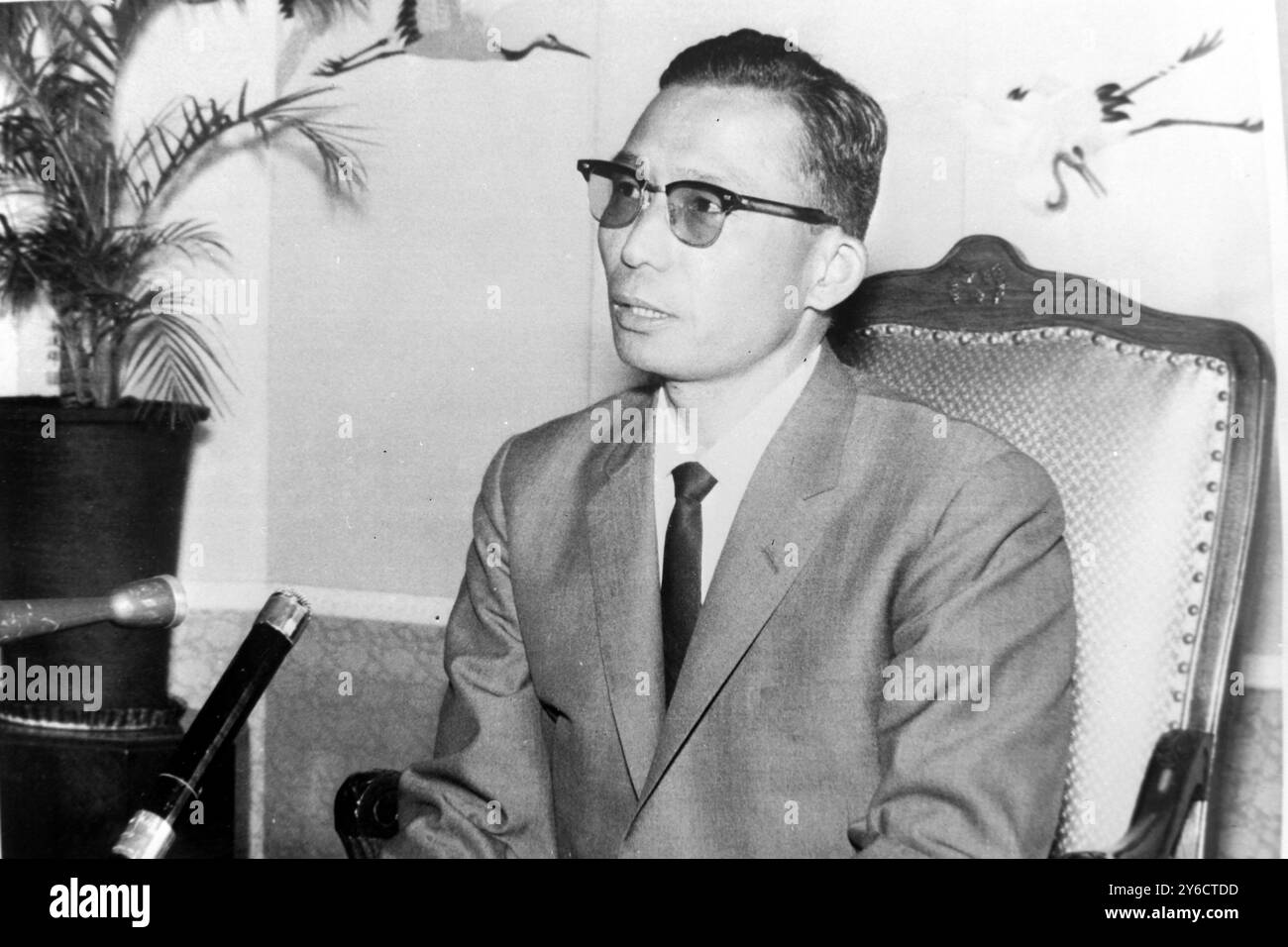
The 1960s marked a radical shift in South Korea’s trajectory. Following a military coup in 1961, General Park Chung-hee took power. While his regime was criticized for its suppression of political freedoms and human rights, it oversaw an era of explosive economic growth known as the "Miracle on the Han River."
Park implemented a series of Five-Year Economic Development Plans that shifted the nation from an import-substitution model to Export-Oriented Industrialization (EOI). The government provided heavy subsidies and support to family-owned conglomerates known as Chaebols, such as Samsung, Hyundai, and LG. Key milestones during this period included:
- 1960s: Development of light industries like textiles and footwear.
- 1970s: A strategic pivot toward heavy and chemical industries, including steel, shipbuilding, and electronics.
- Saemaul Undong: A "New Village Movement" aimed at modernizing the rural economy and closing the wealth gap between urban and rural areas.
By the time of Park’s assassination in 1979, South Korea had transformed from a recipient of foreign aid to a burgeoning industrial powerhouse. However, this growth came at a high social cost, including labor exploitation and the suspension of democratic norms.
The Long Road to Democracy (1980–1987)
The 1980s were defined by a tense struggle between authoritarianism and the growing demand for democracy. Following Park's death, General Chun Doo-hwan seized power through another coup. In May 1980, a pro-democracy uprising in the city of Gwangju was brutally suppressed by the military, resulting in hundreds of deaths. The Gwangju Uprising became a pivotal symbol of the resistance against military rule.
Throughout the 1980s, students, labor unions, and the middle class increased pressure on the regime. This culminated in the June Struggle of 1987, a massive nationwide protest movement. Fearing the loss of the upcoming 1988 Seoul Olympics, the government conceded to the protesters' demands, leading to the 1987 Constitution. This document established direct presidential elections and restored civil liberties, marking the birth of the Sixth Republic—the current democratic framework of South Korea.
South Korea in the 21st Century: Global Cultural and Tech Leader
Since 1987, South Korea has consolidated its democracy and expanded its global influence. The country faced a major hurdle during the 1997 Asian Financial Crisis, which required a massive IMF bailout. However, the nation responded with a national "gold collection campaign" and aggressive structural reforms, recovering faster than many anticipated.
The turn of the millennium saw the rise of the Korean Wave (Hallyu). Beginning with TV dramas and pop music (K-pop), Korean culture began to penetrate global markets. By 2026, South Korea stands as a primary exporter of cultural content, with its films, music, and gaming industries influencing global trends.
Key Governance and Economic Milestones
| Era | Primary Leadership | Main Economic Focus | Key Historical Milestone |
|---|---|---|---|
| First Republic (1948–1960) | Syngman Rhee | Post-war reconstruction | 1953 Armistice Agreement |
| Third/Fourth Republic (1961–1979) | Park Chung-hee | Export-oriented industrialization | Establishment of the Chaebols |
| Fifth Republic (1980–1987) | Chun Doo-hwan | Heavy industry growth | Gwangju Uprising (1980) |
| Sixth Republic (1987–Present) | Roh Tae-woo to Current | High-tech, Digital, Cultural | 1988 Olympics; 1997 IMF Crisis |
| Current Era (2020–2026) | Recent Administrations | AI, Green Energy, Semiconductors | Response to global supply chain shifts |
South Korea in 2026: Status and Challenges
As of 2026, South Korea remains a top-tier global economy (typically ranked within the top 10 to 12 by GDP). Its technology sector, led by companies like Samsung and SK Hynix, dominates the global semiconductor market, which is essential for the AI and electric vehicle industries.
However, the nation faces significant structural challenges:
- Demographic Crisis: South Korea has the world’s lowest fertility rate. By 2026, the implications of an aging population and a shrinking workforce have become a primary focus of government policy.
- Regional Security: Relations with North Korea remain volatile. Despite various periods of engagement, the North's nuclear ambitions continue to necessitate a strong military alliance with the United States.
- Economic Inequality: While the nation is wealthy, there is a persistent gap between the older generation and younger citizens who face high housing costs and a competitive job market.
Frequently Asked Questions
Why is South Korea separate from North Korea?
The separation is a legacy of the Cold War. Following Japan's surrender in 1945, the U.S. and the Soviet Union divided the peninsula into two occupation zones. Ideological differences and the subsequent Korean War (1950–1953) solidified this into two distinct nations with opposing political and economic systems.
What was the "Miracle on the Han River"?
This term refers to the rapid economic growth South Korea experienced between the 1960s and 1990s. The country transitioned from a war-torn agrarian society to a highly developed industrial nation through state-led planning, investment in education, and an aggressive focus on global exports.
When did South Korea become a democracy?
South Korea successfully transitioned to a full democracy in 1987. After decades of military and authoritarian rule, the "June Struggle" of 1987 forced the government to adopt a new constitution that allowed for direct presidential elections and protected fundamental human rights.
What is the role of the Chaebols in South Korean history?
Chaebols are large, family-owned business conglomerates (like Samsung and Hyundai) that were central to the nation's industrialization. The government provided them with preferential credit and support to build key industries. While they drove economic growth, they have also been criticized for creating monopolies and exerting too much political influence.
How has South Korean culture become so popular globally?
The "Korean Wave" or Hallyu was the result of both private innovation and government support. In the late 1990s, the government identified cultural exports as a key driver for the future economy. Strategic investments in media infrastructure and the global success of artists and filmmakers have made Korea a central hub for global entertainment by 2026.
Recommendations for Further Exploration
To understand the depth of South Korean history, students and researchers should look beyond political timelines and examine the cultural and sociological shifts that accompanied the nation's rise. For those visiting or studying the region in 2026, a visit to the National Museum of Korean Contemporary History in Seoul provides an immersive look at the country's 20th-century journey. Additionally, tracking the official reports from the Bank of Korea or the Ministry of Foreign Affairs provides the most accurate data on the country's current economic and diplomatic standing. Understanding the "Why" behind Korea's transformation requires a balanced view of its ancient resilience and its modern adaptability.