Article Six of the United States Constitution establishes the foundational legal hierarchy of the nation, explicitly declaring that the Constitution, federal laws, and treaties serve as the "supreme Law of the Land." It mandates that all state and federal officials are bound by oath to support the Constitution, while also prohibiting religious tests for public officeholders.
The Constitutional Framework of Article Six
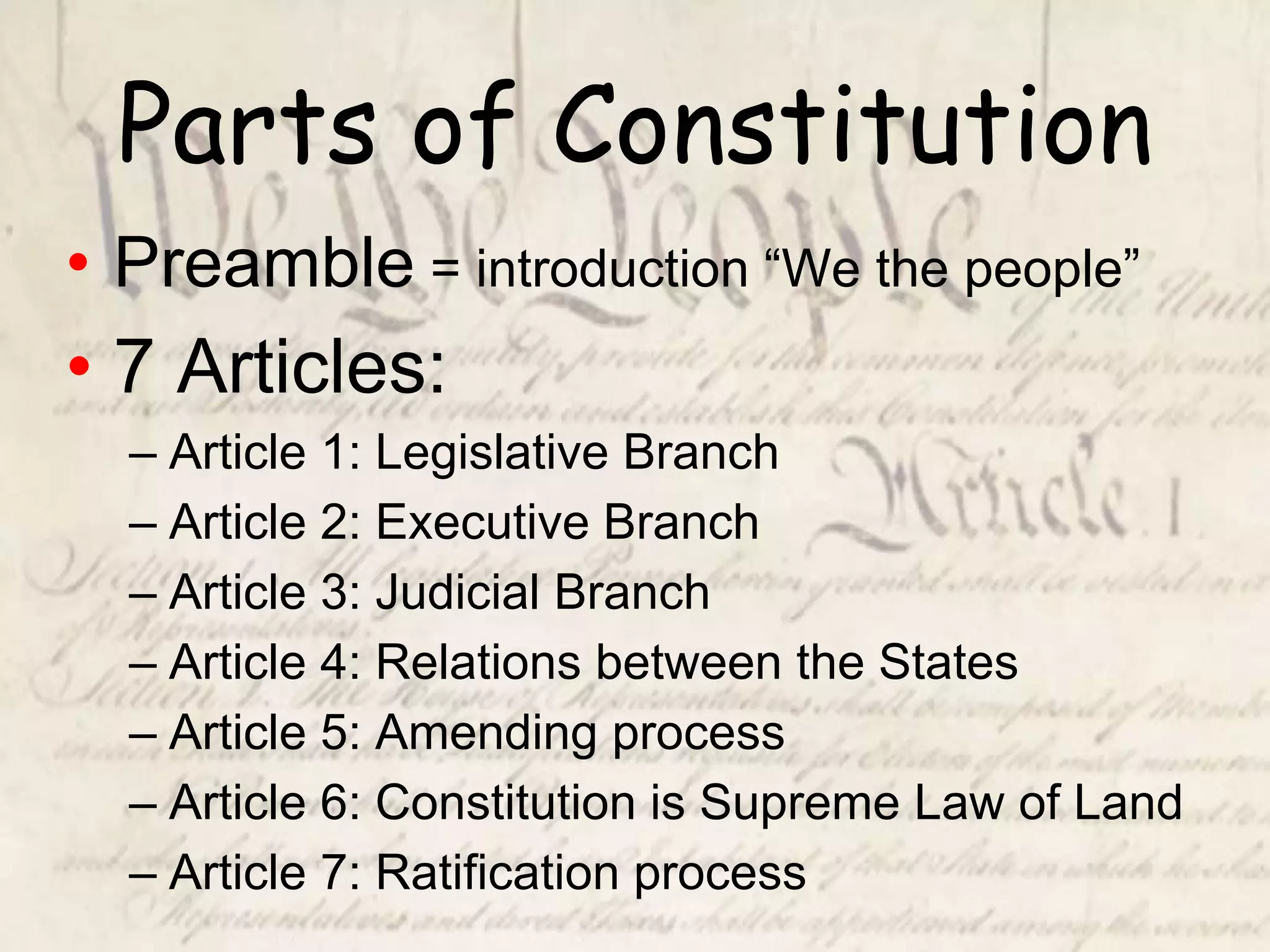
Article Six is composed of three distinct clauses, each serving a critical function in maintaining the structural integrity of the federal system. While the Constitution contains seven original articles, Article Six is unique in its focus on the relationship between federal authority and state sovereignty, ensuring that the former remains paramount in conflicts of law.
The Supremacy Clause: The Doctrine of Preemption
The first and most recognized component of Article Six is the Supremacy Clause. It dictates that the Constitution, along with laws passed by Congress under its authority and treaties made by the United States, constitutes the supreme law of the land.
In practice, this means that state judges are bound by these federal mandates, even if state constitutions or laws state otherwise. This clause acts as a foundational pillar for "preemption," a legal doctrine where federal law displaces conflicting state law. If a state passes a statute that directly contradicts a valid federal enactment or constitutional provision, the federal rule takes precedence. This ensures national uniformity in matters where the Constitution grants power to the federal government, preventing a patchwork of conflicting legal requirements across individual states.
The Oath Requirement: Allegiance to the Constitution
The second clause of Article Six requires that members of Congress, state legislatures, and all executive and judicial officers of both the United States and the states be bound by oath or affirmation to support the Constitution.
This requirement is not merely symbolic; it is a structural safeguard for the republic. By mandating that all levels of government—from local judges to federal representatives—swear allegiance to the federal Constitution, the Framers ensured that the national legal framework would be upheld by the very individuals tasked with enforcement. It creates a universal standard of accountability, emphasizing that the Constitution is the superior document to which all other legal instruments and government officials are subordinate.
The Prohibition of Religious Tests
The final clause of Article Six states: "no religious Test shall ever be required as a Qualification to any Office or public Trust under the United States."
In the 18th century, this was a radical departure from the common European practices of the era, where religious affiliation was frequently a condition for political service or civil rights. By explicitly forbidding the use of religious criteria for federal office, the Framers established a secular standard for governance. This provision reinforces the separation of church and state, ensuring that the federal government remains open to citizens regardless of their personal belief systems or lack thereof.
Comparative Legal Hierarchy
To understand the practical application of Article Six, it is helpful to view the hierarchy of laws within the United States. When conflicts arise, the following table illustrates the order of priority established by the Supremacy Clause.
| Level | Legal Authority | Role in Conflict |
|---|---|---|
| First | U.S. Constitution | Highest authority; invalidates conflicting laws. |
| Second | Federal Statutes & Treaties | Preempts conflicting state laws and local ordinances. |
| Third | State Constitutions | Superior to state statutes but subordinate to federal law. |
| Fourth | State Statutes | Subordinate to all federal law and the state constitution. |
| Fifth | Local Ordinances | Subject to both federal and state laws. |
Historical Context and Intent
The inclusion of Article Six was a direct response to the failures of the Articles of Confederation. Under the earlier government, the national congress struggled to enforce its policies, as individual states frequently ignored federal mandates or treated national obligations as optional.
The Framers of the Constitution sought to rectify this instability by creating a federal structure where the central government possessed enough authority to enforce its laws consistently across all states. The Supremacy Clause was essential to this goal. It prevented states from "nullifying" federal laws, a practice that would have rendered the central government toothless. By making the Constitution the "supreme Law," the Framers ensured that the United States would function as a singular, unified nation rather than a loose collection of sovereign entities.
Implementation and Judicial Review
While Article Six establishes the supremacy of federal law, the practical enforcement of this supremacy is facilitated through the judiciary. The Supreme Court of the United States plays the final arbiter role in determining whether a state law conflicts with federal law.
When a lower court case involves a collision between state and federal legislation, judges utilize the Supremacy Clause to resolve the tension. If a state law stands as an obstacle to the full implementation of a federal goal, the federal law is upheld. However, this does not mean the federal government has unlimited power. The government can only act within the scope of the enumerated powers granted to it by other articles of the Constitution. If the federal government attempts to legislate in an area where it has no authority, the Supremacy Clause does not apply, as the federal law itself would be unconstitutional.
Critical Considerations and Limitations
It is important to understand the boundaries of Article Six. While it establishes a clear hierarchy, it does not grant the federal government absolute power.
- Enumerated Powers: The Supremacy Clause only validates federal laws that are enacted pursuant to the Constitution. If Congress passes a law outside its designated powers, the Supreme Court can strike it down.
- State Sovereignty: The Tenth Amendment serves as a counterbalance to Article Six. It reserves powers not delegated to the federal government to the states or the people, ensuring that states retain authority over internal matters not addressed by federal law.
- Judicial Interpretation: The interpretation of the Supremacy Clause has evolved over centuries. Cases like McCulloch v. Maryland (1819) solidified the idea that federal law is immune from state interference when the federal government is acting within its legitimate scope.
Frequently Asked Questions
What does the "Supreme Law of the Land" actually mean in practice?
It means that when federal law and state law collide, the federal law prevails. For example, if a federal agency sets a environmental standard, a state cannot pass a law that lowers that standard below the federal minimum.
Does Article Six prohibit religious requirements for state and local offices?
While the text explicitly refers to offices under the "United States," the Supreme Court has interpreted the Fourteenth Amendment to extend the principles of the Bill of Rights to states. Consequently, the prohibition against religious tests is effectively applied to all levels of government in the modern era.
Can a state constitution contradict the U.S. Constitution?
No. Because the U.S. Constitution is the supreme law, any provision within a state constitution that conflicts with federal constitutional rights is considered void and unenforceable.
Why is the oath requirement in Article Six significant?
It forces all government officials to declare their loyalty to the Constitution rather than to a political party, a specific leader, or a state government. This is designed to ensure that the document itself remains the ultimate guide for public service.
Does Article Six allow the federal government to abolish states?
No. While the Supremacy Clause mandates adherence to federal law, the Constitution also guarantees the existence of states and protects their boundaries, ensuring the survival of the federalist system.
Practical Recommendations for Legal Research
For those interested in exploring the practical applications of Article Six, start by reviewing the specific case law documented in the U.S. Supreme Court reports. The Supremacy Clause is frequently invoked in modern litigation regarding environmental regulations, interstate commerce, and civil rights. When encountering a potential conflict between federal and state mandates, prioritize verifying whether the federal regulation was authorized by the Constitution. If you are conducting research for legal or academic purposes, rely on the official Constitution Annotated provided by the Library of Congress, which provides a comprehensive, objective record of the Supreme Court's interpretations of each clause over time.