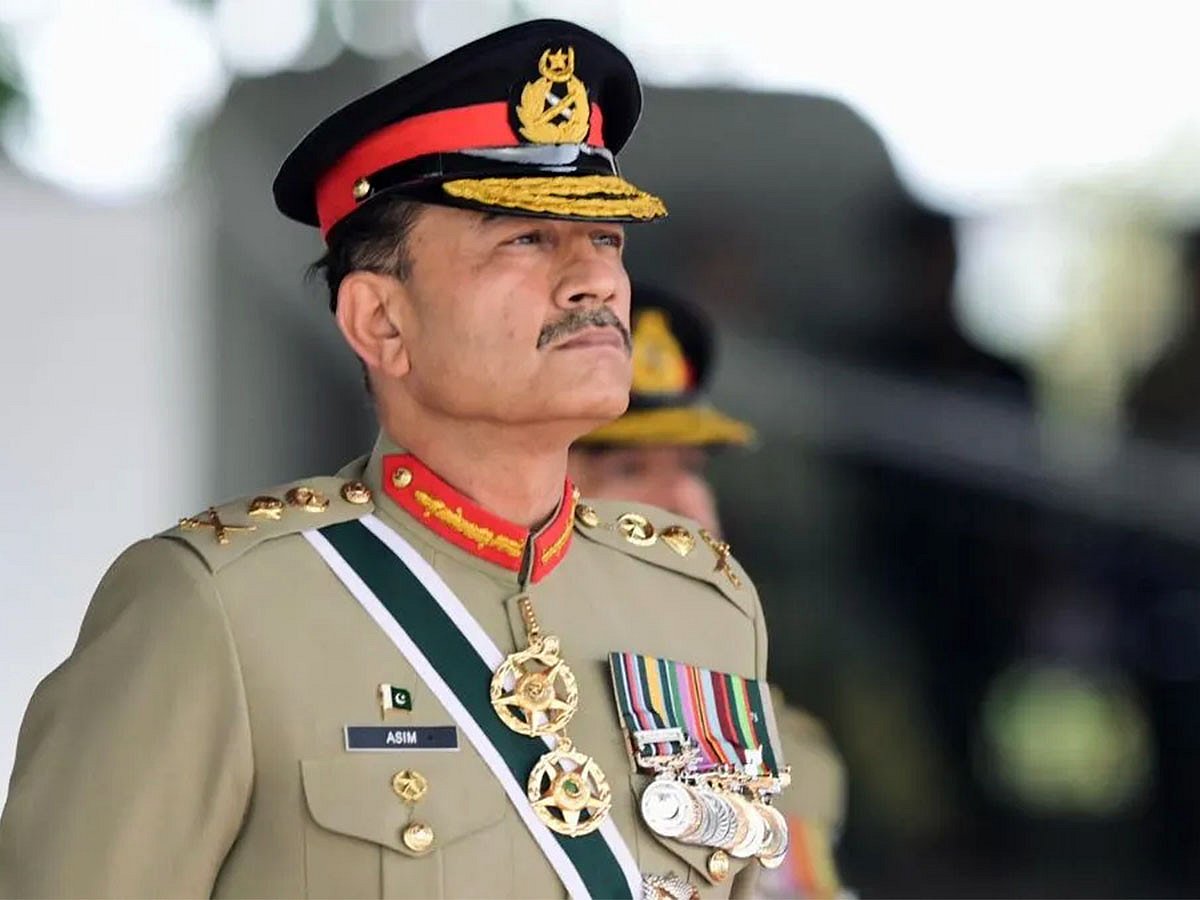
The rank of Marshal, or its national equivalent, represents the absolute pinnacle of military hierarchy, typically designated as a five-star rank (NATO OF-10). It is a distinction reserved for supreme commanders who have demonstrated exceptional leadership during large-scale warfare or as a ceremonial honor recognizing a lifetime of extraordinary service to a nation’s defense.
The Historical Evolution of the Marshalate
The term "Marshal" finds its etymological roots in the Old High German words marah (horse) and scalc (servant). Originally, a marshal was a "stable master" responsible for the horses of a monarch. However, as cavalry became the dominant force on the medieval battlefield, the person responsible for the horses naturally evolved into a high-ranking military officer. By the 12th and 13th centuries, the office of the Marshal had transformed from a domestic role into one of the most powerful positions in the royal court, often involving the command of the vanguard in battle and the adjudication of military law.
During the Napoleonic era, the rank reached its modern definition of prestige. Napoleon Bonaparte famously declared that every soldier carries a "marshal's baton in his knapsack," emphasizing that the rank was a reward for merit rather than noble birth. He created the "Marshals of the Empire" in 1804, a group of 26 men who would lead his Grand Armée across Europe. This system influenced the military structures of nearly every other European nation, leading to the creation of the Field Marshal in the United Kingdom and the Generalfeldmarschall in the Germanic states.
In the contemporary context of 2026, the rank is largely dormant in most Western democracies. Because the rank is designed for the command of massive formations—such as Army Groups consisting of multiple field armies—it is rarely bestowed in the era of specialized, high-tech, and asymmetric warfare. However, the legacy of the rank continues to define the ultimate aspirations of military command and the highest honors a state can provide its defenders.
The United States: General of the Army vs. Marshal
The United States is notable for its avoidance of the title "Marshal," primarily for linguistic and historical reasons. The highest active rank in the U.S. Army is the five-star General of the Army. This rank was formally established by Congress during World War II in December 1944 to provide American commanders with equivalent status to their British and Soviet counterparts.
The decision to use "General of the Army" rather than "Marshal" was influenced by a desire to avoid the awkwardness of calling General George C. Marshall by the title "Marshal Marshall." Furthermore, the United States maintained a republican tradition that viewed "Marshal" as a title too closely associated with European monarchy.
According to the U.S. Department of Defense, the five-star rank is only granted when the "state of the military" warrants it—specifically during times of total war where American generals must command international coalitions. The last living General of the Army was Omar Bradley, who passed away in 1981. While the rank remains on the books in 2026, no officer has held it since the Cold War era. Above this lies the unique rank of General of the Armies of the United States, held only by John J. Pershing and George Washington (posthumously), which is conceptually superior to the five-star rank.
The British Commonwealth: The Prestige of the Field Marshal
In the United Kingdom and several Commonwealth nations, the highest rank is Field Marshal. Unlike the U.S. General of the Army, the British Field Marshal was traditionally a lifetime appointment. Even after retiring from active duty, a Field Marshal remains on the active list for life, continuing to receive half-pay and retaining their rank and status.
The insignia of a British Field Marshal consists of crossed batons surrounded by a wreath of laurel leaves, topped by a crown. Notable historical figures such as Bernard Montgomery and the Duke of Wellington held this rank. However, in 1995, the British Ministry of Defence changed the policy to make Field Marshal a rank awarded only in wartime or for highly exceptional honorary circumstances.
In 2026, the rank continues to be used ceremonially. For example, members of the Royal Family or retiring Chiefs of the Defence Staff may be promoted to the rank as a mark of distinction, though they do not exercise operational command over troops in that capacity. The British Army maintains the rank within its structure to ensure parity with allies during major international conflicts.
France: Maréchal de France as a State Dignity
The French variation, Maréchal de France (Marshal of France), is unique because it is technically not a military rank, but a "dignity of the state." This distinction is important in French law; while a General of a Division is a rank, a Marshal is an honor bestowed by the French Parliament on a general who has won a significant victory.
The tradition was abolished during the French Revolution but restored by Napoleon. In the 20th century, the honor was granted to Great War commanders like Ferdinand Foch and Joseph Joffre. Following World War II, it was granted to Philippe Leclerc de Hauteclocque and Alphonse Juin. Because it is a national dignity, a Marshal of France is entitled to specific honors at their funeral and a lifetime of state support.
As of 2026, there are no living Marshals of France. The honor is rarely bestowed, as the criteria require the command of an army in a successful campaign during a major war. It serves as a historical reminder of France's military tradition, where the marshal’s baton—decorated with blue velvet and golden stars—remains the ultimate symbol of Gallic military achievement.
Eastern Bloc and Russia: The Marshal of the Soviet Union
The Soviet Union utilized the rank of Marshal of the Soviet Union to signify the highest level of military and political authority. Established in 1935, the rank was held by legendary figures such as Georgy Zhukov, who led the Red Army to Berlin in 1945. In the Soviet system, the rank was often as much political as it was military, with figures like Joseph Stalin and Leonid Brezhnev assuming the title.
Following the collapse of the USSR, the Russian Federation established the rank of Marshal of the Russian Federation. To date, only one person has held this rank: Igor Sergeyev, a former Minister of Defense. In the Russian hierarchy, the Marshal rank sits above the General of the Army. The insignia features the double-headed eagle of Russia and a large five-pointed star.
In 2026, the rank remains an aspirational tier within the Russian military code, though it has not been actively filled for several decades. It represents a different philosophy of command compared to the West, where the highest rank is often seen as a bridge between the professional military and the supreme political leadership of the state.
Global Variations and Equivalent Ranks
While "Marshal" is the most common term, many nations use different titles for their OF-10 equivalent. These titles often reflect the specific linguistic or cultural history of the country.
- China: The rank of Yuan Shuai (Marshal) was used in the People's Liberation Army between 1955 and 1965. Ten legendary leaders of the communist revolution were given this title. China later abolished these ranks and currently uses Shang Jiang (General) as its highest active tier, though the concept of a "Grand Marshal" remains in historical documents.
- India: India uses the rank of Field Marshal. Only two officers have ever received it: Sam Manekshaw and K.M. Cariappa. Like the British system, it is a lifetime appointment. The Indian Air Force has a similar rank known as Marshal of the Indian Air Force, held by Arjan Singh.
- Germany: Historically, Germany used Generalfeldmarschall. During the Third Reich, this rank was widely distributed, but it was abolished after 1945. Modern Germany (the Bundeswehr) caps its ranking system at General to distance itself from the militarism of the past.
- Thailand: The Royal Thai Army uses the rank of Chom Phon. Historically held by monarchs and prime ministers, it is equivalent to a Field Marshal.
Comparison of Highest Military Ranks by Country (2026)
| Country | Highest Rank Title | NATO Equivalent | Status as of 2026 |
|---|---|---|---|
| United States | General of the Army | OF-10 | Inactive (Wartime only) |
| United Kingdom | Field Marshal | OF-10 | Honorary/Wartime |
| France | Maréchal de France | Dignity of State | Dormant |
| Russia | Marshal of the Russian Federation | OF-10 | Inactive |
| India | Field Marshal | OF-10 | Honorary (Lifetime) |
| China | Yuan Shuai | OF-10 | Abolished/Historical |
| Turkey | Mareşal | OF-10 | Active (Criteria-based) |
| Egypt | Mushir | OF-10 | Active |
Criteria for Promotion to the Highest Rank
The transition from a four-star General (or equivalent) to a Marshal is rarely based on seniority alone. In almost every military tradition, specific criteria must be met:
- Command of Large Formations: A Marshal is expected to command multiple armies or an entire theater of operations. In the modern era, where most conflicts involve brigade-sized or division-sized elements, the functional need for a Marshal is non-existent.
- Wartime Achievement: Most nations require a "victory in the field" for the rank to be bestowed. In the U.S. and UK, this usually necessitates a declaration of war or a massive national mobilization.
- Diplomatic and Political Standing: Because Marshals often lead multinational coalitions, the rank is sometimes granted to facilitate diplomatic parity. During WWII, U.S. generals were promoted to five stars so they would not be "outranked" by British Field Marshals when making strategic decisions.
- Exceptional Service: In nations like India or Thailand, the rank may be granted as a "reward" for a lifetime of service that fundamentally reshaped the nation's security, even in the absence of a large-scale war.
The Modern Decline of the Five-Star Rank
As we move through 2026, the "Army Marshal" is increasingly a title of the past. There are several reasons for this decline. First, the professionalization of the military has led to a preference for a flatter command structure. Modern communications allow a four-star General at a central headquarters to command global operations that previously would have required several Marshals in the field.
Second, the political optics of the rank have changed. In the 18th and 19th centuries, a Marshal was a symbol of national glory. In the 21st century, such titles can sometimes be associated with authoritarianism or "strongman" politics, leading democratic nations to prefer the more modest title of "General."
However, the rank remains an essential part of military legislation. Governments keep these ranks "on the books" to ensure that if a global conflict on the scale of the World Wars were to break out, the legal and hierarchical framework for supreme command is already in place. This allows for a rapid "brevet" promotion system where commanders can be elevated to the necessary status to lead international forces.
Frequently Asked Questions
Is a Marshal higher than a General?
Yes, in every military system that utilizes both, a Marshal (or Field Marshal/General of the Army) is one tier above a General. In NATO terminology, a General is typically an OF-9 rank (four stars), while a Marshal is an OF-10 rank (five stars).
Can someone become a Marshal in peacetime?
In most modern militaries, no. The rank is generally reserved for wartime. However, some countries grant the rank posthumously or as an honorary title to retiring high-ranking officers or members of royalty. In 2026, the few existing Marshals globally are almost entirely in honorary or ceremonial roles.
What is the insignia of a Marshal?
The insignia varies by country but almost always involves crossed batons or a cluster of five stars. The crossed batons are a tradition dating back to the Roman fasces and the medieval baton of command, symbolizing the authority delegated to the commander by the sovereign or the state.
Is there a "six-star" rank?
In the United States, the rank of General of the Armies is considered a six-star equivalent. It has only been granted to John J. Pershing (1919) and George Washington (posthumously in 1976). While there is no official six-star insignia, these individuals are legally ranked above all other five-star Generals of the Army.
Does a Marshal ever retire?
In the British and Indian traditions, a Field Marshal never truly retires. They remain on the active list for life. In the U.S. system, a General of the Army also remains on active duty for life, though they may transition to an "inactive" status where they no longer perform day-to-day duties but still draw full pay and maintain their rank.
Practical Recommendation for Researchers
For those studying military history or international relations in 2026, it is vital to distinguish between rank and appointment. While "Marshal" is a rank, "Supreme Allied Commander" is an appointment. An officer may hold the appointment of a supreme commander while only holding the rank of a four-star General. When verifying the status of a high-ranking official, always check the national defense statutes of the country in question, as many "Marshals" in smaller nations may be self-appointed or honorary titles that do not correspond to the NATO OF-10 standard of command.