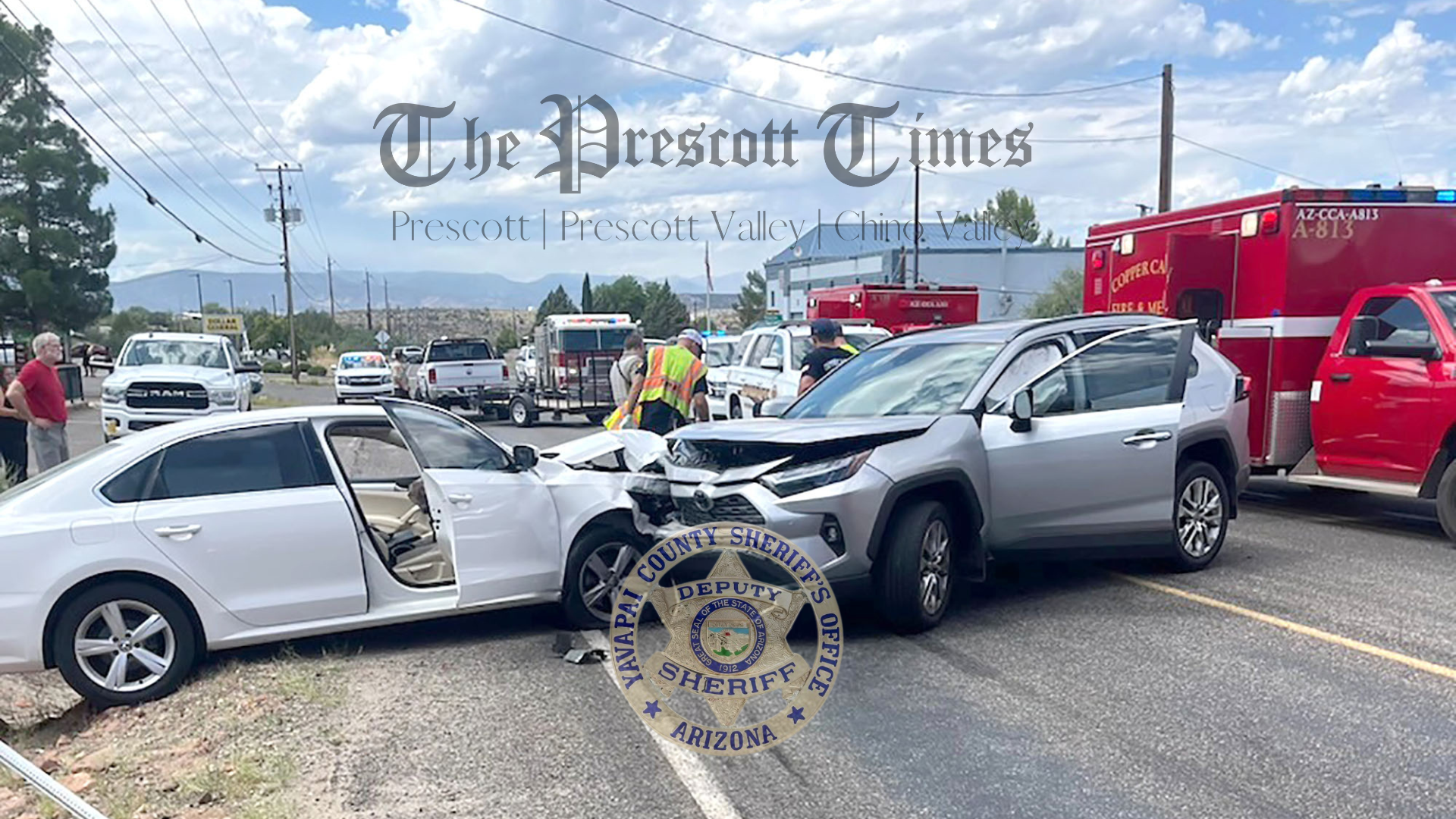
A head-on collision in Arizona is a high-impact traffic accident where the front ends of two vehicles strike each other while moving in opposite directions. Due to the combined velocity of both vehicles, these crashes often result in catastrophic injuries or fatalities. Victims should prioritize immediate medical evaluation, secure an official police report from the Arizona Department of Public Safety (DPS), and understand that Arizona’s pure comparative negligence laws determine how financial recovery is distributed among involved parties.
Head-on collisions represent some of the most dangerous incidents on Arizona roadways. Despite comprising a relatively small percentage of total traffic accidents, they account for a disproportionately high number of fatalities and life-altering injuries. As of 2026, the Arizona Department of Transportation (ADOT) continues to implement advanced thermal detection systems and physical barriers to mitigate these risks, yet driver error, impairment, and fatigue remain persistent catalysts for these devastating events.
The Physical and Mechanical Dynamics of a Head-On Crash
To understand why an Arizona head on collision is so uniquely destructive, one must look at the physics of the impact. In a standard rear-end or side-impact collision, one vehicle is often stationary or moving in the same direction, which reduces the relative speed of the impact. In a head-on crash, the closing speed is the sum of both vehicles' velocities. For example, if two vehicles traveling at 55 mph collide head-on, the force of the impact is roughly equivalent to a single vehicle hitting a solid concrete wall at 110 mph.
This massive transfer of kinetic energy is often more than modern vehicle crumple zones can fully absorb. While 2026 model-year vehicles feature advanced structural reinforcements and multi-stage airbag systems, the internal organs of the occupants still undergo rapid deceleration. This "third collision"—the movement of internal organs against the skeletal structure—is what leads to traumatic brain injuries (TBIs), aortic ruptures, and severe internal bleeding even when no external penetration of the cabin occurs.
Common Locations for Head-On Collisions in Arizona
In Arizona, these accidents are frequently concentrated in two specific environments:
- Rural Undivided Highways: Routes like US-93 or segments of SR-87 often lack physical medians. A single moment of distraction or an unsafe passing maneuver can lead to a direct frontal impact.
- Urban Freeway Ramps: Despite the expansion of thermal wrong-way detection cameras on the I-17 and Loop 101, impaired drivers occasionally enter exit ramps in the wrong direction, leading to high-speed collisions in the HOV or left-hand lanes.
Arizona’s Pure Comparative Negligence Framework
Arizona operates under a pure comparative negligence system, governed by Arizona Revised Statutes § 12-2505. This legal doctrine is critical for anyone involved in a head-on collision because it dictates how damages are awarded when more than one party is at fault.
Under pure comparative negligence, a claimant can recover damages even if they are 99% at fault for the accident. However, their total recovery is reduced by their percentage of fault. In a head-on collision scenario, the "wrong-way" driver is usually assigned the majority of the blame. However, an insurance company might argue that the "right-way" driver was speeding or failed to take evasive action, thereby contributing 10% or 20% to the outcome.
Determining Fault and Liability
Assigning liability in a head-on crash involves a deep dive into evidence. Because the impacts are so violent, vehicles often bounce or rotate away from the initial point of impact, making it difficult for an untrained eye to see who crossed the center line.
Professional investigators and legal teams rely on:
- Event Data Recorders (EDR): Often called the vehicle's "black box," these devices record speed, braking status, and steering input in the seconds leading up to the crash.
- Accident Reconstructionists: These experts use physics and software to trace skid marks, debris fields, and gouge marks in the pavement to find the exact point of impact (POI).
- Toxicology Reports: Since a high percentage of head-on crashes involve impairment, the results of blood or breath tests conducted by law enforcement are pivotal.
Immediate Steps to Take Following a Front-End Collision
The minutes and hours following a head-on crash are chaotic, but the actions taken during this time significantly impact both physical recovery and legal outcomes.
1. Medical Triage and Latent Injuries
In any high-speed frontal impact, the adrenaline surge can mask severe pain. Some of the most dangerous injuries, such as internal hemorrhaging or "coup-contrecoup" brain injuries, do not show symptoms immediately. It is standard protocol in Arizona for emergency responders to transport head-on collision victims to Level 1 Trauma Centers, such as Banner – University Medical Center in Phoenix or Tucson, for comprehensive imaging. Refusing medical care at the scene is often used by insurance adjusters as evidence that the injuries were not severe.
2. Interaction with Law Enforcement
The Arizona Department of Public Safety (DPS) or local municipal police will create an official accident report. Ensure you provide a factual account but avoid speculating on speeds or distances if you are unsure. This report serves as the foundation for any subsequent insurance claim or personal injury lawsuit.
3. Preserving Physical Evidence
If it is safe and you are physically able, take photographs of the vehicle positions, the surrounding road conditions, and any visible signage or road markings. In 2026, many drivers utilize high-definition dash cameras; ensuring that this footage is saved and not overwritten is a top priority for establishing the sequence of events.
| Collision Factor | Impact on Claim | Evidence Required |
|---|---|---|
| Wrong-Way Entry | Establishes primary liability | Dashcam, Thermal Camera logs, Witness statements |
| Driver Impairment | May lead to punitive damages | Police toxicology reports, arrest records |
| Mechanical Failure | Possible third-party liability (manufacturer) | Vehicle maintenance logs, EDR data, expert inspection |
| Roadway Design | Possible government entity liability | ADOT maintenance records, signage audits |
| Speeding | Can result in comparative negligence | Skid mark analysis, EDR "black box" data |
Navigating Insurance Claims and Compensation
Arizona's mandatory minimum insurance requirements provide a starting point for recovery, but they are rarely sufficient for the damages incurred in a head-on collision. As of the 2026 landscape, medical costs for a TBI or multiple orthopedic surgeries can easily exceed $250,000, far surpassing standard policy limits.
Economic vs. Non-Economic Damages
Victims are entitled to seek compensation for two primary types of damages:
- Economic Damages: These are quantifiable financial losses, including hospital bills, future medical costs, lost wages, and loss of earning capacity.
- Non-Economic Damages: These cover intangible losses such as pain and suffering, emotional distress, loss of consortium, and loss of enjoyment of life.
The Role of UM/UIM Coverage
Because many head-on collisions are caused by uninsured or underinsured drivers, Uninsured Motorist (UM) and Underinsured Motorist (UIM) coverage on your own policy is vital. If the at-fault driver has only the state-minimum coverage, your UIM policy can bridge the gap to ensure your medical bills and lost wages are fully covered.
Legal Timelines and the Statute of Limitations
Time is a critical factor in Arizona personal injury law. Under Arizona Revised Statutes § 12-542, the statute of limitations for personal injury claims is generally two years from the date of the accident.
However, there are significant exceptions:
- Claims Against Government Entities: If the head-on collision was caused by a poorly maintained state road or a government vehicle, a "Notice of Claim" must be filed within 180 days, and a lawsuit must be initiated within one year.
- Wrongful Death: If the collision resulted in a fatality, the two-year clock begins on the date of death, which may differ from the date of the accident.
Failure to adhere to these deadlines results in the permanent loss of the right to seek compensation through the court system.
Specialized Issues: Wrong-Way Driving in Arizona
Arizona has gained national attention for its proactive approach to wrong-way driving. By 2026, the state has fully integrated its Wrong-Way Driver Detection System, which utilizes thermal sensors on freeway off-ramps to alert DPS and trigger warning signs for oncoming traffic.
When a head-on collision occurs in an area where these systems are active, the data from ADOT's Traffic Management Center becomes vital evidence. It can prove exactly when a driver entered the freeway going the wrong way and whether the state took reasonable steps to intervene, such as lowering speed limits on overhead digital signs or dispatching officers to intercept.
Frequently Asked Questions
What happens if the driver who hit me head-on was intoxicated?
In Arizona, if a driver was under the influence of alcohol or drugs, you may be eligible for punitive damages in addition to standard compensatory damages. Punitive damages are designed to punish the offender and deter similar conduct. Furthermore, under "Dram Shop" laws, you may have a claim against a bar or restaurant if they over-served the driver.
Can I still recover money if I wasn't wearing a seatbelt during the head-on crash?
Yes, but it may affect your compensation. Arizona allows for the "seatbelt defense." The defense can argue that your injuries would have been less severe had you been wearing a seatbelt. This is another form of comparative negligence that could reduce your final payout by a percentage determined by a jury.
Is the vehicle manufacturer liable if my airbags didn't deploy in a head-on collision?
Potentially. If the impact met the criteria for deployment and the airbags failed due to a design or manufacturing defect, you may have a product liability claim against the automaker. This is separate from the personal injury claim against the other driver and requires specialized engineering experts to prove.
How is fault determined if there are no witnesses to the crash?
In the absence of witnesses, investigators rely on "forensic mapping." This involves analyzing the crush patterns on both vehicles, the location of fluid spills, and the "final rest" positions of the cars. In 2026, many vehicles automatically transmit crash data to manufacturers via telematics, which can also be subpoenaed to reconstruct the crash.
What should I do if the insurance company offers a settlement immediately after the crash?
Exercise extreme caution. Initial offers are often "nuisance settlements" that represent a fraction of the actual claim value. Because head-on collisions involve long-term recovery, you may not know the full extent of your medical needs or permanent disability for months. Signing a release too early bars you from seeking more money later.
Recommendations for Recovery
If you or a loved one has been involved in an Arizona head on collision, the path to recovery is both physical and procedural. Your first priority must be a comprehensive medical screening to rule out latent internal injuries. Following stabilization, secure all evidence, including the DPS report and any digital recordings. Given the complexity of Arizona’s pure comparative negligence laws and the likelihood of severe damages, consulting with a legal professional who specializes in high-impact vehicular litigation is often necessary to ensure that insurance companies do not unfairly shift blame or undervalue your long-term needs.