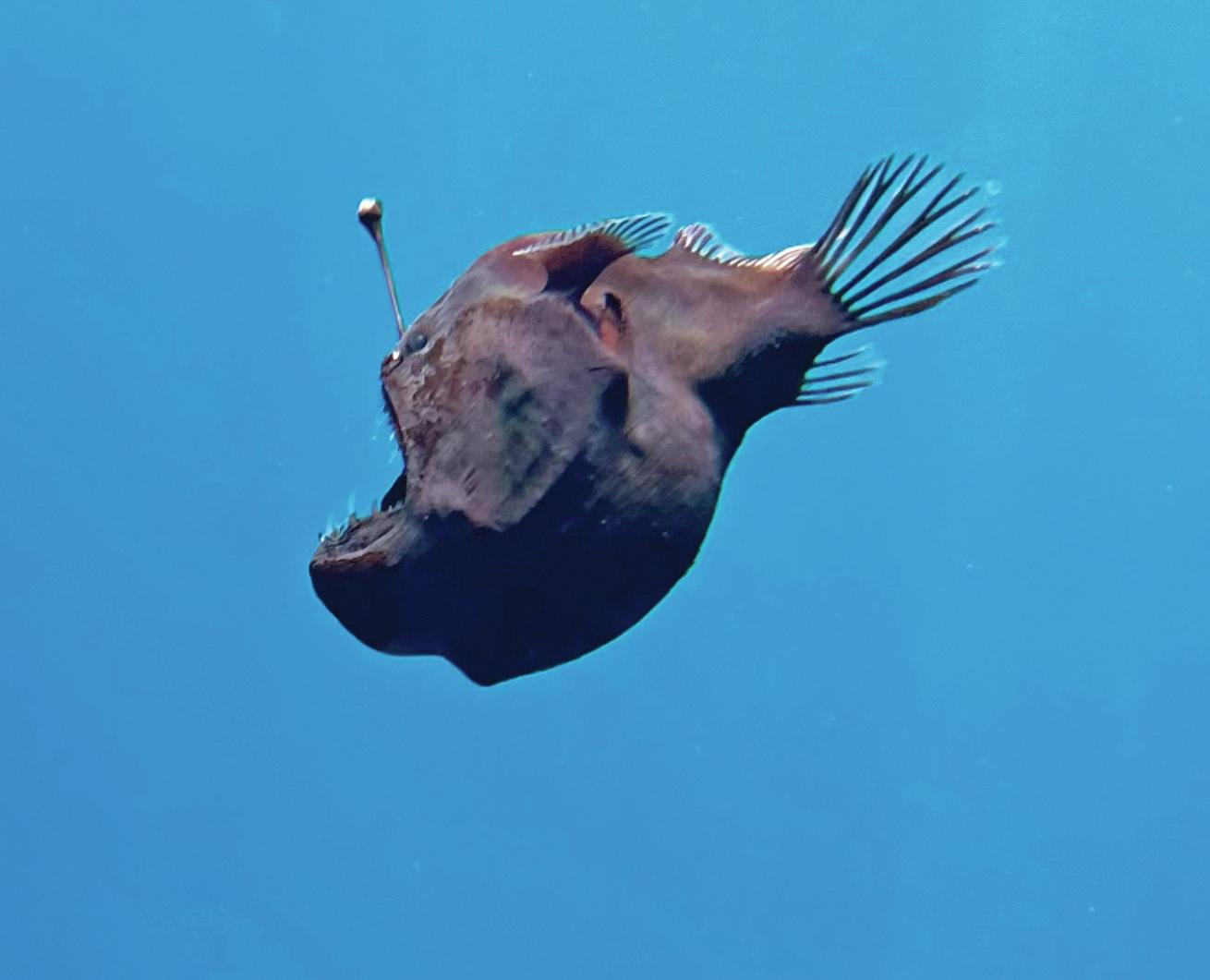
When a deep-sea anglerfish appears near the surface or washes ashore, it represents an extraordinarily rare marine event. These bathypelagic creatures naturally inhabit ocean depths between 600 and 1,000 meters (2,000 to 3,300 feet). Surface occurrences are typically caused by strong ocean currents, upwelling events, severe disorientation, injury, or natural senescent floating, which push these deep-dwelling organisms far beyond their native habitat into upper ocean zones.
The Biology of Deep-Sea Anglerfish: Life in the Bathypelagic Zone
Deep-sea anglerfish belong to the suborder Ceratioidei, a diverse group of ray-finned fishes adapted to survive in the extreme environment of the bathypelagic zone. This ocean layer, extending from roughly 1,000 to 4,000 meters below the surface, is characterized by complete darkness, near-freezing temperatures ranging between 2°C and 4°C, and immense hydrostatic pressure exceeding 100 atmospheres. Understanding how these organisms survive in such hostile conditions explains why their presence at the ocean surface is both biologically abnormal and fatal.
- SURFACE ZONE (Epipelagic): 0m - 200m
- TWILIGHT ZONE (Mesopelagic): 200m - 1,000m
- MIDNIGHT ZONE (Bathypelagic): 1,000m - 4,000m (Anglerfish Native Habitat)
Anatomical Adaptations for the Abyss
Unlike shallow-water fish species, deep-sea anglerfish have evolved structural features specifically tailored for low-energy survival in high-pressure environments:
- Porous, Highly Hydrated Bones: Their skeletons are lightly ossified and rich in water, which minimizes body density and prevents crushing under extreme hydrostatic pressure.
- Flexible Skin and Distensible Stomachs: Their skin lacks standard scales, and their stomach walls can expand dramatically, allowing them to swallow prey larger than themselves in an environment where food encounters are scarce.
- Reduced Muscle Mass: Because swimming long distances is energy-inefficient in the deep ocean, anglerfish possess soft, flabby muscle tissue designed for brief bursts of ambush predation rather than sustained cruising.
Bioluminescence and the Illicium
The most iconic feature of the female deep-sea anglerfish is the illicium—a modified spine originating from the anterior dorsal fin—and the esca, the bulbous glowing organ located at its tip.
The glowing effect within the esca is produced through a symbiotic relationship with bioluminescent bacteria (Photobacterium species). These bacteria inhabit micro-cavities within the esca, receiving nutrients from the fish's vascular system while emitting continuous light. The anglerfish controls the lure's movement and visibility using specialized muscular shafts and dark pigment covers, drawing unsuspecting prey directly toward its formidable teeth.
Extreme Sexual Dimorphism
Deep-sea anglerfish display some of the most extreme sexual dimorphism in the animal kingdom. Females of species such as the Pacific footballfish (Himantolophus sagamius) can grow up to 60 centimeters (2 feet) in length, whereas males rarely exceed 4 to 5 centimeters.
In many ceratioid families, such as Ceratiidae (horned lanternfishes) and Linophrynidae (netdevil anglerfishes), males act as obligate sexual parasites. Lacking functional lures or large teeth, the dwarf males use highly sensitive olfactory organs to track the pheromone trails of females in the pitch-black ocean. Upon locating a mate, the male bites into her abdomen, releasing enzymes that dissolve his mouth tissue and her skin. Their tissues and circulatory systems fuse permanently, allowing the male to receive nutrients directly from the female's bloodstream while providing sperm whenever she spawns.
In other families, such as Himantolophidae (footballfishes), males remain free-swimming dwarf organisms that attach only temporarily during spawning rather than fusing permanently.
Why Deep-Sea Anglerfish Swim to the Surface: Primary Drivers
Under normal physiological conditions, a deep-sea anglerfish will never ascend to shallow waters. When a specimen is spotted swimming near the surface or stranded along a shoreline, marine biologists attribute the phenomenon to a combination of oceanographic dynamics and physiological compromise.
- Deep Ocean Upwelling & Strong Offshore Currents / Disorientation, Injury, or Internal Pathology
- Displacement Beyond Epipelagic Boundary
- Thermal Shock & Rapid Solar Degradation
- Surface Stranding / Beach Washing Event
1. Oceanographic Upwelling and Current Displacement
The primary physical trigger pushing deep-sea fauna upward is localized ocean upwelling. Deep offshore currents striking continental shelves or submarine canyons can generate powerful vertical transport streams. When deep water rises toward the shelf edge, weak-swimming bathypelagic organisms like Himantolophus sagamius can be swept upward into the mesopelagic (200–1,000 meters) and epipelagic (0–200 meters) zones. Once caught in shoreward surface currents, the fish are unable to swim against the flow.
2. Physical Injury, Parasitism, and Pathology
Fishes suffering from internal infections, severe external trauma, or heavy parasitic loads frequently experience loss of equilibrium. Pathological conditions can impair the sensory systems necessary for bathypelagic orientation, causing the animal to drift upward passively.
3. Buoyancy Mechanisms and Senescence
Unlike pelagic fish species that utilize gas-filled swim bladders to control buoyancy, deep-sea anglerfish lack swim bladders entirely. A gas bladder would collapse or expand dangerously under drastic pressure changes. Instead, anglerfish rely on low-density lipids and high tissue-water content to maintain neutral buoyancy.
When an anglerfish reaches the end of its natural lifespan (senescence) or suffers systemic metabolic failure, its lipid balance and fluid regulation breakdown. This loss of density control can cause the animal to float upward into upper water layers.
4. Thermal Shock and Solar Exposure
As a deep-sea anglerfish reaches shallow water, it encounters water temperatures significantly higher than its native 2°C–4°C habitat. This sudden temperature rise induces thermal shock, accelerating metabolic rates beyond sustainable levels and causing severe cardiovascular distress.
Additionally, exposure to ultraviolet solar radiation damages their sensitive, unpigmented eye tissues and unshielded skin, leading to rapid disorientation and death within hours of surface arrival.
Key Differences Between Shallow and Deep-Sea Anglerfish
To clear up common misunderstandings, it is essential to distinguish bathypelagic anglerfish from their shallow-water relatives, such as monkfish (Lophius piscatorius) or frogfish (Antennariidae family), which are frequently encountered by divers in shallow coastal waters.
| Feature / Trait | Deep-Sea Anglerfish (Ceratioidei) | Shallow-Water Anglerfish (Lophiidae / Antennariidae) |
|---|---|---|
| Typical Depth Range | 600 m to >2,000 m (2,000 ft – 6,500+ ft) | 0 m to 200 m (0 ft – 650 ft) |
| Primary Habitat | Open water ocean (bathypelagic) | Sea floor, reefs, sand beds (benthic) |
| Swim Bladder | Absent (uses tissue hydration & lipids) | Present in many species or benthic adapted |
| Bioluminescence | Present via symbiotic Photobacterium in esca | Absent (uses mechanical camouflage lures) |
| Sexual Dimorphism | Extreme (dwarf males, sometimes parasitic) | Moderate to minimal (similar sizes) |
| Body Structure | Soft, gel-like tissues, fragile skeleton | Dense muscle tissue, firm skeletal structure |
| Eyesight | Highly reduced or degenerated in adult females | Well-developed, functional vision |
Historical Documentation of Deep-Sea Anglerfish Wash-Ups
While deep-sea anglerfish specimens have been documented by scientific expeditions since the late 19th century, near-intact beach strandings remain exceptionally rare. Across all global natural history collections, fewer than 40 intact female specimens of Himantolophus sagamius have ever been recovered.
- 1901: First documented specimen discovered in California waters
- May 2021: Intact female specimen found at Crystal Cove State Park, CA
- Oct 2023: Female specimen recovered at Moro Strand State Beach, CA
- May 2024: Intact specimen located along Oregon coastline (Cannon Beach)
Notable Pacific Coast Encounters
- May 2021 (Crystal Cove, California): A pristine, 45-centimeter female Pacific footballfish was discovered on the beach at Crystal Cove State Park in Laguna Beach. The specimen was collected intact and transferred to the Natural History Museum of Los Angeles County, providing scientists with rare tissue samples for genetic sequencing and stomach content analysis.
- October 2023 (Morro Bay, California): A second intact female specimen washed ashore near Moro Strand State Beach. The specimen's luminous lure and teeth were exceptionally well preserved, allowing marine biologists to study the structural morphology of its illicium.
- May 2024 (Cannon Beach, Oregon): An intact female Himantolophus sagamius washed ashore on the northern Oregon coast, marking an unusually northern record for surface displacement along the Pacific coast of North America.
These recurring discoveries along the Pacific Rim are strongly correlated with deep offshore submarine canyons (such as the Monterey Submarine Canyon system) combined with seasonal coastal upwelling events driven by strong northerly winds.
Scientific Value of Recovered Surface Specimens
Every intact deep-sea anglerfish recovered at the surface or on a beach yields invaluable scientific data that cannot be gathered through deep-sea remote ROV (Remotely Operated Vehicle) observations alone.
1. Microbiome Sequencing of the Esca
The symbiotic relationship between the anglerfish and its luminous bacteria remains one of the central mysteries of marine microbiology. Scientists extract bacterial DNA from the esca of freshly recovered specimens to analyze the genomic strain of Photobacterium. Interestingly, research indicates that the bioluminescent bacteria living inside the esca cannot live independently in free seawater, raising fundamental questions about how young female anglerfish acquire their bacterial colonies in the deep ocean.
2. Stomach Content and Trophic Level Analysis
By opening the distended stomachs of preserved specimens, ichthyologists can identify the prey species living in the bathypelagic zone. Intact specimens have yielded deep-sea squids, bristlemouths (Gonostomatidae), and crustaceans, providing direct empirical evidence of midwater food webs.
3. Morphological and Genetic Cataloging
Because deep-sea trawling nets often damage delicate bathypelagic organisms, beach-washed specimens that are found quickly provide undamaged morphological structures. High-resolution CT scans of these specimens allow researchers to map internal skeletal structures, nerve pathways, and muscular attachments without destructive dissection.
- Field Discovery
- Cold Storage & Transport
- Natural History Collection
- Microbiome: Esca bacteria
- CT Scanning: Skeletal map
- Trophic Analysis: Stomach contents
What to Do If You Find a Deep-Sea Specimen: A Step-by-Step Guide
If you discover an unusual deep-sea fish, such as an anglerfish, washed ashore on a public beach, taking the correct steps ensures the specimen can be preserved for scientific research.
Step 1: Document the Discovery Immediately
- Take clear, high-resolution photographs from multiple angles, including close-ups of the head, lure (esca), teeth, and tail.
- Place a standard object (such as a coin, shoe, or water bottle) next to the fish to serve as a scale reference.
- Record precise GPS coordinates using your smartphone's location services.
Step 2: Do Not Damage or Alter the Specimen
- Deep-sea fish tissues are extremely delicate and tear easily. Avoid picking up the specimen by the tail or lure.
- Keep the specimen moist with ocean water if it is exposed to direct sunlight and dry air.
- Do not attempt to clean, dissect, or remove any physical structures.
Step 3: Contact Marine Authorities
Notify local wildlife agencies immediately to coordinate proper retrieval and transport.
- California: Contact the California Department of Fish and Wildlife (CDFW) or the Natural History Museum of Los Angeles County (Ichthyology Department).
- Pacific Northwest: Contact the National Oceanic and Atmospheric Administration (NOAA Fisheries) West Coast Regional Office or local state park rangers.
- East Coast / Atlantic: Contact local marine stranding networks or the Smithsonian Institution National Museum of Natural History.
Frequently Asked Questions
Can a deep-sea anglerfish survive if returned to deep water?
No. Once a deep-sea anglerfish reaches shallow water or the surface, it suffers irreversible physiological damage. The combination of thermal shock from warmer surface temperatures, light exposure, and structural degradation of soft tissues prevents recovery, even if returned to depth.
Do male anglerfish have glowing lures?
No. Only female deep-sea anglerfish possess an illicium and luminous esca. Males lack the modified dorsal spine and rely on highly developed olfactory organs (smell) and large eyes to locate glowing females in the dark.
Are deep-sea anglerfish dangerous to humans?
No. Deep-sea anglerfish pose no threat to humans. They reside thousands of feet below the ocean surface and cannot survive in shallow waters where humans swim. Even large females reaching 60 centimeters in length are slow-moving ambush predators adapted exclusively for deep-ocean prey.
How rare is it to find a deep-sea anglerfish on a beach?
It is extremely rare. Worldwide, fewer than 50 intact specimens of bathypelagic anglerfish species have been recovered from beach strandings over the past century. Most surface encounters occur near deep submarine canyons along major coastal upwelling zones.
Why don't deep-sea anglerfish explode from low pressure near the surface?
Unlike fish with gas-filled swim bladders—which expand violently when brought up rapidly from depth—anglerfish lack gas bladders entirely. Their bodies consist largely of water-dense tissues and flexible cartilage, so while pressure changes cause metabolic stress, they do not suffer explosive physical expansion.
Recommendation for Coastal Observers and Marine Enthusiasts
If you encounter an anglerfish or other rare bathypelagic species stranded on a beach, do not collect the specimen for personal keeping. Most deep-sea organisms wash ashore in protected state parks or federal waters where taking wildlife is restricted by law. Promptly reporting the specimen to regional natural history museums or marine conservation authorities ensures that these rare ocean occurrences contribute directly to global marine science and biodiversity research.