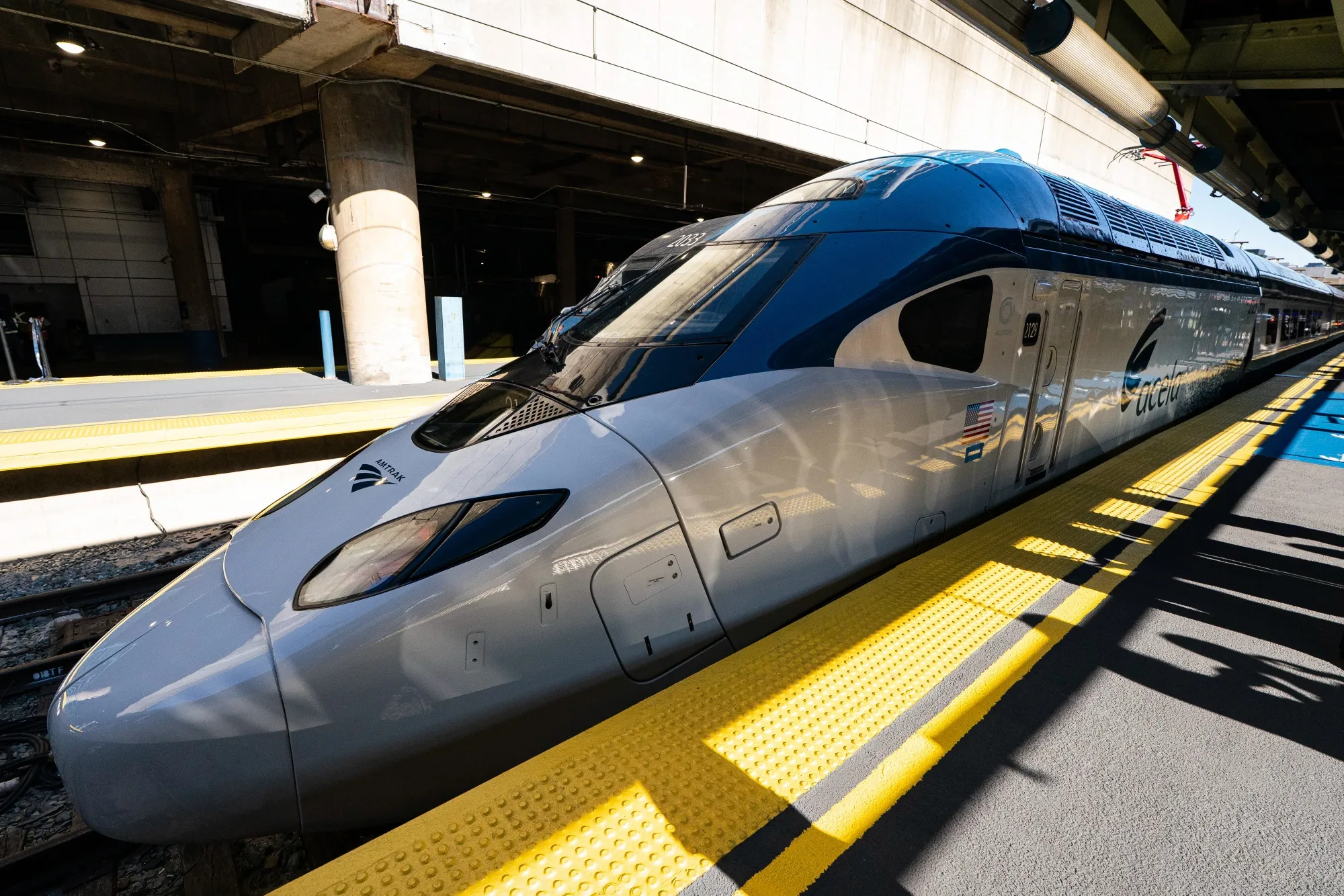
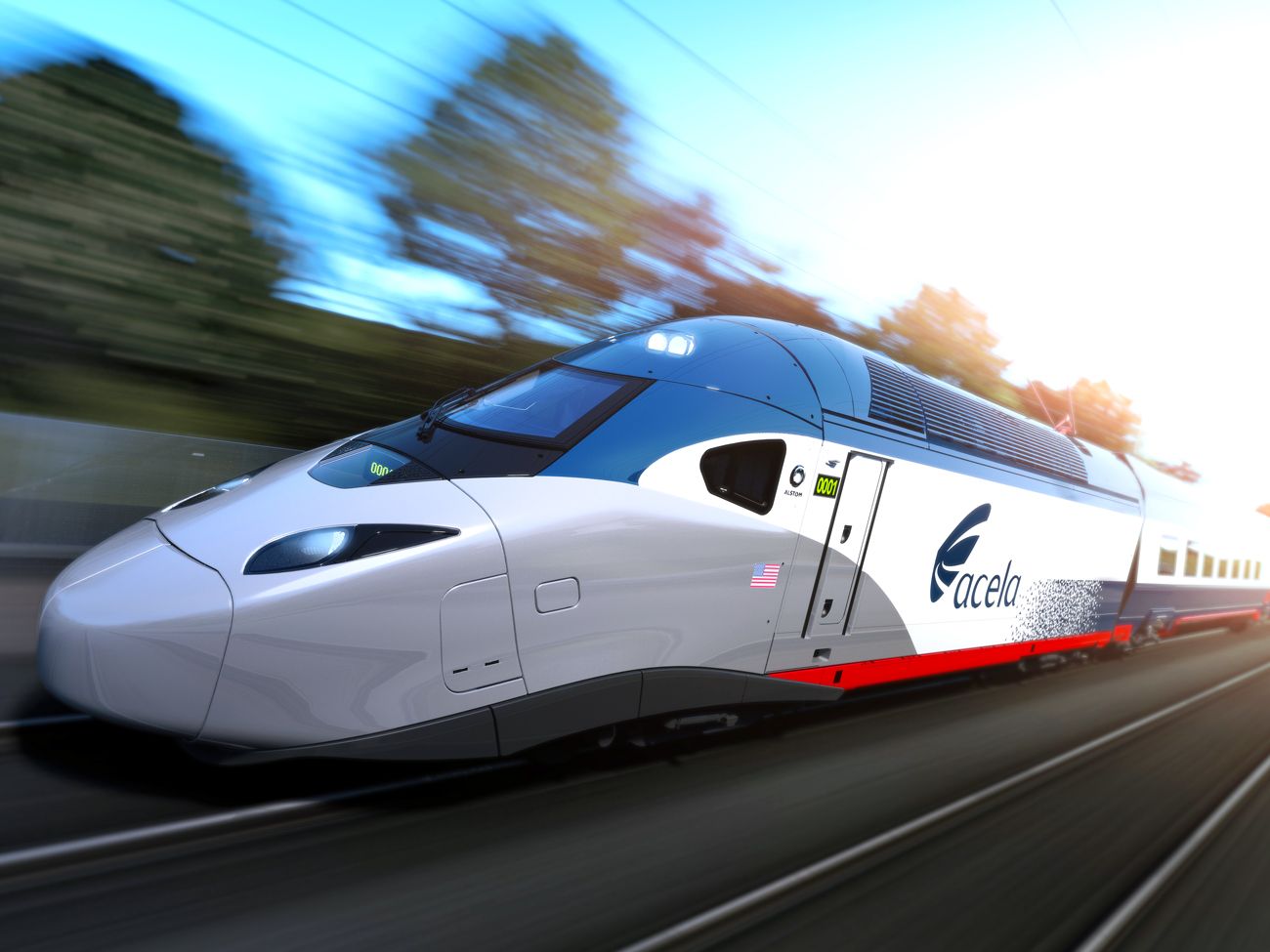
The Amtrak Acela is engineered for a maximum design speed of 165 mph, though its current operational top speed is capped at 150 mph. These high-speed capabilities are achievable only on specific, upgraded segments of the Northeast Corridor (NEC) between Boston and Washington, D.C., and are strictly governed by track conditions, electrification limits, and signaling technology.
Evolution of High-Speed Rail in the Northeast Corridor
To understand the Acela’s speed, one must first understand the environment in which it operates. The Northeast Corridor remains one of the most complex pieces of rail infrastructure in the world. Owned in large part by Amtrak, it serves as a shared artery for high-speed Acela trains, regional passenger services, and various commuter agencies like NJ Transit and MBTA.
The original Acela fleet, introduced in 2000, was designed to modernize American rail. However, the constraints of the existing 19th and early 20th-century track geometry—which includes tight curves, aging bridges, and dense urban tunnels—meant that the trains could rarely utilize their full power. Throughout the 2010s and early 2020s, the focus shifted toward "Avelia Liberty" trainsets, the next-generation Acela fleet designed to offer higher performance and greater passenger capacity. As of 2026, the integration of these trainsets continues to define the speed experience for travelers between the major hubs of the Northeast.
The Technical Reality: Design Speed vs. Operational Speed
There is often a significant discrepancy between what a train is physically capable of doing and what it is allowed to do. The Acela represents a compromise between cutting-edge speed and the reality of shared infrastructure.
The 165 MPH Limit
The Avelia Liberty trainsets have a maximum structural design speed of 165 mph. This speed is the peak velocity at which the train’s propulsion, braking systems, and active tilting mechanisms have been tested and certified for safety. Reaching this speed is a mechanical feat, requiring massive amounts of overhead catenary power and precision track maintenance.
The 150 MPH Reality
Despite the 165 mph design limit, the Acela is authorized for a maximum operational speed of 150 mph. This limit is reached only on limited, specifically engineered stretches of the NEC. The most prominent of these are located in Rhode Island and Massachusetts, where the track has been straightened and upgraded to support high-velocity transit.
In most other sections, the train rarely exceeds 125 mph, and in highly congested or urban segments—such as the approach to New York City’s Penn Station or the tunnels under the Hudson and East Rivers—speeds drop significantly to comply with safety regulations and physical curve constraints.
Why Speed Is Limited on the Northeast Corridor
Several factors prevent the Acela from running at its theoretical top speed across the entire 457-mile route. Understanding these constraints explains why the travel time between New York and Washington, D.C., remains relatively static compared to high-speed rail systems in Europe or Asia.
1. Infrastructure and Curve Geometry
The NEC was built long before the concept of high-speed rail. Many tracks follow routes established in the 1800s, featuring sharp curves that would cause significant discomfort and potential derailment risk if taken at high speeds. While the Acela uses a "tilting" mechanism to allow passengers to remain comfortable while cornering, physics imposes a hard limit on how fast a train can negotiate these turns.
2. Shared Track Usage
Unlike the Shinkansen in Japan or the TGV in France, which often run on dedicated high-speed tracks, the Acela shares its path with slower commuter and freight trains. The density of traffic on the NEC creates a "traffic jam" effect. High-speed trains must frequently slow down to accommodate the slower movement of regional trains ahead of them, making sustained high-speed travel nearly impossible during peak hours.
3. Signaling and Power Infrastructure
High-speed rail requires advanced signaling systems that allow engineers to see further ahead, providing enough stopping distance for a train moving at 150 mph. Furthermore, the overhead catenary system must provide a constant, reliable flow of electricity. Sections of the NEC that have not yet been upgraded cannot deliver the necessary power or provide the signal precision required for 150-mph operations.
Comparison of Rail Performance Standards
To provide context for the Acela’s performance, the following table compares its capabilities against other domestic and international benchmarks. Note that these figures represent the maximum authorized speed under optimal conditions for those specific services.
| Rail Service | Country | Max Operational Speed (MPH) | Infrastructure Type |
|---|---|---|---|
| Amtrak Acela | USA | 150 | Shared/Upgraded |
| Amtrak Regional | USA | 125 | Shared |
| Brightline | USA | 125 | Dedicated/Shared |
| TGV (InOui) | France | 200 | Dedicated |
| Shinkansen | Japan | 200 | Dedicated |
The Impact of Modernization: The Avelia Liberty Era
As of 2026, the transition to the Avelia Liberty trainsets is the primary driver of the Acela experience. These trains are designed to be more energy-efficient and offer a smoother ride at higher speeds than their predecessors.
The primary benefit of these new trainsets is not just a higher top speed, but "acceleration and braking efficiency." By being able to reach 150 mph faster and decelerate more safely, the train can maximize the duration spent at higher speeds between the various speed-restricted zones. This contributes to the overall reliability of the schedule, even if the "top speed" remains capped by the physical track limits.
Operational Constraints and Passenger Experience
For the average passenger, the Acela’s top speed is less important than the "average speed" of the journey. Because of the frequent slowdowns, the time savings of reaching 150 mph for a five-mile stretch are often negligible when followed by a 45 mph crawl through a congested station approach.
Frequency of Speed Changes
If you are tracking the speed of your Acela train using a GPS device or a transit app, you will notice frequent fluctuations. The train is designed for rapid acceleration, which is useful when exiting speed-restricted zones, but these changes are also a byproduct of the signal blocks it must navigate.
The Role of Tilting Technology
The Acela’s ability to "tilt" is the secret to its success on the curvy NEC. By tilting the train body toward the inside of a curve, the Acela reduces the lateral forces felt by passengers. This allows the train to maintain higher speeds through curves than conventional rolling stock could, effectively making the "top speed" more relevant in areas where other trains would be forced to slow down significantly.
Frequently Asked Questions (FAQ)
Is 150 mph the fastest speed for all Amtrak trains?
No. While the Acela is the fastest service in the Amtrak portfolio, most other Amtrak trains, including the Northeast Regional, are limited to a maximum speed of 125 mph on the NEC and often much lower on other routes across the United States.
Can the Acela ever reach 165 mph?
Technically, the equipment is designed for 165 mph. However, reaching this speed would require extensive investment in track infrastructure to allow for higher centrifugal force, upgraded signaling, and potentially the removal of grade crossings or other obstructions that pose safety risks at such velocities. As of 2026, there are no immediate plans for widespread 165-mph operations.
Why does the Acela seem to slow down in tunnels?
Tunnels, particularly the older ones under the Hudson River, have strict clearance and safety limits. High-speed movement through narrow, pressurized tunnels creates aerodynamic challenges and safety concerns, necessitating lower speeds regardless of the power the locomotive can provide.
Does the Acela speed up during the night?
Generally, no. The speed of the train is determined by fixed infrastructure, signaling, and safety regulations, not by the time of day. While night travel may be less crowded, the track geometry and signal blocks remain constant, meaning the top speed profile remains largely the same.
How does the Acela compare to the Brightline service?
Brightline, a private operator in Florida, operates at a maximum of 125 mph. While this is lower than the Acela’s 150 mph, Brightline operates on different infrastructure and service models. Comparing the two is difficult because the NEC’s age and density present unique challenges not found on the newer, flatter corridors in Florida.
Recommendation for Travelers
If you are choosing between the Acela and other rail options primarily for speed, it is important to manage expectations. The Acela is significantly faster than regional rail options between Washington and New York, primarily due to fewer stops and better acceleration. However, because the top speed is geographically limited, the largest time savings are found on the northern end of the route between New York and Boston, where the track infrastructure allows for longer durations of high-speed travel.
For the best experience, prioritize the Acela for trips that span these high-speed segments, and always check the real-time status of your specific train on the Amtrak website or app to see if maintenance or infrastructure issues are expected to affect performance on your travel day.