The Alger Mid Cap Growth strategy is an actively managed equity portfolio focused on mid-sized U.S. companies undergoing positive dynamic change. Managed by Fred Alger Management, the strategy targets businesses experiencing rapid earnings acceleration, product innovation, or market transformation, aiming to outperform the Russell Midcap Growth Index through high-conviction, fundamental stock selection.
Strategy Philosophy: The Engine of Positive Dynamic Change
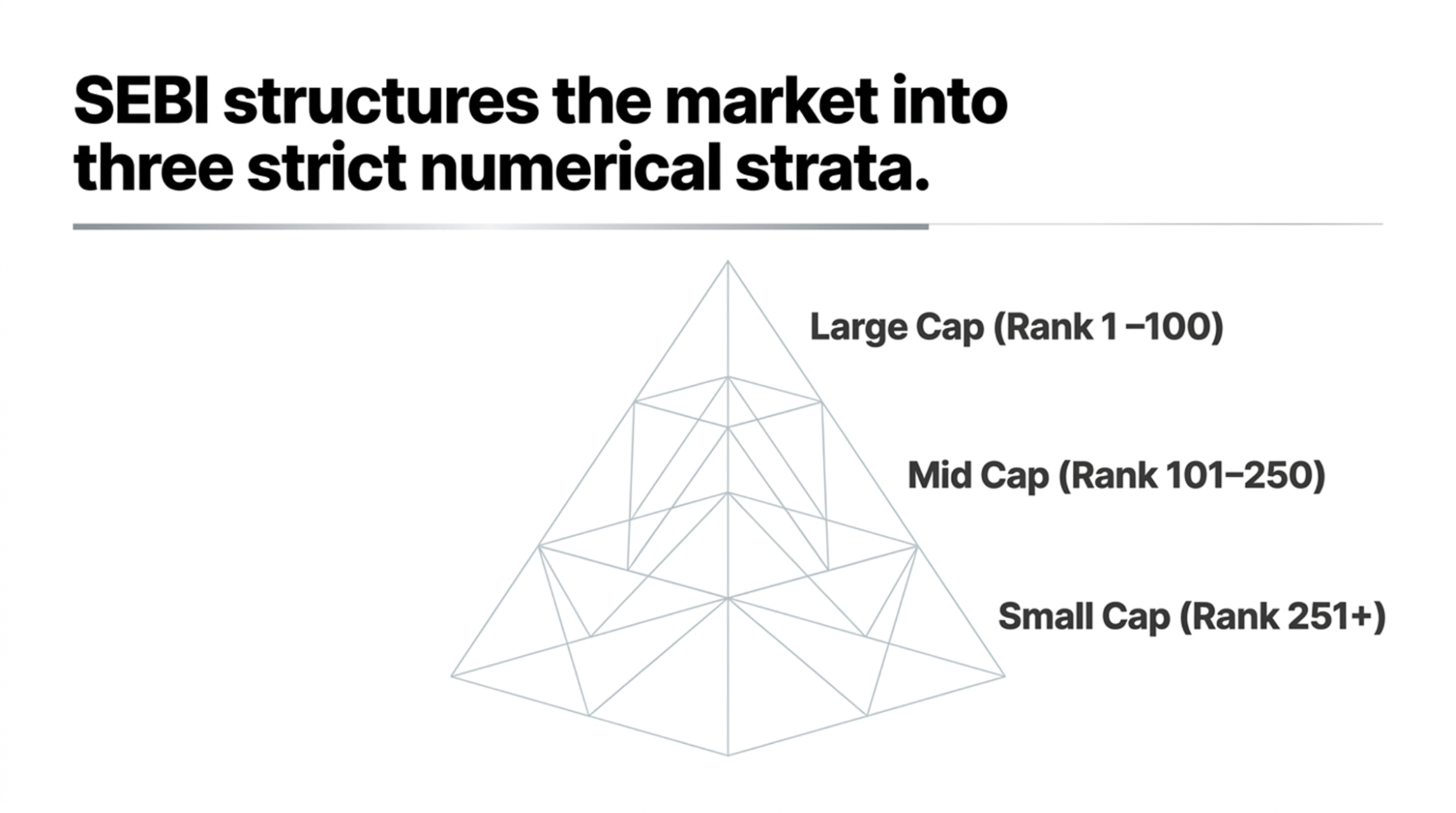
Mid-capitalization equities occupy a distinct position in portfolio construction. Often described as the "sweet spot" of the equity market, mid-caps typically offer more established business models, broader access to capital, and lower default risk than micro- or small-cap companies. At the same time, they frequently preserve substantially higher revenue and earnings growth rates than mature, large-cap corporations.
Within this asset class, Fred Alger Management has operated the Alger Mid Cap Growth strategy under a consistent investment framework founded on identifying what the firm classifies as Positive Dynamic Change.
- Positive Dynamic Change
- High Unit Volume Growth
- Market share expansion
- Secular demand tailwinds
- Scalable economics
- Lifecycle Change Catalysts
- Turnarounds/re-orgs
- Regulatory catalysts
- New executive leadership
- High Unit Volume Growth
The investment philosophy divides growth opportunities into two primary categories:
1. High Unit Volume Growth Companies
These are companies experiencing rapid, organic expansion in demand for their products or services. Rather than driving top-line growth primarily through debt-fueled acquisitions or opportunistic price hikes, these businesses expand market share within growing addressable markets. Characteristics include:
- Favorable secular industry tailwinds (such as cloud enterprise software, medical device automation, or clean energy infrastructure).
- Superior unit economics that allow operating margins to expand as revenues scale.
- Sustainable competitive advantages, such as proprietary technology, strong brand loyalty, network effects, or regulatory patents.
2. Lifecycle Change Companies
Lifecycle opportunities involve businesses experiencing an inflection point that traditional backward-looking financial screens frequently miss. These situations typically stem from:
- New management teams executing corporate turnarounds or operational restructuring.
- Spin-offs, strategic divestitures, or accretive capital redeployment.
- Regulatory, legal, or macroeconomic catalysts that open previously inaccessible markets or remove structural headwinds.
By combining secular growth leaders with tactical lifecycle change candidates, the investment team seeks to capture upside participation during expansionary markets while identifying idiosyncratic, stock-specific catalysts that operate independently of the broader macroeconomic cycle.
Portfolio Construction and Investment Process
The Alger Mid Cap Growth strategy relies on an intensive, bottom-up fundamental research process executed by Alger’s in-house team of research analysts and portfolio managers. The portfolio does not aim to mimic benchmark weights; it is an active, concentrated growth strategy characterized by distinct sector tilts and deliberate divergence from the benchmark.
Screening and Universe Definition
The addressable investment universe primarily comprises domestic operating companies with market capitalizations within the range of the Russell Midcap Index or the S&P MidCap 400 Index at the time of purchase. While the focus remains anchored in U.S. equities, the strategy may hold foreign issuers, including American Depositary Receipts (ADRs), when specific international opportunities fit the analytical criteria.
Analysts screen thousands of mid-cap issuers, evaluating metrics such as:
- Historical and projected revenue growth exceeding industry averages.
- Return on invested capital (ROIC) relative to weighted average cost of capital (WACC).
- Free cash flow conversion rates and balance sheet leverage ratios.
- Reinvestment rates and research and development (R&D) efficiency.
In-Depth Fundamental Underwriting
Once an issuer passes quantitative screening, the research team conducts deep-dive fundamental work. This stage includes building proprietary multi-year financial models, assessing total addressable market (TAM) assumptions, conducting channel checks with suppliers, customers, and industry competitors, and meeting directly with executive management teams.
The analytical goal is to evaluate whether market consensus estimates for earnings per share (EPS) and free cash flow underestimate the company’s true earnings power over an intermediate horizon (typically two to five years).
Position Sizing and Sell Discipline
The strategy typically maintains a focused portfolio of approximately 50 to 80 holdings. Position weightings are determined by conviction, risk-reward skew, market liquidity, and portfolio-level risk parameters rather than benchmark representation.
The portfolio management team enforces a structured sell discipline, trimming or fully exiting positions under three distinct circumstances:
- Thesis Violation: Fundamental deterioration in unit growth, margin contraction, or failure of a lifecycle catalyst to materialize.
- Valuation Extremes: Multiples expand to levels where future growth is fully priced in, skewing the risk-reward ratio negatively.
- Capital Reallocation: Identification of a superior risk-adjusted opportunity within the same sector or thematic sleeve.
- Market-Cap Graduation: If a holding experiences massive growth and migrates firmly into mega-cap territory, the team evaluates whether to harvest gains and reallocate capital back into the core mid-cap market-capitalization band.
Share Classes, Tickers, and Structural Options
The strategy is accessible primarily through mutual fund structures managed by Fred Alger Management, as well as institutional separately managed accounts (SMAs) and sub-advised vehicles. For retail and institutional investors utilizing open-end mutual funds, several share classes exist, each tailored to different distribution channels, minimum investments, and fee arrangements.
The primary share classes for the Alger Mid Cap Growth Fund include:
- Class A (AMCGX): Designed primarily for commission-based retail brokerage accounts. It carries a front-end sales charge (load) that scales down with larger investment amounts, alongside an ongoing 12b-1 distribution fee.
- Class C (AMCCX): Tailored for investors seeking a level-load structure. While it generally waives the initial front-end sales charge, it carries a higher ongoing 12b-1 distribution and service fee, as well as a contingent deferred sales charge (CDSC) if liquidated within the first year.
- Class I / Institutional (ALMRX): Designed for institutional clients, registered investment advisors (RIAs), family offices, and fee-only fiduciary advisory platforms. It features no front-end sales loads, no CDSC, no 12b-1 distribution fees, and a substantially lower net expense ratio, typically requiring a higher initial minimum investment.
- Class Z (AMZIX): Frequently utilized in defined contribution retirement plans (such as 401(k) and 403(b) platforms) and institutional mandates. It offers an institutional cost structure without distribution fees.
The table below summarizes the key attributes, operational specifications, and cost structures across these mutual fund share classes.
| Share Class | Ticker | Primary Channel | Front-End Load (Max) | 12b-1 Distribution Fee | Net Expense Ratio Range (Approx.) | Minimum Initial Investment (Standard) |
|---|---|---|---|---|---|---|
| Class A | AMCGX | Retail Commission Accounts | Up to 5.25% | 0.25% | 1.15% – 1.30% | $1,000 |
| Class C | AMCCX | Level-Load Brokerage | None (1.00% 1-yr CDSC) | 1.00% | 1.90% – 2.05% | $1,000 |
| Class I | ALMRX | Fee-Based / Advisory / Institutional | None | None | 0.80% – 0.95% | $250,000 (often waived on platforms) |
| Class Z | AMZIX | Retirement Plans / Institutional | None | None | 0.80% – 0.92% | $500,000 (often waived in 401ks) |
Note: Expense ratios fluctuate based on operational expenses and asset base. Investors should always consult the most recent fund prospectus for audited fee schedules and fee waiver agreements.
Sector Composition and Differentiating Exposures
Active growth strategies diverge significantly from broad market indices, and the Alger Mid Cap Growth portfolio is no exception. Historically and structurally, the strategy leans into sectors exhibiting high research and development intensity, strong pricing power, and secular innovation.
Representative Sector Concentration:
| Sector | Historical Portfolio Bias |
|---|---|
| Information Technology | Heavy Overweight |
| Health Care | Moderate to Overweight |
| Consumer Discretionary | Selective Growth / Overweight |
| Industrials | Thematic / Capital Goods |
| Financials | Underweight (Fintech focus) |
| Energy / Utilities / Real Est. | Heavy Underweight |
Information Technology and Software
A primary pillar of the portfolio is enterprise software, cybersecurity, digital infrastructure, and semiconductor equipment. Mid-cap technology firms frequently provide high-margin subscription models (SaaS), yielding high revenue visibility and customer retention rates. The investment team looks for mid-sized software providers that dominate critical workflow niches, making them less susceptible to customer attrition during corporate IT budget constraints.
Health Care and Medical Technology
The strategy typically emphasizes medical technology (MedTech), diagnostics, life sciences tools, and clinical-stage biotechnology companies with late-phase commercial assets. Mid-cap healthcare companies often possess disruptive therapeutic approaches or robotic surgery tools that outpace the sluggish growth rates of diversified, mega-cap pharmaceutical conglomerates.
Consumer Discretionary and Digital Commerce
Within consumer spaces, the fund focuses on omni-channel retail innovators, specialized consumer brands with global licensing power, and digital platform services. The team looks for companies with high customer lifetime value (LTV) relative to customer acquisition cost (CAC), alongside robust direct-to-consumer distribution models.
Underweighted Sectors
Conversely, the fund maintains structural underweights—or entirely avoids—sectors characterized by commodity price dependency, regulatory capital constraints, and low return on equity. Consequently, sectors such as Energy, Utilities, Real Estate Investment Trusts (REITs), and traditional Financials (such as regional banks or multi-line insurers) rarely represent substantial weights in the portfolio.
Risk, Volatility, and Performance Characteristics
Evaluating an active mid-cap growth strategy requires an understanding of its performance behavior across varying market environments. The Alger Mid Cap Growth strategy is engineered for capital appreciation, which introduces specific performance trade-offs relative to core market indices.
Upside and Downside Capture
Historically, high-conviction growth strategies such as Alger’s demonstrate an asymmetrical performance profile:
- Bull Markets and Risk-On Regimes: When monetary conditions are accommodative, interest rates are stable or falling, and corporate earnings accelerate, the strategy has demonstrated strong upside participation, frequently outperforming both broad mid-cap blends and the Russell Midcap Growth Index.
- Bear Markets and Valuation Compressions: During periods of sharp interest rate increases, quantitative tightening, or broad market de-risking, high-multiple growth equities tend to experience sharp valuation drawdowns. Because the strategy focuses on dynamic growth rather than deep value or dividend yield, its downside capture ratio during sudden market contractions can exceed 100%.
Standard Deviation and Beta
The portfolio routinely registers a higher standard deviation (a standard measure of investment volatility) and a beta greater than 1.0 relative to broad benchmarks like the S&P 500. Investors must anticipate larger interim portfolio swings in exchange for long-term equity compounding.
Tracking Error and Active Share
A defining feature of the strategy is its high Active Share—the percentage of fund holdings that differ from the benchmark index. While a low active share indicates an index-hugging fund that struggles to justify active management fees, Alger’s high active share means its performance will regularly experience meaningful tracking error relative to the Russell Midcap Growth Index. The fund's returns are driven primarily by stock selection and thematic allocation rather than broad macro beta.
Important Risks and Limitations
An investment in the Alger Mid Cap Growth strategy involves material risks that must be weighed carefully against an individual's financial goals and risk tolerance:
- Equity Market Volatility: Share prices fluctuate daily based on macroeconomic data, corporate earnings updates, geopolitical events, and shifts in investor sentiment.
- Mid-Cap Liquidity and Volatility Risk: Mid-sized companies generally trade with lower average daily trading volumes than mega-cap stocks. In periods of broad market distress, selling mid-cap shares without impacting prevailing market prices can be challenging. Furthermore, mid-cap companies may possess less diversified revenue streams and more limited financial resources to weather sustained economic downturns.
- Growth Multiple Compression: Companies in this strategy often trade at valuations well above their tangible book value or immediate earnings, reflecting high expectations for future cash flows. If a company fails to meet elevated earnings or revenue expectations, its valuation multiple can contract severely and rapidly.
- Sector Concentration Risk: By maintaining elevated weightings in Information Technology, Health Care, and Consumer Discretionary, the strategy is exposed to risks unique to those sectors, such as rapid technological obsolescence, intellectual property litigation, changes in FDA approvals, and shifting consumer trends.
- Active Management Risk: The performance of the portfolio is dependent upon the analytical precision and stock selection capabilities of Fred Alger Management’s portfolio team. There is no assurance that the team’s research will correctly forecast corporate earnings or identify companies poised for positive dynamic change.
Professional Advice Disclaimer: This overview is provided solely for educational and informational purposes and does not constitute financial, investment, legal, or tax advice. Prospective investors should consult a certified financial planner, registered investment advisor, or tax professional to assess suitability within their personal financial situation before allocating capital.
Portfolio Fit: How to Implement the Strategy
For asset allocators and individual investors, the Alger Mid Cap Growth strategy serves specific functional roles within a well-diversified equity sleeve.
Diversified Equity Portfolio Allocation Model:
- Core Large-Cap / Global Equities (50% - 70%)
- (Broad market exposure, dividend payers, mega-caps)
- Mid-Cap Growth Sleeve (10% - 20%)
- [ Alger Mid Cap Growth Fund / Strategy ]
- High-conviction growth engine
- Intermediate market-cap upside
- Value / Real Assets / Small-Cap Sleeve (10% - 20%)
- (Small-cap equities, value plays, commodities, REITs)
1. The Growth Capital Appreciation Sleeve
In a standard core-satellite asset allocation model, low-cost broad index funds (such as S&P 500 or total world stock index trackers) often form the core. An actively managed strategy like Alger Mid Cap Growth can serve as a focused satellite allocation (typically 5% to 15% of total equity exposure), designed to generate alpha through superior stock selection in a less efficiently covered segment of the market.
2. Diversifying Away from Large-Cap Concentration
During periods when mega-cap tech conglomerates dominate broad market indices like the S&P 500, holding specialized mid-cap strategies prevents an investment portfolio from becoming excessively concentrated in a handful of multi-trillion-dollar corporations. Mid-caps expose investors to the next generation of potential large-cap leaders during their prime expansion phases.
3. Pairing with Mid-Cap Value
Because the Alger strategy is purely growth-focused, investors seeking a balanced mid-cap allocation often pair it with a dedicated mid-cap value fund. Blending Alger Mid Cap Growth with a low-multiple, cash-generative mid-cap value manager helps dampen volatility while providing exposure to the entire mid-cap corporate spectrum.
Frequently Asked Questions
What is the primary benchmark for the Alger Mid Cap Growth Fund?
The fund’s primary benchmark is the Russell Midcap Growth Index.
The Russell Midcap Growth Index measures the performance of the mid-cap growth segment of the U.S. equity universe, tracking Russell Midcap Index companies with higher price-to-book ratios and higher forecasted growth values. The fund measures its risk-adjusted returns, tracking error, and alpha generation against this index over three-, five-, and ten-year rolling periods.
What is the concept of "Positive Dynamic Change" used by Alger?
"Positive Dynamic Change" is Alger’s proprietary investment framework focusing on companies undergoing structural catalysts that accelerate corporate earnings power.
This strategy separates companies into two categories: high unit volume growth (businesses gaining significant market share within expanding secular industries) and lifecycle change (companies undergoing turnarounds, management changes, divestitures, or regulatory breakthroughs). The framework prioritizes fundamental corporate inflection points rather than static historical metrics.
How does the Alger Mid Cap Growth Fund differ from an index fund?
The fund is actively managed and maintains a concentrated portfolio with high Active Share, whereas an index fund passively tracks a broad basket of mid-cap stocks.
Passive index funds, such as those tracking the S&P MidCap 400 or Russell Midcap, hold hundreds of companies weighted by market capitalization regardless of business quality or growth momentum. Alger’s team utilizes proprietary research to hold between 50 and 80 carefully vetted companies, deliberately overweighting high-conviction growth sectors and avoiding stagnant industries.
Which share class of Alger Mid Cap Growth is best for individual investors?
The best share class depends strictly on the investor's distribution channel, investment platform, and account type.
For fee-based advisory accounts, institutional platforms, and many workplace retirement plans, Class I (ALMRX) or Class Z (AMZIX) is generally preferred because these classes do not assess front-end loads or 12b-1 distribution fees, resulting in lower net annual expenses. For traditional commission-based brokerage accounts, investors may encounter Class A (AMCGX), which carries an initial sales charge that can often be discounted or eliminated through breakpoint thresholds.
What is the typical portfolio turnover rate of this strategy?
The strategy generally features a moderate-to-high turnover rate, frequently ranging from 50% to over 100% annually depending on market conditions.
Turnover is driven by Alger’s active rebalancing framework, rigorous sell discipline, and the dynamic nature of mid-cap growth equities. As companies outgrow the mid-cap mandate, reach full intrinsic valuation, or experience fundamental thesis breaches, the portfolio managers reallocate capital into emerging opportunities. Investors holding the fund in taxable accounts should consider the potential for annual capital gains distributions resulting from this trading activity.
Strategic Takeaway and Next Actions
The Alger Mid Cap Growth strategy remains a prominent, high-conviction option for investors seeking aggressive capital appreciation within the U.S. mid-cap equity space. Its disciplined reliance on fundamental underwriting and the "Positive Dynamic Change" framework equips it to capture meaningful upside in innovation-led market cycles, balanced by the reality of higher short-term volatility and cyclical valuation drawdowns.
Next Steps for Investors
- Review Portfolio Factor Overlaps: Check existing holdings across large-cap and small-cap allocations to ensure adding a mid-cap growth vehicle does not result in unintended sector overconcentration in enterprise software or medical technology.
- Verify Account Fee Structures: If purchasing through a financial advisor or custodial platform, ensure you are directed to the lowest-cost share class available (such as Class I/ALMRX) to minimize the drag of operational fees and sales loads.
- Determine Tax Placement: Because active mid-cap strategies with moderate turnover can generate short- and long-term capital gain distributions, evaluate whether holding the fund inside a tax-advantaged account (such as an IRA or 401(k)) is preferable to a taxable brokerage account.
- Inspect the Latest Prospectus: Examine Fred Alger Management’s most recent SEC filings, fund prospectus, and semi-annual reports to confirm current top-ten holdings, expense ratios, and portfolio manager commentary.