Protecting a home or business in New York requires a strategic approach that balances advanced technology with strict compliance with state and municipal regulations. Whether you are navigating the high-density environment of New York City or the suburban landscapes of Westchester and Long Island, a modern alarm system serves as the primary defense against intrusion, fire, and environmental hazards. In 2026, the most effective systems integrate artificial intelligence, cellular resilience, and verified professional monitoring to ensure rapid emergency response and minimize the financial burden of false alarm fines.
Understanding the New York Security Landscape
New York presents unique challenges for property security. In the five boroughs of New York City, high-density living, "pre-war" building construction, and specific noise ordinances dictate the type of hardware and monitoring required. Conversely, in Upstate New York or on the North Shore, larger property perimeters and different response times for local law enforcement necessitate a greater focus on outdoor perimeter sensing and environmental monitoring.
As of 2026, the security market has shifted away from traditional landline-dependent systems. The ongoing decommissioning of copper-based telephone infrastructure across the state means that any reliable New York alarm system must now utilize dedicated cellular LTE or 5G paths. Furthermore, New York’s climate—ranging from coastal flooding risks in Queens to extreme freeze cycles in Buffalo—requires that modern "alarm systems" expand beyond burglary to include comprehensive environmental protection.
Legal Requirements and Permits in New York City
If you are installing an alarm system within New York City (Manhattan, Brooklyn, Queens, the Bronx, or Staten Island), you are subject to the rules of the New York City Police Department (NYPD) and the Fire Department of the City of New York (FDNY). Failure to comply with these regulations can result in a lack of emergency response or significant administrative fines.
NYPD Alarm Permits (Notice of Alarm)
The NYPD requires all owners of monitored burglary alarm systems to have a valid permit, often referred to as a "Notice of Alarm." This registration allows the police department to maintain a record of the property, the primary occupants, and the emergency contact details for the alarm company.
In 2026, most registrations are handled through the NYC digital services portal. A key component of this regulation is the "False Alarm Act." The city implements a tiered fine structure for false alarms. Usually, the first one or two false alarms in a calendar year result in a warning, but subsequent incidents incur escalating fees. Professional monitoring centers in New York now often use "verified response" protocols—where they must confirm a crime is in progress via audio or video before dispatching the NYPD—to help residents avoid these costs.
FDNY Fire Alarm Regulations
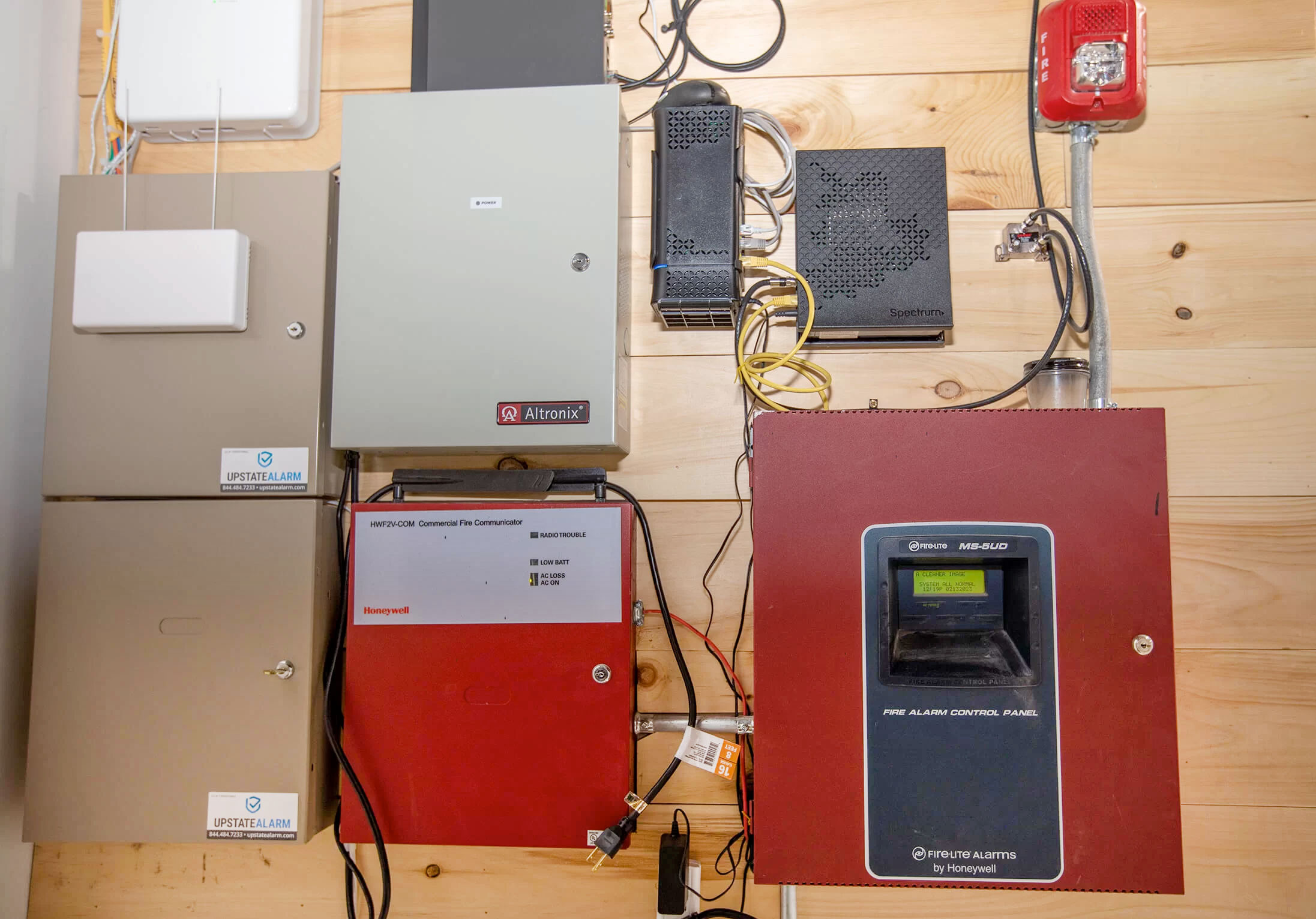
Commercial properties and multi-family residential buildings in New York City are under even stricter oversight by the FDNY. Fire alarm systems must be installed according to the NYC Building Code and NFPA 72 standards. These systems generally require professional engineering plans and must be monitored by an FDNY-approved central station. For residential homeowners, while a "permit" for a standard smoke detector is not required, any system that is integrated into a central monitoring hub must meet specific UL (Underwriters Laboratories) standards to ensure that fire signals are prioritized over burglary signals.
Essential Features for New York Alarm Systems in 2026
When selecting a system, the hardware must be robust enough to handle the specific environmental and structural hurdles of the region.
AI-Driven Video Verification
The most significant advancement in 2026 is the widespread adoption of edge-based AI. In New York's busy streets, traditional motion sensors often trigger false alerts due to street traffic or pets. Modern systems use object recognition to distinguish between a human intruder, a delivery person, or a stray animal. Video verification allows the monitoring center to see a "clip" of the event, which increases the priority of the police dispatch, as "crimes in progress" are handled faster than unverified "sensor trips."
Cellular and Mesh Networking
New York’s "pre-war" buildings are notorious for thick plaster and lath walls, or even concrete and steel, which can block standard Wi-Fi signals. In 2026, the best New York alarm systems utilize "mesh" technology where each sensor acts as a repeater, ensuring the signal reaches the main hub. Additionally, a dual-path communication system—using both the local internet and a dedicated cellular backup—is essential. This ensures that even if a burglar cuts the exterior cable lines or if a storm knocks out the local ISP, the alarm signal still reaches the central station.
Environmental and Flood Sensing
Given the history of flash flooding in NYC’s basement apartments and the recurring deep freezes in the Hudson Valley, environmental sensors are no longer optional. Low-temperature sensors can alert a homeowner before pipes burst, and moisture sensors placed near sumps or water heaters can prevent thousands of dollars in water damage. These sensors are integrated into the same platform as the security system, providing a single point of management.
Professional vs. DIY Monitoring in the Empire State
The choice between a "Do-It-Yourself" (DIY) system and a professionally installed and monitored system often comes down to the complexity of the property and the desired level of liability protection.
The Case for Professional Monitoring
In a state with complex laws like New York, professional monitoring provides a layer of verification that DIY systems lack. If an alarm goes off at 3:00 AM, a central station operator—typically located in a UL-listed facility—immediately reviews the data and contacts the appropriate precinct. This is particularly vital for business owners who must comply with insurance mandates that require 24/7 certified monitoring to maintain their coverage.
DIY Flexibility
For renters in NYC apartments, DIY systems (such as those from SimpliSafe or Ring) remain popular because they do not require permanent alterations to the walls. However, users must still be diligent about registering these systems with the city if they opt for the monitoring component. In 2026, many DIY brands have partnered with local New York contractors to offer "hybrid" services, where the user buys the kit but a pro-installer ensures it meets local fire codes.
Security System Comparison for New York Residents
The following table compares the three primary tiers of security solutions available in the New York market as of 2026.
| Feature | DIY Smart Systems | Local NY Security Firms | National Providers (ADT/Vivint) |
|---|---|---|---|
| Installation | Self-installed; no drilling. | Professional; customized for NY architecture. | Professional; standardized kits. |
| NYPD/FDNY Permits | User must handle filing. | Often included as a concierge service. | Usually handled by the provider. |
| Contract Type | Month-to-month; no long-term. | 1–3 year agreements common. | 3–5 year agreements common. |
| Infrastructure | Primarily Wi-Fi with Cell backup. | High-grade Cellular/Radio (Long-range). | Cellular and Wi-Fi. |
| Best For | Renters and small apartments. | High-value homes and NYC businesses. | Standard suburban residential. |
| False Alarm Tech | Basic App notifications. | Professional Video Verification. | AI Cloud Verification. |
Choosing a Licensed Installer in New York State
New York State law is very clear regarding who can install a security system. Under Article 6-D of the General Business Law, any individual or company that installs, maintains, or services security or fire alarm systems must be licensed by the New York Department of State (NYDOS).
Before hiring a contractor, you should:
- Verify the License: Ask for their NYS Unique ID number. You can verify this on the NYDOS "e-Access NY" portal.
- Check for Insurance: Ensure the company carries both general liability and workers' compensation insurance specific to New York.
- Local Knowledge: A technician based in New Jersey or Connecticut might not be familiar with the specific "Notice of Alarm" requirements for the NYPD. It is often beneficial to work with a company that has a dedicated office within the state.
Addressing the False Alarm Challenge
False alarms are a major concern for New York municipal budgets, as they divert emergency resources from actual crimes. The 2026 guidelines for New York residents emphasize the "Three-Point Check" to reduce fines:
- User Training: Ensure every family member or employee knows the "disarm" code and the "duress" code.
- Maintenance: Replace batteries in sensors every 3–5 years. In the humid New York summers, some outdoor sensors may require more frequent cleaning to prevent debris or insects from triggering motion sensors.
- Enhanced Verification: Use systems that require a second "confirming" hit from a different sensor before an alarm is considered "active." For example, a motion sensor and a door contact both tripping within 30 seconds provides high-certainty evidence of an intrusion.
Frequently Asked Questions
Do I need a permit for a home alarm in New York City?
Yes, if your system is monitored by a central station and is intended to summon the NYPD, you must have an alarm permit. This is often called a "Notice of Alarm." In 2026, failure to have a permit on file when the police respond to a false alarm can result in an immediate fine that is significantly higher than the standard false alarm fee.
What is the difference between a fire alarm and a smoke detector in NY?
A smoke detector is a standalone device that makes a loud noise to alert occupants. A fire alarm is a system of interconnected devices (including smoke, heat, and carbon monoxide sensors) that is monitored by a central station. In many NYC multi-unit buildings, these systems are legally required to be professionally monitored and tested annually.
Can I use a Wi-Fi-only alarm system in a New York apartment?
While you can, it is not recommended. New York’s high-density environments have significant Wi-Fi interference from neighbors. Furthermore, if your power goes out or your router fails, a Wi-Fi-only system cannot send an emergency signal. Always look for a system with a cellular backup component.
How much does professional monitoring cost in New York in 2026?
Costs vary based on the level of service. Basic DIY monitoring typically starts around $20 to $30 per month. Full-service professional monitoring with video verification and fire protection for a New York residence generally ranges from $45 to $70 per month, depending on the number of cameras and sensors.
Are there specific rules for outdoor cameras in New York?
Yes, New York privacy laws generally prohibit cameras from being pointed directly into a neighbor’s window where there is a "reasonable expectation of privacy." When installing outdoor alarm components or doorbell cameras in tight NYC neighborhoods, ensure the field of view is restricted to your own property and public walkways.
Practical Recommendations
To secure your New York property effectively in 2026, begin by assessing your specific environmental risks. If you live in a flood-prone area or an older building with aging pipes, prioritize environmental sensors alongside burglary protection. For residents within the five boroughs, your first step after installation should be the digital registration of your system with the NYPD to avoid unnecessary administrative penalties.
Always prioritize systems that offer video verification. As police departments across New York face increasing call volumes, a "verified" alarm signal ensures that your emergency is moved to the top of the dispatch queue. Finally, ensure your installer provides a written contract that specifies their NYS license number and outlines the recurring costs for both monitoring and system maintenance.