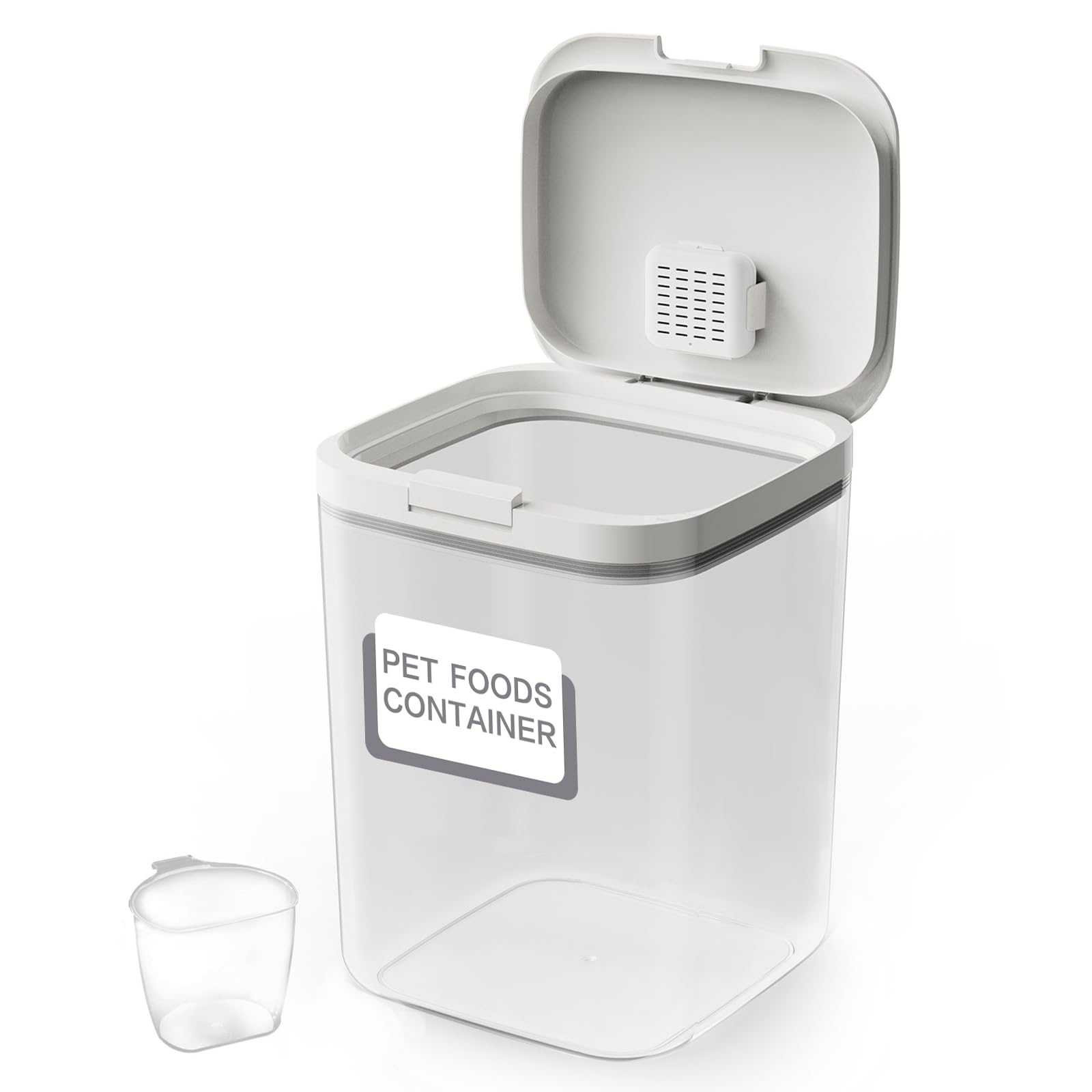
To properly store a 15 lb bag of dog food, you require a container with a volume capacity of at least 18 to 22 quarts (approximately 4.5 to 5.5 gallons) to account for kibble density and air gaps. An airtight seal—typically achieved through a silicone gasket and locking latches—is essential to prevent lipid oxidation and pest infestation.
Understanding Why Airtight Storage is Non-Negotiable in 2026
By 2026, pet nutrition standards have placed a heightened emphasis on the stability of macronutrients and the prevention of inflammatory responses caused by degraded fats. When you purchase a 15 lb bag of premium dog food, you are investing in a carefully balanced profile of proteins, vitamins, and sensitive Omega-3 and Omega-6 fatty acids. However, the moment that bag is opened, the countdown to degradation begins.
Lipid oxidation is the primary enemy of fresh kibble. When fats are exposed to oxygen, they undergo a chemical reaction that creates free radicals and off-flavors. Not only does this make the food less palatable to your dog, but consuming rancid fats over time can lead to cellular damage and long-term health issues. An airtight container creates a controlled micro-environment that significantly slows this oxidative process.
Furthermore, moisture control is a critical safety factor. Even small fluctuations in humidity can introduce enough moisture into a semi-sealed bag to encourage the growth of storage molds, some of which produce dangerous mycotoxins. A true airtight seal, generally defined by a compression gasket, ensures that the ambient humidity of your kitchen or pantry does not penetrate the food supply.
Volume vs. Weight: Solving the 15 lb Capacity Puzzle
One of the most frequent mistakes consumers make is assuming that "pounds" of weight equals "quarts" or "liters" of volume. Dog food density varies wildly based on the shape of the kibble, the ingredients (high-protein, grain-free formulas are often denser), and the amount of air incorporated during the extrusion process.
For a standard 15 lb bag of medium-sized kibble, the following volume metrics generally apply:
- Low-density kibble: Requires approximately 22–25 quarts of space.
- Standard-density kibble: Requires approximately 18–20 quarts of space.
- High-density (small breed) kibble: May fit in a 15–16 quart container.
When shopping for a "15 lb container," always look for the quart or gallon rating rather than the weight rating provided by the manufacturer, as their weight estimates are often based on water or sugar, which are much denser than puffed kibble. In 2026, most specialized pet retailers suggest a 20-quart minimum for 15 lbs of food to ensure you can fit the entire bag without having to wait for the container to get low.
Key Features to Prioritize for Long-Term Preservation
When evaluating containers specifically for the 15 lb range, several technical features differentiate a high-quality preservation system from a simple plastic bin.
The Compression Gasket
The hallmark of a high-performance container is a silicone or rubber gasket embedded in the lid. When the latches are engaged, the lid is pulled down against the rim of the base, compressing the gasket and creating a physical barrier against air and moisture. Avoid "snap-fit" lids that rely on plastic-to-plastic contact; these rarely provide a true airtight seal and will warp over time.
Material Safety: BPA-Free and Food-Grade
As of 2026, the industry standard for plastic containers is high-density polyethylene (HDPE) or polypropylene (PP). Both are BPA-free and FDA-approved for food contact. These materials are preferred because they do not leach chemicals into the food and are resistant to the oils found in kibble. If you prefer to avoid plastic entirely, stainless steel and borosilicate glass are excellent alternatives, though they are significantly heavier and more expensive in the 15 lb size range.
Pest-Proofing Mechanisms
Airtight containers serve a dual purpose: keeping freshness in and keeping pests out. Indian meal moths and grain mites can detect the scent of kibble from considerable distances. A container with a mechanical locking latch—one that requires a physical "click" to secure—is the most effective way to prevent insects and even determined rodents from entering the food supply.
Comparing Leading 15 lb Airtight Dog Food Containers
The following table provides a technical comparison of the most popular models in 2026 that comfortably house a 15 lb supply of kibble.
| Model Name | Primary Material | Capacity (Quarts/Lbs) | Seal Type | Best Use Case |
|---|---|---|---|---|
| Iris USA Airtight Pet Bin | BPA-Free Plastic | 22 Qt / ~15-18 lbs | Foam Gasket | Budget-friendly/Vertical storage |
| Gamma2 Vittles Vault (Small) | HDPE Plastic | 15 lb Rated (approx 20 Qt) | Threaded Screw-Top | Maximum pest protection |
| OXO Good Grips Pet Pop | BPA-Free Plastic | 16 Qt / ~12-14 lbs | Push-Button Silicone | Countertop aesthetics/Small kibble |
| Buddeez Fresh & Clear | Polypropylene | 20 Qt / ~15 lbs | Flip-Top Spout Gasket | Pouring directly into bowls |
| Simplehuman Pet Can (Small) | Stainless Steel | 15 L / ~12-14 lbs | Magnetic Gasket | Odor control and durability |
The "Bag-In" Method: Why Professionals Recommend It
A growing trend among veterinary nutritionists in 2026 is the "Bag-In" storage method. Instead of pouring the kibble directly into the plastic container, you place the entire original paper or plastic bag inside the airtight bin.
There are three technical reasons for this:
- The Barrier Layer: Original pet food bags are often engineered with high-tech liners designed to repel fat and moisture. Using this as a first line of defense adds an extra layer of protection.
- Oil Accumulation: When you pour food directly into a container, the fats and oils coat the walls. Over time, these oils turn rancid. If you do not scrub the container thoroughly between every single bag, the old, rancid oil will contaminate the fresh food.
- Information Retention: Keeping the bag ensures you have the batch code, expiration date, and nutritional information easily accessible in the event of a product recall or if your dog has an adverse reaction.
If you choose the "Bag-In" method, you must ensure the container is slightly larger than the food weight suggests to accommodate the bulk of the folded bag. For 15 lbs, a 25-quart container is ideal for this method.
Maintenance and Hygiene: Preventing the "Old Oil" Problem
If you prefer to pour your kibble directly into the container, a strict cleaning protocol is necessary to maintain food safety. Residual fats from previous batches are highly susceptible to oxidation. When you add fresh food to a container that hasn't been washed, you are essentially "seeding" the new food with spoilage-causing agents.
The Cleaning Cycle
Every time the container is empty, wash it with warm, soapy water. Use a non-abrasive sponge to avoid creating micro-scratches in the plastic, as these scratches can harbor bacteria and mold spores. After washing, it is imperative to let the container dry completely. Even a few drops of trapped moisture can lead to a localized mold outbreak when the new kibble is added.
Gasket Care
Silicone gaskets should be inspected every few months for cracks or loss of elasticity. If the gasket becomes brittle, it will no longer compress sufficiently to create an airtight seal. Many high-end manufacturers sell replacement gaskets, which is a more sustainable and cost-effective option than replacing the entire unit.
Common Mistakes and Environmental Factors
The effectiveness of even the best airtight container can be undermined by poor placement. Heat is a catalyst for chemical reactions; therefore, storing your 15 lb container next to a dishwasher, oven, or in a sunny spot in the laundry room will accelerate the degradation of the kibble despite the airtight seal.
UV Exposure: If you use a transparent or translucent plastic container, sunlight can penetrate the plastic and degrade certain vitamins (like Riboflavin) through photodegradation. For optimal nutrient retention, store clear containers inside a dark pantry or choose an opaque model if the container must be kept in an open area.
Humidity Management: In particularly humid climates, opening the lid multiple times a day allows moist air to enter. To combat this, some owners use food-grade desiccant packets (silica gel) taped to the underside of the lid. Ensure these are securely attached so they cannot accidentally fall into the food and be ingested by the dog.
FAQ
Does a 15 lb bag of dog food always fit in a 15 lb container?
Not necessarily. Manufacturers often rate their containers based on the density of sugar or water. Because dog food is "puffed" or aerated, it takes up more volume. A 15 lb bag of dog food typically requires a container with a 20-quart capacity to fit comfortably.
Is stainless steel better than plastic for 15 lbs of food?
Stainless steel is superior for odor control and longevity because it is non-porous and does not absorb oils. However, for a 15 lb capacity, stainless steel options are often much more expensive and heavier than BPA-free plastic. Plastic is perfectly safe and effective as long as it is cleaned between uses.
How can I tell if my container is truly airtight?
A simple test is the "scent test." If you can smell the dog food while the lid is closed and latched, the container is not airtight. Alternatively, you can place a piece of paper across the rim and close the lid; if you can easily pull the paper out, the gasket isn't compressing enough to create a seal.
Can I store my 15 lb container in the garage?
It is not recommended. Garages experience extreme temperature fluctuations that cause condensation to form inside the container when it is opened and closed. Furthermore, heat in the summer can cause the fats in the kibble to go rancid much faster. Ideally, kibble should be stored in a cool, dry place below 80°F (26°C).
Should I get a container with wheels for 15 lbs?
While 15 lbs is manageable for most people to lift, wheels can be helpful if you store the container under a low shelf or in a tight pantry and need to slide it out twice a day. However, for this smaller weight class, wheels are usually an optional convenience rather than a necessity.
Final Recommendation
For most pet owners managing a 15 lb supply of food in 2026, the Gamma2 Vittles Vault (Small) remains the gold standard for pure preservation due to its heavy-duty gasket and threaded locking system. However, if ease of use and aesthetics are higher priorities, the Iris USA 22-Quart Airtight Bin offers the best balance of volume, seal quality, and vertical space efficiency. Regardless of the model you choose, remember to wash the container between every bag and, if possible, keep the food in its original packaging inside the bin to maximize freshness and safety.