When a scapegoat leaves a dysfunctional family, the system's emotional balance is disrupted, often leading to a "vacuum effect" where a new member is selected to absorb the family's collective shame and anxiety. While the scapegoat finds opportunities for healing, the remaining family typically intensifies smear campaigns or internal conflicts to avoid facing their own systemic dysfunction.
In the complex architecture of dysfunctional families—particularly those led by narcissistic or high-conflict personalities—roles are not assigned by merit but by the needs of the system. The "scapegoat" serves a specific, vital function: they are the repository for the family’s unwanted traits, failures, and anxieties. By projecting all "badness" onto one person, the rest of the family can maintain an illusion of health, unity, and "goodness."
As we look at these dynamics in 2026, the psychological understanding of family systems has evolved to recognize that the departure of the scapegoat is not merely a personal exit; it is a systemic crisis. When the person who previously "carried" the family’s shadow leaves, the structure begins to wobble.
The Psychological Function of the Scapegoat
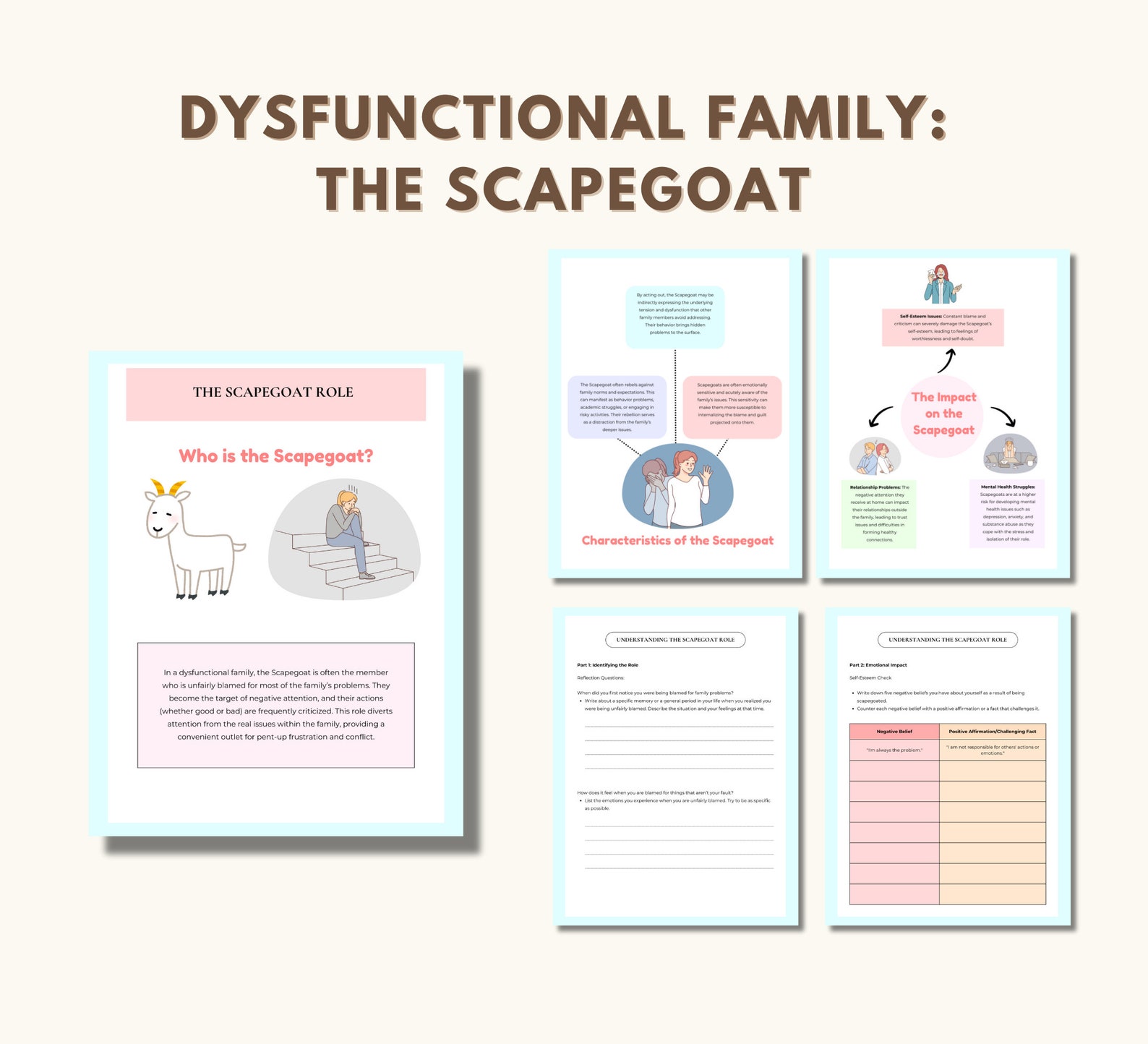
To understand what happens after the scapegoat leaves, one must first understand why they were there. In family systems theory, the scapegoat is often the most perceptive or emotionally honest member. Because they notice and react to the family’s underlying dysfunction, they are labeled as "the problem."
Psychologically, this is known as splitting and projection. The dominant figures in the family (often a narcissistic parent) cannot tolerate their own flaws or the reality of their environment. They project these intolerable feelings onto the scapegoat. As long as the scapegoat is present to take the blame, the family enjoys a precarious form of stability called homeostasis.
The scapegoat’s presence allows the "Golden Child" to remain perfect and the "Enabler" to remain the peacemaker. It provides a common enemy that binds the other members together. Consequently, when the scapegoat exits—whether through going "No Contact," moving away, or setting firm boundaries—the "trash can" of the family is gone, and the toxic waste of the family's emotions has nowhere to go.
The Immediate Reaction: The Vacuum Effect and Systemic Panic
The departure of a scapegoat is rarely met with a "bon voyage." Instead, it usually triggers a state of systemic panic. The family loses its primary coping mechanism for internal stress. In the immediate aftermath, several predictable behaviors emerge as the family attempts to restore its previous balance.
The Search for a New Target
The most common outcome after the scapegoat leaves the family is the selection of a "New Scapegoat." Because the system cannot function without someone to blame, the role must be filled. This is often referred to as the Vacuum Effect.
The new target is frequently the "Lost Child"—the sibling who previously stayed under the radar by being quiet and independent. Alternatively, if the stress is high enough, the "Golden Child" may suddenly find themselves under fire. If they fail to perform to the parent's impossible standards, they may be demoted to the scapegoat role. This shift can be devastating for the Golden Child, who has built their entire identity on being the "favorite."
Recruitment and Hoovering
Before a new scapegoat is solidified, the family will often try to "hoover" the original scapegoat back into the fold. "Hoovering" is a psychological term for the manipulative tactics used to suck a person back into a toxic relationship. This might involve:
- Feigned crises: Medical emergencies (real or exaggerated) or financial disasters.
- Love bombing: Sudden, uncharacteristic displays of affection or promises of change.
- Guilt-tripping: Reminding the scapegoat of their "obligations" or using flying monkeys (third parties) to shame them.
The goal is not reconciliation; it is the restoration of the previous hierarchy. The family doesn't miss the person; they miss the function the person served.
The Smear Campaign and Narrative Control
When hoovering fails, the family system typically pivots to a smear campaign. This is a defensive maneuver designed to protect the family’s public image and internal narrative. If the scapegoat left because of abuse or dysfunction, the family must discredit them to ensure that no one—including the family members themselves—believes the scapegoat’s version of the truth.
In 2026, the tools for smear campaigns have expanded into the digital realm, making reputation management a significant challenge for those who leave. The family may use social media to portray the scapegoat as "mentally unstable," "ungrateful," or "radicalized" by outside influences. By painting the scapegoat as the villain, the family reinforces their own bond. This "common enemy" strategy provides a temporary hit of dopamine and unity for the remaining members, shielding them from the reality that their "perfect" family is fracturing.
What Happens to the Scapegoat?
For the individual who has left, the period following the exit is a tumultuous mix of profound relief and crushing grief. Removing oneself from a toxic system is an act of survival, but it comes with a high cost.
Navigating the "FOG"
The scapegoat often struggles with FOG (Fear, Obligation, and Guilt). Even though they were mistreated, they have been conditioned from childhood to feel responsible for the family’s happiness. They may experience "survivor’s guilt," especially if they left siblings behind who are now being targeted.
The Identity Crisis
Since the scapegoat’s identity was forced upon them by the family, leaving often results in an identity vacuum. They have spent years being told they are "difficult," "selfish," or "crazy." Without the constant reflection of these negative labels, the individual must engage in the slow process of discovering who they actually are. This often requires professional support, such as Cognitive Behavioral Therapy (CBT) or Eye Movement Desensitization and Reprocessing (EMDR), to dismantle the internalized "critical parent" voice.
Physical and Neurological Recovery
Years of being the family target often result in C-PTSD (Complex Post-Traumatic Stress Disorder). After leaving, the individual's nervous system may remain in a state of hyper-vigilance. It can take months or years for the body to realize it is no longer under attack. Many former scapegoats report an initial period of extreme exhaustion as their "fight or flight" response finally begins to deactivate.
Comparison of Family Dynamics: Before vs. After the Scapegoat’s Exit
The following table outlines the shifts in systemic behavior and individual experience before and after the scapegoat departs.
| Feature | During Scapegoating Phase | After the Scapegoat Leaves |
|---|---|---|
| Conflict Management | All conflict is blamed on the scapegoat. | Conflict is redirected toward a new member or internal infighting. |
| Family Narrative | "We are a happy family except for [Scapegoat]." | "[Scapegoat] abandoned us; we are the victims." |
| Primary Stressor | The scapegoat's "behavior" or presence. | The loss of systemic balance and threat of exposure. |
| Golden Child Status | Secure, as long as the scapegoat is present. | Precarious; they may become the next target. |
| Communication Style | Triangulation through the scapegoat. | Intensified secrecy or aggressive recruitment of allies. |
| Scapegoat’s Health | High levels of C-PTSD, anxiety, and low self-esteem. | Initial grief/guilt followed by gradual self-actualization. |
Long-Term Outcomes for the Remaining Family
What happens if the scapegoat never returns? In some cases, the family system eventually stabilizes around a new scapegoat, continuing the cycle for another generation. However, in many instances, the departure of the scapegoat is the beginning of the end for the family unit.
Without the "identified patient" to focus on, the parents may turn on each other. The Enabler, who previously spent their energy managing the scapegoat, may now become the target of the narcissistic parent's rage. Alternatively, the siblings may begin to distance themselves as they realize that the "peace" they enjoyed was bought at the expense of the scapegoat's well-being.
Sometimes, the exit of one member provides the "permission" other members needed to leave. This is known as a cascading exit. Once the narrative of the "perfect family" is broken by one person's departure, the reality of the dysfunction becomes harder for the others to ignore.
Rebuilding Life Outside the Family System
For the former scapegoat, life after the family is a journey toward autonomy. This process involves several critical steps that are often addressed in contemporary therapeutic settings.
- Establishing No Contact or Low Contact: This isn't about punishment; it’s about protection. In 2026, this includes digital boundaries, such as blocking accounts and filtering emails, to prevent the "smear campaign" from infiltrating the individual’s new life.
- Reparenting the Self: This involves learning to provide the validation and care that the family denied. It means challenging the "scapegoat script" every time it enters the mind.
- Building a Chosen Family: One of the most healing experiences for a former scapegoat is entering a healthy community where they are valued for their authentic self, not for their ability to absorb blame.
- Processing Grief: There is a specific type of grief involved in mourning the family you deserved but never had. Acknowledging this loss is essential for moving forward.
Frequently Asked Questions
Does the family ever realize they were wrong after the scapegoat leaves?
It is rare for a dysfunctional family system to have a collective "epiphany." Because the system is built on the denial of reality, admitting the scapegoat was right would require every member to face their own complicity and trauma. Usually, the family doubles down on the narrative that the scapegoat is the "bad one" to avoid this painful self-reflection.
Who is most likely to become the new scapegoat?
The "New Scapegoat" is typically whoever is most convenient or whoever starts to show the most independence. Often, this is the "Lost Child" because they are perceived as weak or the "Golden Child" if they fail to live up to the narcissistic parent's escalating demands for perfection.
Can a scapegoat ever have a relationship with their siblings after leaving?
It is possible, but difficult. Siblings are often deeply entrenched in the family narrative. For a sibling to have a healthy relationship with the exiled scapegoat, they must be willing to acknowledge the family's dysfunction. This often puts the sibling at risk of becoming the new scapegoat, which many are unwilling to do.
How long does it take to heal after being the family scapegoat?
Healing is not a linear process and has no fixed timeline. Many individuals feel a significant "weight" lifted within the first six months of leaving, but the deep psychological work of dismantling internalized shame can take years. By 2026, specialized trauma therapies have become more accessible, significantly aiding the speed and depth of recovery.
Is "No Contact" the only solution?
While "No Contact" is often the most effective way to end the cycle of abuse, some choose "Low Contact" or "Grey Rocking" (becoming as uninteresting as a grey rock). However, these strategies require immense emotional discipline and are often only temporary measures until the individual is strong enough to leave entirely.
Taking the Next Step
If you have recently left a scapegoat role or are considering doing so, the most important action you can take is to prioritize your own reality. For years, your perception of the world was filtered through the needs of a dysfunctional system. Trusting your own senses and feelings is a radical and necessary act of reclamation.
Seek out a therapist who specializes in family systems and narcissistic abuse. In 2026, many support groups exist both online and in-person specifically for those transitioning out of these roles. Remember: the family may have labeled you as the "problem," but your departure proves you are actually the "healer"—the one who refused to allow the cycle of dysfunction to continue within yourself.