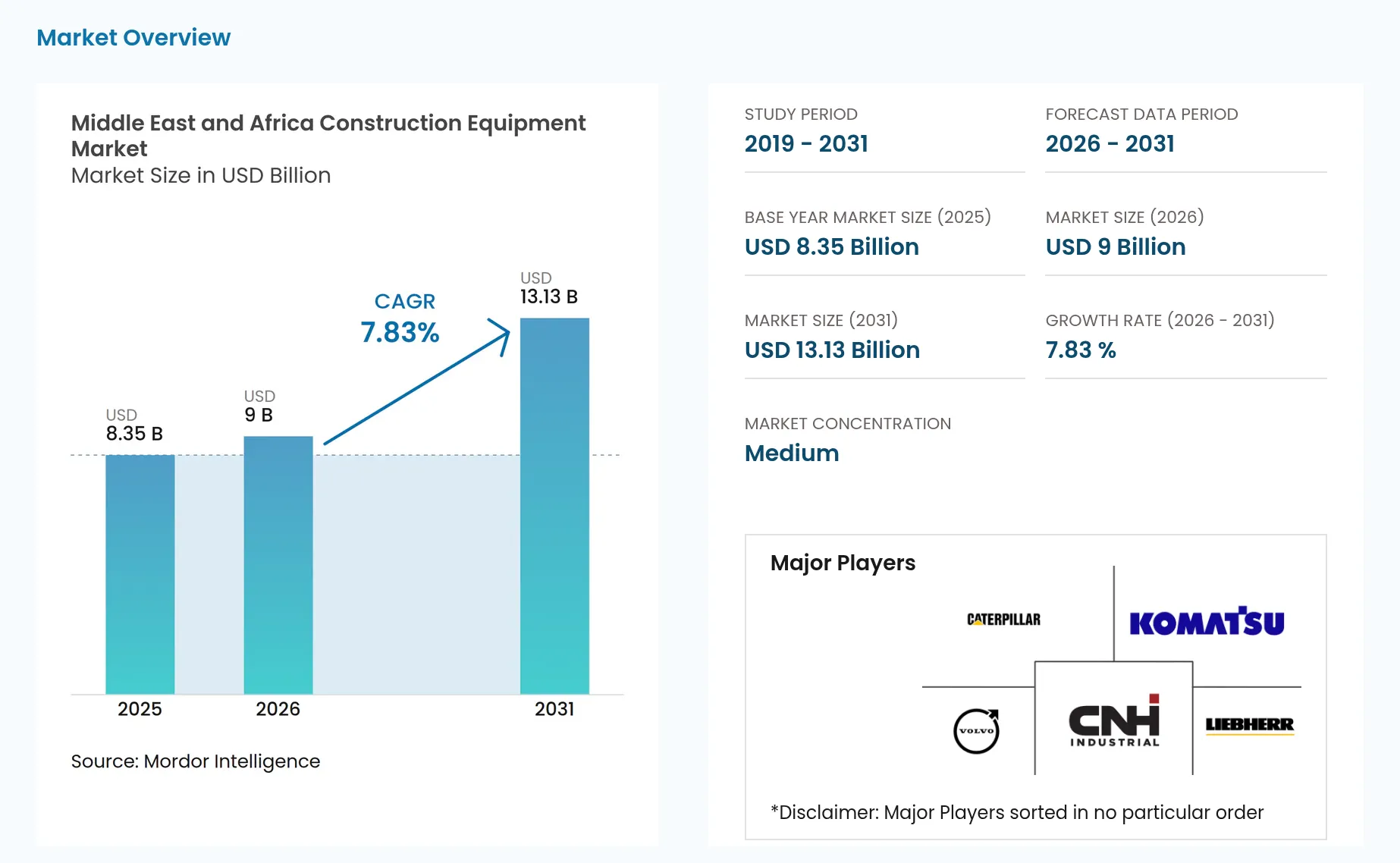
As of 2026, the African construction landscape is defined by a strategic pivot toward cross-border connectivity, renewable energy integration, and the expansion of "smart" urban centers. Driven by the operational maturation of the African Continental Free Trade Area (AfCFTA), infrastructure investment has moved beyond isolated national projects toward integrated corridors designed to facilitate intra-continental trade and industrialization.
The sector currently balances the completion of "mega-projects"—such as Egypt’s New Administrative Capital and various Standard Gauge Railway (SGR) phases—with a localized focus on decentralized energy grids and resilient urban housing. Financing models have also evolved, with a marked increase in Public-Private Partnerships (PPPs) and "Green Bonds" as governments seek to bridge the infrastructure gap without exacerbating sovereign debt.
The Strategic Landscape of African Construction in 2026
The African construction market in 2026 is no longer a monolith of state-funded roadworks. Instead, it is a sophisticated ecosystem influenced by the African Union’s Agenda 2063 and the Program for Infrastructure Development in Africa (PIDA). The primary objective has shifted from basic accessibility to "high-quality infrastructure," emphasizing durability, digital readiness, and environmental sustainability.
The Impact of AfCFTA on Infrastructure Demand
The African Continental Free Trade Area has become the single most significant driver of construction activity. To meet the logistics requirements of a unified market, investment has surged into "Trade Corridors." These are not merely roads but integrated logistics hubs featuring dry ports, bonded warehouses, and digital customs clearing facilities. In 2026, we see the results of the Abidjan-Lagos Corridor project and the completion of key segments of the Trans-Maghreb Highway, which have fundamentally altered regional supply chains.
The Move Toward Sustainability and Decarbonization
In 2026, green building certifications such as EDGE (Excellence in Design for Greater Efficiencies) and LEED have become standard requirements for high-end commercial and public projects across the continent. Developers are increasingly utilizing low-carbon cement, recycled aggregates, and modular construction techniques to reduce the carbon footprint of new developments. This shift is partly driven by international lenders who now mandate stringent Environmental, Social, and Governance (ESG) criteria for project financing.
Key Sectors Dominating the 2026 Construction Pipeline
Construction activity remains concentrated in three primary sectors: Transport and Logistics, Energy and Power, and Urban Development. Each sector reflects a response to Africa’s rapid urbanization and the need for economic diversification.
Transport and Logistics: The Era of the Rail
Rail construction remains a flagship segment. Following the success of the Mombasa-Nairobi SGR, 2026 sees the expansion of the East African Rail Master Plan. Tanzania’s SGR is now facilitating trade between Dar es Salaam and the Great Lakes region, while Nigeria has made significant strides in connecting its northern agricultural belts to the southern ports through the Kano-Maradi line.
Furthermore, port expansion is moving toward "Smart Ports." Facilities in Lekki (Nigeria), Tangier Med (Morocco), and Lamu (Kenya) are integrating automated container handling and 5G-enabled tracking systems, necessitating specialized civil engineering and ICT infrastructure integration.
Energy and Power: Beyond Traditional Grids
Energy construction has transitioned from massive coal plants to diversified renewable energy portfolios. In 2026, the Grand Ethiopian Renaissance Dam (GERD) has reached full operational capacity, becoming a cornerstone of East African energy exports. Simultaneously, Northern Africa has cemented its position as a global green hydrogen hub, with massive electrolyzer plants and solar-wind hybrid farms under construction in Mauritania, Morocco, and Egypt.
Decentralized energy systems, particularly "mini-grids" and solar micro-grids, are also seeing a construction boom in sub-Saharan Africa. These projects are crucial for providing power to rural processing zones, allowing for the "value-addition" of raw materials at the source.
Urban Development: Smart Cities and Mass Housing
With Africa’s urban population expected to double by 2050, 2026 is a critical year for urban infrastructure. Governments are focusing on two extremes: elite "Smart Cities" like Eko Atlantic in Nigeria and Konza Technopolis in Kenya, and large-scale affordable housing schemes.
The construction of the New Administrative Capital (NAC) in Egypt continues to serve as a blueprint for planned urban expansion, featuring state-of-the-art telecommunications and high-speed rail links. Meanwhile, countries like South Africa and Ghana are implementing modular housing projects to address the housing deficit, utilizing 3D printing and prefabricated materials to accelerate delivery times.
Regional Analysis: Where the Activity is Concentrated
The distribution of construction projects varies significantly by region, influenced by political stability, resource wealth, and regional integration efforts.
| Region | Primary Focus (2026) | Key Projects Underway | Dominant Financing Source |
|---|---|---|---|
| North Africa | High-speed rail & Green Hydrogen | Egypt’s NAC, Morocco’s Xlinks | Sovereign Wealth / EU Global Gateway |
| East Africa | Inter-state rail & Hydropower | Tanzania SGR, Ethiopia-Kenya Interconnector | AfDB / China-Exim / Private Equity |
| West Africa | Coastal highways & Port expansion | Lagos-Calabar Coastal Highway, Port of Tema | PPPs / World Bank / Bilateral Loans |
| Southern Africa | Energy grid modernization & Mining infra | SA Renewable Energy IPP, Lobito Corridor | Private Sector / Mining Concessions |
| Central Africa | Hydropower & Road connectivity | Inga III (preliminary), Trans-African Highway | Multinational Development Banks |
North Africa: The Infrastructure Leader
Egypt remains the most active construction market on the continent. By 2026, the focus has expanded from the NAC to the "Decent Life" (Haya Karima) initiative, which involves upgrading infrastructure in thousands of rural villages. Morocco continues to lead in renewable energy infrastructure, linking its massive Noor Ouarzazate solar complex to European grids.
East Africa: A Hub for Integrated Logistics
The East African Community (EAC) has successfully harmonized many of its construction standards, leading to smoother cross-border project execution. The emphasis here is on "land-linked" rather than "land-locked" development, with Uganda and Rwanda investing heavily in road and rail connections to the Indian Ocean ports.
West Africa: Urban Transformation
Nigeria and Ghana are the primary drivers in this region. Nigeria’s construction sector is characterized by massive private-sector-led projects, particularly in the oil and gas downstream sector (refineries and fertilizer plants) and coastal transport infrastructure intended to bypass the congestion of Lagos.
Financing and Investment Trends in 2026
The financing of African construction projects has undergone a fundamental shift. While Chinese state-backed loans were dominant in the 2010s, the landscape in 2026 is more fragmented and competitive.
- The Rise of Institutional Investors: Pension funds and insurance companies, both domestic and international, are increasingly investing in "de-risked" infrastructure projects. This is often facilitated by partial risk guarantees from the World Bank or the African Development Bank (AfDB).
- The EU Global Gateway: This initiative has emerged as a major competitor to China's Belt and Road Initiative (BRI), focusing on digital, energy, and transport projects that align with European environmental standards.
- Local Currency Financing: To mitigate the risks of currency devaluation, more projects are being financed through local bond markets. This trend is particularly evident in South Africa and Nigeria, where local liquidity is higher.
- Blended Finance: Combining concessional loans from development agencies with commercial capital has become the standard for large-scale social infrastructure, such as hospitals and universities.
Technical Advancements and the Digitalization of Construction
The African construction industry in 2026 is increasingly data-driven. The adoption of Building Information Modeling (BIM) has moved from a "luxury" for high-end projects to a requirement for most government-led infrastructure.
Digital Twins and Asset Management
For large-scale projects like dams and railways, developers are using "Digital Twins"—virtual replicas of physical assets—to monitor structural health and optimize maintenance schedules. This technology is particularly valuable in harsh climatic environments where traditional maintenance cycles may be insufficient.
Drones and Geospatial Mapping
Drones are now ubiquitous on African construction sites for site surveying, progress monitoring, and security. In remote areas where traditional surveying is difficult, high-resolution satellite imagery and LiDAR-equipped drones have cut site preparation times by up to 40%.
Local Content and Skills Development
A significant trend in 2026 is the enforcement of "local content" laws. Governments are no longer satisfied with "turnkey" projects delivered by foreign labor. Contracts now frequently mandate the training of local engineers and the sourcing of materials like steel and timber from local or regional suppliers. This has spurred the growth of a sophisticated middle-tier of African construction firms capable of handling complex civil engineering tasks.
Critical Challenges Facing the Sector
Despite the growth, the African construction sector in 2026 faces several persistent head-winds:
- Macroeconomic Volatility: Fluctuating commodity prices and currency instability remain the biggest risks for long-term project viability. Inflation in the cost of imported specialized equipment can lead to significant budget overruns.
- Regulatory Inconsistency: Cross-border projects often struggle with differing technical standards and bureaucratic hurdles, although the AfCFTA is slowly mitigating these issues.
- Security Concerns: In certain regions, particularly parts of the Sahel and northern Mozambique, construction activity is hampered by security threats, necessitating high expenditure on site protection.
- The Skills Gap: While local content is a priority, there remains a shortage of highly specialized skills in areas like nuclear engineering (for energy) and advanced tunneling.
Summary of Major Ongoing Projects (2026 Status)
The following table provides a snapshot of the most impactful construction projects currently active across the continent.
| Project Name | Location | Primary Objective | Estimated Value | 2026 Status Update |
|---|---|---|---|---|
| New Administrative Capital (Phase 2 & 3) | Egypt | Urban Expansion | $50B+ | Phase 2 residential districts completed; Phase 3 government district operational. |
| Tanzania SGR (Central Line) | Tanzania | Logistics/Trade | $14B | Connection to Mwanza completed; cross-border link to Burundi initiated. |
| Lagos-Calabar Coastal Highway | Nigeria | Connectivity | $11B | Initial sections near Lagos and Calabar open; mid-sections under heavy earthworks. |
| Grand Ethiopian Renaissance Dam (GERD) | Ethiopia | Power Generation | $5B | All turbines operational; regional power export agreements in effect. |
| Lobito Corridor Upgrade | Angola/DRC/Zambia | Mineral Export | $2.5B | Rail rehabilitation complete; port automation integration underway. |
| Konza Technopolis | Kenya | ICT/Smart City | $14B | Phase 1 "Digital City" fully occupied by tech firms; Phase 2 infrastructure started. |
FAQ: Africa Construction Project Overview
1. Which country has the most active construction projects in 2026?
Egypt continues to lead the continent in terms of total project value and volume. This is driven by its massive urban redevelopment programs, including the New Administrative Capital and the "Decent Life" initiative, as well as its strategic investments in high-speed rail and Suez Canal expansion.
2. How has the role of China changed in African construction by 2026?
While China remains a vital partner, its approach has shifted from high-volume sovereign lending to "Small yet Beautiful" projects. There is a greater emphasis on project profitability, environmental impact, and equity investment rather than just debt. China now competes more directly with the EU, the US, and Middle Eastern investors.
3. What is the impact of green building regulations on project costs?
Initially, green building requirements can increase capital expenditure by 5% to 10% due to the cost of specialized materials and certification processes. However, in 2026, these costs are increasingly offset by lower long-term operational expenses (energy and water savings) and more favorable financing rates from "Green" investment funds.
4. Are there opportunities for small-scale construction firms?
Yes, particularly in the "last-mile" infrastructure and maintenance sectors. While mega-projects are dominated by multinational conglomerates, there is a burgeoning market for local firms in decentralized solar installation, rural road maintenance, and the construction of affordable housing using local materials.
5. How are construction risks managed in volatile regions?
Risk management in 2026 involves a combination of political risk insurance (provided by agencies like MIGA), the use of "force majeure" clauses in contracts, and increased investment in community engagement to ensure local buy-in. Digital monitoring also allows project managers to oversee sites remotely in high-risk areas.
6. What role does the African Development Bank (AfDB) play in these projects?
The AfDB acts as both a primary lender and a "catalyst." It often provides the "anchor" financing that gives commercial banks the confidence to participate in African infrastructure projects. Their focus is primarily on projects that align with the "High 5s," such as "Light up and Power Africa" and "Integrate Africa."
Next Actions for Stakeholders
For investors and developers looking to enter or expand within the African construction market in 2026, the primary focus should be on ESG compliance and strategic partnerships with local firms. Success in the current landscape requires navigating complex regulatory environments while leveraging new technologies like BIM and digital project management to ensure efficiency. Potential entrants should prioritize regions with high AfCFTA integration, as these areas offer the most stable long-term growth prospects for transport and logistics infrastructure.