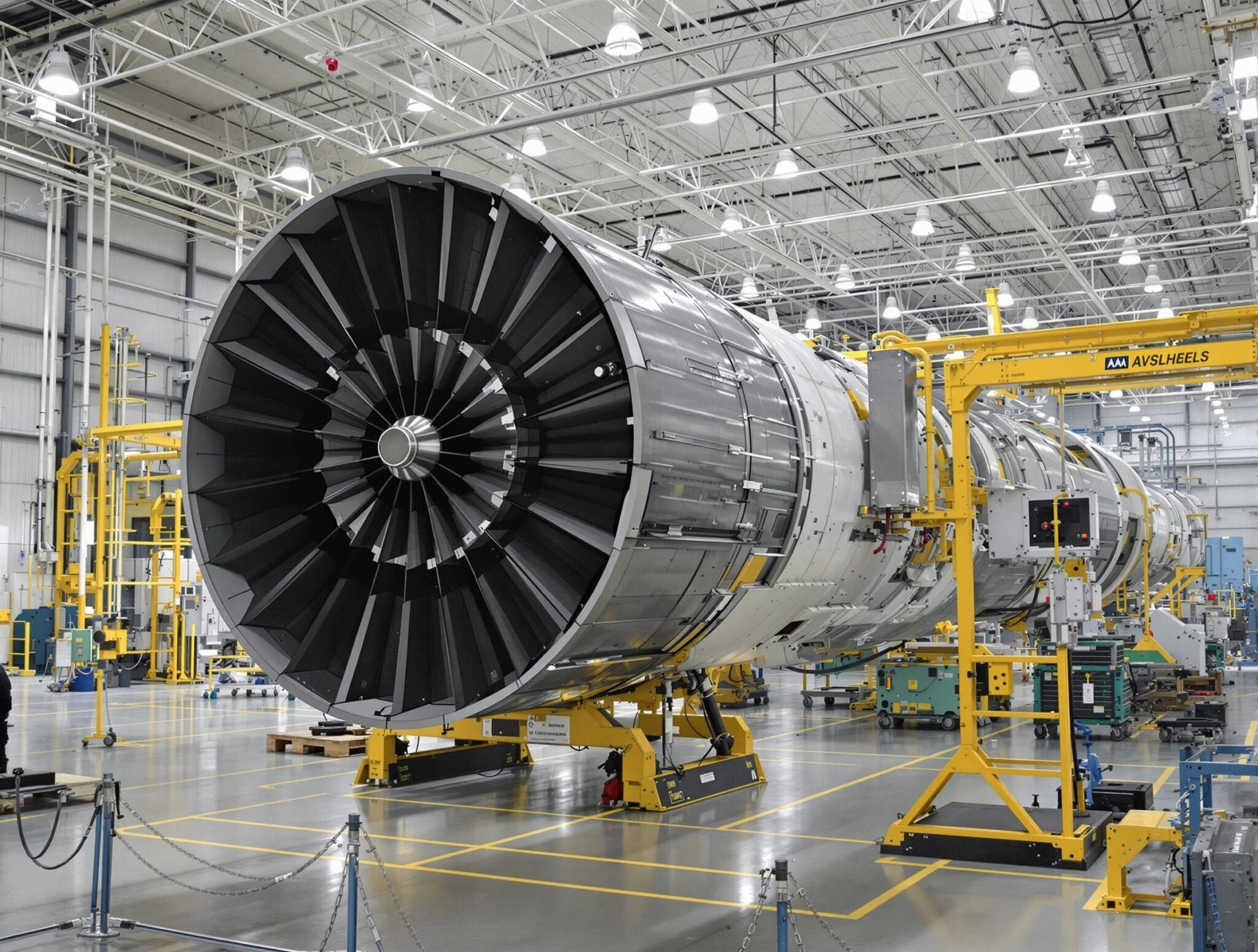
Aero precision engineering is the specialized discipline of designing and manufacturing aerospace components with ultra-tight tolerances, often within microns. In 2026, this field leverages advanced multi-axis CNC machining, additive manufacturing, and digital twin simulations to produce flight-critical parts that meet rigorous AS9100 safety standards while optimizing for weight and thermal resistance.
The Fundamentals of Aerospace Precision
Precision engineering in the aerospace sector is defined by the margin of error permitted during the manufacturing process. Unlike general automotive or industrial manufacturing, where tolerances might be measured in hundredths of an inch, aero precision engineering frequently operates in the realm of ten-thousandths of an inch (or micrometers). This level of accuracy is necessitated by the extreme environments in which aerospace components operate, including high-pressure vacuums, extreme temperature fluctuations, and intense vibrational stress.
The core objective of this discipline is to achieve "interchangeability" and "reliability." Every turbine blade, landing gear assembly, or fuel system valve must be identical to its digital model to ensure that replacement parts fit perfectly and perform predictably. In 2026, the integration of Industry 4.0 technologies has moved this from a manual craft to a highly automated, data-driven ecosystem.
Why Tolerance Matters
In aerospace, a variance as small as five microns can lead to "stack-up errors." When hundreds of precision parts are assembled, small discrepancies in each part can aggregate, leading to a final assembly that does not meet safety or aerodynamic requirements. Proper aero precision engineering utilizes Statistical Process Control (SPC) to monitor these variances in real-time, ensuring that every component coming off the line is within the "nominal" design window.
Essential Manufacturing Technologies in 2026
The landscape of aero precision engineering is dominated by three primary manufacturing pillars: subtractive machining, additive manufacturing, and non-traditional machining like Electrical Discharge Machining (EDM).
Multi-Axis CNC Machining
Computer Numerical Control (CNC) machining remains the backbone of the industry. In 2026, 5-axis and 7-axis CNC centers are the standard. These machines allow the cutting tool to approach a workpiece from virtually any direction, which is essential for the complex geometries found in engine housings and structural airframe ribs.
- High-Speed Machining (HSM): Modern spindles now reach speeds exceeding 30,000 RPM, allowing for faster material removal while reducing the heat transferred to the part.
- Cryogenic Cooling: To handle tough materials like titanium, many precision shops now use liquid nitrogen or CO2 cooling during the machining process, which extends tool life and maintains the structural integrity of the metal.
Metal Additive Manufacturing (3D Printing)
By 2026, metal 3D printing—specifically Direct Metal Laser Sintering (DMLS) and Electron Beam Melting (EBM)—has transitioned from prototyping to full-scale production for flight-ready parts. Aero precision engineering now utilizes "generative design," where AI-driven software creates organic, bone-like structures that provide maximum strength with minimum weight. These parts are often impossible to create via traditional machining.
Electrical Discharge Machining (EDM)
For materials that are too hard for traditional cutting tools, such as Inconel or hardened steels, EDM is indispensable. This process uses electrical sparks to erode material. Wire EDM is frequently used to cut complex slots in turbine disks or produce ultra-precise small-hole drillings for cooling passages in jet engine blades.
Advanced Materials and Their Engineering Challenges
Selecting the right material is a primary step in aero precision engineering. The material must withstand the physical forces of flight while remaining light enough to contribute to fuel efficiency.
| Material Type | Common Applications | Key Engineering Challenge |
|---|---|---|
| Titanium Alloys (Ti-6Al-4V) | Structural frames, landing gear, fasteners | Highly reactive; requires specialized cooling and rigid workholding to prevent vibration. |
| Inconel (Nickel-Chromium) | Jet engine exhaust, turbine blades | Rapidly dulls cutting tools; requires low-speed, high-torque machining or EDM. |
| Carbon Fiber Composites | Wings, fuselage panels, control surfaces | Prone to delamination during drilling; requires diamond-coated tooling. |
| Aluminum-Lithium | Cryogenic tanks, internal structural ribs | Lightest structural metal, but sensitive to thermal expansion during the machining process. |
| Ceramic Matrix Composites | High-pressure turbine shrouds | Brittle and difficult to machine; often requires ultrasonic-assisted machining. |
Handling Superalloys
Superalloys like Inconel 718 are essential for the "hot section" of jet engines because they maintain their strength at temperatures where aluminum would melt. However, they are "work-hardening" materials. If the cutting tool is not sharp or if the feed rate is too slow, the metal becomes harder as it is being cut, leading to tool breakage. Precision engineers in 2026 use advanced sensor-integrated tool holders to detect these changes in real-time.
Quality Assurance and Certification Standards
In aero precision engineering, a part is only as good as its documentation. The industry is governed by strict international standards that ensure every step of the manufacturing process is traceable.
AS9100 Revision E
The AS9100 standard is the aerospace version of ISO 9001. As of 2026, Revision E places a heavier emphasis on Product Safety and Counterfeit Part Mitigation. Any firm engaged in aero precision engineering must maintain a Quality Management System (QMS) that tracks the raw material's heat lot back to the original forge.
Metrology and Inspection
Inspection is no longer a post-production step; it is integrated into the machine.
- Coordinate Measuring Machines (CMM): These use high-precision probes to measure the physical geometry of a part against its CAD model.
- Laser Scanning: Handheld or robotic laser scanners can capture millions of data points per second to create a 3D "point cloud" of the finished part.
- Non-Destructive Testing (NDT): Techniques such as X-ray, ultrasonic testing, and dye penetrant inspection are used to find internal flaws or microscopic surface cracks that could lead to catastrophic failure under stress.
The Role of Digital Twins and Simulation
In 2026, the concept of a "Digital Twin" has revolutionized aero precision engineering. Before a single piece of metal is cut, engineers create a virtual replica of both the part and the manufacturing environment.
This simulation accounts for:
- Thermal Expansion: How the part will expand as it heats up during machining.
- Tool Deflection: How much the cutting tool will bend under pressure.
- Vibration (Chatter): Identifying the resonant frequencies that could ruin the surface finish of a thin-walled aerospace component.
By "machining" the part virtually first, companies reduce waste and ensure that the first physical part produced is within specification. This is particularly critical when working with expensive raw materials like large titanium forgings, which can cost tens of thousands of dollars per unit.
Case Study: Aero Precision in the Firearms Industry
While the term "Aero Precision" is synonymous with high-end aerospace components, it is also the name of a prominent American manufacturer (Aero Precision LLC) known for applying aerospace-grade engineering to the firearms industry. This serves as a prime example of how aero-level precision "trickles down" to other high-stakes sectors.
In the production of AR-15 and AR-10 receivers, the same 5-axis CNC machining and rigid quality control used for aircraft parts are applied to firearm components. The result is a product with superior "fit and finish," where the upper and lower receivers have zero "wobble" and the internal dimensions are optimized for reliability. For enthusiasts and professional shooters, this illustrates that the principles of aero precision engineering—accuracy, repeatability, and high-grade materials (like 7075-T6 aluminum)—are universal markers of quality.
Cost Considerations and Lead Times
Aero precision engineering is a capital-intensive field. The costs are driven by three main factors:
- Material Costs: Aerospace-grade metals are significantly more expensive than commercial grades. For example, titanium prices in 2026 reflect both scarcity and the high cost of the energy-intensive refining process.
- Certification and Labor: The technicians operating these machines are highly skilled and often require specific certifications. Furthermore, the cost of AS9100 compliance and NADCAP (National Aerospace and Defense Contractors Accreditation Program) auditing is built into every part.
- Lead Times: Because of the intensive inspection requirements and the complexity of the setups, lead times for custom aero precision parts can range from 8 to 24 weeks, depending on the complexity and material availability.
Troubleshooting Common Engineering Failures
Even with advanced technology, several common issues can arise in the precision manufacturing process:
- Work Hardening: Often caused by dull tools or incorrect feed rates in stainless steel or nickel alloys. Solution: Update tool paths to ensure a constant chip load.
- Thermal Drift: The machine tool itself expands as it warms up throughout the day. Solution: Use temperature-controlled environments and real-time thermal compensation software.
- Residual Stress: Heavy machining can "trap" stress inside a part, causing it to warp after it is released from the machine fixtures. Solution: Implement stress-relief heat treatments between machining operations.
FAQ: Aero Precision Engineering
What is the difference between precision engineering and aero precision engineering?
While both focus on accuracy, aero precision engineering specifically adheres to the AS9100 standard and handles materials designed for extreme aerospace environments. The level of traceability required for aerospace parts—tracking every part back to the original ore melt—is much higher than in general precision engineering.
What are the typical tolerances in aero precision engineering?
Most flight-critical components require tolerances between ±0.005mm and ±0.01mm. Some specialized components, such as fuel injection nozzles or high-speed bearings, may require tolerances as tight as ±0.001mm (1 micron).
Is 3D printing replacing CNC machining in aerospace?
No, it is augmenting it. While 3D printing is excellent for complex geometries, it often lacks the surface finish and exact dimensional accuracy of CNC machining. Most 3D-printed aerospace parts undergo "finish machining" on a CNC mill to achieve the final, required precision.
Why is titanium so common in this field?
Titanium offers the best strength-to-weight ratio of any metal and possesses excellent corrosion resistance. In 2026, as the industry pushes for more fuel-efficient aircraft, reducing weight while maintaining structural integrity is the top priority, making titanium the preferred choice despite its high cost and machining difficulty.
How does "Digital Twin" technology improve precision?
A Digital Twin allows engineers to predict how a part will react to the manufacturing process. It can simulate the heat generated by the cutting tool and the vibration of the machine, allowing the engineer to adjust the process before any material is wasted.
Practical Recommendation for Sourcing
When selecting a partner for aero precision engineering services in 2026, prioritize facilities that hold both AS9100 Rev E and NADCAP accreditations. Verify that they have in-house metrology capabilities, including 5-axis CMM and non-destructive testing. For new designs, seek out engineers who offer Design for Manufacturing (DfM) consultations early in the process; this can significantly reduce costs by identifying features that are unnecessarily difficult or expensive to machine before the design is finalized.