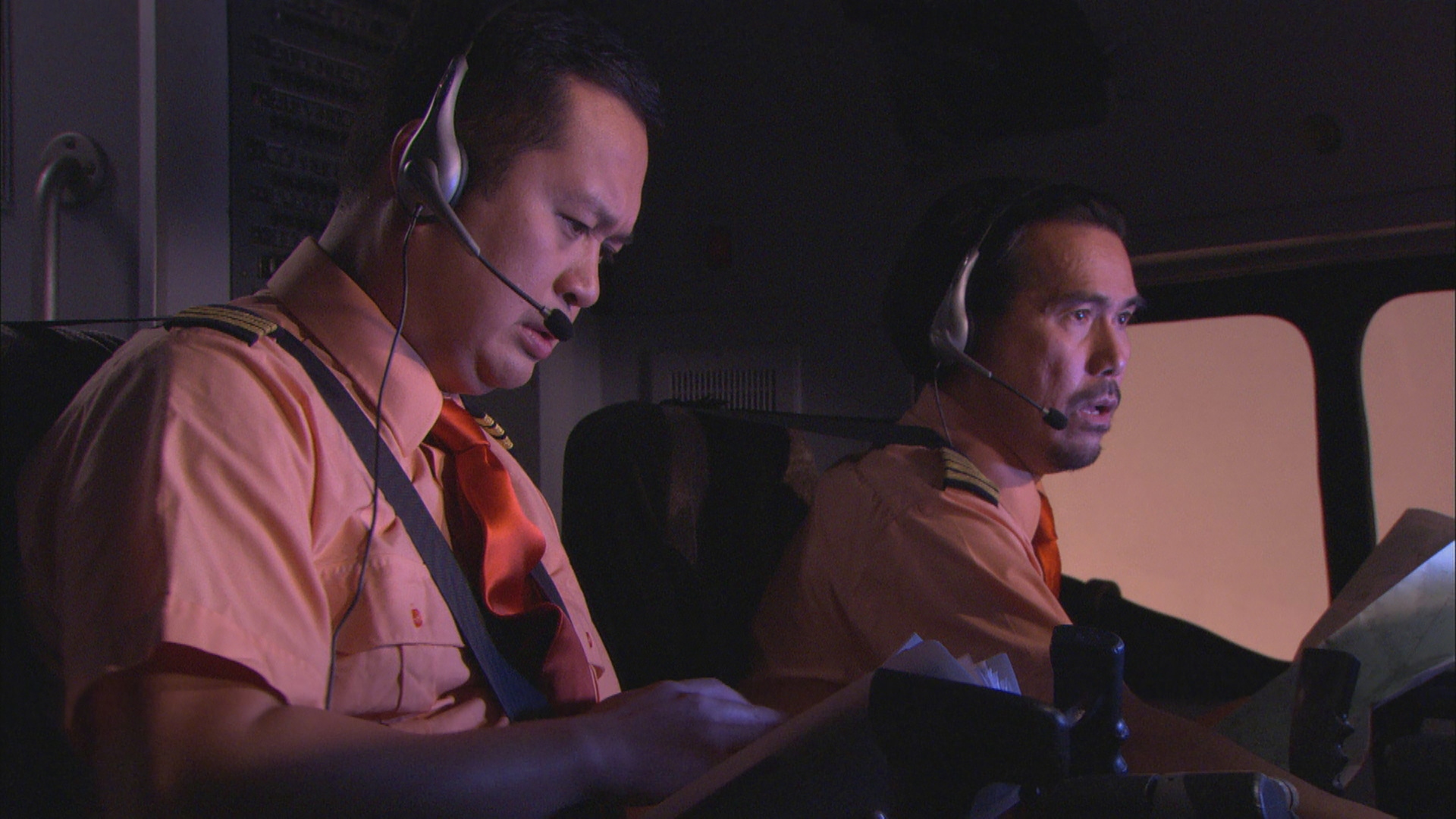
On January 1, 2007, Adam Air Flight 574, a Boeing 737-400 carrying 102 passengers and crew, vanished from radar during a domestic flight in Indonesia. A multi-month deep-sea salvage operation recovered the flight recorders, revealing that crew distraction during troubleshooting of a faulty Inertial Reference System (IRS) caused unperceived autopilot disengagement, spatial disorientation, an unrecovered spiral dive, and catastrophic inflight breakup.
Flight Profile and Chronology of Events
Adam Air Flight 574 was a scheduled domestic passenger flight operating from Juanda International Airport (SUB) in Surabaya, East Java, to Sam Ratulangi International Airport (MDC) in Manado, North Sulawesi. The aircraft assigned to the route was a Boeing 737-400, registered as PK-KKW, carrying 96 passengers—including 11 children—and six crew members.
The flight departed Surabaya at 12:59 local time (05:59 UTC) under the command of Captain Refik Hasan and First Officer Yogo Widodo. Captain Hasan had logged over 5,900 flight hours, while First Officer Widodo had accumulated approximately 4,200 hours. The route called for a northeast heading across the Java Sea and the Makassar Strait, climbing to a cruising altitude of Flight Level 350 (35,000 feet).
- Surabaya (SUB)
- Cruise FL350
- Cloud/Monsoon Front
- IRS Fault & CRM Breakdown
- Loss of Control
Weather reports along the route indicated severe seasonal monsoon turbulence, heavy cloud cover, and crosswinds across central and northern Sulawesi. At 13:56 local time, while cruising at 35,000 feet over the Makassar Strait, the flight crew made routine contact with Air Traffic Control (ATC) in Makassar. They reported entering instrument meteorological conditions (IMC) with dense cloud cover and active thunderstorm cells.
Shortly after this communication, the flight crew encountered persistent directional discrepancies on their primary navigation displays, driven by recurring faults within the aircraft's navigation systems. Rather than focusing on maintaining basic flight attitude, both pilots directed their full attention to diagnosing the instrument anomaly while navigating through heavy cloud cover.
Radar contact was lost at 14:07 local time. No distress signal or Mayday call was transmitted by the flight crew. The aircraft abruptly disappeared from ATC primary and secondary radar displays approximately 85 nautical miles northwest of Majene, West Sulawesi.
Search, Discovery, and Deep-Sea Black Box Recovery
The initial search and rescue effort was plagued by logistical confusion and false reports. Early statements by regional military officials incorrectly asserted that the wreckage had been located in the mountains of South Sulawesi with survivors present. This error delayed target ocean search operations by nearly 24 hours until official retractions were issued by the Indonesian National Search and Rescue Agency (BASARNAS).
Surface search efforts shifted toward the oceanic waters of the Makassar Strait after local fishermen retrieved floating debris, including a Boeing 737 tail slide structure and seat cushions, off the coast of Majene. Floating wreckage confirmed that the aircraft had suffered an impact with the sea, but locating the main fuselage and the flight data recorders presented significant technical hurdles due to deep underwater trenches and complex sea floor topography.
| Date | Chronology of Search & Recovery |
|---|---|
| Jan 01, 2007 | Aircraft disappears over the Makassar Strait. |
| Jan 08, 2007 | Oceanographic vessel USNS Mary Sears detects sonar targets. |
| Jan 11, 2007 | Tail slide debris recovered by local fishermen off Majene. |
| Jan 24, 2007 | Acoustic pings from CVR/FDR pinpointed at ~2,000m depth. |
| Aug 27, 2007 | USNS Mary Sears & Phoenix Intl retrieve CVR and FDR from seabed. |
The Indonesian government requested international assistance, bringing in the oceanographic survey ship USNS Mary Sears (T-AGS-65) operated by the U.S. Navy, alongside specialized deep-sea retrieval assets from Phoenix International. Using side-scan sonar and multibeam echo sounders, the USNS Mary Sears mapped the seabed at depths ranging from 1,500 to 2,000 meters (4,900 to 6,500 feet).
By late January 2007, underwater acoustic hydrophones localized the signals from the underwater locator beacons attached to the Cockpit Voice Recorder (CVR) and Flight Data Recorder (FDR). However, legal negotiations surrounding contract funding and specialized marine salvage assets delayed actual recovery until August 2007. Operating the Remotely Operated Vehicle (ROV) CURV-21, salvage teams recovered both black boxes from depths exceeding 2,000 meters on August 27 and August 28, 2007. The recovered memory modules were transferred directly to the Indonesian National Transportation Safety Committee (KNKT) and the U.S. National Transportation Safety Board (NTSB) for readout and analysis.
Technical Findings of the KNKT Investigation
The final investigation report released by the National Transportation Safety Committee (KNKT Final Report) in March 2008 detailed a classic complex accident sequence. Technical failure, deferred maintenance practices, poor Crew Resource Management (CRM), and spatial disorientation combined to cause a fatal loss of control.
The Inertial Reference System (IRS) Malfunction
The Boeing 737-400 relies on two Inertial Reference Units (IRUs)—part of the Litton LTN-92 Inertial Reference System—to supply primary altitude, spatial attitude, heading, and navigation positioning data to the pilots' Flight Control Computer and Primary Flight Displays (PFD).
- Inertial Reference Unit (IRU) (Faulty Navigation Data)
- Pilot Switches IRU Mode Switch from NAV to ATT Mode
- AUTOPILOT AUTOMATICALLY DISENGAGES (Quiet Warning Tone Sounds)
- Crew Distracted by IRU Reset (Fails to Monitor Attitude)
- Unperceived Slow Right Roll
- Spatial Disorientation
- High-Speed Spiral Dive
Maintenance logs for PK-KKW revealed a chronic history of IRS malfunctions. Over the 12 months preceding the crash, maintenance records documented 154 reported defects related to the aircraft's IRS system. Aircraft technicians repeatedly cleared these write-offs using visual checks, cleaning connectors, or resetting circuit breakers rather than replacing faulty IRU components or diagnosing systemic wiring faults.
During Flight 574, the left (Captain's) IRS began outputting erroneous positional data, causing the navigation displays to show incorrect drift angles and positional errors relative to the actual track.
Sequence of Control Loss
The CVR transcript recorded the pilots spending over 13 minutes trying to troubleshoot the erratic navigation displays while flying in total cloud cover (IMC).
- Mode Switch Alteration: To recalibrate the malfunctioning unit, the Captain switched the IRS selector switch from
NAV(Navigation) mode toATT(Attitude) mode while in flight. - Autopilot Disengagement: Operating logic on the Boeing 737-400 automatically disengages the autopilot whenever an IRS mode switch is taken out of
NAV. The system sounded a standard single-tone chime and illuminated an autopilot disengage light. - Loss of Monitoring: Neither pilot acknowledged the autopilot disengagement chime. Both pilots were entirely preoccupied with looking at the IRS control panel overhead and consulting the Quick Reference Handbook (QRH).
- Attitude Drift: With the autopilot disengaged and no control wheel input from the flight crew, the aircraft developed a subtle right-wing-down roll rate of approximately 1 degree per second, driven by aerodynamic asymmetry and minor atmospheric disturbances.
Spatial Disorientation and High-Speed Breakup
Because the aircraft was flying inside dense cloud layers without visual horizon references, the crew suffered severe spatial disorientation (specifically the "leans"). The roll rate was below the human vestibular threshold for sensing movement, giving the crew no physiological awareness that the aircraft was banking.
Roll Angle Progression vs. Crew Awareness Timeline:
| Time | Bank Angle | Pitch Angle | Aircraft State / Crew Action |
|---|---|---|---|
| 13:59:00 | 0° (Level) | +2° Nose Up | Autopilot engaged cruising FL350. |
| 14:06:30 | 10° Right | +1° Nose Up | IRS switched to ATT; Autopilot disengages. |
| 14:07:00 | 35° Right | -2° Nose Down | Roll exceeds normal bank; no crew entry. |
| 14:07:35 | 60° Right | -10° Nose Down | Spiral dive entry; airspeed rapidly increases. |
| 14:07:50 | 100° Right | -60° Nose Down | Mach Warning sounds; high-G recovery pull. |
| 14:08:00 | Inflight Structural Breakup | Exceedance of Vne/Mmo (Mach 0.926). |
By the time the bank angle passed 35 degrees, the aircraft began to lose lift and pitch downward into a spiral dive. The bank angle reached nearly 100 degrees right-wing-down, with the nose pitched downward by over 60 degrees.
When the pilots finally noticed the extreme attitude on their primary instruments, the aircraft was descending at high velocity. Overwhelmed by confusion, the Captain initiated a sudden pull-back on the control column without first rolling the wings level. Pulling back while banked beyond 90 degrees only tightened the spiral dive, accelerating the vertical drop and increasing aerodynamic loading.
The aircraft exceeded its Maximum Operating Limit Velocity ($V_{MO} / M_{MO}$), reaching an indicated airspeed of Mach 0.926—far beyond the structural design envelope of the Boeing 737-400. Extreme dynamic air loads caused main structural components, including portions of the tail assembly and wings, to separate from the airframe prior to sea impact.
Technical Specifications and Flight Profile Summary
| Parameter | Operational Specification / Investigation Detail |
|---|---|
| Aircraft Type | Boeing 737-4Q8 |
| Registration / Line No. | PK-KKW / Line 1665 |
| Engine Type | 2x CFM International CFM56-3C1 |
| Operator | Adam Air (PT Adam SkyConnection Airlines) |
| Departure / Destination | Surabaya (SUB) to Manado (MDC) |
| Occupants | 102 (96 Passengers, 6 Crew) — 0 Survivors |
| Primary System Fault | Litton LTN-92 Inertial Reference System (IRS) Drift |
| Impact Velocity & Depth | Surface impact post-breakup; wreckage recovered at ~2,000m depth |
| Investigative Authority | National Transportation Safety Committee (KNKT - Indonesia) |
| Assisting Agencies | NTSB (USA), BEA (France), Boeing, GE Aviation |
Crew Resource Management (CRM) and Operational Failures
The technical investigation highlighted severe operational breakdowns within the cockpit and across Adam Air's organizational safety structure.
Ineffective Instrument Cross-Checks
Standard operating procedures mandate that at least one pilot—designated as the Pilot Flying (PF)—must maintain dedicated focus on primary attitude instruments and trajectory control at all times, regardless of minor system anomalies. CVR analysis demonstrated that both Captain Hasan and First Officer Widodo abandoned instrument cross-checks simultaneously to address the overhead IRS control panel.
Standard CRM Task Sharing vs. Flight 574 Breakdown:
- STANDARD CRM LOGIC:
- System Malfunction
- Pilot Monitoring (PM) Troubleshoots
- Pilot Flying (PF) Flies the Aircraft
- System Malfunction
- FLIGHT 574 ACTUAL:
- System Malfunction
- Both Pilots Troubleshoot
- NO PILOT MONITORING FLIGHT ATTITUDE
- System Malfunction
Inadequate Aircraft Maintenance Practices
The recurring maintenance deferrals on aircraft PK-KKW played a direct causal role. Maintenance records showed that ground crews repeatedly signed off on the IRS unit using basic visual checks, despite documented reports of navigation drift on prior flights.
The regulatory body noted that safety culture at Adam Air prioritized high fleet utilization and tight flight schedules over thorough mechanical troubleshooting. Engineers were frequently pressured to issue airworthiness sign-offs on component faults that warranted complete removal and bench testing.
Industry Reforms and Aviation Safety Legacy
The destruction of Flight 574, coupled with subsequent safety incidents involving Indonesian air carriers, exposed systemic safety deficiencies within the Indonesian civil aviation sector. The crash served as a major catalyst for sweeping international regulatory actions and structural reforms.
- REGULATORY CONSEQUENCES & SAFETY REFORMS
- FAA FAA IASA DOWNGRADE
- Category 1 to Category 2
- (Restricted US Ops/CodeShare)
- EUROPEAN UNION BAN
- All Indonesian air carriers banned from EU airspace
- REVOCATION OF ADAM AIR OPERATING LICENSE
- AOC revoked in March 2008 following financial collapse and continuous safety compliance failures
- INDONESIAN DGCA LEGISLATIVE OVERHAUL
- Enactment of Aviation Law No. 1/2009 for mandatory safety oversight and modernization of pilot CRM certification
- FAA FAA IASA DOWNGRADE
Global Regulatory Actions
- FAA Downgrade: In April 2007, the U.S. Federal Aviation Administration (FAA) downgraded Indonesia’s International Aviation Safety Assessment (IASA) rating from Category 1 to Category 2. This rating indicated that the Indonesian Directorate General of Civil Aviation (DGCA) lacked adequate regulations and oversight protocols conforming to minimum International Civil Aviation Organization (ICAO) standards.
- European Union Airspace Ban: In July 2007, the European Commission placed all 51 Indonesian air carriers—including national carrier Garuda Indonesia and Adam Air—on the EU Air Safety List, banning them from operating within European airspace.
- Closure of Adam Air: Following another non-fatal incident involving Adam Air Flight 292 in Batam in March 2008, combined with unpaid debts and severe regulatory non-compliance, the Indonesian government permanently revoked Adam Air’s Air Operator Certificate (AOC) in March 2008. The airline filed for bankruptcy shortly thereafter.
Technical and Operational Reforms
The investigation produced fundamental changes in training regimens for commercial airline pilots operating glass-cockpit and legacy instrumentation aircraft:
- Automated System Disconnect Training: Modern simulator training programs expanded practice modules regarding uncommanded or automatic flight control disengagements, training pilots to immediately verify attitude indicators whenever a disengage warning tone sounds.
- Spatial Disorientation Recovery: Aviation authorities updated Upset Prevention and Recovery Training (UPRT) protocols to mandate simulator scenarios where pilots must recognize high-bank spiral dives in cloud conditions and execute proper recovery steps (rolling wings level before pulling back on pitch controls).
- Enhanced Maintenance Quality Oversight: The DGCA restructured its auditing framework to monitor repeated pilot logbook entries, requiring airlines to remove components from service after a specified threshold of recurring operational complaints.
Frequently Asked Questions
What was the primary cause of the Adam Air Flight 574 crash?
The primary cause was loss of control resulting from crew distraction and spatial disorientation. While troubleshooting a faulty Inertial Reference System (IRS), the flight crew inadvertently disengaged the autopilot, allowed the aircraft to enter an unperceived steep right roll, and failed to recover from a high-speed spiral dive, leading to in-flight structural breakup.
Where was the wreckage of Adam Air Flight 574 located?
The wreckage was located on the sea floor of the Makassar Strait, off the coast of Majene, West Sulawesi, Indonesia. The main wreckage and flight recorders were discovered scattered across deep underwater terrain at depths of approximately 2,000 meters (6,500 feet).
Did the aircraft break up in the air or upon impact with the water?
The investigation concluded that the aircraft suffered an in-flight structural breakup before hitting the ocean. As the Boeing 737 descended in an extreme spiral dive, it reached speeds up to Mach 0.926, generating aerodynamic forces that exceeded the structural limits of the airframe and caused sections of the tail and wings to separate.
Why did the pilots switch the Inertial Reference System (IRS) in flight?
The pilots switched the IRS mode selector from NAV to ATT in an attempt to re-align and reset the system after receiving persistent navigation errors on their displays. Performing this switch while airborne automatically disengaged the autopilot, which went unnoticed by the crew as they focused on reading troubleshooting checklists.
What happened to Adam Air after the Flight 574 crash?
Adam Air faced intense regulatory scrutiny, safety audits, and financial distress following the crash. After another accident in March 2008 involving a Boeing 737 overrunning a runway in Batam, the Indonesian Department of Transportation suspended the airline's operations and revoked its Air Operator Certificate (AOC) later that month.
Key Safety Takeaways for Aviation Operations
The tragedy of Adam Air Flight 574 remains an important case study in aviation safety engineering and operational psychology. It demonstrates that advanced electronic navigation tools cannot replace disciplined primary flight instrument monitoring.
For commercial flight crews and safety managers, the accident underscores three core operational mandates:
- Prioritize Aviate over Navigate: Task delegation must always assign one dedicated pilot to fly the aircraft and monitor primary instruments whenever mechanical troubleshooting occurs.
- Respect Autopilot Disengage Modes: Pilots must immediately verify attitude control and autopilot engagement status whenever an auditory system chime sounds.
- Address Recurring Maintenance Faults: Aviation maintenance teams must treat recurring component defects as serious systemic faults rather than clearing logbooks with superficial visual checks or circuit resets.