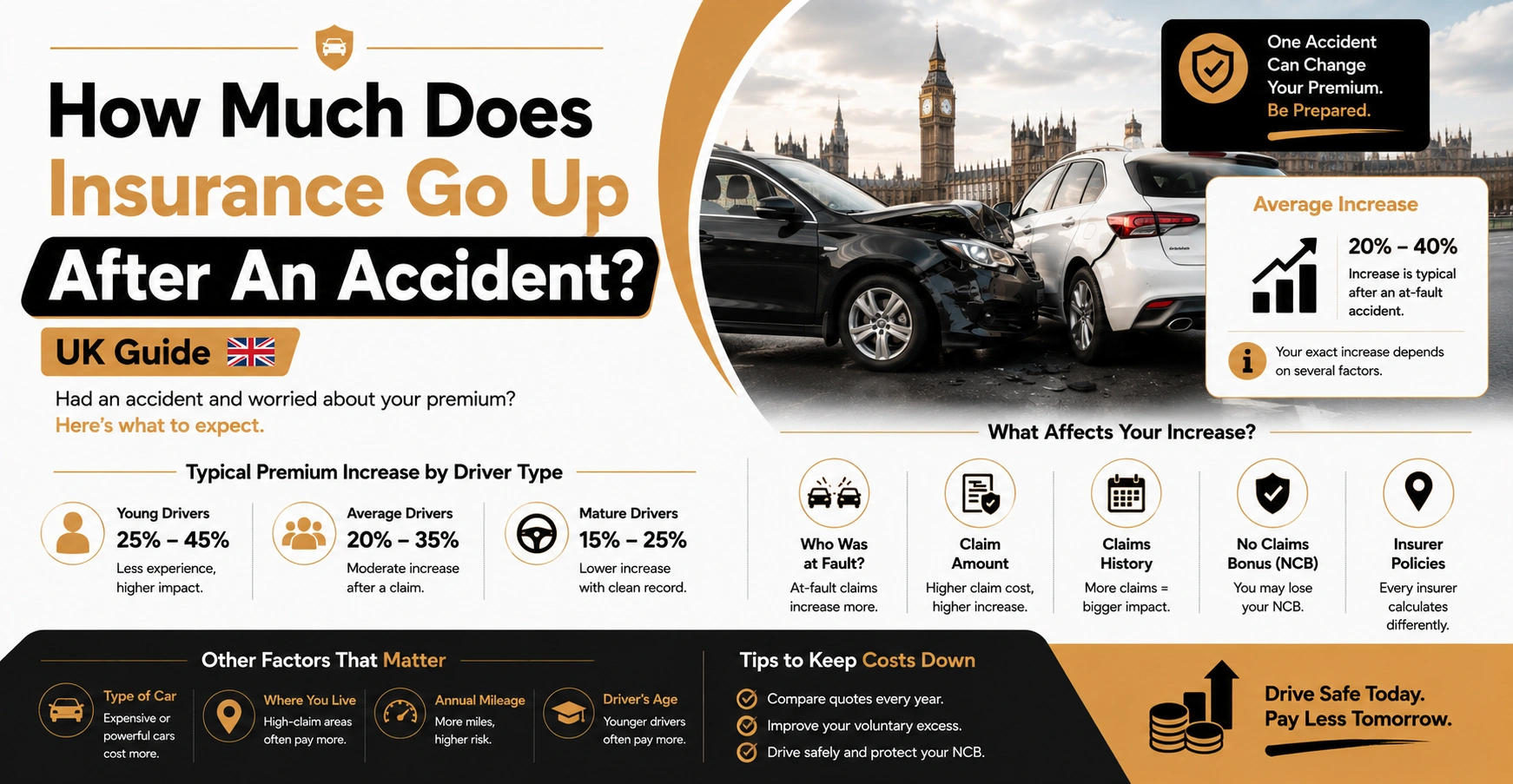
Your accident history is a primary data point used by insurance companies to assess risk and determine your monthly premiums. This history includes past claims, police reports, and traffic violations recorded in databases like the CLUE report and state Motor Vehicle Records. Most accidents influence your insurance costs for three to five years, though major infractions may linger longer.
The Infrastructure of Accident Tracking: CLUE and MVR Reports
In 2026, the insurance industry relies on sophisticated, interconnected databases to maintain a comprehensive record of every driver’s history. When you apply for a policy or a renewal, insurers do not simply take your word for your driving record; they consult two primary sources of truth: the Comprehensive Loss Underwriting Exchange (CLUE) and your state’s Motor Vehicle Record (MVR).
The CLUE report, managed by LexisNexis Risk Solutions, is a claims-history database that enables insurance companies to access information about claims you have filed over the past seven years. This report includes the date of the loss, the type of loss (such as collision, theft, or weather damage), and the amount the insurance company paid out. Even if you didn't file a claim but called your agent to inquire about an incident, it might appear as a "report-only" entry, which some insurers still view as a risk indicator.
The Motor Vehicle Record (MVR) is a government-issued document provided by your state’s Department of Motor Vehicles (DMV) or equivalent agency. While the CLUE report focuses on claims and financial payouts, the MVR focuses on legal infractions. It tracks speeding tickets, DUIs, reckless driving charges, and accidents where a police report was filed. Insurers look for patterns in the MVR to determine if a driver’s behavior is becoming increasingly risky. In 2026, many states have streamlined the digital integration of these records, allowing insurers to pull real-time updates during the underwriting process.
The Underwriting Logic: Why Past Accidents Predict Future Risk
The core philosophy of car insurance underwriting is that past behavior is the most reliable predictor of future performance. Actuaries—the professionals who calculate risk for insurance companies—use vast amounts of historical data to determine that a driver who has been in one at-fault accident is statistically more likely to be involved in another within the next few years.
When an accident is added to your history, it changes your "risk profile." If you were previously classified as a "preferred" or "standard" driver, a single at-fault accident involving significant property damage or bodily injury could move you into the "non-standard" or high-risk category. This reclassification is what triggers a premium increase, often referred to as a surcharge. These surcharges are not flat fees; they are percentages added to your base rate. For example, a 30% surcharge on a $1,200 annual premium results in an extra $360 per year. Over a three-year period, that single accident could cost you over $1,000 in additional premiums.
Distinguishing Between At-Fault and Not-At-Fault Incidents
Not all entries in your accident history carry the same weight. The determination of "fault" is a critical junction in how your insurance rate will be affected.
At-Fault Accidents
In states following traditional tort law, the driver who caused the accident is responsible for the damages. If your insurance company pays out for damages to another party's vehicle or medical bills under your liability coverage, you are deemed at-fault. These incidents have the most dramatic impact on your history. Insurers view these as avoidable events caused by poor judgment or lack of attention, necessitating a higher premium to offset the increased risk of future payouts.
Not-At-Fault Accidents
If another driver hits your car and their insurance pays for the repairs, you are generally considered not-at-fault. In many states, legislation prevents insurance companies from raising your rates solely because of a not-at-fault accident. However, some insurers may still adjust your rates if you have a high frequency of not-at-fault accidents. The logic here is that your driving environment—such as a high-traffic urban area—or your driving habits might make you more prone to incidents, even if you aren't legally liable.
No-Fault States and PIP Claims
In "no-fault" states (such as Florida, Michigan, or New Jersey), drivers carry Personal Injury Protection (PIP) to cover their own medical expenses regardless of who caused the accident. In these jurisdictions, the "accident history" still records the event, but the impact on your premium may be moderated by state laws designed to limit surcharges for minor claims.
How Long Do Accidents Stay on Your Insurance Record?
The duration an accident remains "visible" to insurers varies by state law and company policy. Generally, the timeline follows a standard three-to-five-year window for most incidents.
| Incident Type | Standard Reporting Period | Impact on Premiums |
|---|---|---|
| Minor Fender Bender (At-Fault) | 3 Years | Moderate (15% - 25% increase) |
| Major Accident with Bodily Injury | 5 Years | High (40% - 60% increase) |
| Comprehensive Claim (Theft/Glass) | 3 Years | Minimal to None |
| DUI / Reckless Driving | 7 to 10 Years | Severe (Possible non-renewal) |
| Not-At-Fault Accident | 3 Years | Low to None (State dependent) |
In 2026, advanced data analytics allow insurers to "weight" these years differently. For instance, an accident that occurred four years ago will have a much smaller impact on your rate than one that occurred four months ago. This is known as premium decay, where the surcharge gradually decreases as the incident moves further into the past, provided no new incidents occur.
Accident Forgiveness: A Buffer for Your History
Many insurance carriers in 2026 offer a feature known as Accident Forgiveness. This is essentially a contractual agreement where the insurer promises not to raise your rates after your first at-fault accident.
However, there are three major caveats to understand about this program:
- It is not usually free: Most drivers pay a small additional premium each month to have this protection on their policy, or they must maintain a "clean" record for several years to earn it as a loyalty perk.
- The accident is still recorded: While your current insurer might "forgive" the accident and not raise your rate, the accident still goes on your CLUE and MVR reports. If you try to switch to a different insurance company, the new company will see the accident and price your policy accordingly.
- One-time use: Typically, forgiveness only applies to the first accident within a specific period (e.g., one accident every five years). A second accident will be surcharged normally.
How to Check and Correct Your Accident History
Errors in accident history reports are more common than many drivers realize. A "not-at-fault" accident might be incorrectly coded as "at-fault," or a claim that was denied might still show as a payout.
To verify your history, you should periodically request a copy of your Consumer Disclosure Report from LexisNexis. Under the Fair Credit Reporting Act (FCRA), you are entitled to one free copy of this report every 12 months.
If you find an error:
- Initiate a Dispute: Follow the LexisNexis dispute process to flag the incorrect information.
- Provide Evidence: Submit police reports, letters from your previous insurance company, or court documents that prove the error.
- Notify Your Insurer: Once the database is updated, contact your current insurance provider to ensure they have the corrected data. This could result in an immediate reduction in your premium.
Strategies for Managing Insurance with a Poor Accident History
If your history is currently marred by recent accidents, you aren't necessarily stuck with astronomical rates. Several strategies can help mitigate the financial impact while you wait for the incidents to age off your record.
Telematics and Usage-Based Insurance (UBI)
In 2026, telematics programs (using apps or plug-in devices to monitor driving behavior) have become the standard for high-risk drivers. If you have an accident on your record, enrolling in a UBI program allows you to prove to the insurer that you are currently driving safely—monitoring your speed, braking, and phone usage. Proving "good behavior" in real-time can sometimes offset the static "bad history" of a past accident.
Defensive Driving Courses
Many insurers offer a discount (usually 5% to 10%) if you complete a state-approved defensive driving course. Beyond the discount, completing a course demonstrates to the underwriter that you are taking proactive steps to improve your driving skills following an incident.
Adjusting Your Deductibles
If a surcharge has made your premium unaffordable, increasing your collision and comprehensive deductibles can lower the monthly cost. By taking on more of the financial risk yourself (e.g., moving from a $500 to a $1,000 deductible), you signal to the insurer that you are less likely to file small, "nuisance" claims, which helps lower your overall risk profile.
Shopping at the "Renewal Anniversary"
The best time to shop for new car insurance is exactly three or five years after your last accident. Because different companies use different "look-back" periods, an accident that still triggers a surcharge at Company A might be ignored entirely by Company B because it fell outside their three-year window.
Frequently Asked Questions
Does a car accident stay on your insurance record forever?
No. While the incident may remain on your state’s permanent driving record for a long time, insurance companies typically only "look back" and charge for accidents that occurred within the last three to five years. For major crimes like a DUI, the window can extend to ten years.
Will my insurance go up if I’m not at fault?
It depends on your state. In many states, insurers are legally prohibited from raising premiums for not-at-fault accidents. However, in other states, insurers may raise rates if they determine that your involvement in multiple not-at-fault accidents indicates a higher statistical risk of future claims.
Can I hide my accident history from a new insurance company?
No. Virtually all reputable insurance companies in the United States use the CLUE and MVR databases during the application process. If you omit an accident on your application, the insurer will discover it during the underwriting phase and either adjust your quote upward or deny coverage for "material misrepresentation."
Does "accident history" follow the driver or the car?
The accident history follows the driver. If you have an accident in a rental car or a friend's vehicle, it will still appear on your personal CLUE report and affect your insurance rates. However, if someone else crashes your car, the claim will be associated with your policy history because insurance generally follows the vehicle first.
How much does one accident increase insurance on average in 2026?
On average, a single at-fault accident in 2026 results in a premium increase of 25% to 45%. The exact amount depends on your previous driving record, the cost of the damage, and whether there were any injuries involved.
Practical Recommendation: Next Steps
If you have an accident in your history, your first action should be to obtain your CLUE report to ensure all data is accurate. If the information is correct, do not wait for your current insurer to lower your rates automatically. Once the accident reaches its third or fifth anniversary, immediately shop for new quotes. The "loyalty penalty" is often highest for drivers with past incidents; switching carriers once your record clears is frequently the fastest way to return to "preferred" pricing levels.