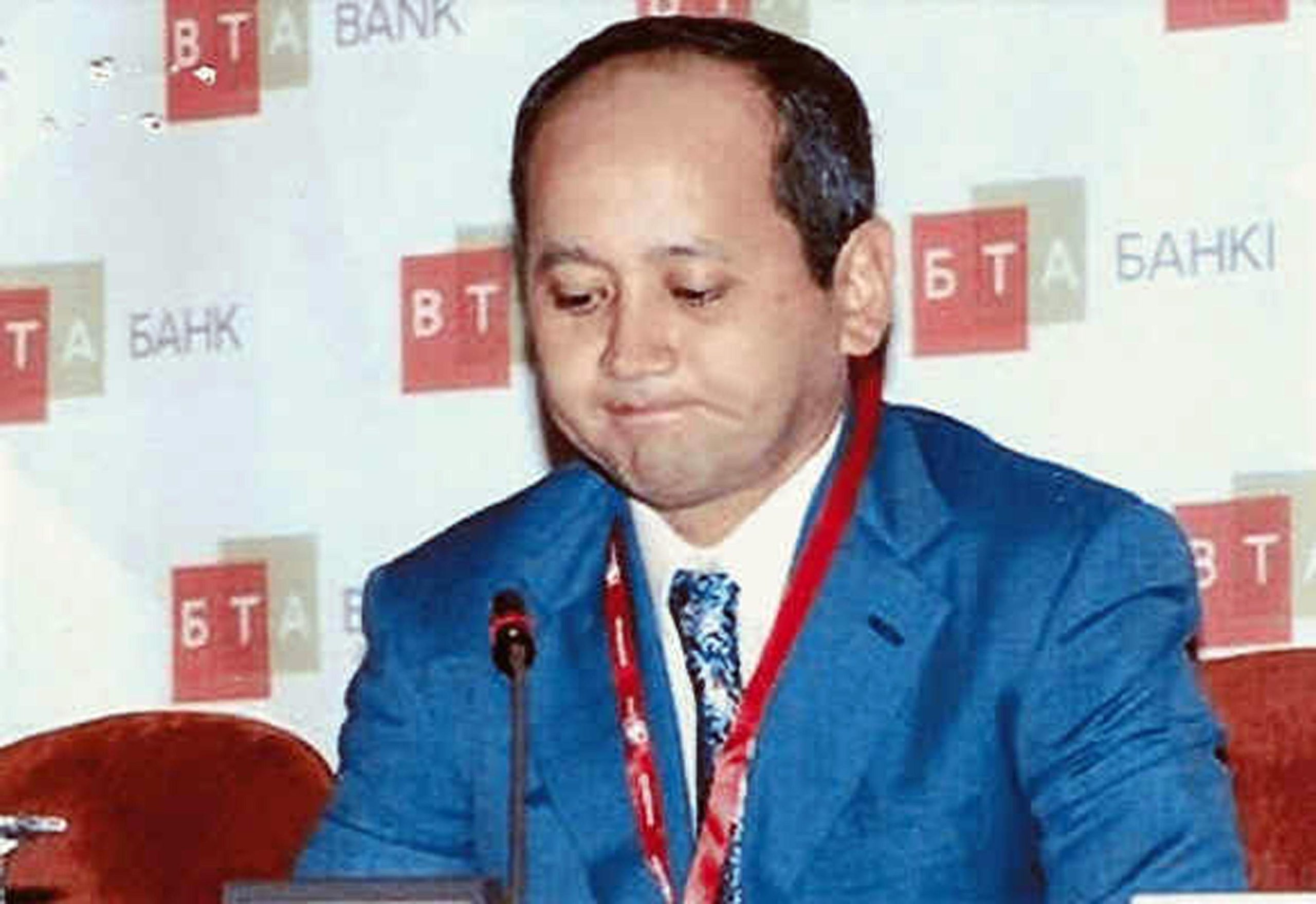
The interaction between Mukhtar Ablyazov and Bulat Utemuratov represents one of the most high-profile legal intersections in Central Asian business and international corporate law. The connection stems primarily from a major multi-billion-dollar asset recovery lawsuit initiated by BTA Bank in the English High Court, where Utemuratov was briefly named in late 2020 under allegations of concealing assets tied to Ablyazov. BTA Bank subsequently retracted all claims against Utemuratov in December 2020 after reviewing documents that proved he was not involved in Ablyazov's financial schemes.
Key Profiles: Distinguishing the Two Figures
Understanding the legal and financial dynamics between Mukhtar Ablyazov and Bulat Utemuratov requires an examination of their distinct backgrounds, political histories, and roles within Kazakhstan's corporate landscape.
Mukhtar Ablyazov
Mukhtar Ablyazov is a former Kazakh government minister, political dissident, and former Chairman of BTA Bank (formerly Bank TuranAlem). During the late 1990s, Ablyazov served as the Minister of Energy, Industry, and Trade in Kazakhstan before co-founding the opposition movement Democratic Choice of Kazakhstan (DCK) in 2001.
Following a period of imprisonment in 2002 and a subsequent pardon, Ablyazov assumed leadership of BTA Bank, expanding its footprint across the Commonwealth of Independent States (CIS). In 2009, the Kazakh government nationalized BTA Bank after discovering financial irregularities estimated between $6 billion and $10 billion. Ablyazov fled Kazakhstan for the United Kingdom, where BTA Bank pursued extensive civil fraud litigation against him.
In 2012, the English High Court issued a bench warrant and sentencing order against Ablyazov for contempt of court after he failed to disclose assets and lied under oath. Ablyazov fled the UK for France, where he has resided for years under legal battles involving extradition requests, international arrest warrants, and political asylum claims. He was convicted in absentia in Kazakhstan for embezzlement and the 2004 murder of his business partner Yerzhan Tatishev.
Bulat Utemuratov
Bulat Utemuratov is one of Kazakhstan’s most prominent businessmen, investors, and former diplomats. Unlike Ablyazov, who built his public profile through open opposition politics, Utemuratov spent decades operating within economic development, state diplomacy, and private equity.
During the 1990s and 2000s, Utemuratov held several senior government posts, including Ambassador to Switzerland, Special Representative of the President, and Secretary of the Security Council. After transitioning away from public office, he consolidated his commercial activities under Verny Capital, a private equity firm managing investments across telecommunications, banking, real estate, and natural resources.
Key assets associated with Utemuratov include major equity in ForteBank, telecommunications provider Kar-Tel (operating as Beeline in Kazakhstan), luxury hotel properties (including Ritz-Carlton locations in Astana, Vienna, and Moscow), and mining operations. Forbes consistently lists Utemuratov among the wealthiest individuals in Central Asia.
Genesis of the BTA Bank Fraud Allegations
The financial conflict involving BTA Bank stands as one of the largest civil fraud litigations in English legal history. The core dispute centered on allegations that Mukhtar Ablyazov utilized a complex network of offshore shell companies, back-to-back loan agreements, and fraudulent transactions to siphon billions of dollars out of BTA Bank between 2005 and 2009.
- BTA Bank Capital Siphoning (2005–2009)
- Offshore Shell Companies & Fraudulent Loans under Ablyazov Management
- Nationalization & Discovery of Deficit (2009)
- Kazakhstan Nationalized BTA Bank; Ablyazov Fled to London
- Multi-Jurisdictional Litigation (2009–2020+)
- English High Court Injunctions, Contempt Rulings, Asset Freezing Orders
- Brief Collateral Extension to Third Parties (Late 2020)
- WFO Issued Against Bulat Utemuratov Based on Unverified Document Trails
- Document Review & Complete Discharge (Dec 2020)
- BTA Retracted All Claims; English High Court Lifted Injunctions
The Mechanism of the Misappropriation
The legal claims brought by BTA Bank in London alleged that Ablyazov executed systemic self-dealing schemes. The bank asserted that under Ablyazov's leadership, BTA issued uncollateralized or under-collateralized loans to entities registered in jurisdictions such as the British Virgin Islands, Cyprus, and Seychelles.
These entities were beneficial-ownership structures allegedly controlled by Ablyazov or his trusted associates, including his son-in-law Ilyas Khrapunov and former executive Viktor Khrapunov. Once funds were disbursed, they were routed through secondary layers of financial intermediaries before being converted into private equity, luxury real estate, and hotel assets across Europe and North America.
The Search for Hided Assets
Because Ablyazov denied owning these assets, BTA Bank employed international law firms, forensic accountants, and private intelligence agencies to map the global web of shell companies. Over a decade of litigation, English courts issued multiple judgments against Ablyazov, ordering him to pay over $4.5 billion in damages and issuing worldwide freezing orders (WFOs) against his suspected holdings.
As BTA Bank continued its efforts to enforce these judgments, its legal team pursued auxiliary actions against individuals accused of acting as nominees, facilitators, or transferees of the contested funds. It was within this aggressive asset recovery campaign that Bulat Utemuratov was temporarily drawn into the English court proceedings.
The 2020 English High Court Freezing Order and Settlement
The direct legal intersection between Mukhtar Ablyazov and Bulat Utemuratov occurred in late 2020, resulting in significant international financial press coverage before being swiftly resolved.
The Issuance of the Worldwide Freezing Order
In November 2020, representatives acting for BTA Bank applied to the High Court of Justice in London for a Worldwide Freezing Order against Bulat Utemuratov, his corporate vehicles, and related entities. The application alleged that Utemuratov had assisted Ablyazov and his relatives in moving or concealing assets that belonged to BTA Bank.
Based on initial evidence submitted ex parte (without the respondent present) by BTA Bank, the English High Court granted a provisional freezing order capping Utemuratov's disposition of specified international assets up to an estimated value of $5 billion. The order temporarily restricted transactions involving banking accounts, corporate entities under Verny Capital, and international hotel properties.
Response, Document Disclosure, and Rapid Dismissal
Following the notification of the freezing order, Bulat Utemuratov and his legal team at Verny Capital mounted an immediate defense. They provided extensive financial documentation, audit trails, and corporate disclosure files directly to BTA Bank and the court.
The disclosed documents demonstrated that:
- Utemuratov’s financial assets, corporate acquisitions, and business capital were independent of BTA Bank's siphoned funds.
- Commercial transactions involving Utemuratov’s business groups were arm's-length commercial deals backed by legitimate financing.
- Neither Utemuratov nor Verny Capital had acted as a nominee, proxy, or intermediary for Mukhtar Ablyazov or his associates.
Upon reviewing the verified documentation, BTA Bank acknowledged that its initial assumptions regarding Utemuratov's involvement were incorrect. In December 2020—less than a month after the original order was filed—BTA Bank filed a joint application with Utemuratov’s legal team to withdraw all claims.
The High Court of Justice in London formally discharged the Worldwide Freezing Order, removing all legal restrictions against Utemuratov and closing the proceedings against him without any admission of liability or financial penalty.
Mechanics of International Asset Recovery and High Court Injunctions
The litigation involving Ablyazov, BTA Bank, and third parties like Utemuratov highlights key legal mechanisms used in cross-border fraud and asset recovery disputes under English commercial law.
Worldwide Freezing Orders (WFOs)
A Worldwide Freezing Order is an in personam injunction granted by the English High Court that prevents a defendant from disposing of, encumbering, or diminishing the value of their assets anywhere in the world.
To obtain a WFO, a claimant must demonstrate:
- A good arguable case on the merits.
- A real risk that the defendant will dissipate assets to render a future judgment unenforceable.
- That it is just and convenient in all circumstances to grant the order.
Because WFOs can be applied for ex parte to prevent the respondent from liquidating funds before the order takes effect, courts place a heavy burden of "full and frank disclosure" on the applicant. If the applicant relies on incomplete or flawed evidence, the court will discharge the order once the respondent presents counter-evidence, as occurred in the Utemuratov proceedings.
Norwich Pharmacal and Disclosure Orders
In complex fraud cases, English law provides mechanisms such as Norwich Pharmacal Orders (NPOs). These orders compel third parties—such as banks, offshore registered agents, or accounting firms—to disclose documents and information required to identify wrongdoers or trace missing assets.
Throughout its multi-jurisdictional litigation, BTA Bank used these disclosure orders across London, New York, Cyprus, and the British Virgin Islands. These efforts generated vast arrays of bank transfers and corporate records that were used to trace asset flows across international boundaries.
Political and Economic Implications for Kazakhstan
The legal disputes surrounding Ablyazov and Utemuratov carry implications that extend beyond private courtroom battles, affecting Kazakhstan's banking sector, corporate governance environment, and international investor confidence.
Banking Sector Restructuring and Sovereign Oversight
The collapse of BTA Bank under Ablyazov’s management in 2009 was a major systemic shock to Central Asia’s financial system. The Kazakh government was forced to deploy billions of dollars from its sovereign wealth fund, Samruk-Kazyna, to stabilize the financial system and absorb bad loans.
| Impacts on Kazakhstan's Financial Sector |
|---|
| Institutional Regulatory Reforms• Tightened capital adequacy ratios for commercial banks.• Enhanced Ultimate Beneficial Ownership (UBO) disclosure rules.• Strict oversight of related-party transactions and cross-border transfers. |
| Commercial Banking Consolidation• Wind-down of BTA Bank as an active deposit-taking institution.• Growth of private financial institutions, including ForteBank.• Repatriation of recovered capital into national stabilization frameworks. |
In contrast, Bulat Utemuratov’s stewardship of ForteBank represented a significant consolidation within Kazakhstan’s modern private banking sector. ForteBank emerged through the merger of Alliance Bank, Temirbank, and ABC Bank, establishing itself as a major capitalized institution subject to regulatory compliance under the National Bank of Kazakhstan (NBK) and the Agency for Regulation and Development of the Financial Market (ARDFM).
International Legal Precedents and Sovereign Wealth Risk
The litigation between Kazakh entities in London, New York, and Paris demonstrates how domestic political and corporate rivalries play out in foreign legal jurisdictions.
By utilizing English legal forums, international courts have established strict standards for verifying evidence regarding Central Asian assets. The rapid withdrawal of the freezing order against Utemuratov demonstrated that international commercial courts require verified, objective financial evidence before upholding major disruptions to legitimate corporate enterprises.
Comparative Matrix: Legal Status, Key Assets, and Litigation Roles
The following table provides a clear comparison of the legal profiles, business holdings, legal actions, and current statuses of Mukhtar Ablyazov and Bulat Utemuratov.
| Parameter | Mukhtar Ablyazov | Bulat Utemuratov |
|---|---|---|
| Primary Historical Role | Former Minister of Energy; Ex-Chairman of BTA Bank; Political Dissident | Former Ambassador; Ex-Secretary of Security Council; Investor |
| Main Investment Vehicle | Democratic Choice of Kazakhstan (Political); Various Offshore Vehicles | Verny Capital |
| Key Commercial Assets | Disputed offshore entities, real estate holdings (subject to asset recovery) | ForteBank, Kar-Tel (Beeline KZ), Ritz-Carlton properties, mining stakes |
| BTA Bank Litigation Role | Primary Defendant (Accused of ~$6B systemic fraud and embezzlement) | Third-Party Respondent (Temporarily named in late 2020; dismissed) |
| Nature of UK Court Orders | $4.5B+ Civil Judgments; Contempt Rulings; Worldwide Freezing Orders | Provisional 2020 Freezing Order (Discharged and fully withdrawn) |
| Legal Status in Kazakhstan | Convicted in absentia (Embezzlement, Financial Fraud, Murder) | Full commercial standing; no legal charges or convictions |
| Current Judicial Status | Subject to international enforcement, civil judgements, asset trace | All claims against him retracted by BTA Bank; operational business lead |
Strategic Context and Legal Outcomes
The resolution of the legal claims involving Mukhtar Ablyazov and Bulat Utemuratov clarifies several key aspects of international commercial law and corporate governance:
- Definitive Separation of Claims: The legal record explicitly separates Bulat Utemuratov and his entities from the fraudulent schemes committed by Mukhtar Ablyazov against BTA Bank.
- Standard of Proof in Foreign Courts: Global commercial courts such as the High Court in London prioritize documented financial evidence over initial assertions during complex cross-border fraud investigations.
- Continuity of Private Capital: The swift dismissal of proceedings allowed commercial enterprises like Verny Capital and ForteBank to maintain stability without structural disruption to their broader operating portfolio.
Frequently Asked Questions
Did Bulat Utemuratov hide money for Mukhtar Ablyazov?
No. While BTA Bank initially filed claims in November 2020 alleging Utemuratov was involved in hiding assets for Ablyazov, BTA Bank formally withdrew all allegations in December 2020. After reviewing verified financial disclosures provided by Utemuratov and Verny Capital, BTA Bank confirmed that Utemuratov had no involvement in Ablyazov’s financial activities or asset management schemes.
What was the result of the 2020 English High Court freezing order against Utemuratov?
The English High Court completely discharged and lifted the Worldwide Freezing Order in December 2020, less than a month after it was granted. The court terminated all restrictions against Utemuratov and his assets after BTA Bank dropped all claims against him.
Why was Mukhtar Ablyazov sued by BTA Bank?
BTA Bank sued Mukhtar Ablyazov for civil fraud, alleging that during his tenure as Chairman (prior to nationalization in 2009), he embezzled between $6 billion and $10 billion through shell companies and uncollateralized loans. English courts subsequently issued multi-billion-dollar judgments against Ablyazov and found him in contempt of court.
What is the current legal status of Mukhtar Ablyazov?
Ablyazov remains subject to multi-billion-dollar civil judgments issued by the High Court of Justice in London, alongside asset recovery actions in multiple international jurisdictions. He has also been convicted in absentia in Kazakhstan on charges including financial fraud, embezzlement, and conspiracy to commit murder.
What business assets does Bulat Utemuratov own?
Bulat Utemuratov manages his investments primarily through private equity firm Verny Capital. Major holdings associated with him include a controlling stake in ForteBank, equity in mobile operator Kar-Tel (Beeline Kazakhstan), real estate assets such as Ritz-Carlton hotels in Astana and Vienna, and interests in natural resource extraction.
Strategic Recommendations for Legal & Financial Analysts
For corporate intelligence analysts, international legal teams, and risk officers examining corporate governance in Central Asia:
- Verify Jurisdictional Updates: Cross-reference historic legal filings with final court disposition orders. Initial ex parte freezing applications often change significantly once full document disclosure occurs.
- Distinguish Operational Capital from Sovereign Litigation: Distinguish between domestic political dynamics and institutional asset tracing conducted under English or U.S. federal law.
- Review Ultimate Beneficial Ownership (UBO) Registries: Utilize official corporate registers (such as the UK Companies House, Luxembourg Business Register, or Kazakh AIFC directives) rather than media reports when evaluating entity structures.
EDITORIAL CATEGORY METADATA:
TOPIC METADATA: