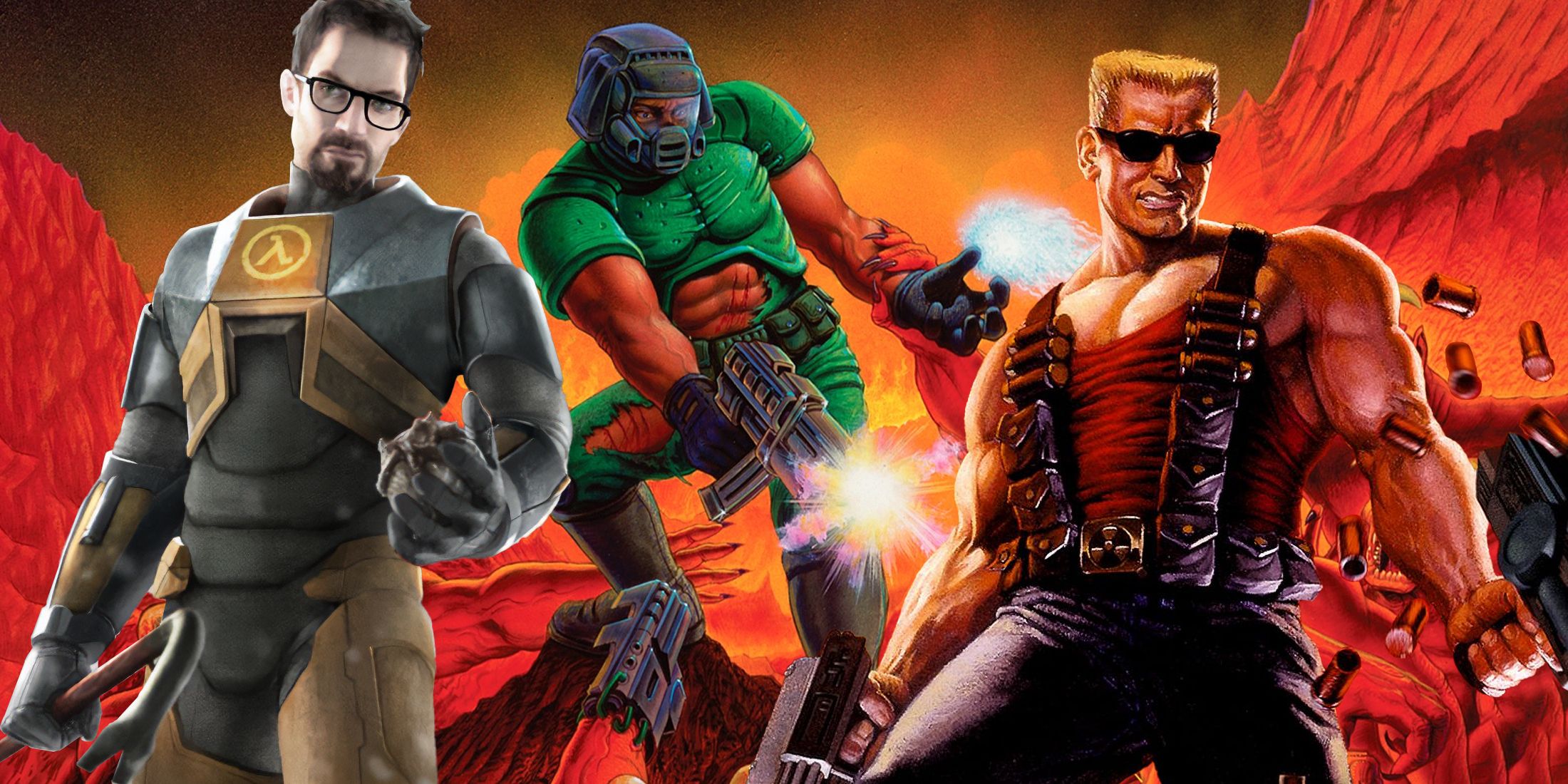
The 1990s represented the most transformative decade in video game history, bridging the gap between 16-bit 2D sprites and the birth of immersive 3D environments. This era saw the rise of the Sony PlayStation, the evolution of the First-Person Shooter (FPS) on PC, and the establishment of narrative-driven gaming as a dominant cultural force.
The decade began with the fierce competition between the Super Nintendo Entertainment System (SNES) and the Sega Genesis, a rivalry that pushed developers to maximize the potential of 2D art. However, by the mid-90s, the industry underwent a seismic shift toward polygonal rendering and CD-ROM storage. This transition allowed for orchestral soundtracks, full-motion video (FMV), and expansive worlds that were previously impossible. In the context of 2026, we look back at these ten years not just as a period of nostalgia, but as the foundational era that established the mechanics, genres, and business models that continue to define the modern interactive entertainment landscape.
The 16-Bit Zenith: Refining the 2D Experience
The early 1990s were characterized by the "Console Wars" between Nintendo and Sega. This competition was fueled by a rapid increase in processing power and memory, allowing for games that were more colorful, detailed, and mechanically complex than their 8-bit predecessors.
The Super Nintendo and Mode 7
Nintendo’s SNES introduced Mode 7, a graphics mode that allowed for the rotation and scaling of a background layer. This created a pseudo-3D effect that was revolutionary for the time. Games like F-Zero and Super Mario Kart utilized this technology to simulate depth and movement on a flat plane. Beyond technical tricks, the SNES era was defined by masterpieces of design, such as The Legend of Zelda: A Link to the Past and Super Metroid, which perfected the "Metroidvania" and action-adventure formulas.
Sega’s "Blast Processing" and Edgy Marketing
Sega countered Nintendo’s dominance with the Genesis (known as the Mega Drive outside North America) and a faster, more aggressive mascot: Sonic the Hedgehog. Sega’s marketing emphasized "Blast Processing"—a term used to describe the console’s higher CPU clock speed compared to the SNES. This allowed for faster gameplay and smoother scrolling, which appealed to a slightly older, "cooler" demographic. The Genesis also became the home of sports titles, with Madden NFL establishing the blueprint for yearly sports franchises.
The 3D Revolution and the Fifth Generation
The mid-90s saw the industry’s most significant technological leap: the transition from 2D pixels to 3D polygons. This shift required a fundamental rethink of how players interacted with virtual spaces.
The Sony PlayStation and the CD-ROM Impact
When Sony entered the market in 1994 (1995 in the West), it brought the CD-ROM to the mainstream. Cartridges were limited by storage space, often maxing out at 32MB or 64MB. A CD-ROM could hold 650MB. This massive increase in capacity allowed developers to include high-quality Redbook audio and pre-rendered cinematics. Square’s Final Fantasy VII (1997) was a turning point, using three discs to tell a cinematic story that helped popularize Japanese RPGs in the West.
Nintendo 64 and the Analog Stick
While Sony focused on storage, Nintendo focused on control. The Nintendo 64 (1996) introduced the analog stick as a standard feature on its controller. Super Mario 64 was the first game to truly solve the "3D camera problem," allowing players to move in 360 degrees with precision. This innovation laid the groundwork for every 3D third-person game that followed. Despite the N64’s superior processing power, its reliance on expensive cartridges limited its third-party support compared to the PlayStation.
PC Gaming and the Birth of Modern Genres
While consoles were battling for the living room, the PC was becoming a powerhouse for technical innovation, specifically in the realms of networking and hardware acceleration.
The FPS Explosion
In 1993, id Software released Doom. While not the first first-person shooter, it was the one that codified the genre. Its use of pseudo-3D environments, fast-paced action, and shareware distribution made it a global phenomenon. In 1996, Quake took this further by introducing true 3D engines and popularized online multiplayer over TCP/IP. By 1998, Valve’s Half-Life proved that the FPS could be a vehicle for sophisticated, scripted storytelling without the need for cutscenes.
Real-Time Strategy and CRPGs
The 90s was also the golden age of the Real-Time Strategy (RTS) genre. Westwood Studios (Command & Conquer) and Blizzard Entertainment (Warcraft and Starcraft) created competitive ecosystems that paved the way for modern e-sports. On the RPG front, the late 90s saw the release of Baldur’s Gate and Fallout, which brought the complexity of tabletop Dungeons & Dragons to the PC with deep narrative branching and character customization.
Key Technical Comparisons: 1990 vs. 1999
The technological trajectory of the decade can be mapped by looking at the leaps in storage, audio, and visual processing.
| Feature | Early 90s (16-Bit Era) | Late 90s (32/64-Bit Era) | Impact of Innovation |
|---|---|---|---|
| Primary Media | ROM Cartridge (1MB - 8MB) | CD-ROM (650MB) | Enabled FMV, high-fidelity audio, and massive game worlds. |
| Graphics | 2D Sprites / Parallax Scrolling | 3D Polygons / Texture Mapping | Shifted gameplay from 2D planes to 3D exploration. |
| Audio | MIDI / Wavetable Synthesis | Redbook Audio (CD Quality) | Allowed for orchestrated scores and full voice acting. |
| Controller | D-Pad (Digital) | Analog Sticks & Vibration | Revolutionized movement and player immersion. |
| Online Play | Local Multiplayer only | Dial-up Internet / LAN | Birthed the concept of global gaming communities. |
The Evolution of Game Design and Mature Themes
As the technology evolved, so did the audience. The 90s saw video games move away from being viewed purely as "toys" for children and toward being recognized as a legitimate form of adult entertainment.
The Rise of Stealth and Horror
The Fifth Generation of consoles allowed for atmospheric experiences. Resident Evil (1996) coined the term "Survival Horror," using fixed camera angles to create a cinematic sense of dread. Meanwhile, Hideo Kojima’s Metal Gear Solid (1998) introduced the world to "Tactical Spying Action." It used the game engine for cinematics, blending gameplay and story in a way that felt like an interactive Hollywood blockbuster.
Content Regulation and the ESRB
The push toward realism led to increased scrutiny. The graphic violence in Mortal Kombat and the "realistic" horror of Night Trap led to US Congressional hearings in 1993. This resulted in the formation of the Entertainment Software Rating Board (ESRB) in 1994. Far from stifling creativity, the rating system allowed developers to target adult audiences more explicitly, knowing that their products would be labeled appropriately.
Handheld Dominance: The Game Boy Era
While home consoles were moving toward 3D, the handheld market remained firmly in the 2D realm, dominated by Nintendo’s Game Boy. Despite technically superior competitors like the Sega Game Gear and Atari Lynx, the Game Boy won due to its superior battery life and a "killer app": Tetris.
In 1996, the release of Pokémon Red and Blue in Japan (1998 in the US) revitalized the aging hardware. The social aspect of the Link Cable, which allowed players to trade and battle creatures, created a playground phenomenon that remains one of the most valuable media franchises in the world as of 2026. This era proved that gameplay and social connectivity were often more important than raw graphical power.
FAQs About 90s Video Game Innovations
Why was the move from cartridges to CDs so controversial?
The move was controversial because CDs had significantly longer loading times compared to the near-instant access of cartridges. However, developers favored CDs because they were much cheaper to manufacture and offered significantly more storage space. Nintendo’s decision to stick with cartridges for the N64 is widely cited as the reason they lost third-party support from companies like Square and Capcom during that era.
What was the first "true" 3D game of the 90s?
This is often debated. While Star Fox (1993) on the SNES used the Super FX chip to render 3D polygons, it was limited. Alone in the Dark (1992) on PC featured 3D characters on 2D backgrounds. However, Virtua Fighter (1993) in arcades and Quake (1996) on PC are often credited with bringing fully polygonal environments and characters to the mainstream.
How did 90s games influence the current 2026 gaming market?
The 90s established the "standard" for 3D navigation (the dual-analog setup popularized by the late-90s DualShock) and narrative structure. Most modern genres, including Battle Royales, Hero Shooters, and Open World RPGs, can trace their mechanical lineage back to 90s titles like Quake, Team Fortress (a Quake mod), and The Legend of Zelda: Ocarina of Time.
Was online gaming common in the 1990s?
Online gaming was a niche but growing sector, primarily on PC. Services like MPlayer, WON, and DWANGO allowed players to compete in Doom and Duke Nukem 3D. On consoles, the Sega Saturn and Dreamcast (released in 1998/1999) featured modems, but the infrastructure was not yet stable enough for the mass market, which wouldn't happen until the following decade with Xbox Live.
What was the most significant hardware innovation of the decade?
While many point to 3D graphics cards (like the 3dfx Voodoo), the analog stick was arguably the most significant for the average consumer. Without it, the precise navigation of 3D space would have been clumsy, hindering the growth of the very genres that made the decade famous.
Legacy and Next Steps for Enthusiasts
The innovations of the 1990s were not merely incremental; they were foundational. For anyone looking to understand the mechanics of contemporary gaming, studying the titles of this decade is essential.
If you are looking to experience these innovations firsthand in 2026, there are several avenues:
- FPGA Hardware: For the most accurate "no-lag" experience, devices like the MiSTer Pi or Analogue Pocket allow you to play 90s games on modern displays with original hardware logic.
- Official Emulation: Services like Nintendo Switch Online and PlayStation Plus Premium provide curated libraries of 16-bit and 32-bit classics.
- Source Ports: For PC classics like Doom or Quake, modern source ports allow these games to run at 4K resolutions and high refresh rates on current hardware while preserving the original gameplay feel.
The 90s taught the industry that while technology provides the canvas, it is the design, character, and community that create a lasting legacy. As we move further into the 2020s, the "Decade of Innovation" remains the ultimate reference point for the entire medium.