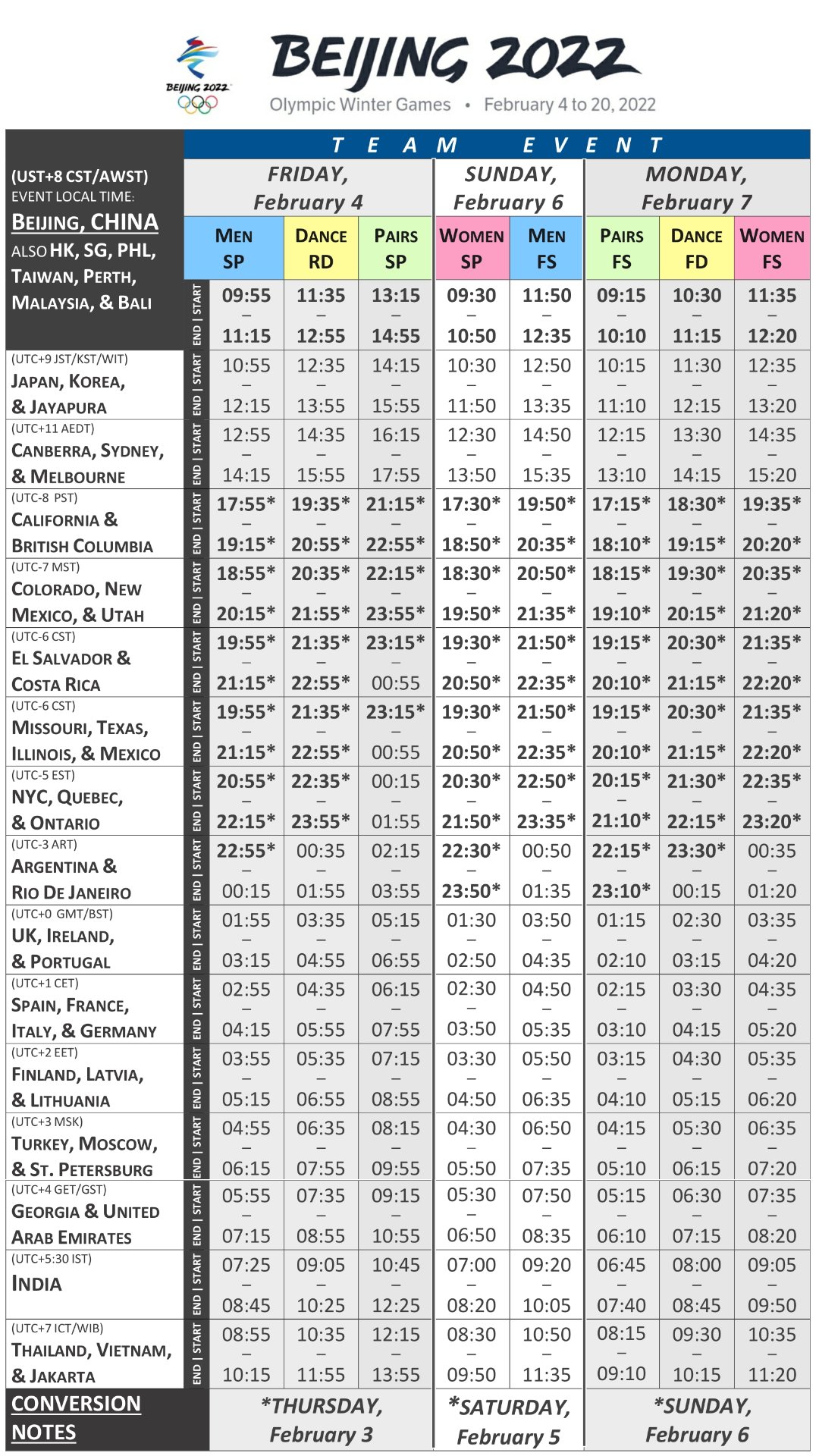
When it is 8:00 AM Central Standard Time (CST), the time in Central European Time (CET) is 3:00 PM (15:00). This represents a seven-hour difference, as CET is ahead of CST. This conversion is a critical synchronization point for professionals and organizations coordinating activities between North America and Europe.
Understanding this conversion requires more than a simple addition of hours. Because both the Central Time zone and the Central European Time zone frequently observe Daylight Saving Time (DST), the offset can fluctuate during specific "shoulder" periods of the year. For 2026, navigating these shifts is essential for maintaining accuracy in international scheduling, logistics, and digital communications.
Understanding the Fundamentals of CST and CET
To perform an accurate time conversion, one must first understand the Coordinated Universal Time (UTC) offsets that define these regions. Time zones are structured relative to the Prime Meridian, and these offsets provide the mathematical basis for all calculations.
Defining Central Standard Time (CST)
Central Standard Time is designated as UTC-6. This means that the local time in this zone is six hours behind the primary global time standard. In North America, CST is observed during the winter months. Geographically, this zone covers a vast area, including:
- United States: Parts of the Midwest and South, including major hubs like Chicago, Dallas, Houston, and New Orleans.
- Canada: Portions of Manitoba and Saskatchewan (though Saskatchewan largely observes CST year-round without shifting to daylight time).
- Mexico: Much of the country previously observed CST, though recent legislative changes in Mexico have altered how certain regions observe seasonal shifts.
- Central America: Countries such as Guatemala, Costa Rica, and Honduras operate on CST year-round.
Defining Central European Time (CET)
Central European Time is designated as UTC+1. This zone is one hour ahead of the Prime Meridian. CET is the standard time used in most of Western and Central Europe during the winter. It is one of the most economically significant time zones in the world, encompassing:
- Major Economic Hubs: Germany (Berlin, Frankfurt), France (Paris), Italy (Rome, Milan), and Spain (Madrid, Barcelona).
- Central Europe: Poland, Czech Republic, Hungary, and Austria.
- Northern and Southern Reach: Norway and Sweden in the north, and as far south as Malta.
The mathematical gap between UTC-6 and UTC+1 is precisely seven hours. Therefore, when it is 8:00 AM in a CST region, you add seven hours to arrive at 3:00 PM in a CET region.
The Impact of Daylight Saving Time in 2026
The most common source of error in time conversion is the failure to account for seasonal shifts. In 2026, both North America and Europe will transition to summer time, but they will do so on different dates. This creates "gap periods" where the standard 7-hour offset changes.
Seasonal Designations
- CDT (Central Daylight Time): UTC-5 (Used in summer in North America).
- CEST (Central European Summer Time): UTC+2 (Used in summer in Europe).
When both regions are in their "summer" versions (CDT and CEST), the offset remains seven hours (5 + 2 = 7). However, the transition dates are not synchronized.
2026 Transition Schedule
In 2026, the transition dates for Daylight Saving Time are as follows:
- March 8, 2026: The United States and parts of Canada transition from CST to CDT. Europe remains in CET for three more weeks. During this window, the offset shrinks to six hours.
- March 29, 2026: Europe transitions from CET to CEST. This restores the seven-hour offset.
- October 25, 2026: Europe transitions back from CEST to CET. North America remains in CDT for one more week. During this window, the offset again becomes six hours.
- November 1, 2026: North America transitions back from CDT to CST, restoring the standard seven-hour offset.
The 8 AM Conversion Table for 2026
This table outlines the specific conversion for 8:00 AM in the Central Time zone to the corresponding European time throughout the 2026 calendar year.
| Date Range (2026) | North American Status | European Status | 8:00 AM Central Time Equals | Offset |
|---|---|---|---|---|
| Jan 1 – March 7 | CST (Standard) | CET (Standard) | 3:00 PM CET | 7 Hours |
| March 8 – March 28 | CDT (Daylight) | CET (Standard) | 2:00 PM CET | 6 Hours |
| March 29 – Oct 24 | CDT (Daylight) | CEST (Summer) | 3:00 PM CEST | 7 Hours |
| Oct 25 – Oct 31 | CDT (Daylight) | CET (Standard) | 2:00 PM CET | 6 Hours |
| Nov 1 – Dec 31 | CST (Standard) | CET (Standard) | 3:00 PM CET | 7 Hours |
Step-by-Step Manual Conversion Process
While digital tools are ubiquitous, understanding the manual calculation ensures that you can verify results and avoid "input errors" when using automated calendars.
The 24-Hour Clock Method
To avoid confusion between AM and PM, professional environments often use the 24-hour (military) clock.
- Start with the base time: 08:00 (8 AM).
- Identify the offset: For CST to CET, the offset is +7.
- Add the hours: 08:00 + 07:00 = 15:00.
- Convert back (if necessary): 15:00 is 3:00 PM.
The Crossing-Midnight Rule
If you were converting a later time, such as 8:00 PM CST, the calculation would be:
- 20:00 (8 PM) + 7 hours = 27:00.
- Since a day has only 24 hours, subtract 24: 27:00 - 24:00 = 03:00.
- This indicates that 8:00 PM CST is 3:00 AM CET the next day.
Why 8 AM CST is a Strategic "Golden Hour"
In the world of international business, 8:00 AM CST is often referred to as the start of the "overlap window" or the "Golden Hour" for trans-Atlantic collaboration.
For North American Teams
Starting a meeting at 8:00 AM CST allows US-based employees to begin their workday just as their European counterparts are entering the final third of theirs (3:00 PM CET). This provides a roughly 2-to-3-hour window where both teams are alert, active, and available for real-time problem-solving before the European offices close for the evening.
For European Teams
For those in Paris or Berlin, 3:00 PM is often the time when the "afternoon slump" hits. Synchronizing with the 8:00 AM CST start in North America often provides a fresh injection of energy into projects. It allows European teams to hand off tasks that need to be completed overnight (European time) by the US team, ensuring a 24-hour "follow-the-sun" production cycle.
Key Industry Applications
- Financial Markets: 8:00 AM CST (9:00 AM EST) coincides with the final hours of the major European stock exchanges (like the Frankfurt Stock Exchange or Euronext Paris), which typically close around 5:30 PM CET.
- Software Development: Daily "stand-up" meetings for distributed agile teams often occur at 8:00 AM CST to ensure that blockers are identified while the European developers are still online to provide context.
- Customer Support: Global support Tiers often hand over tickets at this hour to ensure seamless coverage.
Common Challenges and Troubleshooting
Despite the simplicity of adding seven hours, several technical and human factors can lead to scheduling errors.
The Saskatchewan and Arizona Exceptions
Not all regions within the Central or Mountain time zones observe Daylight Saving Time. For instance, most of Saskatchewan stays on CST year-round. If you are coordinating with someone in Regina, the offset to Europe will change more frequently because the Saskatchewan time never moves, while the European time does.
Software Sync Issues
Most modern calendar applications (Outlook, Google Calendar, Apple Calendar) handle time zone conversions automatically. However, errors occur when:
- A meeting invite is created by someone in a third time zone (e.g., GMT).
- The "automatic time zone" setting on a mobile device is disabled.
- The "floating time" feature is used, which keeps the time the same regardless of the zone, rather than adjusting for the offset.
Troubleshooting Steps
- Verify the Offset: Always check if the current date falls within the "gap weeks" in March or October/November.
- Use UTC as the Anchor: If in doubt, convert both times to UTC. 8 AM CST is 2 PM UTC. 3 PM CET is 2 PM UTC. If the UTC values match, the conversion is correct.
- Confirm the City: Instead of saying "CST," specify "Chicago Time." This allows the software to account for specific local laws regarding DST transitions.
Frequently Asked Questions
Is CST the same as Central Time?
Not exactly. "Central Time" (CT) is a generic term that encompasses both Central Standard Time (CST) and Central Daylight Time (CDT). CST specifically refers to the UTC-6 period (winter), while CDT refers to UTC-5 (summer). When people ask for a "CST to CET" conversion in the middle of July, they are technically asking for a conversion that doesn't exist at that moment, as most of the region is on CDT.
Does 8 AM CST to CET ever change from 7 hours?
Yes. As noted in the 2026 transition table, the offset becomes 6 hours during the periods when North America has moved to Daylight Saving Time but Europe has not yet moved to Summer Time (and vice-versa in the autumn). In 2026, these windows occur from March 8 to March 28 and from October 25 to October 31.
Which European countries do NOT use CET?
While most of Central Europe uses CET, the United Kingdom, Ireland, Portugal, and Iceland do not. They use Western European Time (WET/GMT), which is one hour behind CET. Therefore, 8:00 AM CST would be 2:00 PM in London, not 3:00 PM. Additionally, Eastern European countries like Greece, Finland, and Ukraine use EET (UTC+2), making it 4:00 PM there.
Why does Mexico no longer follow these CST rules?
In late 2022, Mexico abolished Daylight Saving Time for most of the country. Consequently, much of Mexico now observes what was formerly "CST" (Standard Time) year-round. This means the offset between Mexico City and Europe will fluctuate between 7 and 8 hours depending on whether Europe is in Summer Time (CEST) or Standard Time (CET).
How do I convert 8 AM CST to CET if I'm using military time?
In military or 24-hour format, 8:00 AM is written as 08:00. Adding the 7-hour offset results in 15:00. There is no AM/PM designation in military time, which reduces the risk of 12-hour errors.
Practical Recommendation
For anyone frequently managing the 8:00 AM CST to CET conversion, the best practice is to schedule meetings using an "anchor" city rather than a time zone abbreviation. Using "Chicago to Berlin" in your calendar application ensures that the software automatically adjusts for the disparate Daylight Saving Time transition dates in 2026. If you are performing manual calculations, always double-check the date against the March and October/November transition windows to ensure you are not caught in a 6-hour vs. 7-hour discrepancy.