Navigating modern supply chains often requires partnering with external specialists, making third-party logistics companies crucial players in global trade, inventory management, and freight distribution. These specialized providers allow businesses to outsource operational burdens ranging from warehousing and picking to packing and final-mile delivery, freeing up internal resources to focus on core competencies like product development and market expansion.
Introduction to Third-Party Logistics (3PL)
A third-party logistics (3PL) provider is an external firm that businesses use to outsource parts of their distribution, warehousing, and fulfillment services. As global commerce becomes increasingly complex due to omnichannel retail, fluctuating consumer expectations, and international trade regulations, relying entirely on in-house fulfillment can introduce severe operational bottlenecks. Understanding how these providers operate is essential for any business aiming to scale efficiently, optimize inventory control, and control transportation expenditures.
The concept of third-party logistics emerged prominently with the deregulation of the transportation industry in the United States during the late 1970s and early 1980s. Since then, the sector has evolved from basic freight forwarding and truck brokerage into sophisticated, tech-enabled supply chain ecosystems. Today's providers leverage advanced warehouse management systems (WMS), automated material handling equipment, and predictive analytics to synchronize physical inventory flows with digital data streams.
Fact 1: They Provide Comprehensive Supply Chain Integration
One of the most profound misconceptions about third-party logistics companies is that they merely act as trucking companies or storage warehouses. In reality, modern 3PL providers function as fully integrated supply chain partners. They coordinate every phase of the product lifecycle from the moment goods leave a manufacturing facility until they reach the end consumer’s doorstep.
This integration typically encompasses several core operational pillars:
- Warehousing and Storage: Securely holding inventory in strategically located facilities equipped for ambient, temperature-controlled, or hazardous materials storage.
- Inventory Management: Utilizing software solutions to track stock levels in real-time, forecast demand fluctuations, and trigger automated reorder points.
- Value-Added Services (VAS): Performing kitting, assembly, labeling, custom packaging, and quality control inspections directly inside the fulfillment center.
- Freight Forwarding and Transportation Management: Coordinating multi-modal shipping options—including ocean, air, rail, and over-the-road trucking—to optimize transit times and freight costs.
By consolidating these functions under a single operational umbrella, businesses eliminate the friction of managing dozens of disparate vendors. When a 3PL manages both the warehouse and the freight network, communication breakdowns diminish, and accountability for damaged or delayed shipments becomes centralized.
Fact 2: Scalability and Flexibility Drive Cost Efficiency
For growing businesses, capital expenditure related to real estate, material handling equipment, and labor can severely constrain cash flow. Investing in a dedicated warehouse, buying forklifts, and hiring a permanent fulfillment crew requires substantial upfront capital and carries long-term financial risks if market demand drops unexpectedly.
Third-party logistics companies transform these fixed overhead costs into variable expenses. Businesses pay only for the storage space they occupy and the specific picking, packing, and shipping services they utilize. This economic structure provides critical advantages:
- Seasonal Elasticity: E-commerce brands experience massive volume spikes during holiday seasons or promotional events like Black Friday. A 3PL can effortlessly scale labor and space allocation to handle these surges without requiring the client to hire temporary staff or lease overflow warehouses.
- Geographic Expansion: Establishing a new regional fulfillment hub independently is difficult and expensive. Partnering with a 3PL that operates a national or global network of warehouses allows brands to place inventory closer to their customer base overnight, drastically reducing shipping costs and transit times.
- Risk Mitigation: Market downturns or supply chain disruptions pose less existential threat when logistics overhead adjusts dynamically alongside declining sales volumes.
| Feature | In-House Fulfillment | Third-Party Logistics (3PL) Partnership |
|---|---|---|
| Capital Expenditure | High (Real estate, WMS software, forklifts, packing lines) | Low (Pay-per-use model for storage and labor) |
| Scalability | Rigid; difficult to scale up or down quickly | Highly flexible; scales instantly with demand spikes |
| Geographic Reach | Limited by owned or leased facilities | Broad; immediate access to multi-node warehouse networks |
| Core Focus | Diverts management attention to logistics operations | Frees internal teams to focus on sales, marketing, and product |
Fact 3: Advanced Technology Powers Modern 3PL Operations
The contemporary logistics landscape relies heavily on software integration, automation, and data analytics. Leading third-party logistics companies invest heavily in sophisticated technology stacks to ensure transparency, accuracy, and speed across all fulfillment channels.
At the heart of this technological infrastructure is the Warehouse Management System (WMS) and Transportation Management System (TMS). These platforms interface seamlessly with popular e-commerce storefronts and enterprise resource planning (ERP) systems—such as Shopify, WooCommerce, Magento, and NetSuite. When a customer places an order online, the transaction data flows instantly into the 3PL's system, initiating picking protocols without human intervention.
Key technological capabilities offered by advanced providers include:
- Real-Time Inventory Visibility: Dashboards that allow clients to monitor stock levels, track order statuses, and view return processing metrics down to the SKU level.
- Automated Sorting and Picking: Utilizing barcode scanners, RFID tags, pick-to-light systems, and autonomous mobile robots (AMRs) to minimize human error and accelerate order processing speeds.
- Carrier Rate Shopping: Algorithms that scan multiple freight carriers in real time to select the most cost-effective and reliable shipping option for every individual package.
- Predictive Analytics: Utilizing historical shipping data to help clients optimize inventory placement and anticipate regional demand shifts before they happen.
Without these digital tools, maintaining high order accuracy rates and fast delivery windows would be nearly impossible in a high-volume omnichannel environment.
Fact 4: 3PLs Optimize Reverse Logistics and Returns Management
While outbound fulfillment receives the lion's share of attention, inbound returns—known in the industry as reverse logistics—represent one of the most complex, expensive, and critical challenges for modern retailers. Handling returns inefficiently erodes profit margins and damages customer trust. Third-party logistics companies specialize in streamlining this process.
When a customer initiates a return, the 3PL manages the entire lifecycle of the returned item:
- Receiving and Inspection: The returned package arrives at the fulfillment center, where warehouse staff scan the tracking barcode and inspect the item's physical condition against established quality guidelines.
- Disposition Determination: The system categorizes the item based on predetermined rules—deciding whether it should be restocked as-is, repackaged, sent to a manufacturer for refurbishment, or liquidated.
- Customer Credit Trigger: Once inspected and processed, the 3PL system communicates back to the client’s e-commerce platform to automatically issue a customer refund or exchange, maintaining positive consumer relations.
By outsourcing reverse logistics, businesses save internal teams from drowning in manual paperwork, sorting, and restocking tasks. A well-managed 3PL return workflow turns a costly operational headache into an efficient engine for inventory recovery and customer retention.
Fact 5: Different Types of 3PLs Cater to Specialized Industry Needs
Not all third-party logistics companies are identical. The industry encompasses a diverse spectrum of providers, ranging from asset-based operators who own their trucks and warehouses to non-asset-based coordinators who manage logistics networks through partnerships and contracts. Selecting the appropriate category of provider depends heavily on a company's specific vertical, regulatory requirements, and volume.
Common classifications within the industry include:
- Standard 3PL Provider: Focuses on foundational logistics functions such as picking, packing, warehousing, and basic distribution. Ideal for straightforward, stable product lines.
- Service Developer: Offers advanced value-added services, including tracking systems, cross-docking, specific security measures, and customized packaging solutions.
- The Customer Adapter: Takes over operational control of the client's entire logistics department while remaining distinct from the core business. They offer deep customization but require high-volume commitments.
- The 4PL (Fourth-Party Logistics) Provider: Acts as a single overarching integrator that manages multiple 3PLs, sub-contractors, and internal resources to provide a completely unified, macro-level supply chain solution.
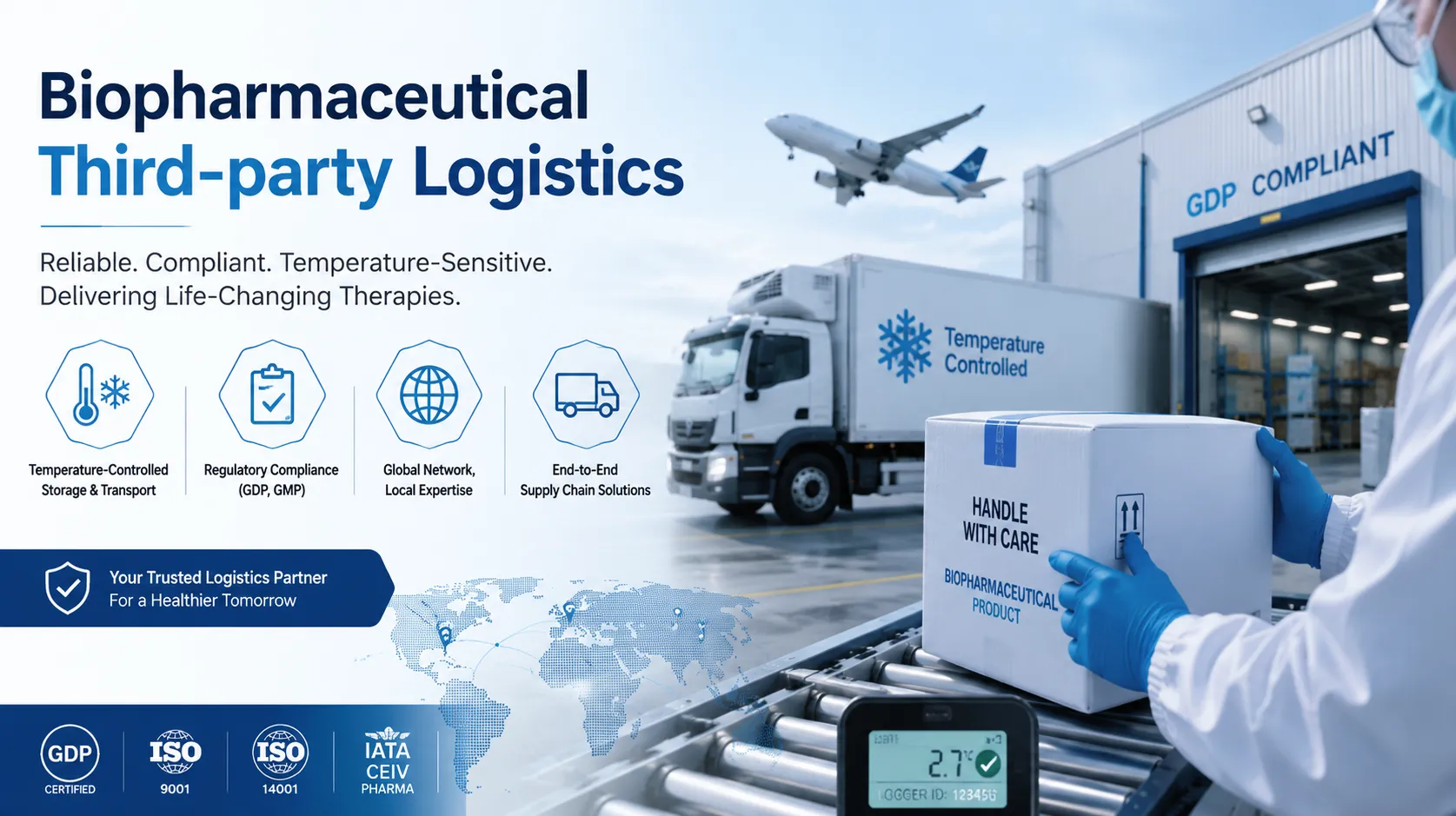
Specialized providers also exist for regulated sectors such as pharmaceuticals, cold-chain food distribution, and high-value electronics. These niche operators possess specific certifications, climate-controlled equipment, and security protocols necessary to comply with strict legal mandates.
Frequently Asked Questions
What is the difference between a 3PL and a 4PL?
A third-party logistics (3PL) provider executes physical supply chain operations such as warehousing, packing, and shipping. A fourth-party logistics (4PL) provider acts as a strategic coordinator that oversees, manages, and optimizes multiple 3PL providers, transportation networks, and technology systems on behalf of a client, serving as a single point of accountability.
How do third-party logistics companies charge for their services?
Pricing models vary based on the provider and services utilized, but they typically include setup fees, storage fees (charged per pallet, bin, or cubic foot per month), and pick-and-pack fees (charged per order plus an incremental fee per item). Additional charges may apply for receiving inbound shipments, long-term storage, and value-added services like kitting or custom labeling.
When should a growing business transition to a 3PL?
Businesses typically transition to a third-party logistics provider when internal fulfillment operations consume excessive time, space, and labor resources that detract from core growth activities. Common tipping points include exceeding daily shipping capacities, running out of on-site storage space, expanding into international markets, or experiencing high error rates during peak seasonal volume spikes.
Do 3PLs own their own warehouses and trucks?
Some third-party logistics companies are "asset-based," meaning they own or lease their warehouses, material handling equipment, and transportation fleets. Others are "non-asset-based," acting as network managers that coordinate services through vetted partnerships with independent carriers and warehouse operators. Many providers utilize a hybrid model combining owned facilities with strategic partner networks.
Can small e-commerce startups use third-party logistics companies?
Yes, many modern 3PLs cater specifically to small and medium-sized businesses (SMBs) and emerging e-commerce brands. These providers offer low or non-existent volume minimums, flexible cloud-based software integrations, and shared-space warehousing models that allow startups to scale their fulfillment operations efficiently without heavy upfront investments.
Conclusion and Next Actions
Partnering with a third-party logistics company transforms fulfillment from a stressful operational hurdle into a strategic competitive advantage. By leveraging scalable infrastructure, advanced technology, integrated freight networks, and specialized returns management, businesses can reduce overhead costs while improving delivery speed and customer satisfaction. To begin your search for the right provider, audit your current fulfillment volume, calculate your total cost per order, and evaluate prospective 3PL partners based on their technology integration capabilities, geographic network reach, and industry-specific expertise.