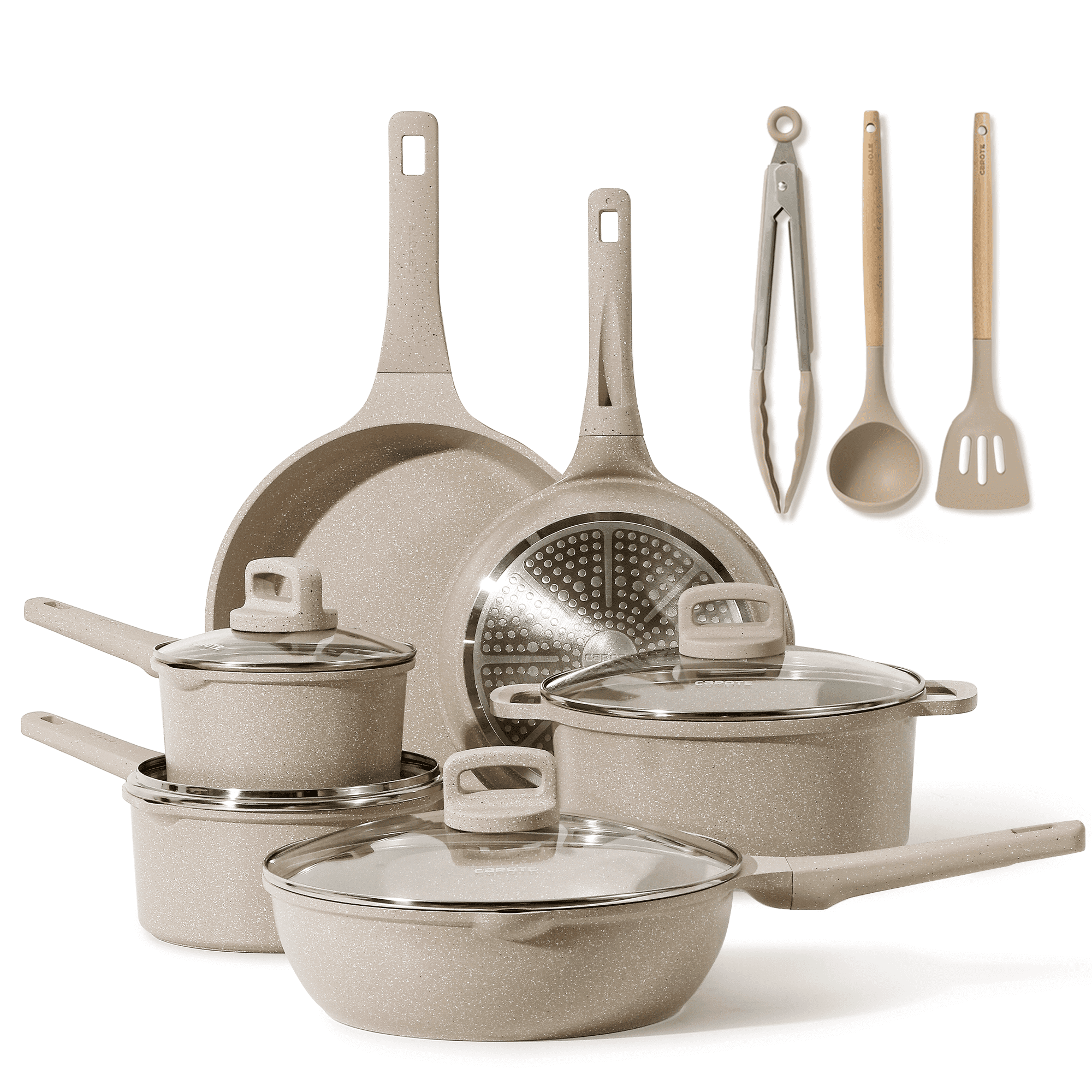
Choosing the right nonstick cookware set involves balancing coating durability, heat distribution, material safety, compatibility with different stovetops, and overall maintenance requirements to fit your daily cooking habits.
Selecting the ideal nonstick cookware set for your kitchen requires cutting through marketing jargon to examine the core factors that dictate real-world performance, longevity, and safety. Whether you are searing proteins, flipping delicate crepes, or simmering acidic tomato sauces, the right set protects your food from sticking while standing up to regular use. Modern nonstick options extend well beyond traditional polytetrafluoroethylene (PTFE) surfaces, incorporating advanced ceramic coatings, heavy-gauge anodized aluminum, and multi-ply stainless steel bases designed for induction, gas, and electric cooktops.
This guide evaluates the top nonstick cookware sets available for home cooks. By analyzing material construction, heat retention, oven safety thresholds, handle ergonomics, and clean-up requirements, you can make an informed investment that matches your culinary style and kitchen setup.
Understanding Nonstick Technology: PTFE vs. Ceramic
Before examining specific cookware sets, it is vital to understand the two dominant types of nonstick coatings on the market: traditional PTFE-based coatings and ceramic sol-gel coatings. Each technology handles heat differently, offers distinct durability profiles, and requires specific cleaning habits to maximize its lifespan.
Traditional PTFE (often referred to by the brand name Teflon) has set the benchmark for food release for decades. High-quality PTFE surfaces feature multiple reinforced layers that prevent even sticky foods like eggs and cheese from adhering, often requiring minimal butter or oil. Modern manufacturing has largely eliminated PFOA (perfluorooctanoic acid) from production processes, making current PTFE cookware significantly safer for domestic use. However, these coatings remain sensitive to extreme heat; overheating a PTFE pan can degrade the coating and release fumes.
Ceramic nonstick cookware, conversely, relies on a silica-based sol-gel coating cured onto aluminum or stainless steel substrates. These pans are naturally free of PTFE, PFOA, lead, and cadmium, appealing to cooks prioritizing chemical transparency. Ceramic surfaces generally tolerate higher surface temperatures than traditional nonstick options without degrading, though their food-release properties tend to diminish faster over time if exposed to harsh dishwashing detergents or abrasive scouring pads.
Key Criteria for Evaluating Cookware Sets
When comparing cookware bundles, look beyond the piece count to assess structural integrity and daily usability. Manufacturers often inflate set numbers by counting lids as individual pieces, meaning an "11-piece set" might only include five pots and pans plus their respective covers.
Base Material and Heat Distribution
The underlying metal determines how evenly a pan heats and how well it resists warping. Hard-anodized aluminum is an industry favorite for nonstick cookware because it is twice as hard as stainless steel, heats evenly, and resists corrosion. Clad stainless steel cores offer excellent durability and induction compatibility, though they tend to be heavier.
Handle Design and Oven Safety
Riveted stainless steel handles provide a secure, permanent grip compared to screwed-on alternatives, but they can conduct heat if left over a burner too long. Always verify the maximum temperature rating for oven use. While aluminum pans with silicone grips are comfortable, they usually limit the cookware's oven-safe threshold to 350°F or 400°F, whereas all-metal sets can often withstand temperatures up to 500°F or higher.
Lid Construction and Steam Vents
Tempered glass lids allow you to monitor cooking progress without lifting the cover and releasing heat. Look for stainless steel rims that create a snug fit and built-in or well-placed steam vents to prevent boiling over.
The 5 Best Nonstick Cookware Sets Reviewed
| Cookware Set | Core Material | Coating Type | Induction Compatible | Max Oven Temp | Best Suited For |
|---|---|---|---|---|---|
| All-Clad HA1 Hard Anodized | Hard-Anodized Aluminum | 3-Layer PTFE | Yes (with bonded plate) | 500°F (Pans) / 350°F (Lids) | High-heat searing and durability |
| Calphalon Premier Hard-Anodized | Hard-Anodized Aluminum | 3-Layer PTFE (Sear Nonstick) | Yes | 450°F | Metal-utensil safe cooking |
| Caraway Ceramic Cookware Set | Aluminum | Ceramic Sol-Gel | Yes | 550°F | Eco-conscious and aesthetic kitchens |
| Anolon Advanced Hard-Anodized | Hard-Anodized Aluminum | PFOA-Free PTFE | No (Standard) / Yes (Newer Editions) | 400°F | Ergonomic comfort and even heating |
| Tramontina Professional Gourmet | Heavy-Gauge Aluminum | Reinforced PTFE | No | 400°F | Heavy-duty restaurant performance at home |
1. All-Clad HA1 Hard-Anodized 10-Piece Set
All-Clad is renowned for professional-grade metalwork, and their HA1 Hard-Anodized line brings high-end performance to the nonstick category. Constructed from heavy-gauge hard-anodized aluminum, these pans feature a bonded stainless steel base that makes them fully compatible with induction cooktops—a rare trait for standard aluminum nonstick cookware.
The interior boasts three layers of PFOA-free nonstick coating that delivers exceptional release performance. The flared edges are designed for drip-free pouring, and the contoured stainless steel handles are riveted for a secure, comfortable grip. While hand washing is strongly recommended to preserve the coating lifespan, the pans are sturdy enough to handle daily meal preparation without warping.
2. Calphalon Premier Hard-Anodized 11-Piece Set
Calphalon Premier stands out for its textured, three-layer nonstick interior designed to withstand metal utensils. While home cooks are generally advised to use silicone, wood, or plastic tools, the textured surface on these pans helps protect the underlying nonstick layer from scratching during vigorous whisking or flipping.
This set is dishwasher safe, though hand washing remains the gold standard for maximizing nonstick longevity. The hard-anodized exterior resists scratching and staining, and the entire set—including the tempered glass lids—is oven-safe up to 450°F, allowing you to easily transition dishes from the stovetop to the oven for roasting or finishing.
3. Caraway Ceramic Cookware Set
For cooks seeking an alternative to traditional PTFE coatings, the Caraway Ceramic set offers a striking aesthetic paired with mineral-based nonstick performance. Free of PTFE, PFOA, lead, and cadmium, these aluminum pans release food smoothly with minimal oil and clean up effortlessly with warm soapy water and a sponge.
The set includes thoughtful organizational accessories, such as modular magnetic pan racks and a canvas lid holder, making cabinet clutter a non-issue. The exterior is coated in vibrant, high-heat resistant ceramic paint available in multiple colors. Note that ceramic coatings require careful temperature management; using medium to low heat prevents thermal shock and preserves the slippery surface over years of use.
4. Anolon Advanced Hard-Anodized 11-Piece Set
Anolon Advanced is designed with the home cook's physical comfort in mind. The trademarked SureGrip handles combine cast stainless steel with durable silicone rubber, offering a soft, ergonomic hold that stays cool on the stovetop and reduces hand fatigue during long cooking sessions.
The heavy-gauge hard-anodized construction ensures rapid, uniform heat distribution across the base and walls of each vessel. The nonstick coating is exceptionally smooth, allowing delicate foods like fish fillets and omelets to slide out effortlessly. The set includes a deep sauté pan and a stockpot with interchangeable strainer lids, adding functional versatility to everyday meal prep.
5. Tramontina Professional Gourmet 10-Piece Set
Derived from commercial kitchen equipment, the Tramontina Professional Gourmet set prioritizes utilitarian performance over flashy design. Crafted from heavy-gauge aluminum with a reinforced nonstick interior, these pans are engineered to withstand the rigorous demands of busy kitchens.
The soft-grip silicone handles are removable for high-heat oven use up to 400°F, and the satin exterior finish resists discoloration. While these pans do not feature induction-compatible base plates in their standard configuration, their performance on gas and electric ranges rivals brands twice their price point. This set is ideal for bulk cooking, sauce reduction, and everyday frying.
Proper Care and Maintenance for Long-Lasting Nonstick Performance
Even the most expensive nonstick cookware set will degrade prematurely if subjected to improper cleaning and heat management. Adhering to a few core maintenance guidelines will protect your investment for years.
- Control the Heat: Avoid using high heat settings on nonstick cookware. Because nonstick surfaces conduct heat efficiently and burn easily, medium to low heat is entirely sufficient for searing, sautéing, and frying. Overheating breaks down coatings and causes permanent warping.
- Hand Wash Whenever Possible: Although many sets claim dishwasher safety, harsh detergents, high water pressure, and prolonged heat cycles in automatic dishwashers dull nonstick coatings and corrode exposed aluminum rims. Hand wash with a soft sponge and mild dish soap.
- Skip Aerosol Cooking Sprays: Commercial nonstick cooking sprays often contain lecithin and other additives that carbonize at relatively low temperatures. This residue bakes onto the pan's surface, creating a sticky film that ruins the natural nonstick release. Instead, use a mister filled with high-smoke-point oil like avocado or canola.
- Store with Protectors: Stacking pans directly inside one another can scratch delicate coatings. Use felt pan protectors, paper towels, or hanging racks to keep surfaces pristine during storage.
Frequently Asked Questions
Can I use metal utensils on nonstick cookware?
Most nonstick cookware requires wooden, silicone, or plastic utensils to prevent scratching. However, select advanced sets—such as the Calphalon Premier line—feature hardened surfaces specifically engineered to tolerate metal utensils, though gentle tools still prolong the pan's life.
Why is my nonstick pan starting to stick?
Food sticking usually results from a buildup of microscopic oil residue and burnt food particles left behind by inadequate cleaning. To fix this, create a paste of baking soda and water, gently scrub the surface with a non-abrasive sponge, rinse thoroughly, and condition the pan with a tiny drop of oil wiped clean with a paper towel.
Are ceramic nonstick pans safer than PTFE pans?
Both modern PTFE (PFOA-free) and ceramic pans are safe for home cooking when used correctly. Ceramic appeals to consumers wanting a completely plastic-free, mineral-based manufacturing process, while PTFE pans typically offer superior longevity and more reliable food release over extended periods.
How often should nonstick cookware be replaced?
Depending on usage frequency and maintenance, standard nonstick cookware sets typically last between three to five years. If the coating is visibly flaking, deeply scratched, or failing to release food even after a thorough cleaning, it is time for a replacement.
Final Recommendation
Investing in the right nonstick cookware set depends entirely on your cooking style and stovetop type. If you use an induction cooktop and demand professional-grade durability, the All-Clad HA1 Hard-Anodized Set provides unmatched structural integrity. If you want a chemical-free surface with striking kitchen aesthetics, the Caraway Ceramic Cookware Set is an exceptional choice. For everyday reliability on gas or electric ranges without overspending, the Calphalon Premier or Tramontina Professional Gourmet sets deliver outstanding value and performance.