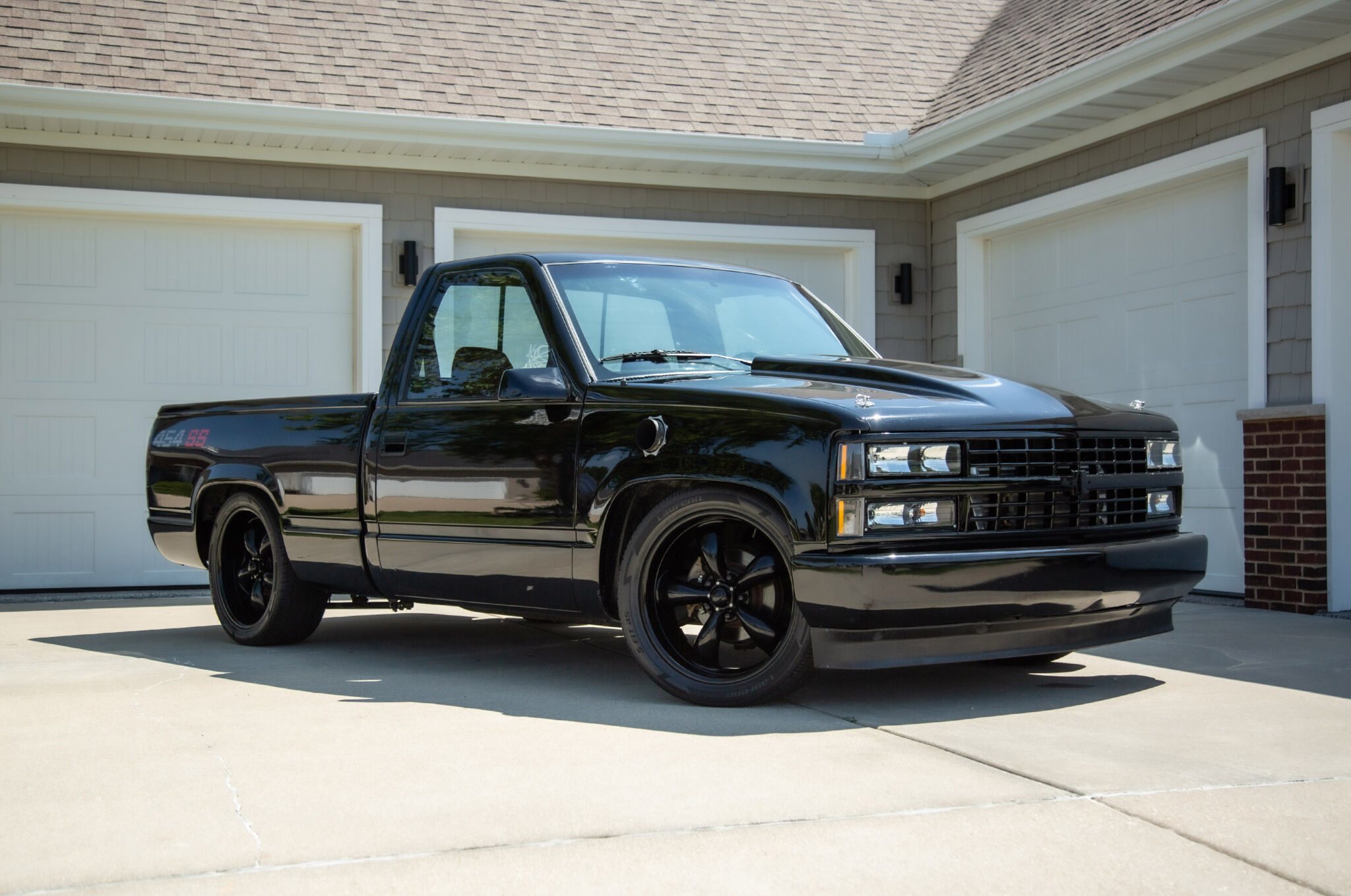
The 1990 Chevrolet 454 SS truck represents a defining milestone in American automotive history by successfully reigniting the factory performance pickup segment and setting a bold precedent for the high-horsepower muscle trucks that would dominate the decade.
Introduction to the 1990 Chevrolet 454 SS Truck
As the automotive landscape transitioned into the final decade of the twentieth century, manufacturers sought innovative ways to capture the attention of driving enthusiasts who yearned for raw acceleration and utility. Released for the 1990 model year, the Chevrolet C/K 1500-based 454 SS captured this exact cultural zeitgeist. By taking a heavy-duty, big-block V8 powerplant and dropping it into a standard-cab, half-ton pickup chassis, General Motors created a visceral vehicle that challenged traditional boundaries.
Rather than functioning purely as a workhorse, the 454 SS was engineered for the street. It arrived with an aggressive appearance package featuring monochromatic black paint, a specialized red interior, upgraded suspension components, and distinct exterior badging. This vehicle acted as a physical snapshot of mid-decade automotive engineering philosophy, proving that utility vehicles could offer genuine muscle-car performance. Understanding this legendary truck requires a thorough examination of its mechanical specifications, chassis development, market reception, and its enduring legacy among automotive collectors today.
Origins and Concept Development
The genesis of the 1990 Chevrolet 454 SS traces back to a changing cultural appetite for high-performance utility vehicles during the late 1980s. Throughout the preceding decade, strict emissions regulations and fuel economy standards had stifled the performance aftermarket and factory muscle offerings. However, as engineering efficiencies improved, manufacturers began exploring how to leverage truck platforms for recreational thrills.
General Motors recognized that custom truck builders were already dropping large-displacement engines into factory frames with immense success. Enthusiasts craved the utility of a bed combined with the straight-line acceleration of a big-block engine. The engineering team at Chevrolet took note of these trends, leveraging the newly introduced GMT400 platform—launched for the 1988 model year—as the ideal foundation. By utilizing the robust C1500 standard-cab short-box configuration, engineers possessed a lightweight, rigid platform capable of handling substantial torque without requiring complex structural reinforcement.
Powertrain and Mechanical Specifications
At the heart of the 1990 Chevrolet 454 SS lies its defining feature: the massive 7.4-liter (454 cubic inch) Mark IV big-block V8 engine. While this engine family had a storied history in GM's heavy-duty trucks and passenger muscle cars, tuning it for a half-ton light-duty pickup required specific modifications to balance low-end grunt with street drivability.
The engine utilized throttle-body fuel injection (TBI), a system optimized for reliable fuel delivery and instantaneous throttle response. In 1990, the powerplant generated 230 horsepower at 3,600 RPM and a massive 385 lb-ft of torque at a low 1,600 RPM. This immense torque curve allowed the heavy truck to launch aggressively from a standstill, defining its personality as a short-distance street brawler.
| Component | 1990 Specification |
|---|---|
| Engine Type | 7.4L (454 cu in) Mark IV Big-Block V8 |
| Fuel Delivery | Throttle-Body Fuel Injection (TBI) |
| Horsepower | 230 hp @ 3,600 RPM |
| Torque | 385 lb-ft @ 1,600 RPM |
| Transmission | Turbo-Hydramatic 3-speed automatic (TH400) |
| Rear Axle Ratio | 3.73:1 with heavy-duty locking differential |
Power was routed through a heavy-duty Turbo-Hydramatic 3-speed automatic transmission, commonly known as the TH400. While a manual transmission option was absent, the robust TH400 easily managed the punishing torque output of the big-block engine. The power transferred to a heavy-duty rear axle featuring a 3.73:1 gear ratio and a standard locking differential, ensuring optimal traction during hard acceleration.
Chassis, Suspension, and Handling Dynamics
Handling a big-block V8 in a half-ton pickup required extensive modifications to the standard C1500 chassis. Chevrolet introduced the "Performance Handling Package" (RPO Z71 was used for off-road, but the 454 SS utilized the specialized B4U performance package), which completely altered the driving dynamics of the truck.
The suspension system was upgraded significantly compared to a standard base model. It featured 32mm front stabilizer bars, heavy-duty Bilstein gas-pressurized shock absorbers, and a specialized steering gear ratio that provided quicker, more direct feedback to the driver. The ride height was slightly lowered in the rear to achieve a more aggressive, level stance, giving the truck a purposeful visual attitude even when parked.
Despite these upgrades, driving a 1990 454 SS presented unique physical characteristics. The heavy-duty iron-block V8 placed substantial weight over the front wheels, creating an inherently nose-heavy weight distribution. Consequently, cornering required respect for physics, as the rear tires—unburdened by significant weight in an empty bed—could easily break traction on wet or uneven pavement. Stopping power was handled by front disc and rear drum brakes enhanced with a vacuum booster, though modern drivers often note that braking distances are lengthy by contemporary standards.
Exterior Styling and Interior Aesthetics
Aesthetics played a crucial role in establishing the identity of the 1990 454 SS. For the inaugural model year, Chevrolet offered only one exterior color: Onyx Black. This monochromatic treatment extended to the front grille, bumpers, mirrors, and trim, creating a stealthy appearance that contrasted sharply with the chrome-heavy trucks of the era.
Subtle red accents broke up the darkness, including "454 SS" decals on the bedside panels, a red Bowtie emblem on the grille, and custom painted wheel center caps. The truck rolled on unique 15x7-inch black-painted styled steel wheels wrapped in 275/60R15 Goodyear Eagle GT+4 radial tires, which were considered high-performance rubber for trucks at the time.
- 1990 Chevrolet 454 SS Highlights
- Exclusive Onyx Black Monochromatic Exterior Finish
- Garnet Red Custom Cloth Interior with Bucket Seats
- Heavy-Duty Performance Suspension with Bilstein Shocks
- 7.4L Big-Block V8 Producing 385 lb-ft of Torque
Inside, the cabin was equally distinctive. While standard C/K trucks often featured utilitarian vinyl or gray cloth benches, the 454 SS came exclusively with a Garnet Red interior. It featured high-back reclining bucket seats with a central storage console, complete with specialized red seatbelts and door panel accents. A leather-wrapped steering wheel and a comprehensive instrument cluster featuring full analog gauges—including oil pressure, voltage, temperature, and a tachometer—reminded the driver that this was a specialized machine.
Market Reception, Sales, and Production Numbers
When the 1990 454 SS debuted at auto shows and dealerships, it immediately captured the imagination of the automotive press and public alike. Car and Driver and other prominent publications tested the vehicle, praising its effortless low-end grunt and intimidating styling, though acknowledging its thirst for fuel and limited payload capacity compared to standard work trucks.
Production numbers for the inaugural year reflected its niche appeal and relatively high starting price, which hovered around $18,000—a significant sum for a standard-cab half-ton pickup at the dawn of the 1990s. Chevrolet manufactured 13,748 units for the 1990 model year.
While this volume was modest, it proved that a viable market existed for factory performance trucks. The success of the 1990 model prompted Chevrolet to expand production in subsequent years, offering additional exterior colors like Summit White and Victory Red starting in 1992, alongside mechanical updates such as a 4-speed automatic transmission (4L80E) and a horsepower bump to 255 hp. However, the original 1990 black-on-red single-year specification remains the purest and most sought-after iteration among collectors.
Comparative Analysis: Muscle Trucks of the Era
To fully understand the significance of the 1990 Chevrolet 454 SS, it is helpful to examine how it positioned itself against competing performance vehicles of the early 1990s. While Ford and Dodge offered various sport appearance packages, none matched the displacement and factory-hot-rod ethos of Chevrolet's big-block offering until later in the decade.
| Vehicle Model | Engine Displacement | Transmission | Power Output | Key Distinction |
|---|---|---|---|---|
| Chevrolet 454 SS (1990) | 7.4L (454 cu in) V8 | 3-Speed Auto (TH400) | 230 hp / 385 lb-ft | Pioneer of the modern factory muscle truck movement. |
| GMC Syclone (1991–1993) | 4.3L (262 cu in) Turbo V6 | 4-Speed Auto (700R4) | 280 hp / 350 lb-ft | All-wheel-drive rocket focused on zero-to-sixty times. |
| Ford F-150 Lightning (1993–1995) | 5.8L (351 cu in) Windsor V8 | 4-Speed Auto (E4OD) | 240 hp / 340 lb-ft | Balanced handling and suspension developed by SVO. |
The 454 SS relied on traditional displacement and low-end torque rather than forced induction or high-revving agility. While the later GMC Syclone utilized a turbocharged V6 and all-wheel drive to achieve supercar-rivaling acceleration, the 454 SS remained a classic rear-wheel-drive big-block cruiser in the spirit of traditional American muscle cars.
Common Maintenance and Ownership Considerations
For enthusiasts evaluating a 1990 Chevrolet 454 SS today, understanding common mechanical traits and maintenance requirements is essential for preservation and enjoyment.
- Cooling System Integrity: Due to the tight confines of the GMT400 engine bay paired with the massive block, managing engine heat is critical. Upgrading radiators and ensuring the fan clutch operates correctly prevents overheating issues during extended idle or heavy towing scenarios.
- Transmission Care: The TH400 transmission is famously durable, but fluid changes and checking for seal leaks are paramount, especially if the vehicle has experienced performance modifications.
- TBI Fuel System Maintenance: The throttle-body injection system is generally reliable, but original rubber fuel lines, pressure regulators, and injectors should be inspected for wear and degradation over time.
- Rust Inspection: Like many trucks of this era, cab corners, rocker panels, and the rear wheel arches are susceptible to rust, particularly in regions that utilize road salt during winter months.
Frequently Asked Questions
How many 1990 Chevrolet 454 SS trucks were built?
Chevrolet produced exactly 13,748 units of the 454 SS for the 1990 model year. This limited production run contributes significantly to its collectibility today, especially given that it was only offered in Onyx Black with a Garnet Red interior for that initial year.
What engine powers the 1990 Chevrolet 454 SS?
The truck is powered by a 7.4-liter (454 cubic inch) Mark IV big-block V8 engine equipped with throttle-body fuel injection. It produces 230 horsepower and an impressive 385 lb-ft of torque at just 1,600 RPM.
Why does the 1990 model have a 3-speed transmission instead of a 4-speed?
The 1990 model utilized the heavy-duty Turbo-Hydramatic 3-speed automatic (TH400) transmission because it was proven to handle the massive torque output reliably. Chevrolet later transitioned to the 4-speed 4L80E automatic transmission in the 1991 model year to improve highway cruising efficiency.
Is the 1990 Chevrolet 454 SS considered a good collector vehicle?
Yes, well-maintained and original-condition 1990 454 SS trucks have established themselves as desirable collector items. They represent a distinct bridge between traditional big-block muscle cars and modern specialty trucks, making them popular at auctions and enthusiast gatherings.
What are the main differences between a 1990 model and a 1993 model?
The 1990 model was exclusively available in black with a red interior and used a 3-speed automatic transmission. By 1993, Chevrolet offered multiple exterior paint colors, introduced the 4-speed 4L80E transmission, increased horsepower to 255, and updated the interior dashboard layout.
Conclusion and Next Actions
The 1990 Chevrolet 454 SS truck remains an essential chapter in automotive history, capturing the raw, unapologetic power of the American big-block era within a utilitarian pickup frame. For prospective buyers, restorers, or automotive historians, verifying original component numbers, checking for structural rust, and preserving factory interior elements are crucial steps toward owning a piece of mid-decade performance heritage. Inspect verified auction registries, consult dedicated GMT400 enthusiast clubs, and examine service documentation carefully before acquiring one of these iconic street machines.