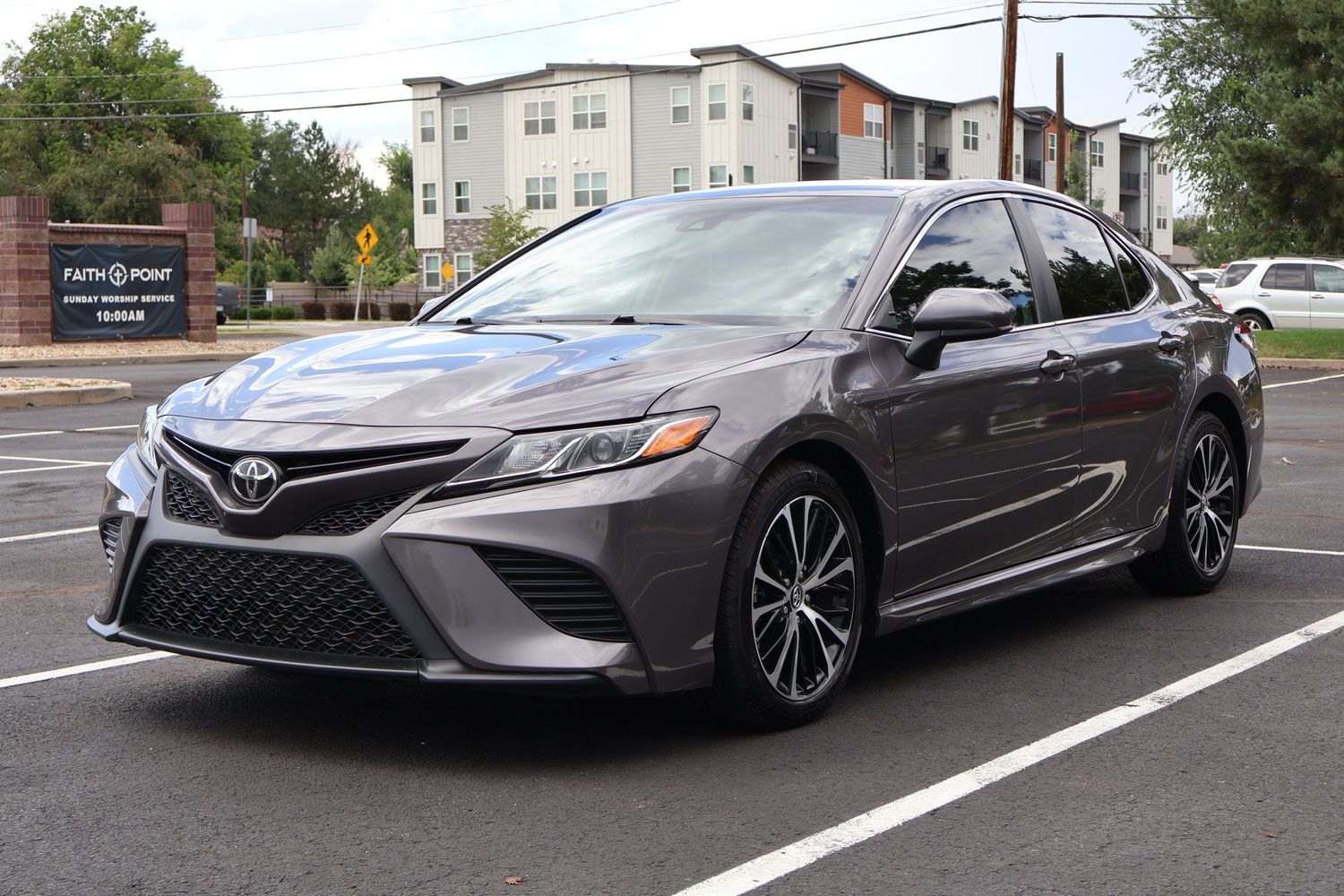
The 203 hp 2019 Toyota Camry SE is powered by a 2.5-liter Dynamic Force four-cylinder engine paired with an eight-speed automatic transmission. Delivering 203 horsepower and 184 lb-ft of torque, this sport-focused midsize sedan combines responsive acceleration, a sport-tuned suspension, and an EPA-estimated highway fuel economy of up to 39 MPG.
Engineering the 203 HP Dynamic Force Engine
At the heart of the 203 hp 2019 Toyota Camry SE is the A25A-FKS Dynamic Force 2.5-liter naturally aspirated inline-four engine. Introduced as part of Toyota’s New Global Architecture (TNGA) overhaul, this engine was designed from the ground up to improve power output while lowering fuel consumption and emissions.
- Dynamic Force A25A-FKS Architecture
- Long-Stroke (87.5 x 103.4mm)
- High-Tumble Intake Air Intake (Wider angle, laser-clad seat)
- Combustion Efficiency Peak: 40% Thermal Efficiency
- D-4S Injection (Port + Direct)
- VVT-iE Valve Timing (Electric Intake Actuation)
High Tumble Flow and Laser-Clad Valve Seats
The engine achieves a high thermal efficiency of 40%—one of the highest figures for a mass-production internal combustion engine. Engineers achieved this through high-tumble airflow inside the combustion chambers. By widening the angle between the intake and exhaust valves and utilizing laser-clad valve seats, air enters the cylinder at high velocity, mixing homogeneously with atomized fuel for cleaner, faster combustion.
D-4S Dual Fuel Injection System
Toyota utilizes the D-4S dual-injection system, which combines both direct cylinder injection and port fuel injection. Under low to medium engine loads, the system uses both injectors to optimize combustion efficiency and reduce emissions. Under high-load scenarios—such as hard acceleration—the system relies primarily on direct injection to cool the intake charge within the cylinder, preventing engine knock despite a high 13.0:1 compression ratio.
VVT-iE Variable Valve Timing
The intake side of the valvetrain uses VVT-iE (Variable Valve Timing-intelligent by Electric motor), which relies on an electric actuator rather than oil pressure to adjust timing. This allows rapid valve timing adjustments even at low engine speeds and cold startups, improving throttle response and cold-weather operation. The exhaust side continues to use conventional hydraulic VVT-i.
Why the SE Trim Produces 203 Horsepower
Prospective buyers often notice minor power rating variations across the 2019 Camry model lineup. While the base L, LE, and XLE trims produce 203 horsepower at 6,600 RPM and 184 lb-ft of torque at 5,000 RPM, the sporty SE shares this exact output. The top-tier 4-cylinder XSE trim generates slightly more power—206 horsepower and 186 lb-ft of torque.
The 3-horsepower difference comes down to exhaust layout:
- Camry SE Architecture: Employs a single exhaust outlet system tuned for high exhaust velocity and efficient noise attenuation.
- Camry XSE Architecture: Features a dual-tip quad exhaust outlet system that reduces backpressure at high RPMs, yielding a 3 hp gain.
Despite the minor output gap, the 203 hp rating in the SE delivers identical 0–60 mph acceleration times (roughly 7.5 to 7.8 seconds) while operating on standard 87-octane regular unleaded fuel.
Direct Shift 8-Speed Automatic Transmission Mechanics
Every non-hybrid 4-cylinder 2019 Toyota Camry SE features the Direct Shift-8AT (UA80E) automatic transmission. Designed to replace the older 6-speed units, this transmission expands gear ratio spread to enhance off-the-line torque while lowering engine RPM at highway cruising speeds.
- Direct Shift-8AT (UA80E) Flow
- Engine Torque
- Multi-Plate Lockup Clutch (Gears 2 through 8)
- Expanded Gears (4.41 to 0.67)
- 1st Gear: Launch torque via torque converter
- 2nd-8th Gears: Direct lockup for manual-like response
Expanded Ratio Spread and Mechanical Lockup
The UA80E has an overall ratio spread of 6.6, featuring a low 1st gear ratio (4.41:1) for immediate off-the-line throttle response and high overdrive top gears (7th at 0.79:1, 8th at 0.67:1).
To eliminate engine power loss associated with traditional fluid torque converters, the Direct Shift transmission locks up its multi-plate clutch across gears 2 through 8 during normal driving. This lockup produces direct power transfer similar to a manual transmission or dual-clutch unit without sacrificing low-speed refinement.
SE Steering Wheel Paddle Shifters
Exclusive to the sport trims (SE and XSE), steering-wheel-mounted paddle shifters allow manual control over gear shifts. Selecting "S" mode on the gear shifter enables sequential shifting logic, giving drivers control over shift points for engine braking or backroad driving.
Sport-Tuned Chassis, Handling, and Dynamics
The performance of the 203 hp 2019 Toyota Camry SE extends beyond its engine specs. Built on the TNGA-K platform, the eighth-generation Camry features structural improvements that drastically alter its driving dynamics compared to pre-2018 models.
- TNGA-K Platform Architecture
- Ring-Structure Frame (Ultra-high strength)
- Low Center of Gravity (Lowered hood and cowl)
- Suspension Tuning: Sport-Tuned MacPherson Front & Rear Double-Wishbone / Multi-Link Suspension
Rigid Chassis Architecture
The TNGA-K platform relies heavily on ultra-high-tensile steel, hot-stamped steel, and extensive ring-structure reinforcement around the door frames. This results in a 30% increase in torsional rigidity over seventh-generation Camrys. This rigid base allows the suspension to absorb impacts without structural flex.
SE-Specific Suspension Calibration
While the Camry LE and XLE use comfort-oriented suspension calibrations, the SE incorporates a dedicated sport-tuned setup:
- Front Suspension: Independent MacPherson strut with revised spring rates, firmer valved shock absorbers, and a thick solid stabilizer bar.
- Rear Suspension: Multi-link double-wishbone rear suspension setup replacing the dual-link strut design used in older generations, improving lateral stability during cornering.
- Rolling Stock: Standard 18-inch black machined-finish alloy wheels fitted with P235/45R18 low-profile all-season tires, offering a larger contact patch than the 16- or 17-inch wheels found on lower trims.
Fuel Efficiency and Real-World Range
The high thermal efficiency of the 2.5-liter engine paired with the 8-speed automatic yields competitive EPA fuel economy figures for a non-hybrid midsize sedan.
- EPA City Rating: 28 MPG
- EPA Highway Rating: 39 MPG
- EPA Combined Rating: 32 MPG
Highway Range Capabilities
Equipped with a 14.5-gallon fuel tank, the 2019 Camry SE has a theoretical maximum highway range of roughly 565 miles on a single fill-up. Real-world highway testing under normal driving conditions (70 mph with climate control engaged) generally yields between 36 and 40 MPG, making it an efficient long-distance vehicle.
2019 Toyota Camry Trim Specification Comparison
The table below summarizes key performance, drivetrain, and hardware metrics across the primary gasoline trims of the 2019 Toyota Camry lineup:
| Specification / Feature | Camry L | Camry LE | Camry SE | Camry XSE (4-Cyl) | Camry XSE V6 |
|---|---|---|---|---|---|
| Engine Type | 2.5L 4-Cylinder | 2.5L 4-Cylinder | 2.5L 4-Cylinder | 2.5L 4-Cylinder | 3.5L V6 |
| Horsepower | 203 hp @ 6,600 RPM | 203 hp @ 6,600 RPM | 203 hp @ 6,600 RPM | 206 hp @ 6,600 RPM | 301 hp @ 6,600 RPM |
| Torque | 184 lb-ft @ 5,000 RPM | 184 lb-ft @ 5,000 RPM | 184 lb-ft @ 5,000 RPM | 186 lb-ft @ 5,000 RPM | 267 lb-ft @ 4,700 RPM |
| Transmission | 8-Speed Automatic | 8-Speed Automatic | 8-Speed Automatic | 8-Speed Automatic | 8-Speed Automatic |
| Paddle Shifters | No | No | Yes | Yes | Yes |
| Suspension Calibration | Comfort | Comfort | Sport-Tuned | Sport-Tuned | Sport-Tuned |
| Wheel Size | 16-inch Steel | 17-inch Alloy | 18-inch Alloy | 19-inch Alloy | 19-inch Alloy |
| EPA MPG (City/Hwy/Comb) | 29 / 41 / 34 | 28 / 39 / 32 | 28 / 39 / 32 | 28 / 39 / 32 | 22 / 32 / 26 |
| Curb Weight | 3,241 lbs | 3,296 lbs | 3,340 lbs | 3,395 lbs | 3,572 lbs |
Cabin Features, Ergonomics, and Technology
The interior of the 2019 Toyota Camry SE features driver-focused ergonomic design balanced with durable cabin materials.
- 2019 Camry SE Cabin & Tech
- SofTex Seating (Synthetic leather with fabric inserts)
- Driver Ergonomics (8-way power driver seat, leather steering wheel)
- Infotainment & Safety: Entune 3.0 Audio, Apple CarPlay Standard, Toyota Safety Sense P (TSS-P)
Seating Materials and Styling
The SE trim replaces standard cloth seats with SofTex-trimmed seats featuring fabric inserts. SofTex is a synthetic leather alternative designed to resist spills, UV fading, and surface wear over time.
Additional SE interior features include:
- Leather-trimmed three-spoke steering wheel with audio and cruise control toggles.
- Metallic interior trim panels along the dashboard and center console.
- Sport instrument cluster with analog tachometer, speedometer, and a 4.2-inch color Multi-Information Display (MID).
- 8-way power-adjustable driver’s seat with power lumbar support.
Infotainment Capabilities and Compatibility
The standard infotainment head unit on the 2019 Camry SE is Entune 3.0 Audio operating through a 7-inch touchscreen display.
- Apple CarPlay: Standard equipment on all 2019 models.
- Android Auto: Not supported natively on 2019 models (Toyota added Android Auto integration in 2020). Android users rely on Bluetooth audio streaming or third-party retrofit solutions.
- Audio System: 6-speaker sound system with USB media port, auxiliary port, and hands-free Bluetooth phone connectivity.
Standard Safety Technology (TSS-P)
Every 2019 Camry SE comes standard with Toyota Safety Sense P (TSS-P). This suite utilizes a windshield-mounted camera and millimeter-wave radar mounted in the front grille:
- Pre-Collision System with Pedestrian Detection: Identifies vehicles or pedestrians and provides automatic emergency braking if a collision is imminent.
- Lane Departure Alert with Steering Assist: Monitors lane lines and provides visual warnings alongside light steering input if unintentional drifting occurs.
- Automatic High Beams: Toggles high beams automatically based on surrounding traffic.
- Dynamic Radar Cruise Control (DRCC): Maintains a pre-set distance from the vehicle ahead at highway speeds.
Common Issues, Reliability, and Maintenance Guidelines
The eighth-generation Camry consistently earns top reliability marks from vehicle evaluation programs. However, several documented technical issues and routine maintenance details apply to the 203 hp 2.5-liter engine platform.
Common Mechanical Considerations
Transmission Shift Logic Hesitations
Some early eighth-generation Camry models (2018–2019) exhibit gear hesitation or delayed downshifts when accelerating from a rolling stop (e.g., 5 to 15 mph).
- Cause: The transmission ECU calibration prioritizes fuel economy, locking up the torque converter early and staying in high gears longer than ideal.
- Resolution: Toyota released Technical Service Bulletins (TSBs) providing Software Calibration Updates for the Transmission Control Module (TCM). Re-flashing the TCM improves low-speed shift responsiveness.
Coolant Bypass Valve Failures
A known issue affecting the A25A-FKS engine involves the electronic engine coolant bypass valve assembly.
- Symptom: Check Engine Light illumination, often displaying Diagnostic Trouble Code (DTC) P2681 (Engine Coolant Bypass Valve Control Circuit/Open).
- Fix: Replacement of the electronic thermostat/coolant control valve assembly. Toyota issued extended warranty programs for specific production runs to address this hardware failure.
Direct Injection Fuel Pump Chirping
Due to the high-pressure mechanical fuel pump used in the D-4S injection system, a faint chirping sound at warm idle is normal. This noise stems from the mechanical operation of the pump driven by the camshaft and does not indicate component failure.
Mandatory Maintenance Schedule
To maintain performance and reliability over a multi-decade operational lifespan, observe the following service intervals:
Recommended Maintenance Intervals
- Every 5,000 Miles / 6 Months:
- Tire rotation, brake inspection, fluid level check
- Every 10,000 Miles / 12 Months:
- Engine oil change (0W-16 Synthetic) & oil filter replacement
- Every 30,000 Miles / 36 Months:
- Cabin air filter & engine air filter replacement
- Every 60,000 Miles / 72 Months:
- Transmission fluid inspection, serpentine belt check
- Every 100,000 Miles:
- Engine coolant flush (Toyota Super Long Life Coolant)
- Every 120,000 Miles:
- Iridium spark plug replacement (Denso FK16HBR-J8)
- Every 5,000 Miles / 6 Months:
Engine Oil Specification: Full Synthetic SAE 0W-16. Using heavier weights (such as 5W-30) can degrade VVT-iE response and reduce fuel economy.
Oil Capacity: 4.8 quarts with filter change.
Spark Plugs: Extended-life iridium spark plugs designed for replacement every 120,000 miles.
Pre-Purchase Inspection Checklist for Used Buyers
When inspecting a pre-owned 2019 Toyota Camry SE, use this technical evaluation checklist:
- Transmission Function: Test drive from a dead stop and through low-speed rolling turns. Check for smooth gear engagement without persistent searching or clunking. Verify whether TCM TSB re-flash updates were logged.
- Coolant System Performance: Inspect the engine compartment for pink crust or fluid residue around the engine coolant bypass valve. Check for pending or stored trouble codes (such as P2681) using an OBD-II scanner.
- Underbody and Suspension: Inspect front strut towers and rear multi-link control arms for leaks, torn rubber bushings, or bent components. Verify even tire wear across all four 18-inch wheels.
- Infotainment Operation: Test Apple CarPlay functionality via a certified lightning cable. Confirm touchscreen responsiveness across all display menus.
- Safety Systems Check: Ensure the front emblem (which houses the TSS-P millimeter radar sensor) is free of physical damage, heavy rock pitting, or aftermarket paint that might impair system operation.
Frequently Asked Questions
Does the 2019 Toyota Camry SE have a turbocharger?
No. The 2019 Toyota Camry SE uses a naturally aspirated 2.5-liter four-cylinder engine (A25A-FKS). It generates its 203 horsepower without turbocharging by utilizing a high compression ratio (13.0:1), D-4S dual fuel injection, and VVT-iE variable valve timing.
Can the 2019 Camry SE run on regular 87-octane gas?
Yes. Despite its high 13.0:1 compression ratio, the 2019 Camry SE is engineered to run on standard 87-octane regular unleaded gasoline. The D-4S direct injection system cools the intake charge inside the combustion chamber, preventing knock without requiring premium fuel.
Is All-Wheel Drive (AWD) available on the 2019 Toyota Camry SE?
No. All-Wheel Drive was introduced to the Camry lineup for the 2020 model year. All non-hybrid 2019 Toyota Camry models—including the SE trim—are Front-Wheel Drive (FWD) only.
What is the difference between the 2019 Camry LE and SE?
The SE is the sport variant, while the LE focuses on comfort. Mechanical differences include the SE’s stiffer sport-tuned suspension, 18-inch alloy wheels (versus 17-inch on LE), steering-wheel-mounted paddle shifters, and a sport front grille design. Inside, the SE features SofTex synthetic leather seating, whereas the LE uses standard cloth seats.
How fast is the 203 hp 2019 Toyota Camry SE from 0 to 60 mph?
The 203 hp 2019 Toyota Camry SE accelerates from 0 to 60 mph in approximately 7.6 seconds, with quarter-mile times averaging around 15.8 seconds at 90 mph.
Summary Guidance
The 203 hp 2019 Toyota Camry SE strikes a compelling balance between mechanical durability, fuel efficiency, and responsive road handling. Its naturally aspirated Dynamic Force engine delivers ample highway passing power without the maintenance complexities of turbochargers. Combined with its rigid TNGA platform, low ownership costs, and high resale value, the 2019 Camry SE remains a reliable, sensible, and engaging midsize sedan option.