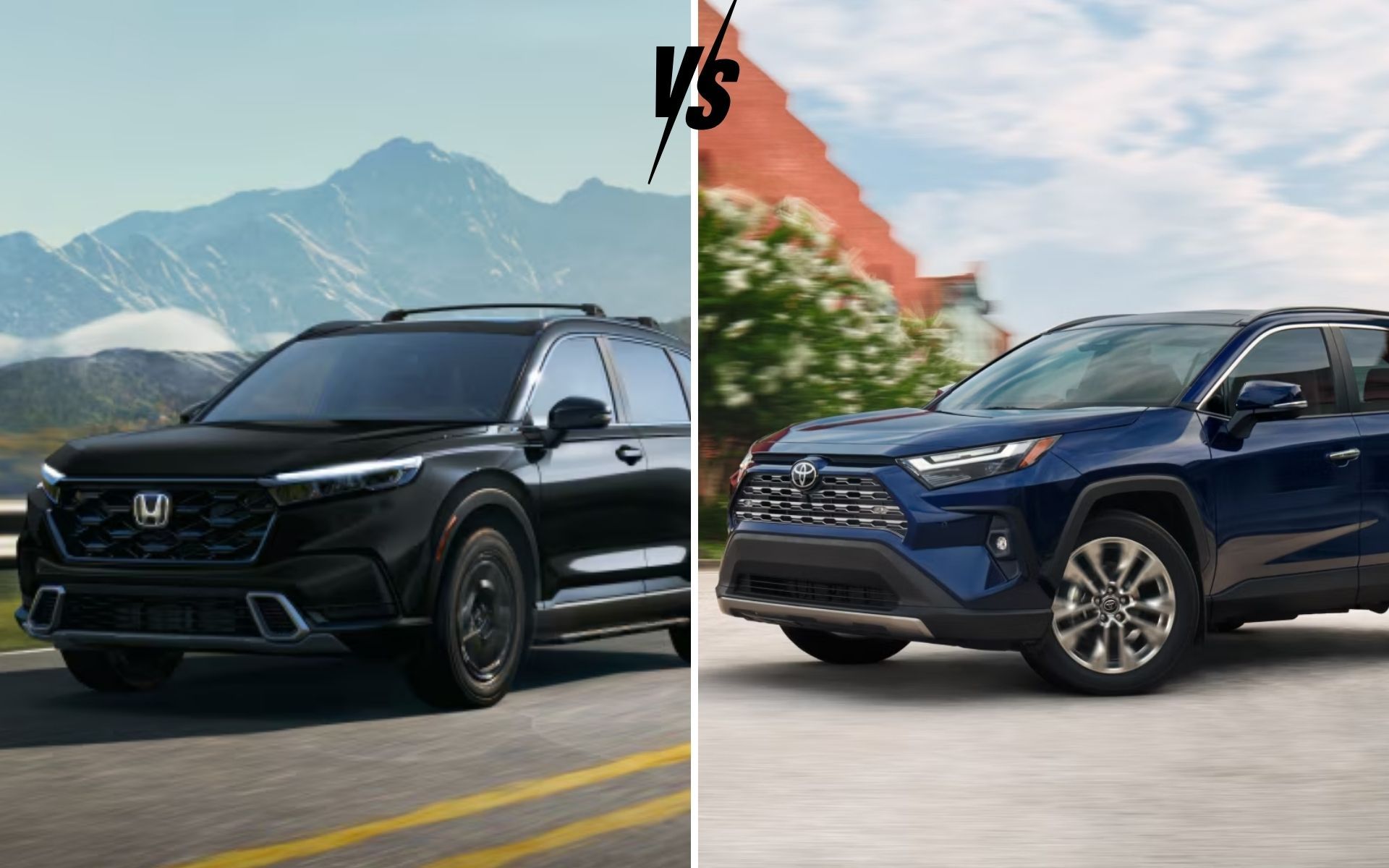
The 2025 Honda CR-V earns strong predicted reliability ratings, building on the refined design of Honda's sixth-generation platform. Featuring a choice between an updated 1.5-liter turbocharged engine and a dual-motor hybrid system, the 2025 model delivers dependable daily performance, modest annual maintenance costs, and high resale value, making it one of the most reliable compact crossovers available.
1. Overview of the 2025 Honda CR-V and Sixth-Generation Architecture
The 2025 Honda CR-V represents the third model year of the sixth-generation CR-V architecture (introduced for the 2023 model year). Honda engineered this generation with a stiffer body structure, an upgraded chassis, and acoustic insulation enhancements designed to improve ride quality and mechanical longevity. Occupying a central place in the competitive compact SUV segment, the 2025 CR-V carries forward a reputation for utility, practical engineering, and predictable long-term ownership.
Honda divides the 2025 CR-V lineup between traditional internal combustion engine (ICE) models and hybrid powertrains:
- Gas-Only Trims (LX, EX, EX-L): Powered by a 1.5-liter turbocharged inline four-cylinder engine paired with a Continuously Variable Transmission (CVT).
- Hybrid Trims (Sport Hybrid, Sport-L Hybrid, Sport Touring Hybrid): Powered by a 2.0-liter naturally aspirated four-cylinder engine linked to a two-motor hybrid drive system (e-CVT).
Understanding the mechanical differences between these two setups is central to evaluating the model's overall reliability profile. While both trim lines benefit from shared structural improvements, their distinct mechanical configurations present unique operational characteristics and maintenance requirements over time.
2. Predicted Reliability Ratings and Industry Scoring
Evaluated across major automotive industry benchmarks, the 2025 Honda CR-V maintains high predicted reliability scores. Automotive assessment organizations base these predictions on historical data from the 2023 and 2024 model years, as well as component sharing across the broader Honda vehicle lineup.
J.D. Power Predicted Reliability Score
J.D. Power rates vehicle dependability based on verified owner surveys covering hundreds of problem areas across mechanical, electronic, and interior components. The sixth-generation Honda CR-V consistently earns a Predicted Quality & Reliability score in the low 80s out of 100, placing it squarely in the "Great" category. Owners routinely praise the mechanical consistency of the engine and transmission, with most reported complaints focused on minor infotainment connectivity glitches rather than powertrain failures.
Consumer Reports Reliability Insights
Consumer Reports consistently places the Honda CR-V near the top of its compact SUV reliability rankings. The 2025 CR-V benefits from past refinements that resolved early-generation design issues seen in older models. According to Consumer Reports survey data:
- The 2.0-liter Hybrid system earns exceptional reliability scores due to its lack of a conventional transmission with mechanical step gears.
- The 1.5-liter Turbocharged engine earns solid ratings, supported by mechanical revisions that addressed legacy cold-weather fuel dilution issues found in pre-2019 versions.
Crash Safety and Structural Integrity
Reliability extends to structural integrity and safety occupant protection over the vehicle’s operating lifespan. The National Highway Traffic Safety Administration (NHTSA) awarded the sixth-generation CR-V a 5-Star Overall Safety Rating, while the Insurance Institute for Highway Safety (IIHS) designated it a TOP SAFETY PICK+. These ratings confirm that the vehicle's structural welds, active safety sensors (Honda Sensing), and restraint systems meet rigorous structural standards.
3. Powertrain Deep Dive: 1.5L Turbo vs. 2.0L Hybrid Durability
Choosing between the gas-only and hybrid powertrains is the most significant decision for prospective 2025 Honda CR-V buyers. Both systems possess strong durability records, but their underlying mechanical designs differ substantially.
- 2025 Honda CR-V Powertrains
- 1.5-Liter Turbocharged I-4 (ICE)
- 190 hp / 179 lb-ft torque
- Push-Belt CVT
- High-pressure Direct Injection
- 2.0-Liter Hybrid System (e-CVT)
- 204 hp total system output
- Direct electric motor drive
- Atkinson-cycle engine operation
- 1.5-Liter Turbocharged I-4 (ICE)
The 1.5-Liter Turbocharged Engine (L15BE)
The 1.5-liter DOHC turbocharged four-cylinder engine produces 190 horsepower at 6,000 RPM and 179 lb-ft of torque between 1,700 and 5,000 RPM.
- Fuel Dilution Mitigation: Early iterations of Honda’s 1.5-liter direct-injected engine (2017–2018) experienced oil dilution, where unburned fuel washed past piston rings into the engine oil crankcase during short winter trips. For the sixth-generation CR-V, Honda re-engineered the engine’s thermal management software, revised the high-pressure injection timing, and upgraded the positive crankcase ventilation (PCV) hardware. As a result, fuel dilution complaints have diminished significantly in 2023–2025 models.
- CVT Longevity: The accompanying push-belt CVT utilizes electronic control algorithms to minimize pulley slipping under heavy loads. Provided the transmission fluid is drained and replaced at recommended intervals (typically every 30,000 miles under severe operation), this unit demonstrates high durability.
The 2.0-Liter Two-Motor Hybrid System
The hybrid powertrain pairs a 2.0-liter Atkinson-cycle naturally aspirated four-cylinder engine with a two-motor electric drive system, outputting a combined 204 horsepower and 247 lb-ft of torque.
- Transmission-less Drive System: Unlike conventional hybrids that use planetary gear sets or belt-driven CVTs, Honda’s two-motor system acts primarily as an electrical generator and propulsion system. At lower speeds, the gas engine drives a generator motor that feeds electricity to the traction motor powering the front wheels. At highway speeds, a lock-up clutch directly couples the engine to the drive wheels via a fixed gear ratio.
- Reduced Wear Components: Because there are no torque converters, traditional multi-speed gearboxes, or drive belts, mechanical friction points are reduced. Furthermore, the regenerative braking system absorbs initial deceleration energy, extending brake pad and rotor lifespan compared to standard gas-only trim levels.
- High-Voltage Battery Life: The lithium-ion battery pack is covered by Honda’s standard 8-year/100,000-mile high-voltage battery warranty (extended to 10 years/150,000 miles in states adhering to California Air Resources Board emissions regulations).
4. Technical Service Bulletins, Recalls, and Known Watch-Outs
No vehicle is completely free of manufacturing defects or mechanical updates. Prospective buyers of the 2025 Honda CR-V should remain aware of specific technical service bulletins (TSBs) and past recall actions that apply to the sixth-generation CR-V platform.
Steering Gearbox / "Sticky Steering" Issue
One of the most notable technical matters affecting late-model Hondas—including 2023–2025 CR-V, Civic, and HR-V vehicles—involves the electronic power steering (EPS) gearbox. Owners reported a "sticky" or notched sensation when making minor steering adjustments at highway speeds.
- Cause: The issue stems from an improper manufacturing tolerance in the worm gear assembly inside the electronic power steering unit, which could expand when exposed to high ambient heat and humidity, swelling and increasing gear friction.
- Resolution: Honda issued safety recalls and service campaigns covering affected platform production runs. Dealers replace the EPS gear assembly or install a revised worm gear spring to restore smooth steering operation. Buyers of 2025 models should verify that their vehicle’s Vehicle Identification Number (VIN) shows all completed steering campaign updates via the official NHTSA Recalls Database.
High-Pressure Fuel Pump Service Bulletins
In late 2024, Honda announced recalls for select 2023–2025 model vehicles due to potential manufacturing defects in the high-pressure fuel pump core. An internal crack could develop in the pump body, potentially causing fuel odors or small leaks. Honda dealers inspect and replace the high-pressure fuel pump assembly free of charge with an updated component.
Infotainment System and Software Glitches
While mechanical hardware in the 2025 CR-V is robust, minor electrical and software glitches have been noted by early sixth-gen owners. These typically present as intermittent Bluetooth disconnects, black screens on the 7-inch or 9-inch touchscreen displays, or delayed backup camera initialization. Most of these issues are resolved through over-the-air (OTA) updates or dealer-installed software reflashes.
5. 2025 Honda CR-V Powertrains & Maintenance Metrics Comparison
The following table compares key technical specifications, maintenance demands, and predicted component lifespans between the gas-only and hybrid powertrains.
| Feature / Metric | 1.5L Turbocharged Gasoline (LX, EX, EX-L) | 2.0L Two-Motor Hybrid (Sport, Sport-L, Sport Touring) |
|---|---|---|
| Engine Configuration | 1.5L Direct-Injected DOHC 4-Cylinder Turbo | 2.0L Direct-Injected DOHC 4-Cylinder Atkinson-Cycle |
| Horsepower & Torque | 190 hp @ 6,000 RPM / 179 lb-ft @ 1,700–5,000 RPM | 204 hp total system / 247 lb-ft total torque |
| Transmission Type | Continuously Variable Transmission (Push-Belt CVT) | Electronic CVT (Direct dual-motor propulsion lock-up) |
| EPA Fuel Economy (FWD/AWD) | ~28 City / 34 Hwy (FWD) | ~43 City / 36 Hwy (FWD) |
| Oil Change Interval | 5,000–7,500 miles (0W-20 Full Synthetic) | 7,500–10,000 miles (0W-20 Full Synthetic) |
| Transmission Fluid Service | Every 30,000 miles (Honda HCF-2 Fluid) | Every 45,000–60,000 miles (Honda e-CVT Fluid) |
| Brake Pad Service Life | 35,000–50,000 miles (standard friction wear) | 70,000–100,000 miles (assisted by regenerative braking) |
| Major Maintenance Milestones | Spark plugs at 100k miles, CVT service every 30k | Spark plugs at 100k miles, hybrid coolants at 100k/120k |
| High-Voltage Battery Warranty | N/A | 8 Years / 100,000 Miles (10 Yr / 150,000 Mi in CARB states) |
6. Real-World Maintenance Costs and Ownership Expectations
Long-term reliability depends significantly on adhering to routine preventative maintenance schedules. Honda utilizes an integrated Maintenance Minder system in the instrument cluster, which monitors engine operating temperatures, rev counts, trip lengths, and ambient conditions to calculate remaining fluid lifespans.
- Honda Maintenance Minder Codes
- Main Code A / B
- Code A: Replace Engine Oil
- Code B: Replace Oil & Filter, Inspect Brakes & Steering
- Sub-Codes 1 through 7
- 1: Rotate Tires
- 2: Cabin & Engine Air Filters
- 3: Replace Transmission Fluid
- 4: Replace Spark Plugs
- 5: Replace Engine Coolant
- 7: Replace Brake Fluid
- Main Code A / B
Maintenance Code Breakdown
- Main Code A: Replace engine oil.
- Main Code B: Replace engine oil and oil filter, inspect front/rear brakes, tie-rod ends, steering gearbox, and suspension components.
- Sub-Code 1: Rotate tires and check tire pressure.
- Sub-Code 2: Replace cabin air filter and engine air cleaner element.
- Sub-Code 3: Replace transmission fluid (crucial for gas-only CVT protection).
- Sub-Code 4: Replace spark plugs and inspect valve clearance.
- Sub-Code 5: Replace engine coolant.
- Sub-Code 7: Replace brake fluid (recommended every 3 years regardless of mileage).
Annual Repair Cost Estimates
According to industry tracking metrics from repair pricing databases, the average annual repair and maintenance cost for a Honda CR-V runs approximately $400 to $550 per year, which is lower than the compact SUV segment average ($520–$650). The vehicle experiences fewer unscheduled maintenance events per year compared to domestic and European segment competitors.
7. How the 2025 CR-V Compares to Key Rivals in Reliability
When evaluating overall reliability, comparing the 2025 Honda CR-V against its primary market competitors provides valuable context for prospective buyers.
| Model | Overall Durability | Key Mechanical Strengths |
|---|---|---|
| 2025 Honda CR-V | Above Average | e-CVT durability, fit & finish |
| Toyota RAV4 | Excellent | Proven naturally aspirated 2.5L |
| Subaru Forester | Above Average | Standard AWD, high clearance |
| Hyundai Tucson | Average | Generous warranty coverage |
Honda CR-V vs. Toyota RAV4
The Toyota RAV4 remains the CR-V's closest rival. Both models offer exceptional predicted reliability scores.
- Engine & Transmission: The non-hybrid RAV4 uses a 2.5-liter naturally aspirated engine with an 8-speed automatic transmission, appealing to drivers who prefer traditional step-gear transmissions over CVTs.
- Hybrid Drive: The RAV4 Hybrid and CR-V Hybrid are evenly matched in terms of longevity. Toyota’s planetary e-CVT design has a slightly longer history, but Honda’s direct-drive electric system features fewer moving parts overall.
Honda CR-V vs. Subaru Forester
The Subaru Forester offers standard All-Wheel Drive across all trims and high ground clearance.
- Engine Design: Subaru’s boxer engine uses horizontally opposed pistons, which require diligent head gasket and valve cover monitoring over 100,000 miles. Honda’s inline-four configurations generally show fewer exterior fluid weeping issues over extended mileage.
- CVT Tuning: Honda’s CVT tuning is frequently praised for direct throttle response and durability compared to earlier generations of Subaru Lineartronic CVTs.
Honda CR-V vs. Hyundai Tucson
The Hyundai Tucson offers high tech content and an attractive 10-year/100,000-mile limited powertrain warranty.
- Long-Term Ratings: While Hyundai’s extended warranty provides financial protection, independent reliability indices place the Honda CR-V higher than the Tucson for overall component longevity, minimal sensor failures, and structural wear over 5 to 10 years of ownership.
8. Practical Recommendations for Prospective Buyers and Owners
To maximize the ownership lifecycle and minimize reliability risks with a 2025 Honda CR-V, consider the following practical guidelines:
- Prioritize the Hybrid Powertrain for Long-Term Ownership: If your budget allows, selecting a hybrid trim (Sport, Sport-L, or Sport Touring) offers a simpler propulsion drive mechanics setup, lower brake wear, and improved urban fuel economy.
- Verify Recall Clearance: Ensure the vehicle’s VIN has cleared all NHTSA steering gearbox and high-pressure fuel pump service bulletins before taking delivery, particularly when purchasing used or certified pre-owned units.
- Strictly Adhere to Fluid Replacement Intervals: For 1.5L Turbo models, do not skip or delay CVT transmission fluid services. Change fluid every 30,000 miles to prevent internal belt wear and maintain smooth hydraulic pressure.
- Mitigate Cold-Weather Fuel Dilution (1.5L Turbo): If owning a gas-only model in low-temperature environments, avoid frequent short drives (under 5 minutes) where the engine fails to reach full operating temperature. Drive long enough for the cooling system to warm up fully, allowing any fuel vapor in the crankcase to burn off safely.
- Use OEM Maintenance Products: Always select Genuine Honda Type 3.1 HCF-2 CVT fluid for gas models, e-CVT fluid for hybrid units, and Honda Genuine 0W-20 full-synthetic engine oil to preserve seal life and sensor performance.
Frequently Asked Questions
Is the 2025 Honda CR-V a reliable car for long-term ownership?
Yes, the 2025 Honda CR-V receives high reliability ratings across major automotive research organizations. Built on Honda's mature sixth-generation platform, it features refined engine management software and proven component construction, making it fully capable of exceeding 150,000 to 200,000 miles with proper maintenance.
Which 2025 Honda CR-V engine option is more reliable: Turbo or Hybrid?
While both engines are dependable, the 2.0-liter hybrid powertrain has a slight structural reliability advantage. It lacks a traditional mechanical transmission (utilizing direct electric motor drive), omits starter motors and belt-driven alternators, and reduces brake system wear through regenerative braking.
Has Honda fixed the oil dilution issue on the 1.5L turbo engine for 2025?
Yes. The severe fuel dilution issues that affected 2017–2018 1.5-liter turbo models were resolved through physical engine revisions, updated fuel injection timing, and improved thermal management systems introduced in later years and finalized for the sixth-generation (2023+) release.
What is the most common issue reported on the 2025 Honda CR-V?
The most frequently reported issue across 2023–2025 CR-V models involves a sticky or notched sensation in the electronic power steering gearbox at highway speeds. Honda addresses this under an official service campaign/recall by replacing or adjusting the internal gear assembly.
How much does annual maintenance cost for a 2025 Honda CR-V?
Annual routine maintenance for a Honda CR-V typically costs between $400 and $550 per year. Costs stay minimal during the first few years, mainly limited to synthetic oil changes, tire rotations, cabin filter replacements, and standard brake inspections.
Final Summary and Next Actions
The 2025 Honda CR-V stands out as a dependable choice in the compact SUV segment. Its solid build quality, low maintenance requirements, and reliable powertrain options make it a practical selection for drivers seeking long-term reliability.
Next Steps for Buyers:
- Check safety bulletins and recall records by searching the vehicle's 17-digit VIN on the NHTSA Recalls Portal.
- Test drive both the 1.5L Turbo (EX/EX-L) and 2.0L Hybrid (Sport/Sport Touring) trim levels to determine which power delivery style fits your daily driving needs.
- Review maintenance requirements with your dealership to establish a service routine aligned with Honda Maintenance Minder guidelines.