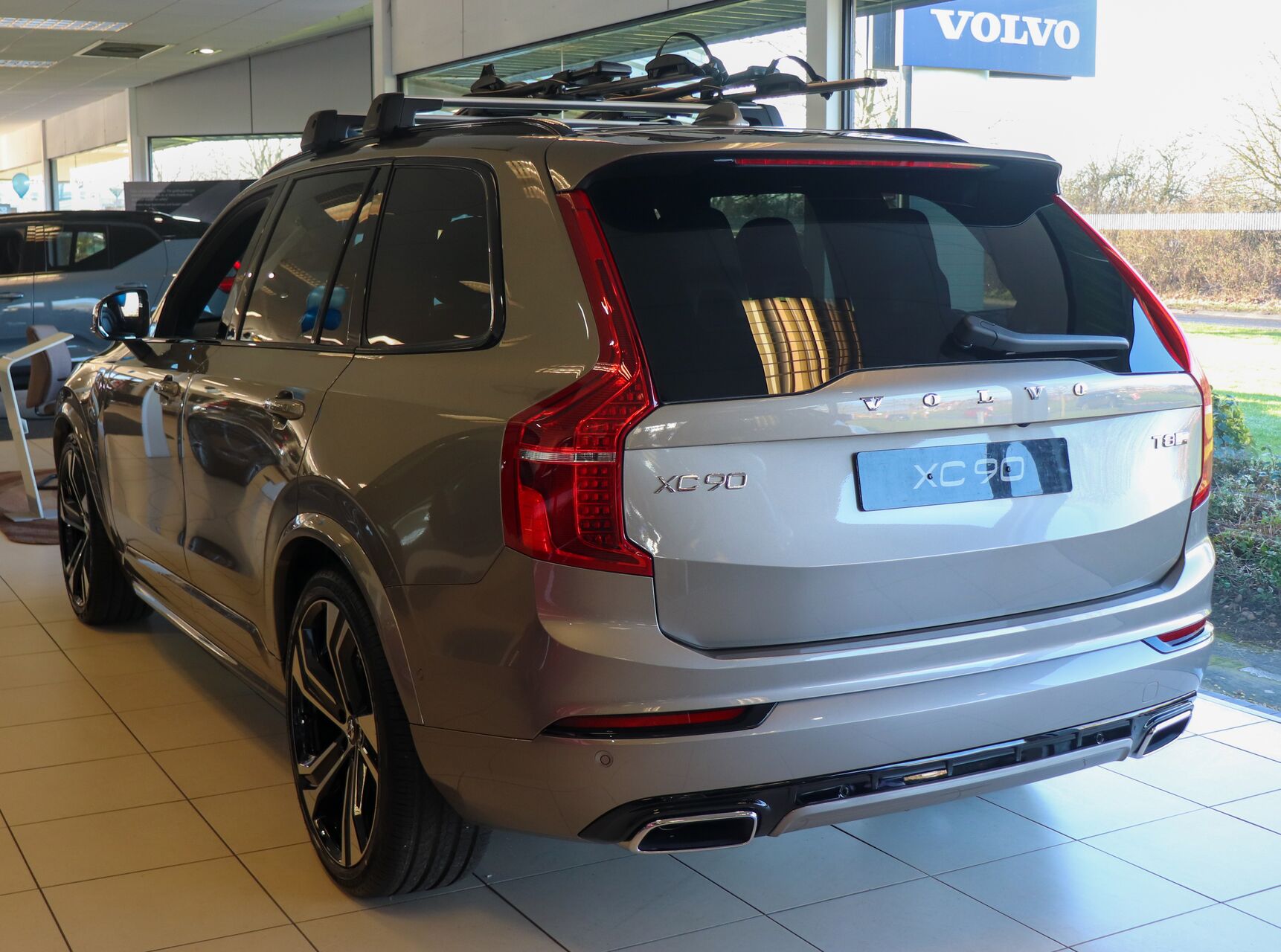
The 2020 Volvo XC90 and the 2018 model share nearly identical exterior and interior dimensions, as both belong to the second-generation SPA platform era, though minor trim-specific styling updates and seating configurations can subtly influence spatial distribution and passenger comfort metrics across model years.
When automotive enthusiasts, prospective buyers, and current owners compare model years of luxury midsize SUVs, vehicle dimensions often dictate purchasing decisions. The Volvo XC90 represents a benchmark in Scandinavian design, balancing commanding road presence with clever packaging. Evaluating the 2018 and 2020 model years reveals whether Volvo altered its flagship SUV's footprint during its production lifecycle. Understanding these physical attributes helps drivers assess garage clearance, parking ease, cargo utility, and interior ergonomics.
Introduction to the Volvo XC90 Second-Generation Platform
The modern era of the Volvo XC90 began with the introduction of the second-generation vehicle, underpinned by Volvo’s Scalable Product Architecture (SPA) platform. Debuting globally for the 2016 model year, this architecture was engineered to accommodate various powertrains—including standard four-cylinder engines, plug-in hybrids, and mild hybrids—without compromising cabin or cargo volume.
Because both the 2018 and 2020 model years utilize this same foundational SPA platform, their core structural measurements remain virtually identical. However, mid-cycle updates introduced across the lineup brought minor revisions to exterior fascias, wheel designs, and interior trim options. These cosmetic changes can occasionally cause slight discrepancies in published length figures depending on whether an Inscription, R-Design, or Momentum trim is measured, though the foundational architecture stays constant.
Exterior Dimensions: A Side-by-Side Comparison
Exterior dimensions govern how a vehicle interacts with its environment, from fitting into tight urban parking stalls to clearing residential garage doors. Examining the baseline numbers for the 2018 and 2020 Volvo XC90 highlights a high degree of architectural consistency.
| Dimension Metric | 2018 Volvo XC90 | 2020 Volvo XC90 |
|---|---|---|
| Wheelbase | 117.5 inches (2,984 mm) | 117.5 inches (2,984 mm) |
| Overall Length | 195.0 inches (4,953 mm) | 195.0 inches (4,953 mm) |
| Overall Width (Mirrors Folded) | 79.1 inches (2,009 mm) | 79.1 inches (2,009 mm) |
| Overall Width (With Mirrors) | 84.3 inches (2,140 mm) | 84.3 inches (2,140 mm) |
| Overall Height | 69.9 inches (1,775 mm) | 69.9 inches (1,775 mm) |
| Front Track | 66.4 inches (1,687 mm) | 66.4 inches (1,687 mm) |
| Rear Track | 66.8 inches (1,697 mm) | 66.8 inches (1,697 mm) |
| Ground Clearance | 8.3 – 9.3 inches (varies by air suspension) | 8.3 – 9.3 inches (varies by air suspension) |
As evidenced by these manufacturer specifications, the footprint of the XC90 did not undergo a physical redesign between 2018 and 2020. The wheelbase of 117.5 inches ensures a stable highway ride and creates ample space between the axles for passenger accommodation. The overall length of 195 inches places the XC90 squarely in the midsize-to-large luxury SUV segment, positioning it closely against competitors like the Audi Q7, BMW X5, and Mercedes-Benz GLE.
Trims and Exterior Styling Variations
While the core numbers are identical, subtle exterior styling revisions introduced for the 2020 model year can create minor visual and dimensional nuances. Volvo updated the front grille design, lower air intakes, and rear bumper trim for 2020 across variants like the Momentum, R-Design, and Inscription.
Furthermore, wheel options ranging from 19-inch standard alloys to optional 21-inch and 22-inch wheels affect unsprung weight and can marginally alter the vehicle's stance or ride height depending on whether the vehicle is equipped with the Four-Corner Air Suspension system. This electronically controlled air suspension allows drivers to lower the vehicle for easier entry and exit or raise it for off-road clearance, a feature available on both 2018 and higher-tier 2020 models.
Interior Dimensions and Cabin Packaging
Inside the cabin, the packaging efficiency of the SPA platform shines. Both the 2018 and 2020 Volvo XC90 models are primarily configured as three-row SUVs, seating up to seven occupants in a standard 2-3-2 layout, or six occupants when fitted with optional second-row captain's chairs.
Headroom and Legroom Analysis
Passenger accommodation across the three rows remains consistent across both model years:
- Front Row: Headroom measures approximately 38.9 inches (with panoramic sunroof), while legroom stretches to a generous 40.9 inches.
- Second Row: Headroom is rated at 38.5 inches, and legroom provides a comfortable 37.0 inches, aided by sliding second-row seats that allow occupants to balance legroom between the second and third rows.
- Third Row: Headroom drops slightly to 36.3 inches, and legroom measures 31.9 inches. This row is best suited for children or smaller adults on longer journeys.
These interior measurements demonstrate that Volvo prioritized an airy, expansive cabin environment. Large glass areas, optional panoramic sunroofs, and slim seat designs maximize the perception of space, mitigating the physical constraints inherent to three-row midsize utility vehicles.
Cargo Capacity and Utility Metrics
Cargo versatility is a primary consideration for family-oriented luxury SUV buyers. The 2018 and 2020 Volvo XC90 models share identical cargo volume ratings, designed to accommodate everything from weekly groceries to bulky outdoor equipment.
- Cargo Space Behind Third Row: With all three rows of seats upright, the XC90 offers 15.8 cubic feet of storage space behind the rearmost seats.
- Cargo Space Behind Second Row: Folding the third-row seats flat expands the cargo capacity significantly to 41.8 cubic feet.
- Maximum Cargo Space: Folding both the second and third rows flat opens up a maximum cargo volume of 85.7 cubic feet, providing a flat floor and a wide rear liftgate opening.
An important technical note for prospective buyers involves the powertrain selection. While standard T5 (front-wheel or all-wheel drive) and T6 (turbocharged and supercharged all-wheel drive) models maintain identical cargo volumes, the T8 Twin Engine Plug-in Hybrid variants feature a battery pack housed in the central tunnel. While this layout preserves passenger and cargo room remarkably well compared to competitors that sacrifice trunk space for electrification, minor packaging differences exist beneath the floorboards in hybrid variants across both years.
Weight Classifications and Towing Capacities
Dimensions extend beyond physical length and width into weight distributions and towing metrics. The operational footprint of the XC90 influences its handling dynamics and capability ratings.
Curb weights for the 2018 and 2020 models fluctuate based on drivetrain and equipment levels. A base front-wheel-drive 2018 T5 model starts at roughly 4,394 pounds, whereas a heavily optioned 2020 T8 Inscription Plug-in Hybrid can exceed 5,170 pounds due to the added weight of the electric motor and lithium-ion battery pack. Despite these weight variations, the exterior physical footprint remains constant.
Towing capacity remains robust across both model years. Properly equipped models featuring the T6 or T8 powertrains boast a maximum towing capacity of up to 5,000 pounds (approximately 2,268 kg), making the vehicle suitable for hauling small campers, boat trailers, or utility equipment without straining structural tolerances.
Common Questions Regarding XC90 Dimensions
Did the Volvo XC90 get bigger in 2020?
No, the Volvo XC90 did not increase in physical size for the 2020 model year. It retained the exact 117.5-inch wheelbase, 195.0-inch overall length, and 79.1-inch width established at the launch of the second generation in 2016. Changes for 2020 were strictly cosmetic and technological.
Will a 2018 or 2020 Volvo XC90 fit in a standard American garage?
Yes, in most cases. With an overall width of 84.3 inches including mirrors and 79.1 inches with mirrors folded, along with a length of 195 inches, the XC90 fits comfortably into standard 20-foot residential garages. However, owners should verify garage door height clearances if the vehicle is equipped with an air suspension set to its raised off-road position.
Are interior dimensions identical between the 6-seat and 7-seat configurations?
While overall cabin volume remains the same, the choice between a second-row bench seat (7-seater) and individual captain's chairs (6-seater) alters accessibility and lateral comfort. The captain's chairs provide a dedicated pass-through to the third row and independent armrests, altering the tactile spatial experience for second-row passengers.
How does the XC90's length compare to other midsize luxury SUVs?
At 195 inches long, the XC90 matches or slightly exceeds competitors like the BMW X5 (approx. 194.3 inches) and Audi Q7 (approx. 199.6 inches). It offers a balanced compromise, providing three-row utility without the unwieldy parking footprint of full-size, truck-based SUVs.
Practical Next Actions and Buying Guidance
For buyers cross-shopping between a 2018 and a 2020 Volvo XC90, dimensional specifications will not serve as a deciding factor because the physical exterior and interior footprints are identical. Instead, purchasing decisions should hinge on technological updates, infotainment system revisions (such as the integration of improved software interfaces in later years), warranty status, and powertrain availability.
Before finalizing a purchase, measure your primary parking space or home garage to account for the vehicle's 195-inch length and 84-inch mirror-inclusive width. If garage clearance is tight, ensure the vehicle's power-folding mirror function operates correctly during your pre-purchase inspection. Test-driving both a 7-seat bench model and a 6-seat captain's chair variant will also clarify which seating arrangement best suits your daily cargo and passenger hauling requirements.