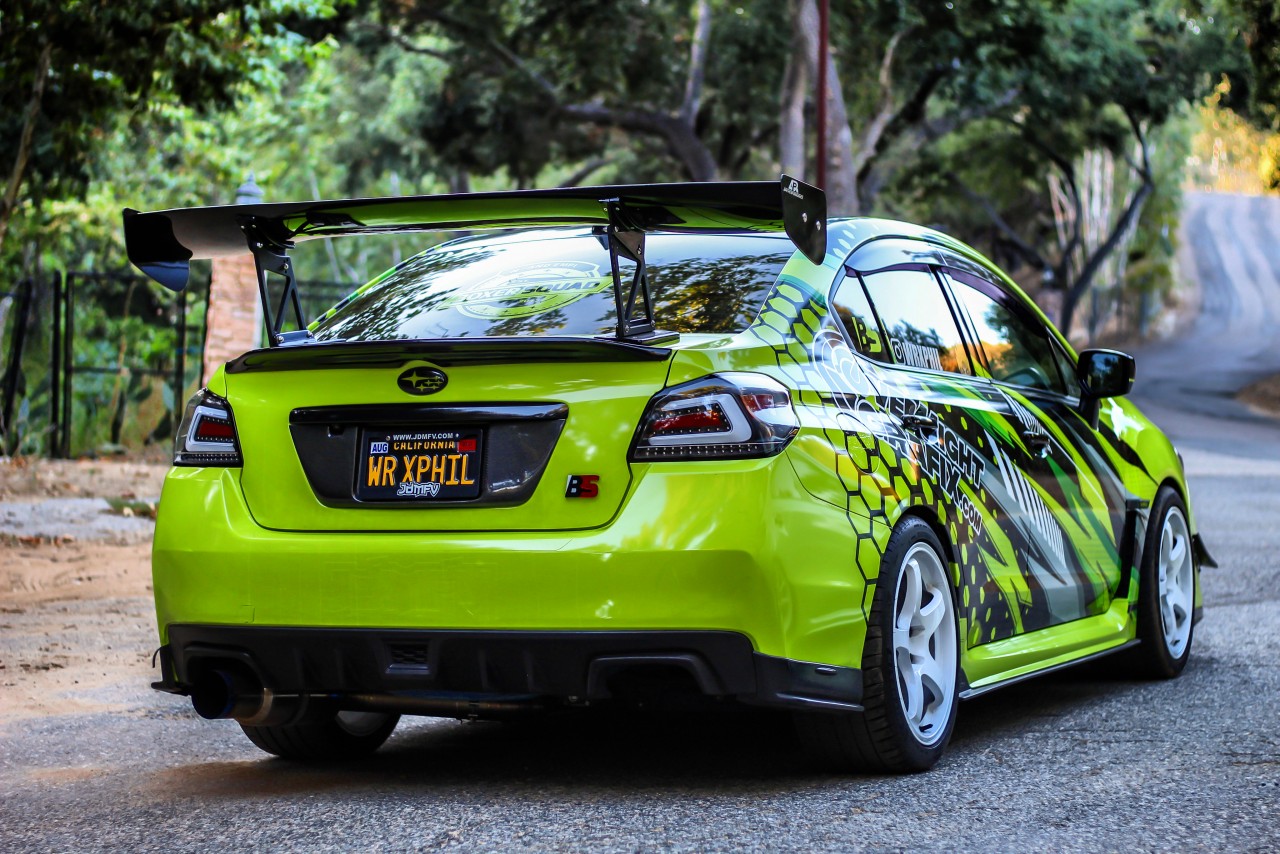
The Cobb Accessport is the industry-standard handheld ECU (Engine Control Unit) tuning device designed to unlock the performance potential of the 2016 Subaru WRX. By connecting to the vehicle’s OBD-II port, it replaces the conservative factory programming with optimized "Off-The-Shelf" (OTS) maps that increase horsepower and torque, smooth out power delivery, and provide real-time monitoring of critical engine health metrics.
As we look at the landscape in 2026, the 2016 Subaru WRX—the second year of the VA chassis featuring the FA20DIT engine—remains a staple of the enthusiast community. Whether you are a new owner of a high-mileage example or a long-term enthusiast looking to finally "go Stage 1," the Cobb Accessport V3 (specifically model AP3-SUB-004) is the most critical tool in your arsenal. It is not merely a "chip"; it is a comprehensive engine management solution that bridges the gap between a stock daily driver and a high-performance machine.
Understanding the FA20DIT and the Accessport Connection
The 2016 WRX was a departure from the classic EJ-series engines found in earlier models and the concurrent STI. The FA20DIT (2.0L Direct Injection Turbo) engine brought better efficiency and a broader torque curve, but it also introduced specific tuning challenges, such as aggressive "rev-hang" between gears and a sensitive knock-correction system.
The Cobb Accessport addresses these factory limitations immediately. When you "marry" the Accessport to your 2016 WRX, the device saves your stock ECU data and flashes a new calibration. This new software adjusts the three pillars of engine performance:
- Boost Control: Increasing target boost levels while smoothing the transition into boost to avoid the "on/off" switch feeling of the stock turbo.
- Ignition Timing: Optimizing when the spark plug fires to maximize the force of the combustion cycle.
- Fueling: Adjusting the air-fuel ratio (AFR) to ensure the engine runs safely, especially under high load, preventing lean conditions that lead to catastrophic failure.
Performance Gains and "Stage" Definitions
One of the primary reasons owners seek out the 2016 WRX Cobb Accessport is the simplicity of the "Stage" upgrade path. Cobb provides pre-verified calibrations that correspond to specific hardware modifications.
Stage 1: The First Step
Stage 1 is designed for a completely stock 2016 WRX or one with a simple high-flow air filter. It requires no mechanical changes to the exhaust or intake. In 2026, many owners still prefer Stage 1 because it retains factory reliability while removing the annoying 1st-to-2nd gear rev-hang and increasing peak power. You can expect gains of approximately 10% to 15% in horsepower and a significant increase in mid-range torque, making the car feel much more responsive in highway passing maneuvers.
Stage 1+ Big SF
This stage requires the Cobb Big SF Intake System. Many owners enjoy the increased "induction noise" (the sound of the turbo spooling and the bypass valve). It is crucial to note that you must use the specific "Stage 1+ Big SF" map on the Accessport. Using a stock map with an aftermarket intake on an FA20DIT engine can lead to incorrect Mass Air Flow (MAF) readings and potential engine damage.
Stage 2 and the "Green Speed" Era
Historically, Stage 2 involved changing the restrictive factory J-pipe (downpipe). However, since the introduction of Cobb’s "Green Speed" initiative in 2022, the tuning landscape has changed. To remain compliant with emissions regulations, Cobb updated their software to prevent the suppression of Check Engine Lights (CELs) related to the removal of catalytic converters or TGV/EGR systems. In 2026, if you are seeking a Stage 2 setup, you must ensure you are using EPA-compliant hardware, such as the Cobb GESi J-pipe, which allows for increased flow without triggering emissions failures.
| Feature | Stage 0 (Stock) | Stage 1 (Accessport Only) | Stage 2 (Accessport + J-Pipe) |
|---|---|---|---|
| Peak Boost | ~15.9 PSI | ~18-19 PSI | ~20-22 PSI |
| Rev-Hang | Present (Aggressive) | Reduced/Eliminated | Eliminated |
| Hardware Required | None | None | High-flow J-Pipe (GESi) |
| Primary Goal | Fuel Economy/Quiet | Drivability/Power | Maximum Street Power |
| Difficulty | N/A | Very Low (Flash only) | Moderate (Exhaust work) |
The Installation Process: A Step-by-Step Guide
Installing the Accessport is a straightforward process, but it requires attention to detail to avoid "bricking" the ECU (rendering it non-functional).
- Battery Health Verification: Ensure your 2016 WRX has a healthy, fully charged battery. The flashing process involves the ECU and fuel pump running while the engine is off. If the voltage drops too low during the write process, the installation will fail. In 2026, if your battery is more than 3-4 years old, consider connecting a battery tender during the flash.
- Locate the OBD-II Port: The port is located under the driver's side dashboard, near the hood release. Plug the Accessport cable into this port.
- Initiate "Install": Turn the ignition to the "ON" position (dash lights on, but engine not running). Select "Install" from the Accessport menu.
- Identify Vehicle: The Accessport will automatically detect the 2016 WRX (Subaru 6MT or CVT).
- Select Map: Choose the map that matches your fuel octane (91 or 93) and your hardware (Stock, Big SF, etc.).
- The Flash: The device will first save your factory ROM. Do not touch the cable, the door, or any electrical switches during this time. Once the save is complete, it will write the new Cobb map.
- Finalize: Once the screen says "Success," turn the ignition off for 15 seconds, then start the car.
Live Monitoring and Engine Health Metrics
The 2016 WRX Cobb Accessport is more than a tuning tool; it is a high-speed diagnostic monitor. The FA20DIT engine is sensitive to fuel quality and heat, and the Accessport allows you to monitor parameters that the factory dashboard cannot. Every owner should keep an eye on these four "Digital Gauges":
1. Feedback Knock (FKL)
This represents an immediate response to a knock event. Small values like -1.41 are often "phantom knock" from drivetrain noise, but large, consistent negative numbers suggest poor fuel quality or a mechanical issue.
2. Fine Learning Knock (FLK)
This shows knock that the ECU has "learned" over time. If this remains negative over several driving sessions, it indicates a recurring issue at a specific RPM and load range.
3. Dynamic Advance Multiplier (DAM)
On a 2016 WRX, the DAM should ideally be at 1.000. If the DAM drops (e.g., to 0.875 or lower), it means the ECU has detected significant knock and is proactively reducing ignition timing across the board to protect the engine. This is usually the first sign that you have a "bad tank of gas."
4. Air-Fuel Ratio (AFR)
Under wide-open throttle (WOT), the AFR should drop from the cruising 14.7 range down to the 10s or low 11s. If the car stays "lean" (higher numbers) under boost, you should stop driving immediately and check for vacuum or boost leaks.
Reliability and Maintenance for Tuned 2016 WRXs
A common concern is whether the Accessport will "blow up" the engine. The reality is that the Accessport itself is a tool; the safety of the engine depends on the quality of the tune and the maintenance of the vehicle. By 2026, many 2016 WRXs have surpassed 100,000 miles. Before installing an Accessport on a high-mileage car, you must perform the following:
- Walnut Blasting: Because the FA20DIT is direct-injected, fuel never washes over the intake valves. Over time, carbon builds up, leading to "stutters" and knock. Cleaning these valves is essential for a stable tune.
- Spark Plug Replacement: Performance tunes require healthy spark plugs. Use only the factory-recommended NGK Laser Iridium plugs and ensure they are gapped correctly (usually 0.020" to 0.022" for tuned applications).
- Oil Selection: Tuned WRXs generate more heat. Using a high-quality 5W-30 or 5W-40 synthetic oil and changing it every 3,000 to 3,500 miles is the best insurance for your rod bearings.
Cobb Green Speed and 2026 Compliance
As mentioned, the automotive tuning world shifted significantly around 2022. For owners of a 2016 WRX in 2026, this means that some "old-school" modifications are no longer supported by the standard Accessport software. If you install an Accessport today, you cannot simply "turn off" codes for deleted TGV (Tumble Generator Valves) or EGR (Exhaust Gas Recirculation) systems.
This change was implemented to comply with EPA Clean Air Act regulations. While this limited some extreme modifications, it pushed the industry toward high-quality, high-flow catalytic converters that provide nearly the same performance gains as "catless" setups without the environmental impact or the smell of raw fuel. When purchasing used parts for your 2016 WRX, always verify they are "Green Speed" compatible if you intend to use Cobb OTS maps.
Frequently Asked Questions
Does the Cobb Accessport void my warranty?
Legally, a manufacturer cannot void your entire warranty because of a part unless they can prove that part caused the failure (as per the Magnuson-Moss Warranty Act). However, in 2026, most 2016 WRXs are well out of their factory powertrain warranties. If you have an aftermarket extended warranty, flashing the ECU is generally grounds for a claim denial regarding engine or transmission failures.
Can I use one Accessport on two different cars?
No. An Accessport "marries" to a single VIN. To use it on another vehicle, you must "unmarry" it from the current car, which restores the stock ECU flash and unlocks the device for the next vehicle.
Is the Accessport compatible with the CVT 2016 WRX?
Yes. Cobb provides specific maps for the CVT (Continuously Variable Transmission) models. These maps not only adjust engine parameters but also optimize the simulated "shift points" and ensure the torque levels do not exceed the mechanical limits of the CVT chain.
What should I do if my DAM drops below 1.000?
Don't panic immediately. First, stay out of high boost. Refill the tank with high-quality 93-octane fuel from a reputable station. If the DAM doesn't return to 1.000 after a few drive cycles, check for mechanical issues like a loose intake clamp or fouled spark plugs.
Can the Accessport read and clear Check Engine Lights?
Yes. The Accessport acts as a fully functional OBD-II scan tool. It can read "P-codes" and provide a brief description of the error, allowing you to troubleshoot issues without visiting a mechanic.
Practical Recommendation for 2026 Owners
If you own a 2016 WRX and are looking for the best "bang for your buck," your first step should be the purchase of a Cobb Accessport V3. Start with the Stage 1 91 Octane map (even if you use 93 octane gas) to provide an extra margin of safety for the engine.
Once you are comfortable with the monitoring gauges and have verified that your car is mechanically sound—specifically ensuring the intake valves are clean and the spark plugs are fresh—you can then progress to Stage 1+ or Stage 2 hardware. Always remember that the Accessport is a window into your engine's soul; ignore the gauges at your own peril, but use them wisely, and you will enjoy another 100,000 miles of performance from your Subaru.