The 2009 Toyota Camry actually features a timing chain rather than a rubber timing belt on its core engine options, meaning owners investigating replacement schedules are typically looking at long-term engine durability, accessory belt service, or managing high-mileage maintenance requirements for this generation of vehicles.
Navigating the Confusion: Timing Belt vs. Timing Chain on the 2009 Toyota Camry
When discussing the 2009 Toyota Camry timing belt replacement, the most critical piece of technical context is that the vast majority of these vehicles do not have a timing belt at all. Toyota engineered both the 2.5-liter 2AR-FE engine (if applicable to specific late-year rollouts or global variants, though primarily the 2.4L 2AZ-FE is found in the 2009 US market model) and the 3.5-liter 2GR-FE V6 engine with internal timing chains.
Understanding this distinction alters how owners approach routine maintenance. Rubber timing belts are wear items that require scheduled replacement every 60,000 to 100,000 miles to prevent catastrophic engine interference. Timing chains, conversely, are designed to last the lifetime of the engine, typically engineered to endure 200,000 to 300,000 miles or more, provided the vehicle receives consistent, high-quality engine oil changes.
If you have heard mechanics or fellow owners talk about replacing a "timing belt" on a 2009 Camry, they are usually referring to one of two things:
- The Serpentine (Accessory) Drive Belt: This external rubber belt drives the alternator, power steering pump, and air conditioning compressor. It does require periodic inspection and replacement.
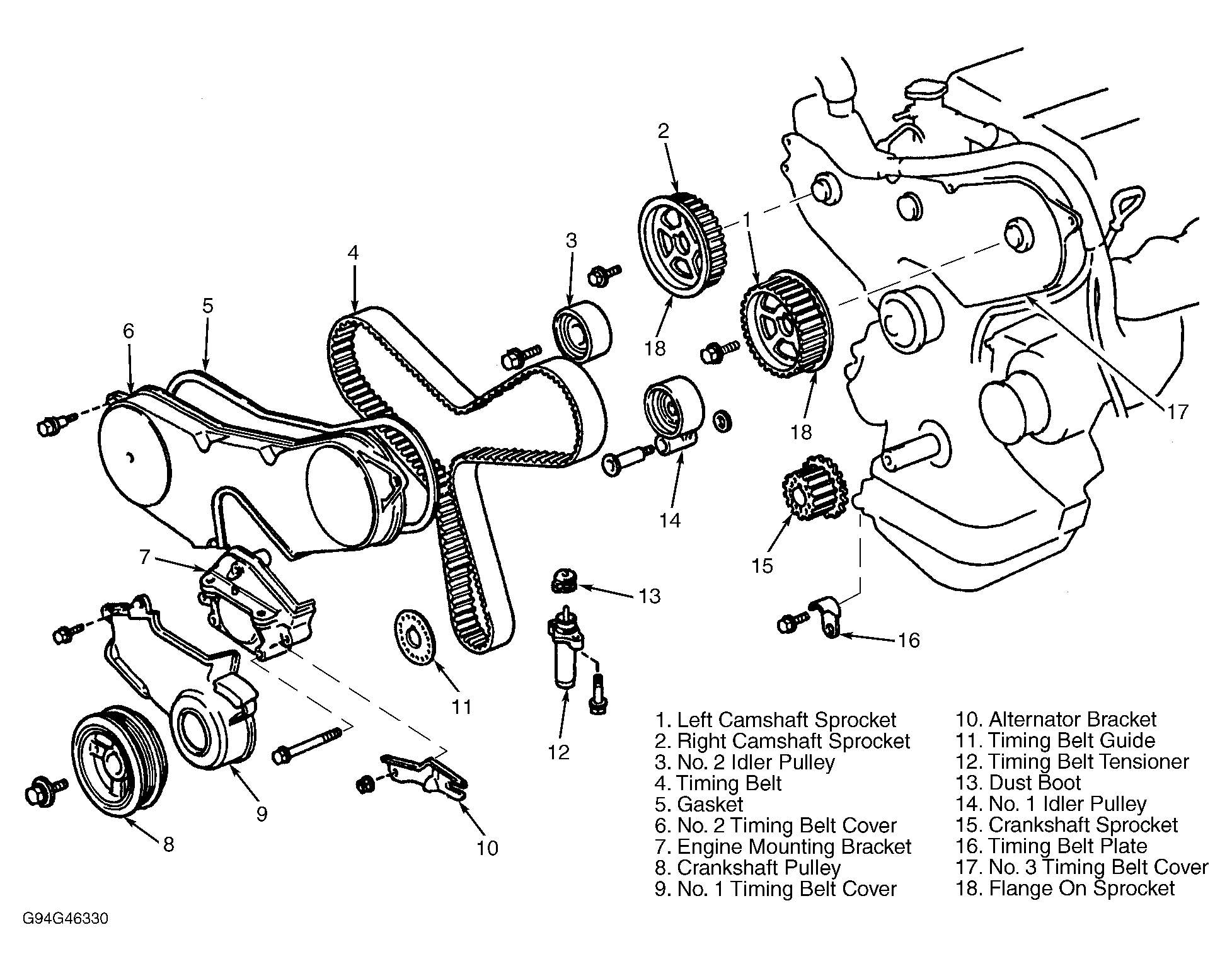
- Misidentification of the Engine Class: Older generations of the Toyota Camry (such as those equipped with the 3.0-liter 1MZ-FE V6 found in late-1990s and early-2000s models) did use rubber timing belts. Owners transitioning from older vehicles often carry over the assumption that newer generations require the same service.
Powertrain Options and Mechanical Architecture
To understand what maintenance a 2009 Toyota Camry requires today, it is essential to look closely at the exact engine under the hood. The 2009 model year offered two primary engine choices, both utilizing steel timing chains running in an oil bath.
1. The 2.4-Liter 4-Cylinder (2AZ-FE)
This engine powered the majority of 2009 Camry base, LE, SE, and XLE models.
- Valve Train Design: Dual Overhead Cam (DOHC), 16-valve with VVT-i (Variable Valve Timing with intelligence).
- Timing Component: Single-row steel roller chain driven by the crankshaft, tensioned via a hydraulic tensioner, and guided by resin-faced rails.
- Maintenance Reality: While the chain itself is exceptionally durable, this specific engine generation is well-documented for potential oil consumption issues due to piston ring design. Keeping a close eye on oil levels is vital because low oil pressure starves the hydraulic timing chain tensioner, leading to premature chain rattle and guide wear.
2. The 3.5-Liter V6 (2GR-FE)
Available on higher trim levels, this powerful V6 uses a more complex timing system to synchronize its dual overhead cams on each cylinder bank.
- Valve Train Design: DOHC, 24-valve with Dual VVT-i.
- Timing Component: Multiple timing chains—a primary chain driving the crankshaft to the exhaust cams, and secondary chains linking the intake cams.
- Maintenance Reality: The V6 timing system is robust and rarely fails prematurely. However, because of the tight engine bay packaging, any major service involving the front timing cover or valve cover gaskets requires significant labor.
2009 Toyota Camry Maintenance Comparison: Timing Chain vs. Accessory Belts
To clarify what service your vehicle actually needs, the following table breaks down the differences between the internal timing chain and the external accessory drive belt system.
| Component Type | Location | Service Interval | Typical Symptoms of Wear | Replacement Complexity |
|---|---|---|---|---|
| Engine Timing Chain | Internal (inside the engine block, sealed by timing cover) | Lifetime of the engine (200,000+ miles) | Metallic rattling on cold startup, check engine light (timing correlation codes P0016/P0017) | Extremely high (requires engine/transmission support, removal of accessories and timing cover) |
| Serpentine Drive Belt | External (side of the engine bay) | Every 60,000 to 90,000 miles or 6–8 years | Squealing noises under acceleration, visible rubber cracking, fraying edges, accessory failure | Low to moderate (requires basic hand tools and a tensioner release tool) |
Inspecting and Replacing the Serpentine Belt Today
Even though your 2009 Camry lacks a rubber timing belt, it features a vital serpentine belt that demands attention. Over years of heat cycling and mechanical friction, the rubber compound degrades, developing micro-cracks, stiffness, or separation of the ribs.
How to Inspect Your 2009 Camry Drive Belt
- Visual Check: Locate the belt on the passenger side of the engine bay. Shine a flashlight along the ribbed side of the belt while it is wrapped around the pulleys. Look for transverse cracks running across the ribs. Finding three or more cracks within a three-inch span indicates the belt should be replaced.
- Edge Fraying: Check the outer edges of the belt for loose threads or peeling rubber layers.
- Audio Cues: A sharp squeal or chirp upon starting the vehicle or when turning the steering wheel sharply often indicates a slipping, glazed, or stretched belt, or a failing automatic belt tensioner.
Service Procedures
Replacing the serpentine belt on a 2009 Camry is a straightforward afternoon project for a DIY mechanic. You will need a socket set and a serpentine belt tool (or a long-handled breaker bar) to rotate the automatic tensioner, relieve belt tension, and slip the old belt off the pulley routing path. Always consult the under-hood routing diagram to ensure the new belt is threaded correctly around the alternator, water pump, power steering pump (if hydraulic), and crankshaft pulley.
Warning Signs of Internal Timing Chain Wear
Because timing chains do not have a fixed mileage replacement interval, they are inspected by listening for symptoms of wear or scanning for diagnostic trouble codes. If a 2009 Toyota Camry has crossed high mileage thresholds (especially past 150,000 miles), wear can occasionally occur on the plastic guide rails or tensioners.
- Cold Start Rattle: A brief metallic rattling or scraping noise lasting two to three seconds immediately after turning the key is often the classic symptom of a lazy hydraulic tensioner or slack chain slapping against a worn guide rail.
- Check Engine Light: If stretched chains cause the camshaft and crankshaft to fall out of precise synchronization, the engine control module (ECM) will trigger Diagnostic Trouble Codes (DTCs) such as P0016 (Crankshaft Position - Camshaft Position Correlation Bank 1 Sensor A).
- Engine Misfires and Performance Loss: Severe timing degradation disrupts valve opening and closing events, resulting in rough idling, reduced fuel economy, and power loss.
Best Practices for Long-Term Engine Health
Maximizing the lifespan of the engine architecture in a 2009 Toyota Camry relies heavily on preventative maintenance practices that protect both the internal timing components and external drive systems.
- Strict Oil Change Intervals: Never stretch oil change intervals beyond 5,000 miles for conventional oil or 7,500 miles for full synthetic oil. Clean oil prevents sludge buildup, which can clog the small oil passages that feed the timing chain tensioner.
- Monitor Oil Consumption: For the 2.4L 4-cylinder engine, check the dipstick every time you fill up with gas. Allowing the oil level to drop significantly starves the valvetrain of lubrication and pressures.
- Address Oil Leaks Promptly: Timing chain covers are sealed with liquid gasket material (RTV). If you notice oil weeping from the front of the engine block, have the seals inspected and re-sealed before oil contamination degrades external rubber belts and mounts.
Frequently Asked Questions
Does a 2009 Toyota Camry have a timing belt or timing chain?
The 2009 Toyota Camry features a steel timing chain on both its 4-cylinder and V6 engine options. It does not use a rubber timing belt. This chain is designed to last the entire operational lifespan of the vehicle, provided regular oil changes are maintained.
When should the serpentine belt on a 2009 Camry be replaced?
The external serpentine drive belt should typically be inspected every 30,000 miles and replaced proactively every 60,000 to 90,000 miles, or whenever deep cracking, fraying, or rubber separation is visually identified during routine maintenance.
What happens if a timing chain fails on a 2009 Toyota Camry?
A timing chain failure is exceptionally rare on this generation of Camry, but if it does occur due to severe oil starvation or extreme mileage, it will cause immediate engine stalling. Because these are interference engines, a broken chain can cause valves to strike pistons, resulting in major internal engine damage.
How much does it cost to replace a serpentine belt on a 2009 Camry?
Replacing the serpentine belt is relatively inexpensive. Professional mechanic labor and parts typically range from $100 to $200. If you perform the task yourself, a replacement belt usually costs between $25 and $50.
Are there any other belts under the hood of a 2009 Toyota Camry?
No. Modern automotive design relies on a single serpentine belt to drive all major engine accessories, eliminating the multi-belt configurations found in older vehicles from the 1980s and 1990s.
Practical Next Steps for Camry Owners
If your primary concern regarding the 2009 toyota camry timing belt replacement what it means today stems from approaching high mileage or buying a used vehicle, your immediate priority should be a comprehensive mechanical inspection. Open the hood and examine the condition of the external serpentine belt, listen closely to the engine idle during a cold startup for any abnormal rattling, and check the service history for consistent oil change documentation. Maintaining clean oil and addressing worn accessory belts will keep your 2009 Camry running reliably for years to come.