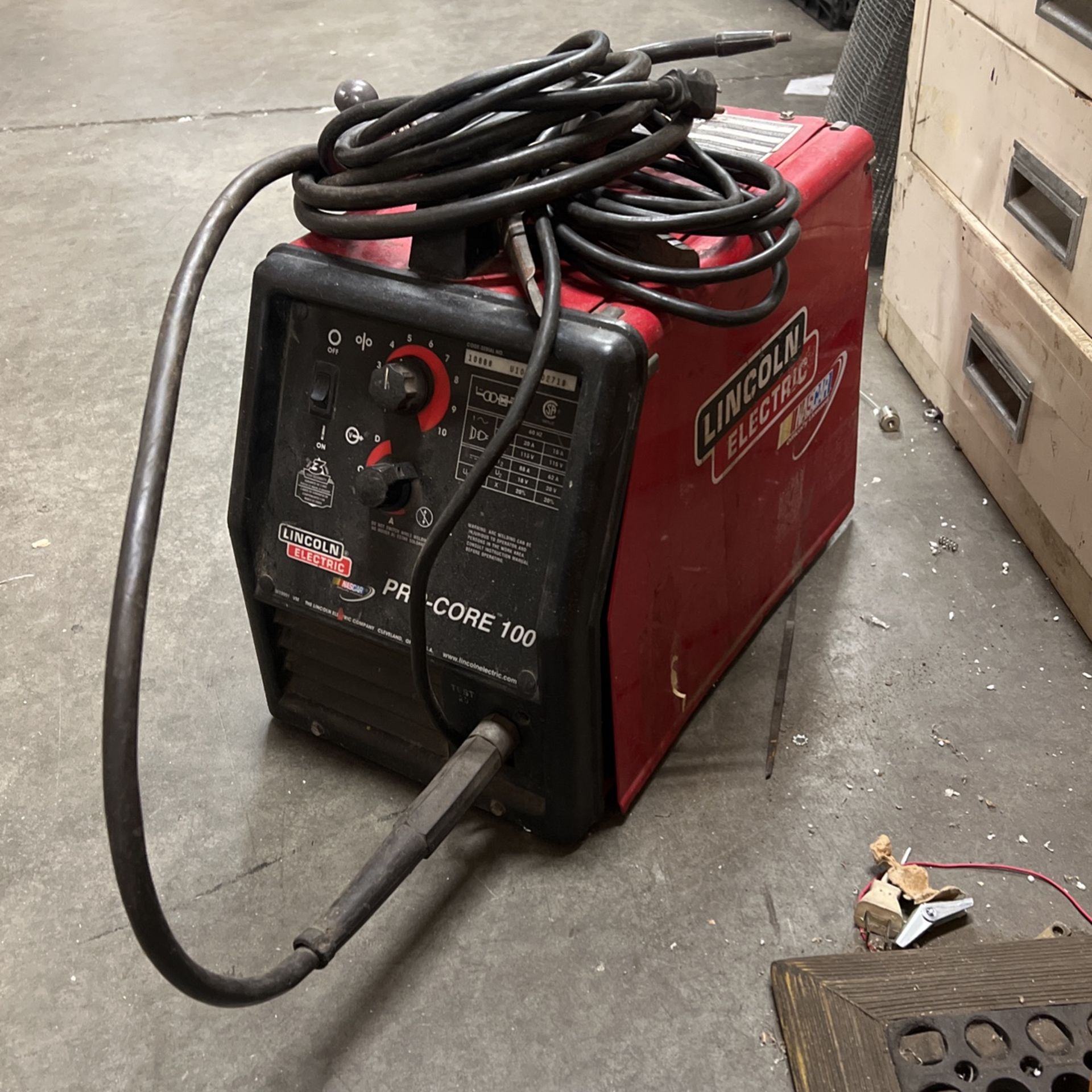
The Lincoln Electric Pro Core 100 is a dedicated flux-cored arc welding (FCAW) machine designed specifically for entry-level hobbyists and DIY users who require a portable, household-current-friendly solution for steel repair and fabrication. It offers a straightforward, gasless welding experience suitable for light-gauge materials, provided the operator understands its duty cycle limitations and specific material thickness constraints.
Understanding the Role of the Lincoln Pro Core 100
The Lincoln Pro Core 100 occupies a distinct niche in the welding market. Unlike multi-process machines that allow for MIG (Metal Inert Gas) welding with shielding gas or stick welding (SMAW), this unit is engineered exclusively for flux-cored welding. This is a critical distinction for potential owners. Flux-cored welding uses a tubular wire filled with flux that, when burned, creates its own shielding gas. This eliminates the need for external gas cylinders, regulators, and hoses, making the machine exceptionally portable and ideal for outdoor use where wind would otherwise blow away shielding gas.
As of 2026, this unit remains a popular choice for those performing light-duty automotive repairs, creating small shop projects, or conducting general home maintenance. It is designed for use with standard 120V household outlets, which serves as both its greatest advantage and its primary limitation.
Key Technical Specifications and Operational Capacities
When evaluating the Pro Core 100, users must align their expectations with the technical design of the machine. It is a constant voltage (CV) machine intended for wire-fed processes.
Power Requirements and Duty Cycle
The machine operates on a standard 20-amp, 120V circuit. Because it is limited by the current available from a typical household outlet, it cannot penetrate thick plate steel. Users should stick to material thicknesses ranging from thin sheet metal up to 3/16 inch. Attempting to weld thicker materials will result in a "cold" weld—meaning the filler metal will sit on top of the base metal without achieving proper fusion, leading to structural failure.
The duty cycle—the amount of time a welder can operate in a 10-minute window before needing to cool down—is modest. At the maximum output, the duty cycle is relatively low, typically around 20% to 30%. For the average homeowner, this rarely poses a problem; however, for continuous production tasks, it is insufficient.
Wire and Consumables
The Pro Core 100 is designed to handle flux-cored wire, typically .030" or .035" diameters. Users must ensure they are using the correct drive rolls and contact tips for their chosen wire. Using the incorrect size will cause the wire to slip or bind, leading to erratic arc performance and frustration.
Performance Evaluation for the Home Hobbyist
In practical application, the Pro Core 100 excels at simplicity. Because there is no gas to manage, the setup time is minimal. An operator can move the machine to a location, clamp the ground to the workpiece, and begin welding almost immediately.
Weld Quality
Flux-cored welds are characterized by a layer of slag that must be chipped and brushed away after each pass. While they lack the aesthetic "dime-stacking" appearance of high-end TIG or MIG welds, they are structurally sound when performed correctly. For projects like building a garden gate, repairing a metal bracket, or fabricating a small work cart, the weld quality is more than sufficient.
Ease of Use
For beginners, the interface is manageable. Lincoln Electric typically provides a setup chart inside the wire door, which is an invaluable resource. This chart provides recommended settings based on the material thickness and wire diameter. Following these guidelines is the most effective way for a novice to achieve consistent results without having to guess at voltage and wire speed settings.
Comparison of Entry-Level Welding Solutions
To determine if the Pro Core 100 is the right choice, it is helpful to compare it against other common entry-level alternatives.
| Feature | Pro Core 100 (Flux-Cored Only) | Multi-Process (MIG/Flux/Stick) | Oxy-Acetylene Torch |
|---|---|---|---|
| Portability | High | Low/Medium | Low (Requires bottles) |
| Gas Required | No | Optional (Required for MIG) | Yes |
| Complexity | Low | High | High |
| Ideal Use | Minor Repairs | Versatile Fabrication | Heating/Cutting |
| Cost of Entry | Low | High | Moderate |
As shown in the table, the Pro Core 100 is the clear winner for users who prioritize simplicity and portability over versatility. If you anticipate needing to weld aluminum or stainless steel in the future, a multi-process machine would be a better long-term investment, though it will carry a higher initial price tag.
Critical Considerations Before Purchase
Before finalizing a decision, you must consider the electrical infrastructure of your workspace. While the machine is designed for a 120V outlet, it draws a significant amount of power. Using a long, undersized extension cord will cause a voltage drop, which can severely impact the welder’s performance.
The Importance of Power Supply
Ideally, the welder should be plugged directly into a wall outlet on a dedicated 20-amp circuit. If you must use an extension cord, ensure it is a heavy-gauge cord (12-gauge or thicker) and keep it as short as possible. A failure to provide adequate power will manifest as a weak, sputtering arc and poor penetration.
Safety and Personal Protective Equipment (PPE)
Flux-cored welding produces more smoke and fumes than gas-shielded processes. Working in a well-ventilated area is not a suggestion; it is a safety requirement. You will also need a high-quality auto-darkening welding helmet, flame-resistant gloves, a long-sleeved welding jacket, and steel-toed boots. Never weld in synthetic clothing, as molten spatter can melt fabric to the skin.
Troubleshooting Common Operational Issues
Even experienced welders encounter issues with flux-cored machines. Most problems stem from setup or maintenance rather than the welder itself.
- Erratic Wire Feed: This is almost always caused by a dirty liner or incorrect drive roll tension. If the wire is feeding unevenly, inspect the tip for clogs and ensure the drive roll is tight enough to grip the wire without deforming it.
- Excessive Spatter: If the arc is producing an excessive amount of metal spray, it may be due to the polarity being set incorrectly or the wire speed being too high for the voltage. Check the machine’s manual to ensure your polarity matches the requirements for the specific flux-cored wire you are using.
- Porosity in Welds: If your weld looks like a sponge, you likely have trapped gases. This is usually caused by having too much "stick-out" (the distance from the contact tip to the metal) or by welding on contaminated (rusty or oily) steel. Clean your material thoroughly with an angle grinder before you strike an arc.
The Verdict on Suitability
The Lincoln Pro Core 100 is a specialized tool that performs its intended job well. It is not an industrial powerhouse, nor is it intended for professional fabrication shops. It is a purpose-built, user-friendly device for the individual who needs to complete home repairs or small fabrication projects without the overhead costs and complexities of a full-scale MIG welding setup.
If your requirements are limited to basic carbon steel repair and you value a "plug-and-play" experience, the Pro Core 100 provides a reliable and cost-effective entry point. However, if you suspect your interests will grow toward more complex alloys or high-precision aesthetic work, you may find yourself outgrowing the capabilities of this machine within a year or two. Evaluate your projects carefully: if they involve structural components (like trailer axles or heavy load-bearing beams), consider consulting a professional or choosing a machine with higher duty cycles and amperage outputs.
Frequently Asked Questions
Can I use the Pro Core 100 for automotive frame repair? It is generally not recommended for critical structural components like vehicle frames. Frame repair often requires specific certification and high-penetration welding techniques that go beyond the capacity of a standard 120V entry-level welder.
Does the machine require a gas bottle to operate? No, the Pro Core 100 is specifically designed for flux-cored welding, which uses a self-shielding wire. You do not need to purchase gas, regulators, or hoses.
How thick of a piece of steel can I weld in one pass? The machine is optimized for material up to 3/16 inch thick. For anything thicker, you would need to prepare the edges with a bevel and perform multiple passes, but you are still limited by the machine’s maximum amperage output.
Why is my weld producing so much smoke? Flux-cored welding is inherently "dirtier" than MIG welding because the flux material produces smoke as it protects the weld pool. This is normal, but it underscores the need for excellent ventilation or a respirator when working indoors.
Can this machine weld stainless steel or aluminum? While specialized flux-cored wires exist for some materials, the Pro Core 100 is calibrated and marketed for mild steel. Attempting to weld aluminum or stainless steel with this unit is not recommended and typically yields poor results.
What is the most important maintenance task? Keeping your drive rolls and contact tips clean and free of debris is essential. Periodically blowing out the inside of the case with compressed air to remove metallic dust is also recommended to prevent electrical shorts.
Next Action: Before purchasing the Lincoln Pro Core 100, inspect the electrical outlet in your intended workspace to confirm it is a dedicated 20-amp circuit. If you are a complete beginner, purchase a few extra pounds of scrap steel of the same thickness you plan to repair, and spend time practicing your travel speed and gun angle before starting your actual project.