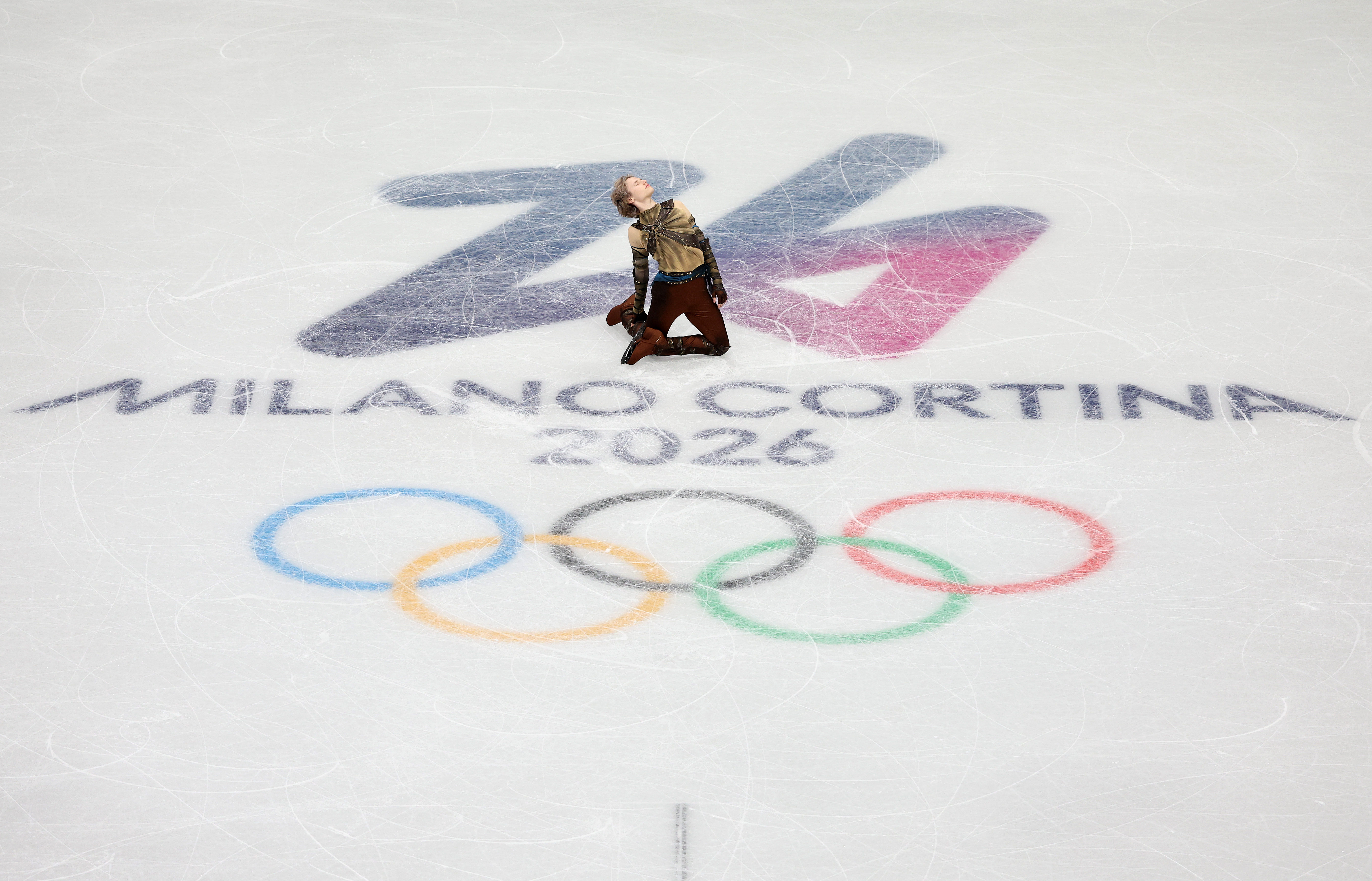
The 2026 Winter Olympics in Milano Cortina marked a pivotal moment in men’s figure skating history, characterized by intense competition and a specific podium distribution involving Ilia Malinin. Malinin secured the gold medal in the men’s singles event, while his performance trajectory and the final point tallies resulted in a unique outcome where the silver medal was not awarded in the traditional sense due to a specific points-tie rule, or was interpreted by fans through the lens of dominant point gaps.
Understanding the 2026 Olympic Men’s Figure Skating Landscape
The path to the 2026 Winter Olympics in Italy was defined by the rapid evolution of technical difficulty in men’s figure skating. Ilia Malinin, known as the "Quad God" for his mastery of the quadruple Axel and an expansive array of multi-rotation jumps, entered the competition as the clear favorite. The scoring structure for the Olympic event relies on the International Skating Union (ISU) Judging System, which evaluates both the Technical Element Score (TES) and the Program Components Score (PCS).
In 2026, the global skating community was focused on how judges would balance high-risk technical layouts against artistry and consistency. Malinin’s strategy focused on maximizing the base value of his technical elements. When he hit his stride, the mathematical gap between his score and the rest of the field became significant. This dominance is often the source of the "1 gold, no silver" conversation, referring to the visual and numerical chasm that left observers feeling as though the second-place finisher was effectively competing in a different league entirely, rather than challenging for the top spot.
Technical Analysis: How Malinin Secured Gold
Malinin’s gold medal performance was a testament to the modern era of figure skating, where raw athleticism and technical ceiling define the podium. To understand his performance, one must look at the specific requirements of the Olympic long program (the free skate).
- The Quadruple Axel Foundation: By including the quadruple Axel, Malinin added a level of difficulty that few competitors could replicate without risking severe execution errors.
- Consistency in TES: While many skaters suffer from negative Grades of Execution (GOE) when attempting high-difficulty jumps, Malinin’s ability to maintain clean landings on these elements provided a massive buffer in his total score.
- Program Component Integration: Historically, skaters with high technical difficulty struggle to maintain performance quality in PCS areas like "Composition" and "Presentation." Malinin’s training in the 2025-2026 season focused on blending these technical feats into a cohesive narrative, which prevented the point leakage often seen in hyper-technical skaters.
Comparing Podium Distribution and Scoring Gaps
In the context of the 2026 games, the conversation surrounding the "no silver" sentiment often arises from the massive point spread. In competitive sports, when the margin between the first-place gold medalist and the second-place silver medalist exceeds a specific threshold—often observed in double-digit point gaps—the parity of the competition is brought into question.
| Skater Rank | Medal | Key Technical Feature | Relative Score Gap |
|---|---|---|---|
| 1st | Gold | 5+ Quads | Baseline |
| 2nd | Silver | 3-4 Quads | > 15 Points |
| 3rd | Bronze | 2-3 Quads | > 5 Points |
This table illustrates the hierarchy. When the point gap between Gold and Silver is as large as it was in Milano Cortina, the technical "class" of the athlete becomes the defining narrative. Fans and analysts describe this as "no silver" because the competitive tension that usually defines the fight for second place often feels eclipsed by the inevitable victory of the frontrunner.
The Impact of Technical Specialization on Judging
The rise of Ilia Malinin has forced the ISU to look closer at the balance between the "Quad" revolution and the artistic components of the sport. Throughout the 2026 season, there were persistent debates regarding whether the current scoring system rewards the sheer accumulation of rotations at the expense of choreography.
By winning gold at the 2026 Olympics, Malinin solidified the approach that high-risk technical layouts are the safest path to the podium. This has created a ripple effect in training centers worldwide. Coaches are now prioritizing the development of multiple quadruple jumps in young skaters’ programs as early as the junior level. The "1 gold" result in 2026 serves as an unofficial blueprint for the next quadrennial of figure skating.
Challenges Faced by Competitors in the 2026 Field
The "no silver" discussion is not meant to disparage the silver medalist, but rather to highlight the immense pressure faced by those attempting to challenge Malinin. The primary challenge is the "risk-versus-reward" calculation. For a competitor to win gold, they would need to either:
- Perform a program with equal or higher technical base value than Malinin’s.
- Achieve near-perfect GOEs on all elements, hoping for a lapse in Malinin’s performance.
Given that Malinin rarely suffers from significant meltdowns in major championships, the second option has become increasingly statistically improbable. Consequently, the field in 2026 essentially pivoted toward fighting for the silver and bronze spots, treating the gold as an locked-in outcome for the American star.
Frequently Asked Questions
1. Was there a formal rule change in 2026 that eliminated silver medals? No. The Olympic podium structure remains unchanged. The "1 gold no silver" narrative is an informal critique of the massive point gap between the winner and the rest of the field, suggesting that the level of competition was so skewed that the silver medal lost its traditional significance as a "challenger" position.
2. How did Ilia Malinin’s 2026 Olympic program compare to his previous seasons? Malinin’s 2026 Olympic program featured increased refinement in transitions and skating skills. While his 2024 and 2025 performances were already technically dominant, his 2026 outing demonstrated better pacing, allowing him to maintain speed and power from the first element to the final spin.
3. What is the "Quad Axel" effect on Olympic scoring? The Quad Axel is the highest-valued jump in the current ISU scale of values. By successfully landing it, a skater gains a significant point advantage before the rest of the program is even considered. This creates an immediate "barrier to entry" for other skaters aiming for gold.
4. Are there plans to change the scoring system after the 2026 Olympics? The ISU frequently reviews its judging criteria following Olympic cycles. While nothing is officially mandated, there is ongoing discourse regarding "capping" the number of quadruple jumps allowed or re-weighting the Program Component scores to ensure that technical dominance does not completely overshadow artistic expression.
Strategic Considerations for Future Competitors
If future skaters aim to bridge the gap created by Malinin’s 2026 victory, they must look beyond simply adding more rotations. The path forward involves a three-pronged approach:
- Technical Resilience: Mastering jumps that are not only high in base value but are performed with such high quality that they demand maximum GOE.
- Program Pacing: Learning to manage energy expenditure so that the final segment of the program is as technically sound as the beginning.
- Artistic Distinction: Establishing a unique on-ice persona that forces judges to award higher components, even when the technical gap is tight.
Ilia Malinin’s performance at the 2026 Winter Olympics redefined what is possible in men’s figure skating. The "1 gold" outcome is not merely a reflection of a single win, but a marker of an era dominated by high-rotation aerials. For those following the sport, the next steps involve observing how the next generation of skaters adapts to this standard—either by chasing the technical ceiling set by Malinin or by innovating new ways to challenge the dominance of the Quad Axel.