A probation violation does not automatically result in a felony charge. Whether a violation escalates depends entirely on the nature of the alleged infraction, the specific conditions of your original sentencing, and the jurisdiction in which the case is being handled. A violation typically initiates an administrative process where a judge determines if the breach warrants a modification of terms, an extension of probation, or potential incarceration.
The Nature of Probationary Supervision
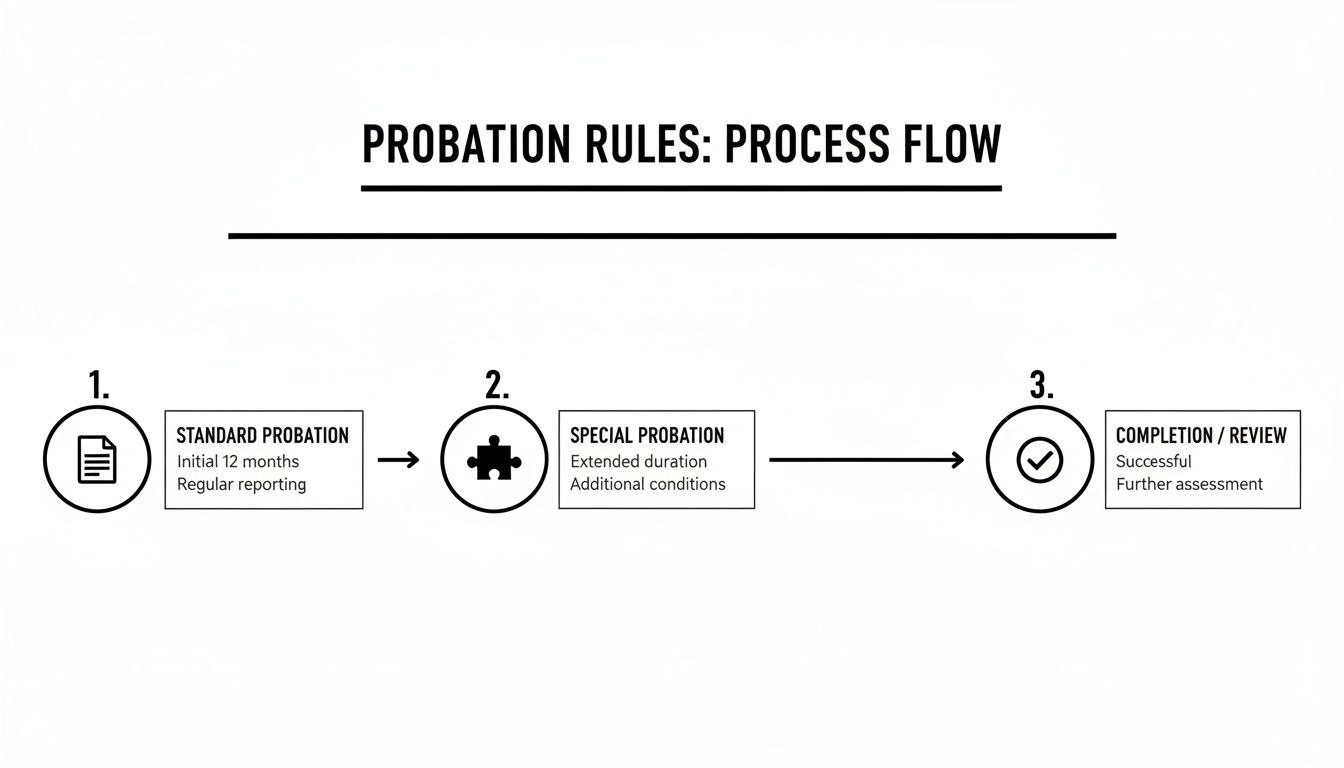
Probation serves as a court-ordered alternative to incarceration. When an individual is placed on probation, they remain under the supervision of the court and a probation officer, subject to a strict set of conditions. These conditions are categorized as either general or special. General conditions apply to almost every person on probation, such as maintaining employment, reporting to a probation officer at designated intervals, and avoiding further criminal activity. Special conditions are tailored to the specific case, which may include attending substance abuse treatment, paying restitution, maintaining a curfew, or adhering to electronic monitoring.
It is a common misconception that any misstep—such as missing a single appointment or failing to pay a fine on time—automatically triggers a "felony" status. In reality, a probation violation is a distinct legal procedure. It is an allegation that the defendant has failed to comply with the court’s order. It is not, in itself, a new criminal offense that elevates the original conviction level. The legal system treats the violation as a breach of the contract between the offender and the court.
Technical vs. Substantive Violations
To understand why a violation is not automatically a felony, you must distinguish between the two primary types of infractions: technical violations and substantive violations.
Technical Violations
A technical violation occurs when an individual fails to abide by the rules of their probation that do not involve committing a new crime. Examples include:
- Missing a scheduled check-in with a probation officer.
- Traveling outside of a permitted jurisdiction without prior approval.
- Failing to pay court-ordered restitution or supervision fees.
- Testing positive for a prohibited substance (depending on the jurisdiction's specific policies).
In these instances, the court is often more lenient, especially if the individual has a history of compliance. A judge may choose to issue a warning, impose additional community service hours, or extend the duration of the probation period. These actions are modifications of existing orders, not new criminal convictions.
Substantive Violations
A substantive violation occurs when the individual is alleged to have committed an entirely new criminal offense while on probation. This is where the risk of a "felony" increases—not because the violation itself is a felony, but because the new act may be a felony. If you are on probation for a misdemeanor and you commit a new felony, you are now facing both a probation revocation hearing and a new criminal charge.
The Mechanics of the Revocation Hearing
If a probation officer reports a violation, they submit an affidavit to the court, and a warrant or summons is typically issued. The defendant is then entitled to a probation violation hearing. This hearing is significantly different from a standard criminal trial:
- Lower Burden of Proof: In a regular criminal trial, the prosecution must prove guilt "beyond a reasonable doubt." In a probation revocation hearing, the standard is usually "preponderance of the evidence," meaning it is "more likely than not" that the violation occurred.
- No Jury Trial: These hearings are decided by a judge, not a jury. The judge has broad discretion to determine the outcome.
- Due Process Rights: While you have the right to notice, to be heard, and to present evidence or witnesses, you do not have the same constitutional protections as you would in an original trial.
If the judge finds that a violation has occurred, they have three primary options: continue the probation as is, modify the conditions, or revoke the probation entirely and impose a sentence of incarceration.
Factors Influencing the Consequence of a Violation
Several variables influence how a judge handles a violation. The severity of the original offense is a major factor. If an individual is on probation for a high-level felony, the court is naturally more sensitive to any deviation from the rules. Conversely, those on probation for minor infractions may find the court more willing to engage in rehabilitative measures rather than punitive ones.
| Factor | Impact on Potential Outcome |
|---|---|
| Type of Violation | Technical issues often lead to warnings; new crimes lead to revocation. |
| Prior Compliance | A record of steady check-ins and payments suggests a "one-off" mistake. |
| Nature of New Crime | If the violation is a new crime, the severity level (felony vs. misdemeanor) dictates risk. |
| Probation Officer Recommendation | Officers often have significant influence over whether the court seeks a warrant. |
| Jurisdictional Policy | Some states have statutory caps on how much jail time can be given for technical violations. |
The Impact of State Statutes and Reform
It is essential to note that as of 2026, many jurisdictions have implemented "probation reform" initiatives. These laws were designed specifically to prevent mass incarceration stemming from minor, technical probation violations. In many states, statutes now limit the amount of jail time a judge can impose for a technical violation. For example, a first-time technical violation might be limited to a brief period of "sanction jail" (such as 48 to 72 hours) rather than a full revocation of the probation term.
These reforms reflect a growing legal consensus that minor technicalities should not lead to the same life-altering consequences as committing a new, violent, or major criminal act. Always consult with a local attorney or review the specific statutes of your state, as legal codes regarding supervision and revocation vary significantly across the country.
Frequently Asked Questions
Does a positive drug test automatically send me to prison? No. While a positive drug test is a violation of probation, it is often treated as a clinical issue rather than a criminal one. Many jurisdictions now mandate participation in drug counseling, increased testing, or intensive outpatient treatment before considering incarceration.
If I miss a meeting, is it considered a felony? No. Missing a meeting is a technical violation. While it can result in a warrant for your arrest, it does not change your underlying charge into a felony. The court will likely hold a hearing to determine why you missed the appointment and assess your overall progress.
Can I be charged with a new crime for a probation violation? You are not charged with a "probation violation crime." You are charged with a new offense if you break the law (e.g., shoplifting). The fact that you are on probation simply means that this new charge can trigger a separate, concurrent revocation hearing for your original case.
What should I do if my probation officer files a violation report? Seek legal counsel immediately. Even if the violation seems minor, having an attorney present at the revocation hearing can significantly impact the judge’s decision. An attorney can present evidence of your compliance in other areas and advocate for rehabilitative alternatives over jail time.
Are there different rules for felony probation versus misdemeanor probation? Yes. The oversight and potential consequences for violating felony probation are generally more severe than for misdemeanor probation. However, the fundamental principle remains: a violation is a procedural issue, and the consequences remain within the discretion of the presiding judge.
Taking Proactive Steps
If you believe you have violated or are at risk of violating your probation, do not wait for the probation officer to file an official report. Proactive communication is often the most effective strategy. If you have fallen behind on fines, notify your officer and offer a payment plan. If you are struggling with substance use, demonstrate that you are voluntarily seeking treatment.
The court’s goal is to ensure public safety and personal rehabilitation. By showing that you are taking responsibility and actively addressing the cause of the potential violation, you provide the court with reasons to maintain your probation rather than resorting to incarceration. Always document your interactions with your probation officer and keep records of all payments, appointments, and treatment sessions to present if a hearing becomes necessary.