Approximately one billion international tourist arrivals occur globally every year, reflecting massive volumes of cross-border human movement driven by tourism, business, migration, and trade. When factoring in repeated crossings by frequent flyers, cross-border commuters, and regional laborers, the total number of individuals crossing international borders annually reaches multiple billions.
Understanding Global Cross-Border Movement
The study of international travel statistics is vital for governments, security agencies, tourism boards, and global transport infrastructure planners. To understand the scale of how many travelers cross borders each year, researchers must analyze a complex matrix of data collected by immigration authorities, international aviation organizations, and tourism ministries.
Global mobility is not a monolith; it comprises multiple distinct categories of movement. A tourist taking a two-week vacation abroad generates different data points than a truck driver crossing a land border multiple times a week or a business executive flying internationally monthly. Accurately quantifying these movements requires harmonizing diverse tracking methodologies across more than 190 sovereign nations.
Defining International Borders and Crossings
An international border marks the geographic boundary between two sovereign states. Crossing these boundaries subjects individuals to legal jurisdictions, customs regulations, and immigration controls.
- Physical Crossing: The act of moving from one country's territory into another via land, sea, or air.
- Unique Travelers vs. Total Crossings: A single person taking ten international trips in a year counts as one unique international traveler but generates ten distinct border crossings.
- Transit Passengers: Individuals passing through an international airport or port without officially entering the destination country's customs territory.
Pre-Pandemic Baselines and the 2026 Recovery Landscape
Analyzing global mobility requires examining long-term structural trends alongside cyclical disruptions. Prior to the disruptions of the early 2020s, international travel experienced decades of uninterrupted growth. According to data tracked by the UN Tourism (formerly UNWTO), international tourist arrivals reached an all-time high of approximately 1.5 billion in 2019.
Following the unprecedented contraction of the global travel sector, the industry entered a multi-year recovery phase. By 2024 and 2025, international tourism arrivals rebounded to nearly 90 to 95 percent of pre-pandemic levels globally, with regional disparities driven by aviation capacity, economic conditions, and geopolitical stability. As global mobility stabilizes, baseline annual international tourist arrivals hover around 1.4 to 1.5 billion, while total border crossings—including land-border commutes and non-tourism travel—surge well past the three-billion mark.
Key Factors Driving Border Crossings
- Expansion of Commercial Aviation: Low-cost carriers and expanding route networks make international travel accessible to broader demographics in emerging economies.
- Economic Integration: Free-trade zones, regional economic communities (such as the European Union's Schengen Area), and cross-border labor markets encourage frequent transit.
- Digital Nomads and Remote Work: The proliferation of flexible work arrangements has increased medium-term cross-border relocations.
- VFR Travel: Visiting Friends and Relatives (VFR) remains one of the most resilient segments of international travel, maintaining high baseline crossing numbers even during economic downturns.
Modes of Transport and Border Infrastructure
The physical infrastructure facilitating cross-border movement shapes how many travelers cross borders and where bottlenecks occur. Different transport modes exhibit distinct data reporting mechanisms and passenger volumes.
| Transport Mode | Primary Tracking Mechanism | Relative Volume Share |
|---|---|---|
| Air Travel | Advance Passenger Information (API) & Passenger Name Record (PNR) data | Highest for long-haul/inter-continental travel |
| Land Borders (Road/Rail) | Automated license plate readers, passport scans, local commuter passes | Highest total volume of frequent, short-distance crossings |
| Maritime (Cruise/Ferry) | Manifests submitted by vessel captains and port authorities | Moderate volume, highly seasonal |
Air Travel and Global Aviation Data
Aviation data provides some of the most reliable metrics for international travel. The International Civil Aviation Organization (ICAO) tracks billions of scheduled passenger boardings annually. However, domestic and international flights must be segregated; internationally, ICAO reports that hundreds of millions of passengers fly across borders every year.
Aviation security mandates require airlines to transmit passenger manifests to destination governments before departure, providing immigration departments with exact counts of international air arrivals.
Land Borders and Commuter Traffic
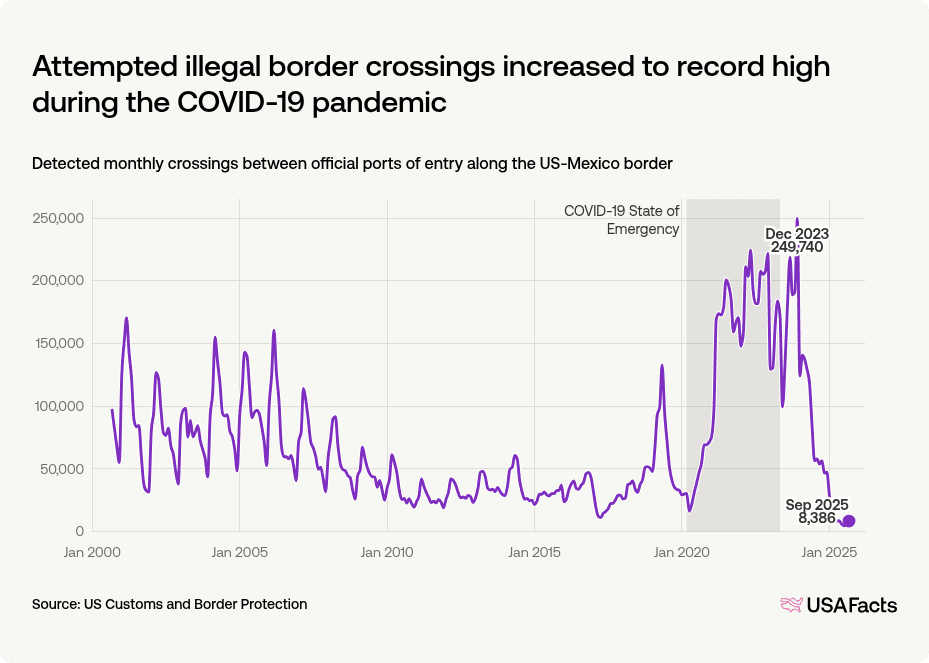
Land borders—such as the United States-Mexico border, internal European land borders, and crossings within Southeast Asia—account for the largest raw volume of border crossings. Many of these involve daily or weekly commuters, cross-border shoppers, and trade transport workers.
Counting land border crossings presents methodological challenges. While automated gates and passport control stations track formal entries, some regional agreements permit streamlined or expedited transit where data collection is sampled rather than exhaustive.
Economic and Security Implications of High-Volume Travel
The reality of billions of annual cross-border movements has profound implications for global security, public health, and economic development. Governments balance the desire to facilitate frictionless trade and tourism with the necessity of maintaining robust national security and border integrity.
Economic Impact
International tourism and cross-border commerce constitute a cornerstone of the global economy, generating trillions of dollars in export revenues. Nations rely on visitor expenditures to support hospitality, retail, aviation, and infrastructure sectors. Conversely, drops in cross-border mobility due to geopolitical tensions, economic shocks, or health crises send immediate shockwaves through national GDPs.
Security and Biometric Modernization
To manage high volumes of travelers efficiently, border control agencies increasingly rely on advanced technology:
- Biometric Verification: Facial recognition and automated fingerprint scanning speed up identity verification at major international airports.
- Electronic Travel Authorizations: Systems like the US ESTA, Canada's eTA, and the European Union's upcoming ETIAS screen travelers before they arrive at a physical border, shifting security vetting upstream.
- Interoperable Data Sharing: Governments collaborate to share watchlists and travel history data to detect security threats without slowing down legitimate passenger flow.
Frequently Asked Questions
How many people travel internationally each year?
According to data from the UN Tourism, international tourist arrivals exceed 1.4 billion annually. This figure counts arrivals rather than unique individuals, meaning frequent travelers are counted multiple times per trip.
What is the difference between a tourist arrival and a border crossing?
A tourist arrival specifically measures a visitor staying at least one night in a destination outside their country of residence for leisure, business, or other personal purposes. A total border crossing includes tourists, daily cross-border commuters, truck drivers, flight crews, and returning residents crossing land, sea, or air boundaries.
Which country receives the most international travelers annually?
France consistently ranks as the world's most-visited country by international tourist arrivals, welcoming tens of millions of visitors each year, followed closely by nations such as Spain, the United States, Italy, and China.
How do governments track the exact number of cross-border travelers?
Governments utilize a combination of Advance Passenger Information (API) provided by airlines, passport control scans at ports of entry, electronic visa and travel authorization platforms, and automated land-border reading systems to compile migration and tourism statistics.
Why has international travel volume grown exponentially over the last few decades?
Growth is driven by rising global middle classes, particularly in Asia, deregulation of commercial aviation, the proliferation of low-cost carriers, increased globalization, and more streamlined visa-processing procedures worldwide.
Next Actions for Travelers and Researchers
For travelers planning international journeys, understanding border requirements—such as passport validity rules, visa mandates, and electronic travel authorizations—ensures smooth transit. For researchers and analysts studying global mobility, consulting primary datasets from organizations like UN Tourism, ICAO, and national immigration statistical bureaus provides the most accurate foundation for assessing ongoing trends in international travel.