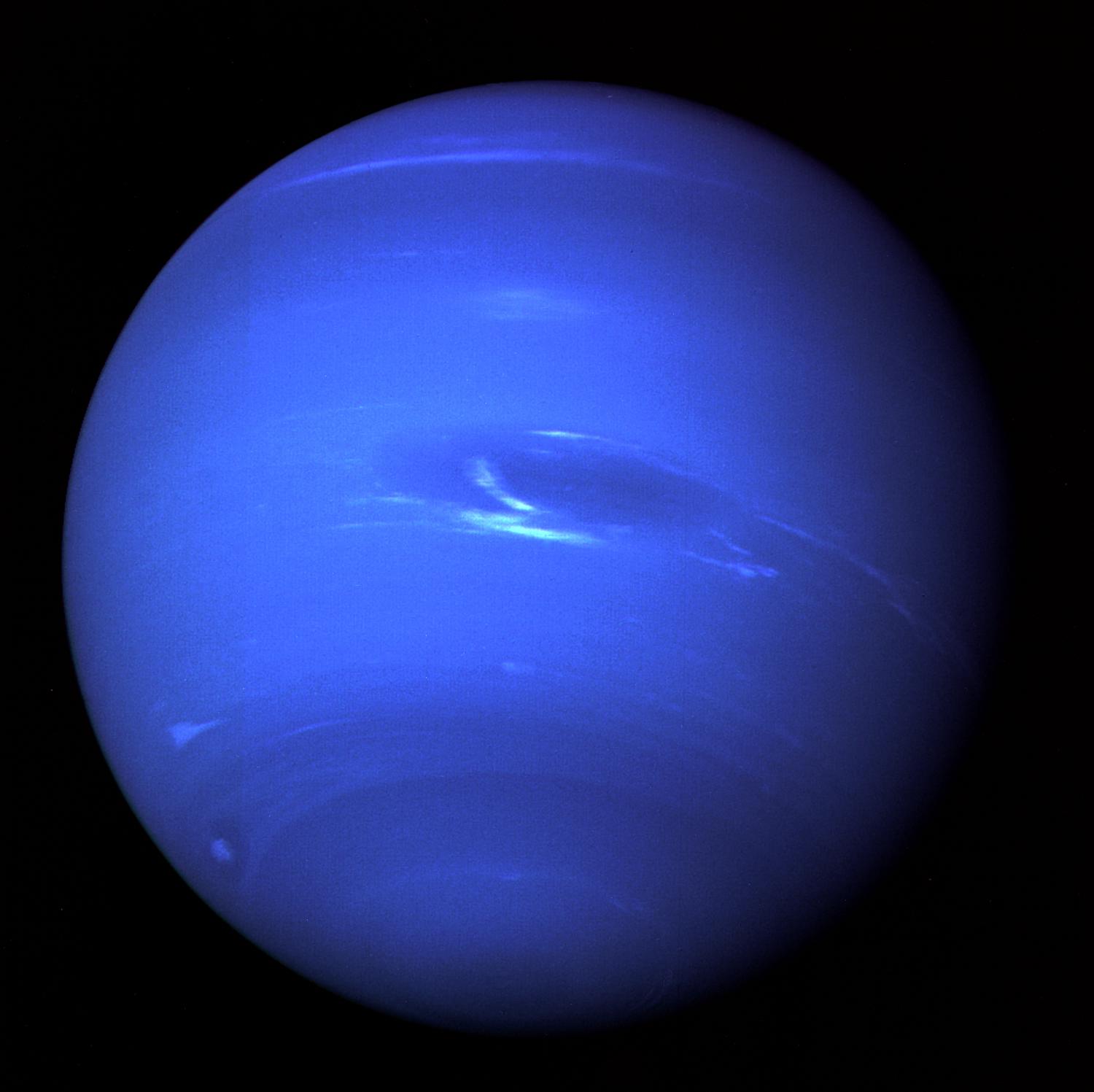
The search for a massive planet beyond Neptune, often referred to as "Planet Nine," is a rigorous scientific quest driven by observed gravitational anomalies in the outer solar system. While mathematical models suggest a world five to ten times the mass of Earth orbiting hundreds of astronomical units away, visual confirmation remains the primary goal of modern astronomy in 2026.
For decades, the boundaries of our solar system were thought to be well-defined. Following the discovery of Neptune in 1846 and the subsequent discovery (and later reclassification) of Pluto in 1930, the outer reaches were viewed as a cold, mostly empty graveyard of small icy bodies. However, as we move through 2026, the scientific community is more convinced than ever that a significant, "distant world" lurks in the shadows of the Kuiper Belt, exerting a ghostly gravitational pull on the objects we can see.
The Historical Precedent: From Planet X to Planet Nine
The hunt for a ninth planet is not a new phenomenon. It began shortly after the discovery of Neptune. Astronomers noticed that Neptune's orbit did not perfectly match the predictions of Newtonian physics, leading to the hypothesis of a "Planet X." Percival Lowell, a wealthy businessman and astronomer, dedicated the later years of his life to finding this disturber. While his specific calculations were eventually proven incorrect, his search led directly to Clyde Tombaugh’s discovery of Pluto.
Pluto held the title of the ninth planet for 76 years. However, its small size and the discovery of other similar objects in the Kuiper Belt led the International Astronomical Union (IAU) to reclassify it as a dwarf planet in 2006. This decision did not end the search for a major ninth planet; instead, it refocused it. The modern "Planet Nine" hypothesis is not based on the "Planet X" errors of the 19th century, but on the precise orbital patterns of newly discovered "Extreme Trans-Neptunian Objects" (eTNOs).
The Mathematical Evidence for a Hidden Giant
In 2016, Caltech astronomers Konstantin Batygin and Michael Brown published a landmark paper providing mathematical evidence for the existence of a massive planet. Their research did not involve a direct sighting but rather a realization that the orbits of distant Kuiper Belt objects were not distributed randomly.
Orbital Clustering
The most compelling piece of evidence is the "clustering" of the perihelia (the point in an orbit closest to the sun) of distant objects like Sedna and 2012 VP113. These objects have highly elongated orbits that all point in roughly the same direction and are tilted at similar angles relative to the plane of the solar system. The mathematical probability of this happening by chance is roughly 0.007%.
Gravitational Shepherding
To explain this alignment, Batygin and Brown proposed that a massive planet is "shepherding" these smaller objects. This hypothetical world would need to be on an eccentric, anti-aligned orbit—meaning its closest approach to the sun is on the opposite side of the solar system from the objects it influences. By acting as a gravitational anchor, this distant world prevents the eTNOs from drifting out of their synchronized patterns.
Technical Specifications of the Hypothetical Planet Nine
Based on the most recent simulations as of 2026, astronomers have narrowed down the likely characteristics of this elusive world. It is not a small, icy rock like Pluto, but a substantial planet that likely bridges the gap between Earth and Neptune.
| Characteristic | Predicted Value / Range | Comparison to Earth |
|---|---|---|
| Mass | 5 to 10 Earth Masses | Super-Earth / Mini-Neptune |
| Average Distance (Semi-major axis) | 400 to 800 AU | 13 to 26 times further than Neptune |
| Orbital Period | 10,000 to 20,000 years | Extremely long |
| Orbital Inclination | 15 to 25 degrees | Significantly tilted relative to the ecliptic |
| Atmospheric Composition | Hydrogen and Helium | Likely a gas or ice giant |
| Surface Temperature | ~40 to 50 Kelvin | Cold, but slightly warmed by internal heat |
Why Is It So Hard to Find?
The primary challenge in searching for a world beyond Neptune is the inverse square law of light. Because the sun’s light must travel out to the planet, reflect, and travel all the way back to Earth, the brightness of an object decreases by the fourth power of its distance. An object twice as far away is 16 times fainter. Planet Nine, located at 500 AU, would be roughly 160,000 times fainter than Neptune.
Furthermore, the search area is massive. While mathematical models tell us the shape of the orbit, they do not tell us where the planet currently sits on that orbital path. It could be at its closest point (perihelion) or its furthest (aphelion). Searching for a tiny, dim point of light across the entire "strip" of its predicted orbit is the astronomical equivalent of finding a needle in a thousand haystacks.
Modern Search Methods and the Rubin Observatory
In 2026, the search has entered a high-velocity phase thanks to the Vera C. Rubin Observatory in Chile. Its Legacy Survey of Space and Time (LSST) is a transformative tool for this specific mission. Unlike previous telescopes that look at small patches of sky in great detail, the Rubin Observatory maps the entire visible sky every few nights.
The Power of Wide-Field Imaging
The LSST uses a 3.2-gigapixel camera to capture wide-swath images. By comparing images taken days, months, or years apart, astronomers can identify moving objects. Because Planet Nine would move very slowly against the backdrop of distant stars, the long-term data baseline provided by the Rubin Observatory is essential. If Planet Nine is within the brightness limits of the LSST (approximately magnitude 24.5 in the r-band), it is almost certain to be detected within the next few years of the survey.
Infrared Detection Efforts
NASA’s Wide-field Infrared Survey Explorer (WISE) and the James Webb Space Telescope (JWST) have also been utilized. While WISE ruled out the existence of a Saturn-sized planet out to 10,000 AU, it could not rule out a smaller, Earth-to-Neptune-sized body at 500 AU. The internal heat of a planet this size would make it glow in the infrared, and deep-space surveys continue to filter through background noise to find that heat signature.
Alternative Theories: Is It Something Else?
Not every scientist agrees that a planet is the only explanation for the orbital clustering. Several alternative hypotheses have been proposed and remain under investigation in 2026.
- Collective Gravity: Some researchers suggest that the combined mass of a large disk of small, icy objects (the "trans-Neptunian disk") could provide the same gravitational pull as a single large planet. However, current estimates of the total mass of the Kuiper Belt suggest there isn't enough material for this to be the sole cause.
- A Primordial Black Hole: A more exotic theory posits that Planet Nine might be a grapefruit-sized primordial black hole left over from the Big Bang. While it would have the mass of five Earths, it would emit no light, making it impossible to find with optical telescopes. This could only be verified by searching for "microlensing" events or sending a fleet of tiny probes to detect its gravity directly.
- Observational Bias: Some critics argue that the clustering of eTNOs is an illusion caused by where we point our telescopes. If we only look in certain directions, we will only find objects in those directions. However, recent studies using more uniform survey data have reinforced the idea that the clustering is real.
The Search for "Planet Ten"
Interestingly, the search for a distant world has revealed evidence for another, smaller body—sometimes dubbed "Planet Ten." This hypothetical object is thought to be roughly the mass of Mars and located much closer, around 60 AU from the sun. Its existence is suggested by a "warp" in the mid-plane of the Kuiper Belt. While distinct from the "Planet Nine" search, it highlights how much of our solar system's architecture remains hidden.
Practical Steps for Enthusiasts and Amateur Astronomers
While the discovery will likely happen at a major observatory, the public can still contribute to the search.
- Participate in Citizen Science: Platforms like Zooniverse often host projects like "Backyard Worlds: Planet 9." Participants look through infrared images from NASA’s WISE mission to spot moving objects that automated scripts might miss.
- Follow the Minor Planet Center (MPC): The MPC is the official clearinghouse for all small body discoveries in the solar system. Monitoring their circulars provides the latest data on new eTNOs that might refine the search area for Planet Nine.
- Educational Resources: Use software like Stellarium or Celestia to visualize the vast distances of the outer solar system. This helps in understanding why detecting an object at 500 AU is such a monumental task.
Comparison of Known and Hypothetical Outer Worlds
The following table contextualizes the hypothetical Planet Nine within the known framework of the outer solar system.
| Planet / Object | Classification | Distance (AU) | Discovery Year | Discovery Method |
|---|---|---|---|---|
| Neptune | Ice Giant | 30.1 | 1846 | Mathematical Prediction |
| Pluto | Dwarf Planet | 39.5 | 1930 | Optical Search |
| Eris | Dwarf Planet | 67.7 | 2005 | Digital Sky Survey |
| Sedna | eTNO | 506 (Avg) | 2003 | Wide-field Imaging |
| Planet Nine | Hypothetical | ~500 | TBD | Gravitational Analysis |
Frequently Asked Questions
Why is it called Planet Nine and not Planet X?
The term "Planet X" historically referred to a planet beyond Neptune that would explain supposed errors in Neptune's orbit (which were later explained by Voyager 2 data). "Planet Nine" is the specific name given by Batygin and Brown to the world predicted by the clustering of Kuiper Belt objects. It also reflects its potential status as the ninth major planet following Pluto's reclassification.
How much longer will the search take?
With the Rubin Observatory's LSST now in full operation as of 2026, astronomers expect that if the planet exists and is within the predicted size and distance range, it should be found by 2028 or 2029. If it is not found by the end of the 10-year survey, the hypothesis may need significant revision or may be discarded in favor of alternative theories.
Could Planet Nine be dangerous to Earth?
No. Even at its closest approach, Planet Nine would remain hundreds of times further from the sun than Earth. Its gravitational influence on the inner solar system is negligible. It does not "pull" asteroids toward us; in fact, its presence helps stabilize the long-term orbits of many distant objects.
What would we name it if found?
The International Astronomical Union (IAU) holds the final authority on naming celestial bodies. Traditionally, major planets are named after Roman deities. Since the existing eight planets cover the major gods, the name would likely be drawn from a different but related mythological figure, though some have suggested naming it after the astronomers who predicted it.
If it’s so big, why haven't we seen it yet?
The combination of its extreme distance and the vastness of the sky makes it incredibly difficult to spot. It is very faint, moves very slowly, and its exact location is unknown. Most large telescopes have a very narrow field of view, like looking through a straw. You have to know exactly where to point them.
Future Recommendations
For those tracking the search for a distant world, the best course of action is to stay informed via official astronomical channels. The next two years are critical as data from the Rubin Observatory is processed. Watch for announcements regarding the discovery of new "Extreme Trans-Neptunian Objects" (eTNOs); every new object found acts as a data point that either confirms the clustering or suggests the "Planet Nine" hypothesis needs adjustment.
As we continue through 2026, the intersection of big data, advanced sky surveys, and mathematical modeling brings us closer than ever to resolving this mystery. Whether we find a new giant planet or discover a new law of orbital dynamics, the search itself is expanding our understanding of the solar system's final frontier.