When an injured employee files for workers' compensation, an attorney must systematically evaluate medical records, employment history, and statutory guidelines to determine liability, potential claim valuation, and the viability of pursuing maximum benefits or a settlement.
Introduction to Attorney Analysis in Workers' Compensation
Navigating the aftermath of a workplace injury requires a disciplined, analytical approach. When an injured worker seeks legal representation, the attorney's primary objective is to deconstruct the incident, the resulting medical condition, and the employer's or insurer's response. This investigative and evaluative process—often encompassing medical chronologies, wage statements, and jurisdictional statutes—determines whether a claim is compensable, what benefits are accessible, and whether a lump-sum settlement or ongoing administrative litigation is the most prudent path forward.
Because workers' compensation is governed strictly by state-specific statutory frameworks rather than federal law, legal counsel must view every fact through the lens of local administrative rules. The analysis is rarely limited to a single document; rather, it is a multi-disciplinary synthesis of medical science, employment law, and insurance mechanics designed to protect the injured employee's financial and physical recovery.
The Core Objectives of Case Evaluation
Before diving into documentation, an attorney establishes a strategic framework focused on several distinct objectives. Understanding these goals clarifies why certain documents are requested and why specific timelines must be met.
- Establishing Compensability: Proving that the injury or occupational disease arose out of and in the course of employment.
- Maximizing Medical Benefits: Ensuring the client receives necessary, reasonable medical treatment authorized by the employer’s insurance carrier without premature termination.
- Calculating Wage Replacement: Determining the correct average weekly wage (AWW) to ensure accurate temporary or permanent disability benefits.
- Identifying Third-Party Liability: Uncovering potential personal injury lawsuits outside the workers' compensation system (e.g., defective machinery, negligent property owners).
- Assessing Permanent Impairment: Evaluating whether the injury will result in partial or total permanent disability, vocational retraining needs, or a final settlement value.
Phase One: Initial Intake and Fact-Finding
The analytical process begins the moment a prospective client consults a law firm. During the initial intake, the attorney conducts a thorough interview to capture the narrative of the accident and the immediate aftermath.
Gathering Critical Incident Data
Attorneys collect granular details regarding the timeline of events. Key inquiries include the exact date, time, and location of the incident, the specific equipment or environmental hazards involved, and the names of any witnesses. Crucially, attorneys verify whether the employee reported the injury to a supervisor in writing and within the strict statutory notice deadlines mandated by state law. Failure to provide timely notice can jeopardize an entire claim, making this verification an immediate priority.
Document Collection Checklist
A comprehensive case file requires gathering foundational records from multiple sources. Legal teams routinely request:
- The employer’s official First Report of Injury (FROI) or equivalent state form.
- Initial emergency room records, ambulance reports, and urgent care notes.
- Personnel files, job descriptions, and employment contracts to establish duties and wage history.
- Correspondence, denial letters, or acceptance notices from the workers' compensation insurance adjuster.
Phase Two: Medical Records and Causal Relationship Analysis
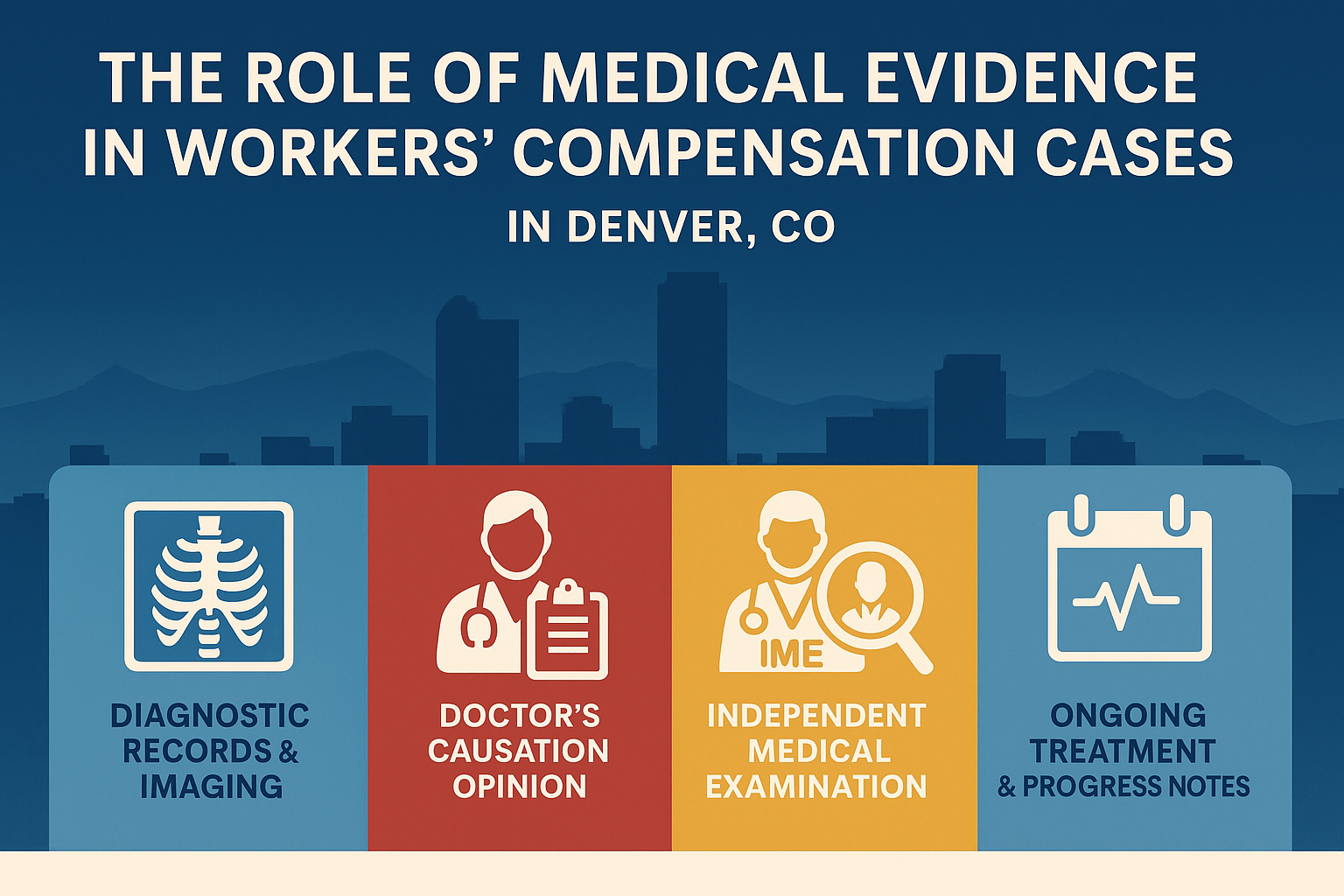
Medical evidence forms the backbone of any workers' compensation case. An attorney does not merely read medical charts; they analyze them to establish a legally defensible "causal relationship" between the workplace event and the medical pathology.
Dissecting Narrative Reports and Treatment Notes
Attorneys closely review physician notes for objective findings—such as magnetic resonance imaging (MRI) scans, electromyography (EMG) results, and surgical reports—as opposed to purely subjective complaints of pain. Insurance carriers frequently contest claims by arguing that a condition is degenerative or pre-existing. Counsel analyzes past medical history to isolate the workplace trauma as the primary aggravator or direct cause of the current disability, relying on statutory provisions regarding the aggravation of pre-existing conditions.
Maximum Medical Improvement (MMI) and Impairment Ratings
A pivotal milestone in any case is reaching Maximum Medical Improvement (MMI), the point at which an injured worker's condition has stabilized and is unlikely to change substantially with or without further medical treatment. Attorneys analyze the impairment ratings assigned by treating physicians or Independent Medical Examiners (IMEs). Under many state laws, these percentage ratings directly dictate the monetary value of permanent partial disability awards.
Phase Three: Wage Calculations and Benefit Classifications
Financial recovery in workers' compensation is tied directly to earnings. Attorneys audit employer payroll records to calculate the correct Average Weekly Wage (AWW), which in turn determines the compensation rate.
- Temporary Total Disability (TTD): Benefits paid while the worker is completely unable to work during recovery.
- Temporary Partial Disability (TPD): Benefits paid when the worker returns to light-duty work at a reduced wage.
- Permanent Partial Disability (PPD): Compensation for lasting impairment to a specific body part or the body as a whole.
- Permanent Total Disability (PTD): Lifetime or long-term benefits awarded when an injured worker can no longer engage in any gainful employment.
Discrepancies often arise regarding overtime, bonuses, secondary employment, or seasonal fluctuations. Attorneys recalculate wages independently to ensure insurers are not underpaying weekly benefits.
Comparative Overview of Case Analysis Elements
| Analysis Component | Primary Focus | Key Documents Reviewed | Common Legal Hurdles |
|---|---|---|---|
| Fact & Notice | Establishing work connection and timely reporting | Incident reports, witness statements, employer policies | Late notice, unwitnessed accidents, horseplay defenses |
| Medical Causation | Proving the injury stemmed from employment | ER notes, surgical logs, diagnostic imaging (MRI/CT) | Pre-existing degenerative conditions, delayed treatment seeking |
| Wage Calculation | Determining accurate compensation rate | Pay stubs, W-2 forms, collective bargaining agreements | Irregular hours, fluctuating commission, unreported tips |
| Disability Status | Assessing work restrictions and MMI | Functional Capacity Evaluations (FCE), IME reports | Dispute over work readiness, forced light-duty disputes |
Phase Four: Investigating Defenses and Legal Roadblocks
Insurance adjusters and defense counsel employ standard defenses to deny or minimize claims. Experienced attorneys anticipate these roadblocks and build counter-strategies during their initial analysis.
Common Insurer Defenses
- Intoxication and Willful Misconduct: Allegations that the worker was under the influence of drugs or alcohol, or intentionally violated safety rules.
- Horseplay or Deviation: Claims that the employee was engaged in unauthorized activities unrelated to their job duties when injured.
- Independent Contractor Misclassification: Arguments by the employer that the worker is an independent contractor rather than an employee, thereby excluding them from statutory coverage.
By securing surveillance footage, safety manuals, and supervisor deposition testimony, attorneys systematically dismantle unfounded defenses to protect the client's entitlement to benefits.
Phase Five: Settlement Valuation vs. Ongoing Litigation
Once the medical condition stabilizes and all evidence is assembled, the attorney conducts a valuation analysis to determine whether to negotiate a Compromise and Release (C&R) settlement or proceed to a formal administrative hearing before a judge or commission.
Factors Influencing Settlement Value
- Future Medical Care Costs: Actuarial estimates of anticipated surgeries, physical therapy, medication, and durable medical equipment.
- Future Wage Loss: Projected financial impact if the worker must transition to a lower-paying career or cannot return to the workforce.
- Jurisdictional Risk: The historical tendencies of specific administrative law judges or state boards regarding awards and dispute resolution.
- Medicare Secondary Payer (MSP) Compliance: Ensuring that future medical allocations account for Medicare's interests, often requiring a Medicare Set-Aside (MSA) arrangement.
Frequently Asked Questions
What records do attorneys examine first in a workers' compensation case?
Attorneys typically begin by reviewing the initial report of injury, emergency room or urgent care medical records, and the employer's denial or acceptance letters. This establishes the baseline timeline, the reported mechanism of injury, and the insurer's initial stance on compensability.
How does an attorney prove a work-related injury caused a condition?
Attorneys rely on objective diagnostic testing, physician narrative reports, and medical opinions explicitly connecting the workplace incident to the pathology. They also counter insurance claims regarding pre-existing conditions by demonstrating how the work accident aggravated or accelerated the underlying issue.
What is the Average Weekly Wage (AWW) and why is it analyzed?
The AWW is the calculation of an employee's earnings prior to the injury, typically averaged over 26 to 52 weeks. Attorneys analyze tax documents, pay stubs, and tips to ensure this figure is accurate, because state benefit rates are calculated directly as a percentage of this wage.
Can an attorney help if the insurance company denies medical treatment?
Yes. Attorneys analyze the utilization review denials or independent medical examination reports used to cut off care. They can file expedited motions, request administrative hearings, or secure supportive testimony from treating physicians to compel the insurer to authorize necessary medical procedures.
What happens after a worker reaches Maximum Medical Improvement (MMI)?
Once MMI is reached, the attorney evaluates the permanent impairment rating issued by the doctor. This rating dictates the final permanent disability award or serves as the benchmark for calculating a lump-sum settlement negotiation with the insurance carrier.
Practical Next Actions
For injured workers navigating the complexities of the claims process, maintaining a meticulous personal file is essential. Preserve all correspondence with insurance adjusters, keep a detailed journal of medical appointments and physical symptoms, and avoid signing any settlement waivers or recorded statements without prior legal consultation. Consulting a qualified workers' compensation attorney ensures that medical records, wage calculations, and statutory deadlines are managed effectively to secure a fair recovery.