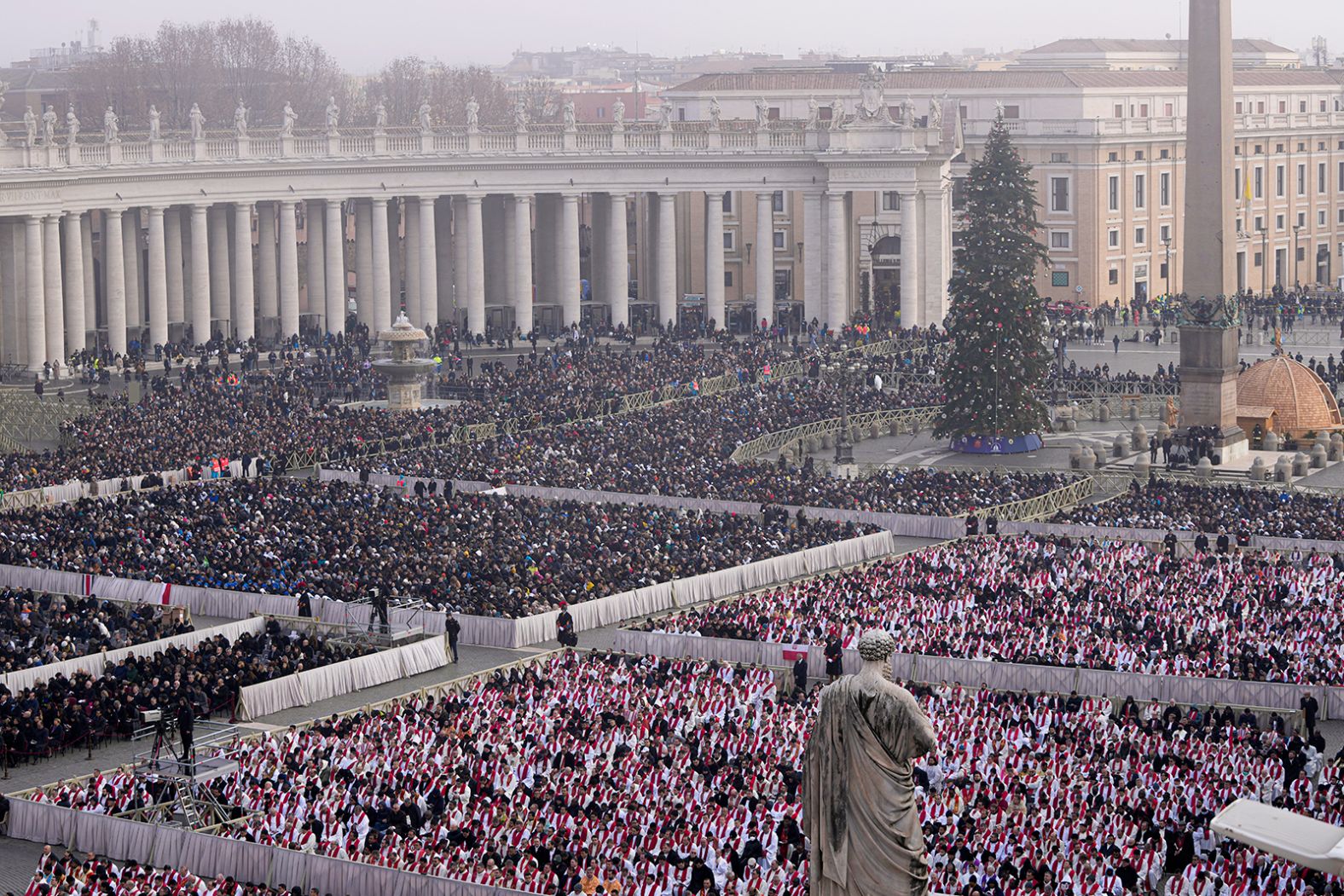
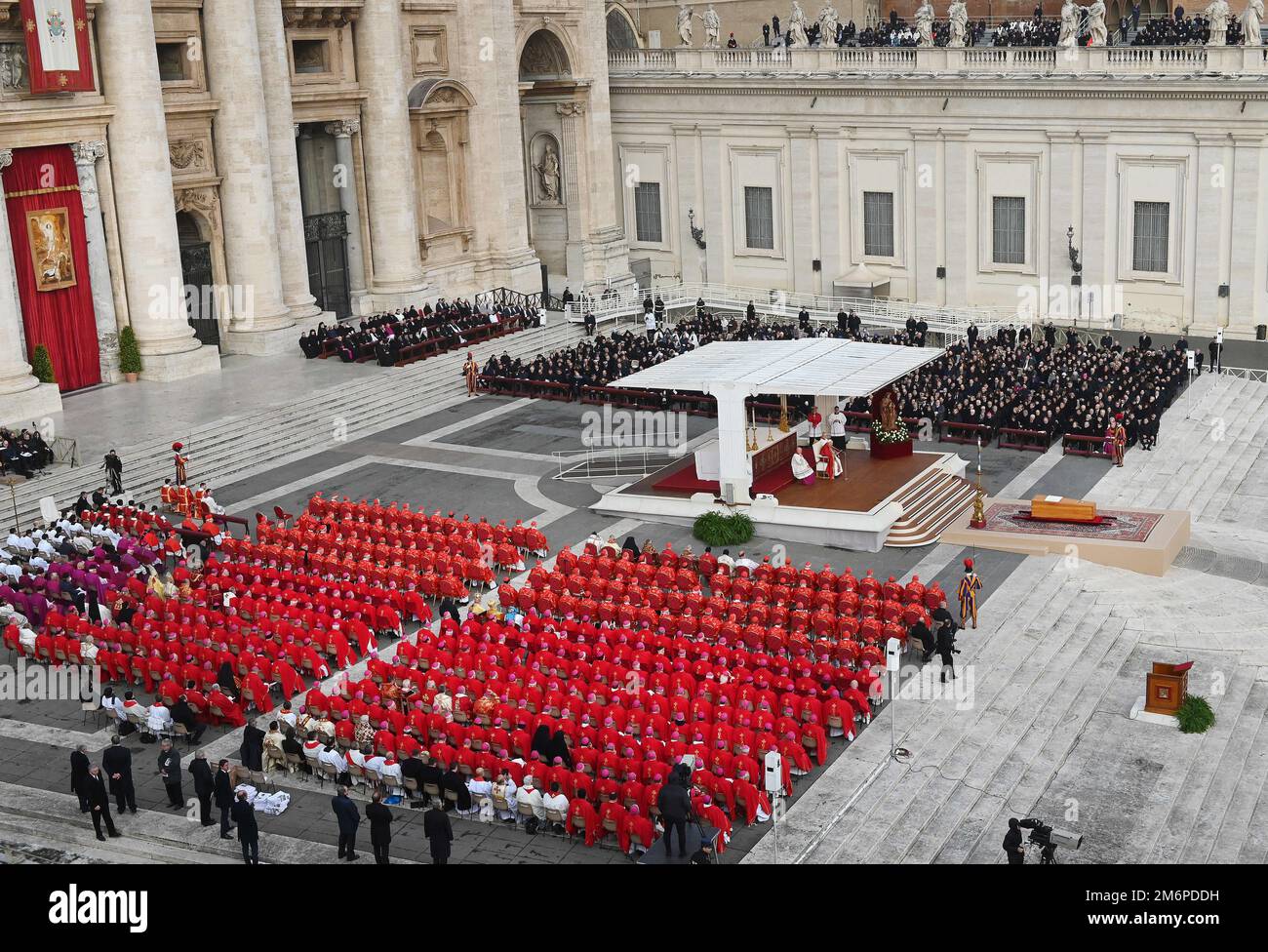
The funeral of Pope Benedict XVI, held on January 5, 2023, in St. Peter’s Square, was characterized by its unique protocol as a papal emeritus's funeral. While official invitations were strictly extended only to the two countries where Benedict held citizenship or long-term residence—Italy and Germany—the event drew a global audience of high-ranking officials, religious leaders, and tens of thousands of faithful who attended in a private capacity.
The Diplomatic Framework: Understanding Papal Protocol
To understand who attended the funeral of Pope Benedict XVI, one must first understand the distinction between a state funeral for a reigning pontiff and the funeral of a pope emeritus. When a reigning pope dies, the Vatican sends formal invitations to every sovereign nation with which it maintains diplomatic relations, leading to an massive influx of heads of state and royal families.
However, because Benedict XVI had resigned in 2013, the protocol for his funeral was altered significantly. The Holy See clarified that official state delegations were invited only from Italy and Germany. This decision was rooted in the specific circumstances of his life: he was a German national by birth and had served as the Bishop of Rome (Italy) during his papacy and his years as pope emeritus. For all other nations, the attendance of dignitaries was considered private, meaning they attended as individuals or represented their countries in an unofficial or personal capacity, rather than as part of an invited state delegation.
Official State Delegations
The official state presence was composed entirely of representatives from the two nations formally recognized in the protocol. These delegations were tasked with representing the institutional ties between the Vatican and their respective governments.
- The Italian Delegation: As the host nation and the seat of the Holy See, Italy maintained a formal presence. President Sergio Mattarella and Prime Minister Giorgia Meloni led the Italian state officials. Their presence underscored the dual role of the Vatican as a sovereign entity and a central institution within the Italian cultural and historical landscape.
- The German Delegation: Representing the Pope Emeritus’s homeland, the German delegation was led by President Frank-Walter Steinmeier and Chancellor Olaf Scholz. Given Benedict XVI’s significant intellectual and theological influence on modern Catholicism, the presence of the German leadership was seen both as a gesture of national respect and an acknowledgment of his global stature as a prominent German intellectual.
Private Attendance by Global Dignitaries
Despite the restrictive invitation policy, many high-ranking international officials and members of royalty chose to attend. Because they were not part of an "official" state delegation, their presence was classified as private. This distinction is subtle but important: it allowed foreign leaders to pay their respects without requiring the Vatican to manage the complexities of formal state protocol for a retired pope.
Notable figures who attended in a private capacity included:
- Royal Families: Members of various European monarchies were present, including King Philippe of Belgium and Queen Mother Sofia of Spain. Their attendance reflected the historical, traditional, and long-standing ties between European royal houses and the Catholic Church.
- Religious and Interfaith Leaders: The funeral saw a significant gathering of leaders from diverse denominations. Representatives of the Orthodox Church and members of the Anglican Communion were present, highlighting the ecumenical efforts that Benedict XVI pursued during his tenure and retirement.
- Diplomatic Envoys: Many ambassadors to the Holy See who were already based in Rome attended the ceremony. Because they represent their respective countries to the Vatican on a permanent basis, their attendance served as a natural extension of their daily diplomatic duties.
The Role of the Faithful and the General Public
While the diplomatic and political figures occupied the reserved seating areas, the vast majority of the attendees were members of the general public. Estimates from the Vatican Gendarmerie suggested that approximately 50,000 to 60,000 people filled St. Peter’s Square to pay their respects.
The demographic makeup of this crowd was diverse, ranging from clergy and religious orders to individual pilgrims who had traveled from around the world. For many, attending the funeral was a pilgrimage to honor a figure they viewed as a profound theological teacher. The atmosphere was noted by observers as somber yet orderly, a contrast to the high-energy crowds often seen at canonization masses or events involving a reigning pope.
Comparative Attendance Analysis: Reigning vs. Emeritus
To better contextualize the attendance, it is useful to compare the 2023 funeral to the 2005 funeral of Pope John Paul II, which is the most recent example of a "standard" papal funeral.
| Feature | Pope John Paul II (2005) | Pope Benedict XVI (2023) |
|---|---|---|
| Status at Death | Reigning Pope | Pope Emeritus |
| Official Delegations | All nations invited | Italy and Germany only |
| State Attendance | Extensive, high-level heads of state | Private/Unofficial capacity (mostly) |
| Attendance Volume | Millions (estimated) | ~50,000 - 60,000 |
| Protocol | Full state funeral | Simplified pontifical funeral |
The differences in the table highlight how the Vatican successfully scaled the event to fit the specific juridical status of Benedict XVI. By limiting official state delegations, the Vatican avoided the logistical burden of coordinating security and protocol for dozens of heads of state, focusing instead on the liturgical nature of the ceremony.
Challenges and Security Considerations
Organizing the logistics for an event of this nature, even with restricted state attendance, requires significant coordination between the Vatican’s security forces and the Italian state police.
- Security Perimeter: The "Terrazzo" and the immediate vicinity of St. Peter’s Square were placed under high security. Even without the typical influx of world leaders, the presence of the Italian head of state and other international dignitaries necessitated strict access control.
- Access Management: The general public was allowed entry on a first-come, first-served basis. This meant that thousands of attendees arrived in the early morning hours, creating a long, orderly queue that stretched across the Via della Conciliazione.
- Media and Press: Accredited journalists were required to go through a rigorous vetting process. Media coverage was handled centrally by the Vatican Media office, which ensured that the images of the funeral were disseminated accurately to global outlets.
The Impact of Benedict XVI’s Theology on Attendees
The character of the attendees was also shaped by the intellectual legacy of Joseph Ratzinger. Unlike some papal events that attract a cross-section of global travelers, the attendees of this funeral were, to a significant extent, individuals specifically drawn to Benedict’s writings and conservative theological positions. Many were academics, students of theology, or members of traditionalist Catholic movements. This created a distinct "intellectual" tone to the gathering, where the focus remained on the late pope’s contributions to Christian thought rather than political or social reform agendas.
Frequently Asked Questions
Who was officially invited to the funeral of Pope Benedict XVI? The Holy See issued formal invitations only to official state delegations from Italy and Germany. All other international dignitaries attended in a personal, private capacity.
Why were other world leaders not invited formally? Because Benedict XVI was no longer the reigning head of state of the Vatican City State at the time of his death, standard state funeral protocol for a sitting pope did not apply. The Vatican tailored the protocol to his status as a pope emeritus.
How many people attended the funeral? Official estimates provided by the Vatican Gendarmerie indicated that approximately 50,000 to 60,000 people were present in St. Peter’s Square for the funeral mass.
Did non-Catholic religious leaders attend? Yes, the funeral was attended by various representatives of other Christian denominations, including members of the Orthodox Church and the Anglican Communion, reflecting the ecumenical relations fostered during Benedict's papacy.
Was the general public allowed to enter the square? Yes, the square was open to the public on a first-come, first-served basis. Security measures were in place to manage the flow of attendees as they entered through the designated security checkpoints.
What was the tone of the funeral compared to other papal funerals? The tone was described as deeply reflective and somber. It lacked the massive political pageantry of a reigning pope’s funeral, focusing instead on the liturgical traditions of the Church and the personal legacy of the late Pope Emeritus.
Practical Guidance for Historical Researchers
For those researching the attendees of this specific event, it is vital to distinguish between official participants and attendees who were present in a personal capacity. When citing sources, always verify whether a dignitary was part of the "official delegation" or merely a private attendee. Official Vatican press releases serve as the primary source for the names of the delegations from Italy and Germany. News reporting from reliable wire services, such as Reuters or AP, is generally sufficient for identifying the names of other prominent figures who attended in a private capacity.
If you are tracking the attendance of specific non-governmental organizations or religious groups, look for reports from the Vatican’s own news portal, which often lists major groups represented in the crowd. Avoid relying on social media rumors regarding the presence of specific politicians, as many claims about "official attendance" were often conflated with personal visits to the lying-in-state at St. Peter's Basilica.
By understanding the intersection of theological legacy and diplomatic protocol, one gains a clearer picture of why the funeral of Pope Benedict XVI remains a unique case study in modern ecclesiastical history. It was an event that balanced the requirements of a former head of state with the quiet dignity requested by the deceased in his final instructions.