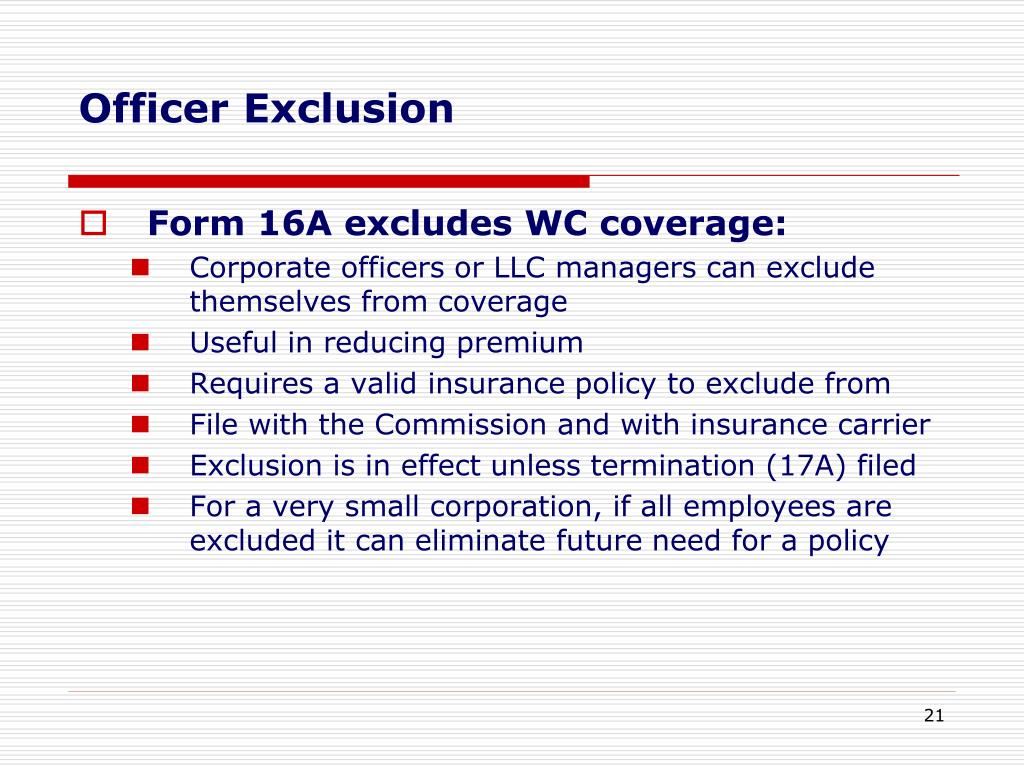
In Arizona, the Workers Compensation Officer Exclusion Form is a legal document that allows corporate officers and members of limited liability companies (LLCs) to waive their right to workers' compensation benefits. By filing this form with their insurance carrier, these individuals are excluded from the payroll used to calculate premiums, potentially reducing business insurance costs while assuming the personal risk for work-related injuries.
Understanding the Legal Framework in Arizona
To understand the Arizona workers compensation officer exclusion form, one must first look at the state's statutory requirements. Under Arizona Revised Statutes (A.R.S.) § 23-901, the definition of an "employee" is broad. In a corporate setting, any person in the service of an employer—including executive officers—is generally considered an employee. Because Arizona law mandates that all employers with at least one employee (with very few exceptions) must carry workers' compensation insurance, these officers are automatically included in the coverage by default.
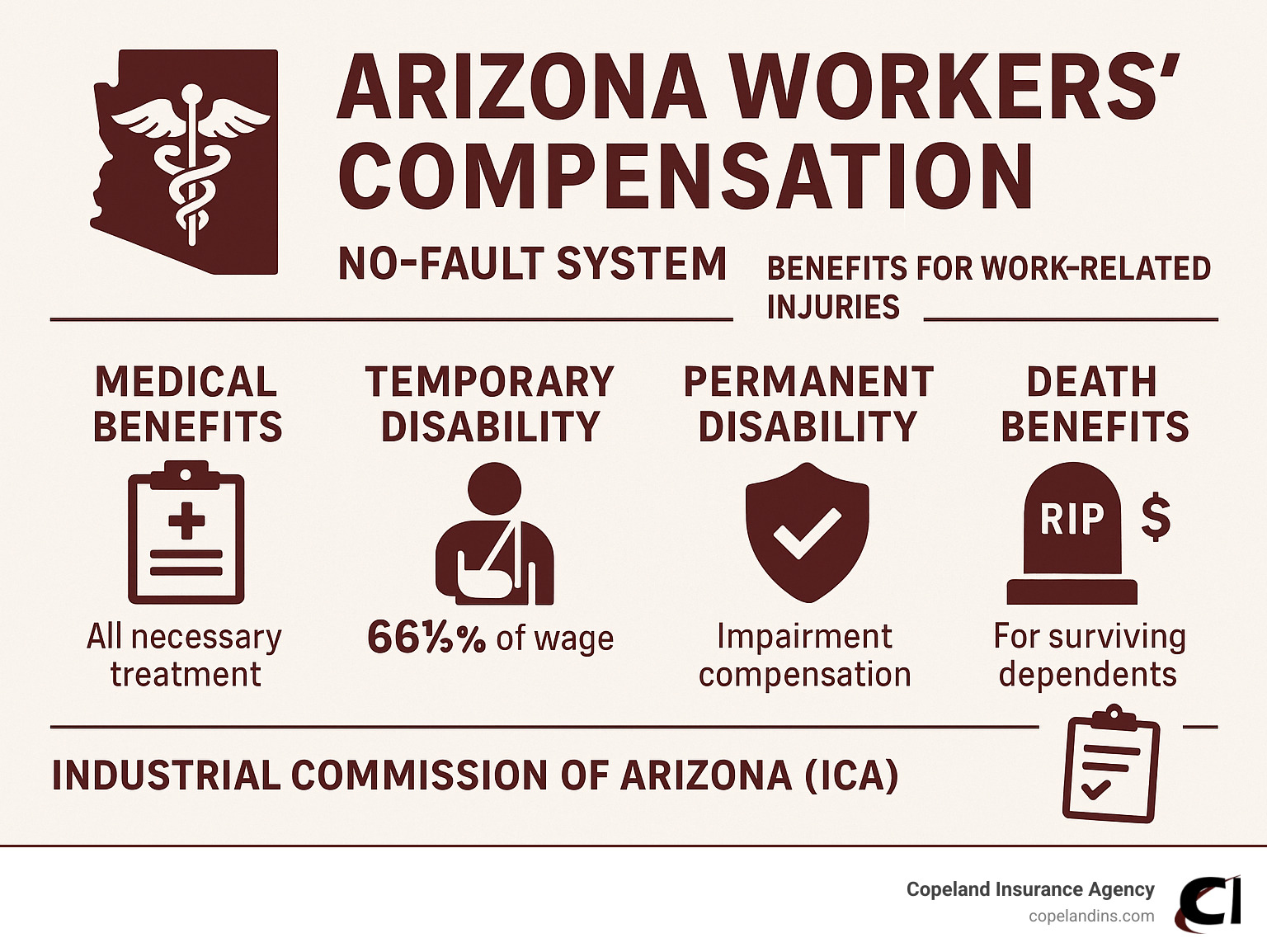
The Industrial Commission of Arizona (ICA) oversees these regulations. The primary goal of the system is to ensure that if a worker is injured on the job, their medical bills and a portion of their lost wages are covered regardless of who was at fault. However, the law recognizes that those who own or control a business may have different financial protections in place and may wish to opt out of the system to save on premium costs.
By 2026, the cost of workers' compensation premiums continues to be a significant line item for Arizona small businesses. Excluding a high-salaried officer can result in substantial savings, as the premium is often a percentage of the total payroll. However, this exclusion is not a casual decision; it is a formal legal rejection of rights that requires specific documentation to be valid under A.R.S. § 23-906.
Who is Eligible to File for Exclusion?
The eligibility for exclusion depends largely on the legal structure of the business and the specific role the individual holds. Not every person with a title can be excluded, and the rules differ between corporations and LLCs.
Corporate Officers
In a corporation (whether C-Corp or S-Corp), officers such as the President, Vice President, Secretary, and Treasurer are considered employees. Under Arizona law, these officers can elect to be excluded from coverage. This applies regardless of whether the officer owns stock in the company, though in practice, it is usually the owner-officers who choose this route.
LLC Members and Managers
For Limited Liability Companies, the rules are slightly different. Members (owners) and managers of an LLC are generally not considered employees unless they specifically elect to be covered or if the nature of their work and compensation structure dictates otherwise under evolving ICA interpretations. However, most insurance carriers in Arizona require a formal election or exclusion form to be on file to clarify the status of these individuals during a premium audit.
Sole Proprietors and Partners
It is a common misconception that sole proprietors and partners need to "exclude" themselves. In Arizona, sole proprietors and partners in a partnership are actually excluded by default. They must specifically "opt-in" if they wish to be covered by their own workers' compensation policy. The exclusion form discussed here is primarily used for those who would otherwise be automatically included by law.
The Step-by-Step Filing Process
Filing an exclusion is a procedural task that must be handled correctly to avoid "unintended coverage"—a situation where an officer thinks they are excluded, but the insurance carrier still charges premium for them because the paperwork was deficient.
- Obtain the Correct Form: While the ICA provides guidance, most exclusions are processed using a form provided by your specific insurance carrier. This is often titled "Rejection of Coverage" or "Officer/Member Exclusion Endorsement." Ensure you are using the version compliant with 2026 Arizona standards.
- Complete the Personal Details: The form requires the officer’s full legal name, social security number (or employee ID), and their specific title within the organization.
- Execute the Rejection: The officer must sign the form, acknowledging that they are voluntarily giving up their rights to benefits under the Arizona Workers’ Compensation Act. In many cases, this signature must be witnessed or notarized to prevent fraudulent filings.
- Submit to the Insurance Carrier: The completed form must be sent to the insurance company providing the workers' compensation policy. It is highly recommended to send this via certified mail or a digital portal that provides a time-stamped receipt.
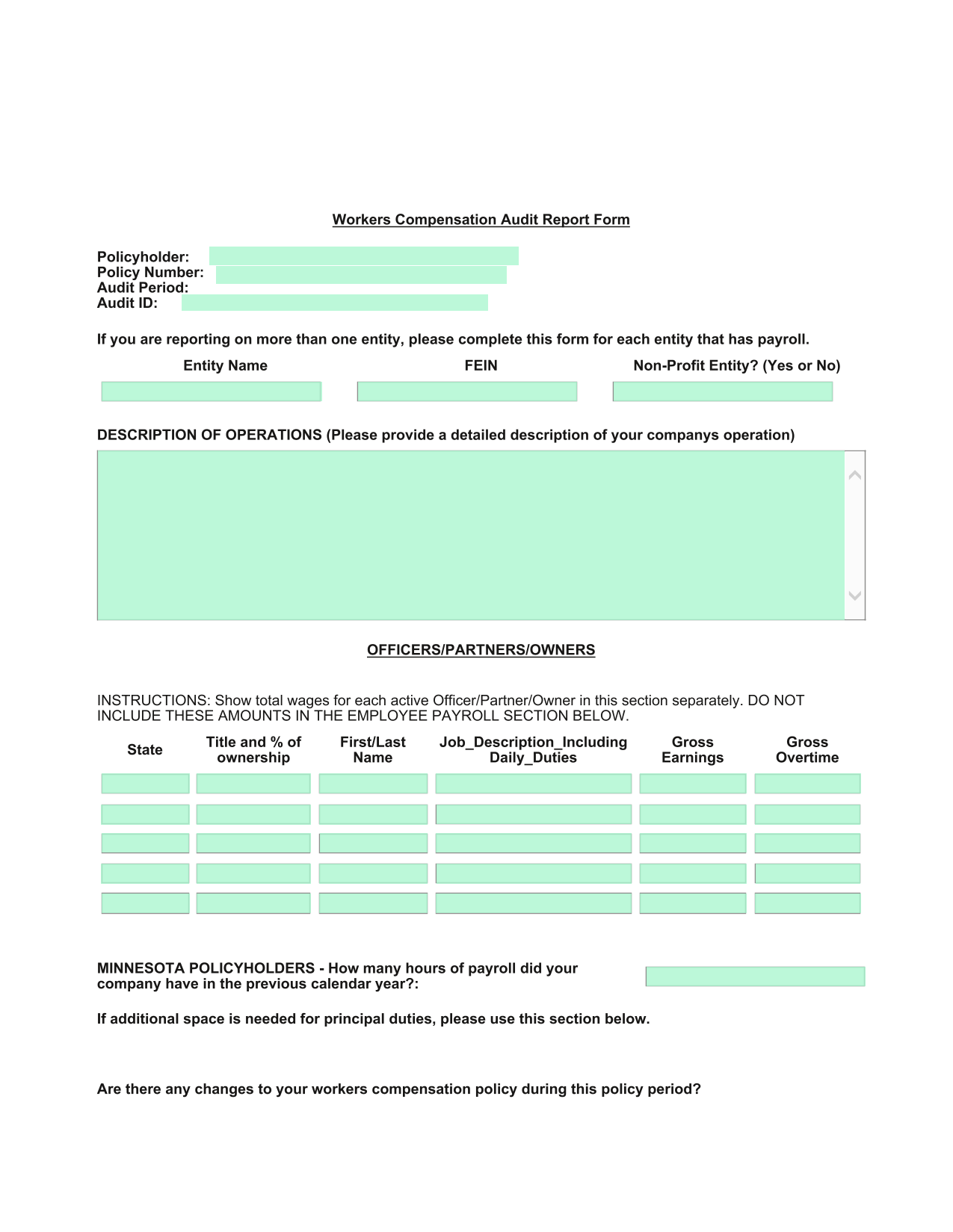
- Retain a Copy for Audits: Insurance carriers perform annual payroll audits. If you cannot produce a signed exclusion form for an officer, the auditor will add that officer’s entire salary (up to the state-mandated cap) to your payroll, resulting in a surprise bill for back-premiums.
- Notify the ICA (If Applicable): While the carrier usually handles the reporting, some specific statutory rejections require a copy to be filed with the Industrial Commission of Arizona to be legally binding against third-party claims.
Financial Implications: Premiums and Audits
The primary motivation for filing an officer exclusion form is financial. In 2026, Arizona insurance carriers use NCCI (National Council on Compensation Insurance) classifications to determine rates. Each job type has a "rate per $100 of payroll."
For example, if a corporate officer in a construction company has a salary of $100,000 and the clerical rate is $0.50 per $100, the premium for that officer is relatively low ($500). However, if that officer is active on job sites, the rate could be $10.00 per $100, leading to a $10,000 premium.
Payroll Caps and Minimums
Even if an officer is included, Arizona law and NCCI rules often apply "minimum and maximum" payroll caps for executive officers. This means that even if an officer earns $500,000, the insurance company only charges premium on a set amount (e.g., $60,000 to $150,000 depending on the current year's index). Excluding the officer entirely removes this payroll from the equation, bringing the premium for that individual to zero.
The Audit Process
At the end of the policy term, an auditor will review the business's records (941s, tax returns, and payroll journals). If the auditor sees an officer listed on the payroll but does not see a valid exclusion form, they are required by law to include that officer's payroll in the final premium calculation. This is one of the most common causes of disputes between small businesses and insurance carriers in Arizona.
The Hidden Risks of Excluding Officers
While the premium savings are attractive, the risks of excluding an officer from workers' compensation coverage are significant and often misunderstood by business owners.
Medical Expenses
Workers' compensation provides "first-dollar" coverage for medical bills with no deductibles or co-pays for the injured worker. If an excluded officer is injured on the job, their regular health insurance may refuse to pay. Most private health insurance policies contain an "industrial injury exclusion" clause, meaning they do not cover injuries that should have been covered by workers' compensation. This can leave an officer personally responsible for hundreds of thousands of dollars in medical debt.
Lost Wages and Disability
Workers' compensation provides temporary total disability (TTD) benefits and permanent partial disability (PPD) awards. An excluded officer loses access to these payments. If an injury prevents them from working for six months, the business may struggle to pay their salary, and they have no state-mandated safety net to replace that income.
Subrogation and Third-Party Liability
In some cases, if an officer is injured due to the negligence of a third party (such as a car accident while on a business errand), having workers' compensation allows the insurance company to handle the legal complexities of subrogation. An excluded officer must navigate these legal waters alone, often at a high personal cost.
| Feature | Officer Included in Coverage | Officer Excluded (Form Filed) |
|---|---|---|
| Premium Cost | Paid based on officer's payroll (subject to caps) | Zero premium for the officer |
| Medical Benefits | 100% coverage for work-related injuries | No coverage (Officer pays out of pocket) |
| Wage Replacement | Provided per Arizona statutory limits | None |
| Health Insurance | Secondary (usually doesn't apply) | May deny claims due to "work-related" status |
| Legal Protection | Exclusive Remedy applies (cannot sue company) | Officer may have grounds to sue own company |
| Audit Requirement | Payroll must be reported | Valid signed form must be provided to auditor |
Common Pitfalls and Troubleshooting
Many Arizona business owners encounter issues with officer exclusions because they treat the form as a "set it and forget it" task.
- Failure to Update After Business Changes: If an LLC converts to a Corporation, or if a new officer is appointed, a new exclusion form must be filed. The old form tied to the previous entity or individual is legally void.
- Assuming Silent Partners are Automatically Excluded: Even a partner who doesn't perform daily work might be considered an employee if they receive a K-1 that the auditor interprets as "wages for services." It is always safer to have a formal exclusion on file.
- The "Dual Capacity" Trap: If an officer is excluded but performs manual labor, and then gets injured, the ICA may scrutinize the exclusion. Arizona courts have occasionally looked at whether an individual was acting as an "officer" or an "employee" at the exact moment of injury.
- Missing Signatures: It sounds simple, but a form missing a date or a middle initial can be rejected by a carrier’s underwriting department. If the carrier rejects the form and the business doesn't realize it until the audit, the exclusion will not be honored.
Frequently Asked Questions
Can an excluded officer opt back into coverage later?
Yes. An officer can rescinded their rejection of coverage. This is typically done at the time of the policy renewal, though most carriers allow mid-term additions if a written request and a premium adjustment are made. The coverage will not be retroactive; it only applies to injuries occurring after the opt-in date.
Does the exclusion form cover federal workers' compensation?
No. The Arizona workers compensation officer exclusion form only applies to state-level requirements under the Arizona Workers' Compensation Act. If your business falls under federal jurisdictions—such as the Longshore and Harbor Workers' Compensation Act or the Jones Act—the state exclusion form will not exempt you from those federal requirements.
Is the form required if the business has no other employees?
If a corporation has only one person who is the sole officer and shareholder, they are still technically an employee of the corporation. To avoid being forced to buy a policy just for themselves, they would file the exclusion. However, if there are absolutely no employees and the owner is a sole proprietor or a member of a single-member LLC, a policy might not be required at all under Arizona law.
How does this affect my Experience Modification Rate (MOD)?
Excluding an officer can help protect your MOD factor. Because an officer’s injury would not be covered by the policy, it would not appear on your loss runs. High-dollar claims from owners can significantly spike a MOD factor for three years, leading to higher premiums for all other employees.
Can an officer exclude themselves if the company is in a "high-risk" pool?
Yes. Even if your company is insured through the assigned risk plan (the "pool" for businesses that cannot find voluntary coverage), the right to exclude officers remains the same under Arizona law.
Final Recommendations for Arizona Business Owners
Before filing the Arizona workers compensation officer exclusion form in 2026, perform a thorough cost-benefit analysis. While the immediate premium savings are quantifiable, the potential cost of a single workplace accident is not.
If you choose to proceed with an exclusion, ensure that the officer has a robust private disability insurance policy and that their primary health insurance does not contain an absolute exclusion for industrial accidents. Consult with your insurance broker annually during the renewal period to verify that all exclusion forms are still on file with the carrier and that they match the current list of officers registered with the Arizona Corporation Commission.
Finally, keep a "compliance folder" containing copies of all filed exclusion forms and the proof of delivery to the insurance carrier. This simple step can save thousands of dollars and hours of administrative headaches during your annual premium audit.