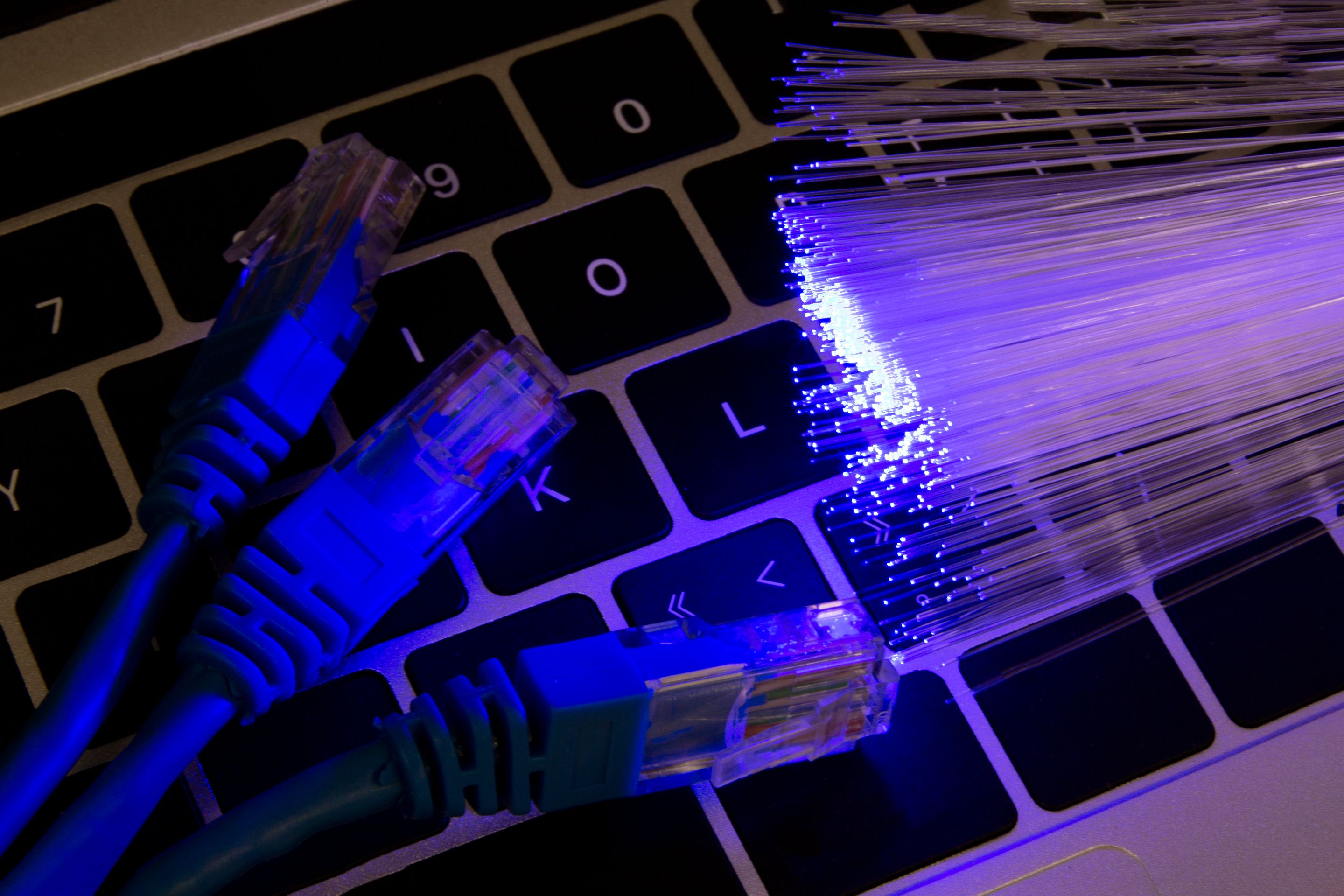
To connect to high-speed fiber broadband in Arkansas in 2026, residents should first verify availability via the Arkansas State Broadband Map, select a local or national provider, and schedule a professional installation. This process involves running a fiber-optic drop to your home and installing an Optical Network Terminal (ONT) to convert light signals into usable internet data.
In 2026, the landscape of digital connectivity in Arkansas has undergone a massive transformation. Driven by the Arkansas Rural Connect (ARC) program and significant federal investment through the Broadband Equity, Access, and Deployment (BEAD) program, fiber-optic infrastructure now reaches corners of the state that previously relied on sluggish DSL or unreliable satellite connections. For residents and business owners, transitioning to fiber is no longer a luxury but a standard utility requirement for participation in the modern economy, telehealth, and remote education.
Understanding the Arkansas Fiber Initiative
The push for universal high-speed broadband in Arkansas is coordinated primarily through the Arkansas State Broadband Office. By 2026, the state has moved aggressively toward its goal of ensuring every "unserved" and "underserved" location has access to at least 100/20 Mbps speeds, with fiber-to-the-premises (FTTP) being the preferred gold standard.
Fiber-optic technology utilizes thin strands of glass to transmit data as pulses of light. Unlike traditional copper-based cable or DSL, fiber offers symmetrical speeds—meaning your upload speed is just as fast as your download speed. This is critical for activities like high-definition video conferencing, cloud backups, and real-time gaming. In Arkansas, the rollout has been unique due to the heavy involvement of Electric Cooperatives, which have leveraged their existing pole infrastructure to string fiber lines across rural counties.
Step 1: Verify Availability via the State Broadband Map
Before contacting a provider, your first step is to determine if fiber infrastructure has reached your specific address. Coverage in Arkansas can vary significantly even within the same county.
Utilizing the Arkansas State Broadband Map
The most accurate resource is the official Arkansas State Broadband Map, maintained by the State Broadband Office. This map is updated quarterly in 2026 to reflect new "lit" areas.
- Navigate to the official portal and enter your physical address.
- Identify the "Fabric" point of your home. If the point is green, high-speed service is officially available.
- Look for the listed "Provider of Record." In many rural areas, there may only be one fiber provider, often a local cooperative or a regional player like Ritter Communications or Brightspeed.
Checking with Local Electric Cooperatives
In Arkansas, Electric Cooperatives have been the vanguard of rural fiber. If the state map shows availability, visit the website of your local electric provider. Entities such as OzarksGo (Ozarks Electric), Empower (Craighead Electric), and NEXT (North Arkansas Electric) have established specialized fiber divisions. Even if your neighbor has service, your specific "drop" might still be in the construction phase, so checking the specific feeder map for your neighborhood is essential.
Step 2: Choosing the Right Provider and Service Plan
Once you confirm availability, you must select a plan that matches your household's data consumption. In 2026, Arkansas fiber providers typically offer tiered packages based on bandwidth.
Common Tiered Offerings
- 300 Mbps Symmetrical: Ideal for small households (1-2 people) who stream 4K video and work from home occasionally.
- 1 Gig (1,000 Mbps): The standard for families with multiple devices, gamers, and heavy cloud users.
- 2 Gig to 5 Gig: High-end plans usually reserved for home offices with massive data transfers or "smart homes" with dozens of connected IoT devices.
Evaluating Costs and Contracts
While many Arkansas cooperatives offer "no-contract" models, larger national providers like AT&T Fiber or Cox may offer promotional rates for the first 12 to 24 months. Be sure to ask about:
- Equipment Fees: Does the monthly price include the router/gateway, or is there a $10–$15 monthly rental fee?
- Data Caps: Unlike older cable plans, almost all fiber plans in Arkansas in 2026 feature unlimited data.
- Symmetry: Confirm the plan provides equal upload and download speeds.
| Provider Type | Examples in Arkansas | Typical Speed Range | Best For |
|---|---|---|---|
| Electric Cooperatives | OzarksGo, Empower, NEXT, South Central | 100 Mbps - 2 Gbps | Rural residents and local support |
| National Carriers | AT&T Fiber, Brightspeed | 300 Mbps - 5 Gbps | Urban/Suburban centers |
| Regional ISPs | Ritter Communications, WEHCO Video | 100 Mbps - 1 Gbps | Mixed business and residential |
| Municipal Networks | Conway Corp | 100 Mbps - 1 Gbps | Local city-wide residents |
Step 3: Preparing for the Installation Process
Fiber installation is more invasive than setting up a simple plug-and-play satellite dish. It involves two distinct phases: the "exterior drop" and the "interior installation."
The Exterior Drop
The provider will send a crew to run a fiber-optic cable from the nearest distribution hub (the "pedestal" or utility pole) to the side of your house. In Arkansas, this is often done via directional boring (underground) or aerial lines (following electric wires).
- Utility Marking: If the line is buried, "Arkansas 811" must be called to mark existing underground lines (water, gas, electric) before digging.
- The NID/SNI: A small weatherproof box called a Network Interface Device (NID) or System Network Interface (SNI) will be mounted to your exterior wall. This serves as the transition point between the provider's network and your home's wiring.
The Interior Installation
A technician will visit at a scheduled time to bring the fiber inside. They will drill a small hole through the exterior wall to pull the fiber through to a location near a power outlet.
- Placing the ONT: The fiber connects to an Optical Network Terminal (ONT). This device is the fiber equivalent of a modem; it converts light pulses into electrical signals.
- The Router Connection: The ONT connects to your Wi-Fi router via an Ethernet cable (typically Cat6 or Cat6a in 2026). Some providers use an "All-in-One" Gateway that combines the ONT and Router into a single box.
Step 4: Configuring Your Home Network for Maximum Speed
Getting fiber to your wall is only half the battle. To actually experience 1 Gbps+ speeds, your internal hardware must be compatible.
Hardware Requirements
If you are using your own router instead of the provider's equipment, ensure it supports Wi-Fi 6E or Wi-Fi 7 (standard in 2026). Older Wi-Fi 5 (802.11ac) routers will bottleneck your connection, often topping out at 400-600 Mbps regardless of how fast your fiber line is.
- Wired vs. Wireless: For gaming or large file transfers, use a physical Ethernet connection. A Cat6 cable can handle up to 10 Gbps, ensuring you get every bit of speed you pay for.
- Mesh Systems: Since many Arkansas homes are spacious or have thick walls, a Mesh Wi-Fi system is recommended to eliminate "dead zones" far from the primary router.
Step 5: Troubleshooting and Activation
Once the technician leaves, you should perform an immediate speed test using a site like Speedtest.net or Fast.com.
Common Setup Issues
- Low Speed on Wi-Fi: This is rarely a fiber line issue; it is usually caused by interference or distance from the router. Test again with a wired laptop directly connected to the ONT.
- Blinking Red Lights: If the ONT shows a red "Fail" or "Alarm" light, it usually indicates a "kink" or break in the fiber line. Fiber is glass and cannot be bent at sharp 90-degree angles.
- Latency/Ping Issues: Fiber should provide pings between 1ms and 20ms. If your ping is high, check for background updates or local network congestion.
Financial Assistance and Subsidies in Arkansas
Even with the expansion of infrastructure, the cost of high-speed internet can be a barrier for some Arkansas households. In 2026, several programs exist to bridge this gap.
The Arkansas Digital Opportunity Plan provides frameworks for low-income residents to access discounted service. While the federal Affordable Connectivity Program (ACP) saw changes after its initial rollout, many Arkansas-based providers have maintained "Lifeline" style packages or specific low-cost tiers (often around $30/month) for households that meet certain income thresholds or participate in programs like SNAP or Medicaid. Always ask your provider if they participate in the "Arkansas Broadband Discount Program" or its 2026 equivalent.
Technical Specifications of Arkansas Fiber Networks
Arkansas's newer fiber deployments primarily utilize XGS-PON (10-Gigabit Symmetric Passive Optical Network) technology. This is a significant upgrade over the older GPON standard.
- XGS-PON: Allows for 10 Gbps capacity shared among a small group of users, facilitating the symmetrical 1 Gig and 2 Gig plans common in 2026.
- Latency: Fiber-optic signals travel at approximately two-thirds the speed of light in a vacuum. In practical terms, an Arkansas user connecting to a server in Dallas or Chicago will experience significantly lower "lag" compared to cable users, whose signals must undergo more complex electrical conversions.
Next Steps for Residents
Connecting to fiber in Arkansas is a straightforward process of verification, selection, and professional installation. As the state moves toward 100% connectivity by the late 2020s, the "digital divide" is closing. If your area is not yet served, you can visit the Arkansas State Broadband Office website to submit a "Challenge," which officially alerts the state that your address lacks the speeds claimed by providers.
Summary Checklist:
- Check the Map: Visit the Arkansas State Broadband Map.
- Contact Provider: Call the local cooperative or national ISP servicing your zone.
- Prepare the Site: Clear the area near your utility meter for the exterior box.
- Hardware Check: Ensure your router supports at least Wi-Fi 6.
- Install & Test: Confirm symmetrical speeds with the technician present.
Frequently Asked Questions
What is the average cost of fiber internet in Arkansas in 2026?
In 2026, the average cost for a 1 Gbps symmetrical fiber plan in Arkansas ranges from $65 to $85 per month. Smaller tiers, such as 300 Mbps, are often available for $45 to $55. Many local cooperatives offer these prices as "flat rates" with no additional taxes or hidden fees, particularly those funded by ARC grants.
How long does the fiber installation process take?
The physical installation typically takes between 2 and 4 hours. This includes the time needed to run the fiber from the exterior NID to the interior ONT, configure the router, and verify the signal strength. However, the wait time for an appointment can vary; in high-growth areas like Northwest Arkansas, you may need to book 1–2 weeks in advance.
Can I install Arkansas fiber myself?
No, you cannot perform a "self-install" for the initial fiber connection. Unlike cable internet, which may use existing jacks, fiber requires specialized equipment to "splice" the glass strands and a professional technician to install the ONT. Once the ONT is active, you can typically manage the Wi-Fi router setup yourself if you choose not to use the provider's equipment.
Why is my fiber speed slower on my phone than on my computer?
Wireless speeds are limited by the Wi-Fi chip in your device and the distance from the router. Even with a 1 Gbps fiber line, an older smartphone may only reach 300–400 Mbps. To see your full fiber speed, you must use a device with a Wi-Fi 6/7 card or a wired Ethernet connection to a PC with a Gigabit-rated network card.
What should I do if fiber is available on my street but not at my house?
This is known as being "near-net." You should contact the provider and request a "Site Survey." Sometimes a house is missed in the initial mapping. If the distance from the road to your house is exceptionally long (common in rural Arkansas), there may be an additional "construction fee" to run the fiber drop to your home.
Are there data caps on Arkansas fiber plans?
Virtually all fiber-to-the-home providers in Arkansas, including OzarksGo, Empower, and AT&T Fiber, offer unlimited data in 2026. Because fiber-optic lines have massive bandwidth capacity compared to older copper lines, providers do not need to restrict usage to manage network congestion.