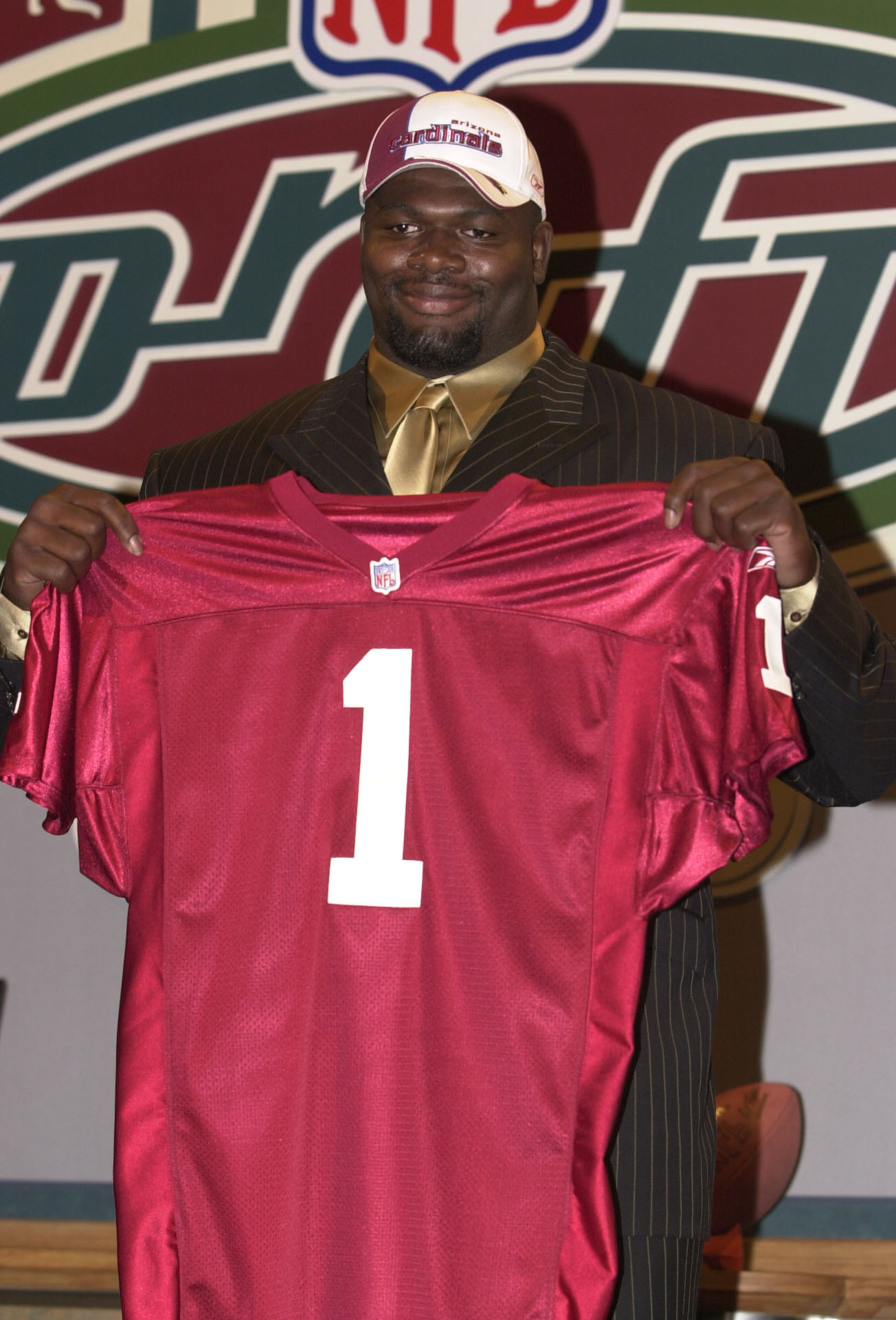
The 2001 Arizona Cardinals season was the franchise’s 82nd in the National Football League (NFL) and its 14th since relocating to the desert. Finishing with a 7–9 record, the campaign was characterized by a defensive resurgence under head coach Dave McGinnis, though the team ultimately fell short of the postseason for the third consecutive year, struggling with offensive consistency and quarterback stability.
The Context: Transition and Expectations
Entering the 2001 season, the Arizona Cardinals were a team in search of an identity. Having fired Vince Tobin late in the 2000 season, the organization promoted defensive coordinator Dave McGinnis to the head coaching role. McGinnis, known for his high-energy, "no-nonsense" approach, inherited a roster that was talented in specific pockets but plagued by organizational instability.
The 2001 campaign took place against the backdrop of a broader league transition. The NFL was adjusting to the fallout of the massive expansion and the evolving complexity of defensive schemes. For the Cardinals, the primary mission was to move beyond the .500 threshold that had eluded them since their lone playoff success in 1998. The team’s primary search for a franchise quarterback remained a recurring theme, as the organization balanced veteran presence against the need for long-term development.
Coaching and Personnel Dynamics
Dave McGinnis brought a distinct philosophy to the 2001 squad. His emphasis was on physical, aggressive football, particularly on the defensive side of the ball. The coaching staff utilized a 4-3 base defense that aimed to pressure the passer and limit explosive plays.
The quarterback situation was the central drama of the season. Jake Plummer, the charismatic leader who had guided the team during the late 90s, was tasked with being the primary signal-caller. However, Plummer struggled with turnover issues and inconsistent completion percentages throughout the year. His performance sparked heated debates among the local fanbase and sports media, as the offense often relied on a "big play or bust" mentality. The lack of a high-efficiency passing game often placed undue pressure on the defense to keep the score low, a challenge they met with varying degrees of success.
Statistical Breakdown and Performance Trends
The 7–9 record was a microcosm of the team's narrow margins of error. The Cardinals were competitive in the majority of their games, but they lacked the closing power required to overcome elite opponents.
Offensive and Defensive Metrics
The 2001 Cardinals struggled significantly in total offensive output. While the running game showed glimpses of productivity, the inability to sustain drives through the air meant the defense was frequently forced back onto the field. Conversely, the defense managed to keep the team in games through forced turnovers and goal-line stands.
| Metric | 2001 Season Outcome | Key Influence |
|---|---|---|
| Final Record | 7–9 | Inconsistent offensive efficiency |
| Division Rank | 4th (NFC East) | Strong competition in the division |
| Total Points Scored | 295 | Mid-tier league performance |
| Total Points Allowed | 343 | Resilience despite high volume of plays |
| Turnover Margin | Negative | Costly interceptions and fumbles |
The Cardinals were part of the NFC East at the time, facing historical rivals like the Dallas Cowboys, Washington Redskins, New York Giants, and Philadelphia Eagles. Navigating this division presented a massive hurdle, as the physical style of play favored by opponents often wore down the Arizona roster by the final quarter of the season.
Key Players and Influencers
Several individuals defined the 2001 Cardinals. On the defensive front, players like Simeon Rice—though he departed that offseason—left a void that younger players were expected to fill. The defensive secondary, led by veterans who understood the complexities of the NFC East passing attacks, served as the team's backbone.
On the offensive side, David Boston was a standout performer during this era. His physical dominance at the wide receiver position allowed for highlight-reel catches, but the team's over-reliance on his production occasionally made the offense predictable. When opponents doubled-teamed Boston, the rest of the receiving corps frequently struggled to find separation, further complicating Plummer’s decision-making process.
The "What If" Factors: Challenges and Limitations
The 2001 season serves as a primary example of how organizational instability can impact on-field performance. The team faced several structural limitations:
- Quarterback Consistency: The volatility at the QB position meant the offense often lacked a rhythmic flow. This forced the coaching staff to play conservatively, which frequently resulted in three-and-out drives.
- Special Teams Reliability: While not the primary focus of the media, the special teams unit experienced highs and lows. In close, one-possession games—of which the Cardinals had several—missed field goals or poor field position often became the deciding factor.
- Injuries and Depth: Like many NFL teams, the 2001 Cardinals dealt with a thin bench. As the season moved into the late autumn months, the cumulative effect of injuries took a toll on the starting lineup, particularly in the trenches.
Historical Impact on the Franchise
The 7–9 finish of 2001 was a bridge between the late 90s era and the complete rebuild that would follow. Looking back from 2026, the 2001 season is viewed as the end of a specific chapter for the Cardinals. It underscored the difficulty of finding stability in a league that demanded rapid results.
The lessons learned during this time eventually informed the front office’s strategies in the mid-2000s, leading to a shift in how the organization scouted talent and approached the salary cap. While the 2001 season itself was not a "winning" year by record, it was vital in clarifying that a total shift in offensive personnel and philosophy was necessary for the team to achieve lasting, playoff-caliber success.
Frequently Asked Questions
What was the Cardinals' division standing in 2001?
In 2001, the Arizona Cardinals played in the NFC East. They finished the season in 4th place, behind the Philadelphia Eagles, Washington Redskins, and New York Giants. This division was notoriously difficult during that era, featuring robust defensive teams that prioritized trench warfare.
Who was the starting quarterback for the majority of the 2001 season?
Jake Plummer was the primary starter for the 2001 season. While his talent was never in question, his ability to manage games and avoid turnovers remained a focal point of criticism throughout the year. His tenure in Arizona was marked by high-risk, high-reward playmaking.
Why is the 2001 season often discussed in terms of "lost potential"?
The season is frequently cited as a "lost" opportunity because the team possessed high-caliber individual talents, such as David Boston, who were hitting their athletic prime. Despite this, the lack of a cohesive offensive system and persistent turnover issues prevented them from capitalizing on the defense's solid work.
How did the coaching of Dave McGinnis influence the team?
Dave McGinnis brought a focused, defensive-first mentality. His impact was most visible in the team's increased physicality and effort. While the win-loss record did not reach the heights the organization desired, the team rarely appeared "out of the fight" during games, which is a testament to the culture McGinnis attempted to instill.
Did the 2001 season lead to major roster changes?
Yes. The inability to secure a playoff spot or show significant improvement over the previous year served as a catalyst for future changes. Following the 2001 campaign, the team began to aggressively evaluate their long-term options at the quarterback position and looked to infuse younger talent across both lines of scrimmage.
Moving Forward: Lessons from the 2001 Campaign
For followers of Cardinals history, the 2001 season is a study in the importance of offensive balance and roster depth. The takeaway is clear: defensive grit can keep a team relevant in individual games, but long-term success requires a quarterback who can manage the game with precision and a supporting cast that can diversify the offensive threat.
The 2001 Cardinals remain a compelling piece of franchise history—a team that played with heart but ultimately lacked the precision required to turn a 7–9 record into a winning season. Whether analyzing the era for statistical study or historical context, the season remains a pivot point that forced the organization to face the realities of NFL competitiveness at the turn of the millennium.