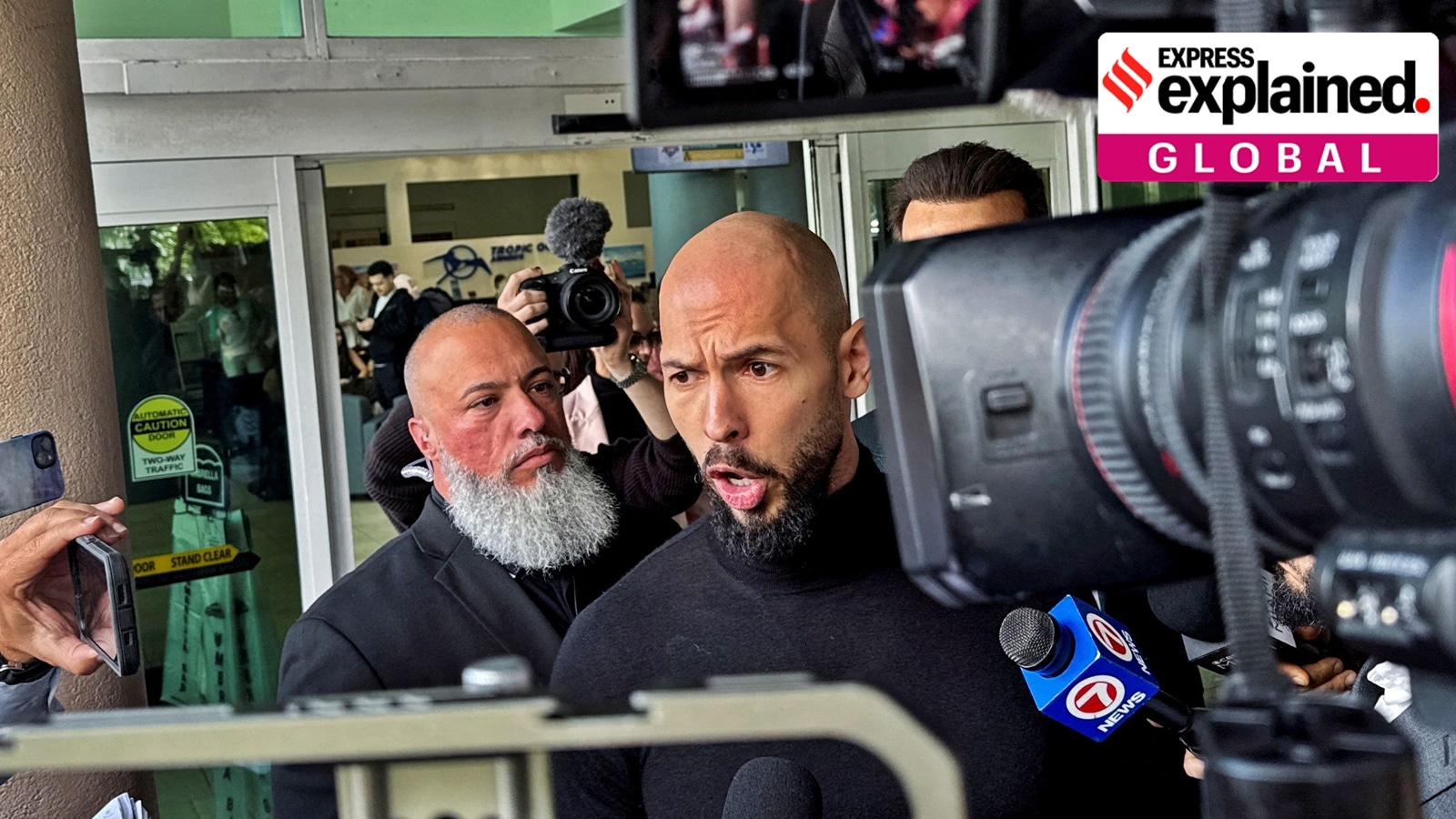
Before his global ascent to notoriety and the subsequent legal entanglements in Eastern Europe, Andrew Tate was a burgeoning fixture in the New York City nightlife circuit. Between 2016 and 2018, he utilized the city’s high-end club scene to cultivate the "Cobra" persona, leveraging his kickboxing credentials to access elite social circles and establish the foundational elements of his hyper-masculine brand.
The Professional Kickboxing Foundation in New York
Andrew Tate’s entry into the New York social hierarchy was not merely as a tourist, but as a professional athlete. By the mid-2010s, Tate had already secured multiple world titles in kickboxing under the ISKA (International Sport Kickboxing Association) and Enfusion banners. His presence in New York was often tied to the combat sports industry, which served as his primary "social currency" during his early years in the city.
In NYC, a city that prizes achievement and status, being a "World Champion" provided Tate with immediate entry into venues that are typically restricted to the ultra-wealthy or the famous. Unlike the trust-fund socialites common in Manhattan, Tate marketed himself as a self-made warrior. This distinction allowed him to navigate the Meatpacking District and Midtown nightlife scenes with a level of perceived "toughness" that appealed to a specific demographic of young professionals and fitness enthusiasts.
During this period, the combat sports scene in New York was experiencing a resurgence. With the legalization of professional MMA in New York State in 2016, the culture surrounding martial arts became trendy. Tate capitalized on this timing, appearing at high-profile gyms and networking with other fighters and promoters. This athletic legitimacy was the bedrock upon which he built his more controversial social persona.
The NYC Nightlife Circuit: From Marquee to 1OAK
The Manhattan nightlife ecosystem is a complex hierarchy where status is measured by proximity to the "head table" and the size of one's "spend." Andrew Tate and his brother, Tristan, became known for their aggressive presence in venues such as Marquee, Lavo, and 1OAK. Their approach to nightlife was transactional and performative, designed to generate social media content long before "influencer" was a standard career path.
The Meatpacking District Influence
The Meatpacking District served as the primary stage for Tate’s NYC maneuvers. This neighborhood, known for its high-density of luxury boutiques and exclusive clubs, provided the aesthetic backdrop Tate required. Observers from that era recall the brothers arriving in high-end vehicles—often rentals or shared assets—to signal a level of wealth that matched the "Hustler" narrative they were beginning to sell.
In these venues, the Tate brothers were often seen surrounded by a rotating cast of associates. Their table presence was characterized by high-volume bottle service, a standard requirement for maintaining favor with NYC club promoters. However, even then, friction was evident. While most high-rollers preferred discretion, the Tates sought maximum visibility, often clashing with the "old money" sensibilities of the New York elite.
Networking and the "War Room" Origins
It was within these Manhattan lounges and hotel suites that the early iterations of the "War Room" were reportedly conceptualized. The War Room, Tate’s private network for men, began as a series of high-stakes meetups. In NYC, these gatherings were often marketed as "masterminds" where participants would pay for the privilege of dining with the Tate brothers. These events served as the prototype for the digital subscription models that would later propel him to billionaire status (or the appearance thereof).
Constructing the "Cobra" Persona in the Concrete Jungle
New York City acted as a refinery for the Andrew Tate brand. The "Cobra" moniker, a callback to his kickboxing name, began to transition from a sports handle to a lifestyle brand. The imagery he produced in NYC—cigar-smoking in tailored suits against the Manhattan skyline—became the template for the content that would eventually flood TikTok and Instagram years later.
Tate understood the "aspirational" quality of New York. By positioning himself as a man who had "conquered" the world's most competitive city through sheer force of will and "alpha" traits, he began to attract a following of young men disillusioned with traditional career paths. This era was marked by his shift from talking about kickboxing technique to talking about "The Matrix"—a concept he used to describe the perceived societal traps that kept men poor and subservient.
The Role of Luxury Assets
Central to his NYC image was the display of luxury. Whether it was a suite at the Baccarat Hotel or a table at Cipriani, the location was always chosen for its symbolic value. In New York, where everyone is selling a version of themselves, Tate was an early adopter of the "lifestyle flex" as a marketing tool for financial coaching. Critics at the time pointed out the lack of transparency regarding the source of his wealth, which he claimed came from various businesses, including webcam studios and cryptocurrency, though these claims were often met with skepticism by the city’s established financial community.
Friction and Controversy: Why NYC Was Not a Long-Term Fit
Despite his attempts to dominate the NYC scene, Andrew Tate’s stay was relatively short-lived compared to his later residencies in London and Bucharest. The controversy surrounding him in New York was multi-faceted, involving both his public rhetoric and his personal conduct within the nightlife industry.
Cultural Clashes
The New York social scene, while commercialized, still maintains a degree of progressive social etiquette, especially within its elite echelons. Tate’s emerging rhetoric regarding women and "traditional" gender roles often put him at odds with the venue owners and socialites who dictated the city’s cultural pulse. His "unapologetic" stance was viewed by many as a calculated provocation designed to generate engagement rather than a genuine reflection of the city’s values.
Staff and Patron Complaints
Reports from former hospitality workers in the Meatpacking District suggest that the Tate brothers were polarizing figures. While they were high spenders, their interaction with staff was frequently described as demanding and abrasive. In the tightly-knit world of NYC nightlife, having a reputation for being difficult with service staff can lead to an unofficial "blacklisting." By 2018, the Tates had largely shifted their focus away from the United States, citing "Western decline" as a reason, though many observers believe the move to Eastern Europe was a strategic pivot to a region with fewer regulatory and social constraints.
Comparison: Andrew Tate’s NYC Era vs. The Bucharest Mogul Era
To understand the evolution of this figure, it is necessary to compare his formative years in New York with his peak influence period in Romania.
| Feature | New York City Era (2016–2018) | Bucharest/Global Era (2019–2026) |
|---|---|---|
| Primary Status | Professional Kickboxer / Socialite | Media Mogul / "Top G" |
| Primary Revenue | Fight Purses / Early Crypto / Small Masterminds | Hustler’s University / The Real World / Webcam Studios |
| Public Image | Aspiring "Alpha" Luxury Traveler | Anti-Establishment / "The Matrix" Antagonist |
| Legal Standing | No significant public criminal records in US | Multiple charges in Romania (Trafficking/Organized Crime) |
| Media Strategy | Targeted Networking / High-End Photography | Viral Short-Form Video / X (Twitter) Provocation |
| Nightlife Style | High-End Manhattan Bottle Service | Private Estates / Custom "Casino" Lounges |
The 2026 Perspective: Legacy and Current Status
As of 2026, the discussion surrounding Andrew Tate in NYC is largely one of retrospective analysis. The legal proceedings in Romania, which saw Tate and his brother facing charges related to human trafficking and organized crime (DIICOT investigations), have cast a long shadow over their earlier activities. In the New York nightlife industry, he is remembered as a precursor to the "hyper-viral" influencer—a figure who showed how quickly a personality could be scaled into a global brand through strategic controversy.
The "Tate Effect" remains a topic of study for New York-based social psychologists and marketing experts. The city that prides itself on being the center of the world provided the stage for his early acts, but it was also the first to identify the inherent friction between his brand of "radical masculinity" and modern social structures.
By 2026, many of the venues he frequented have either rebranded or shuttered, and the "Hustler" culture he championed has evolved. However, the blueprint he created in the clubs of Manhattan—combining athletic status with aggressive financial posturing—remains a persistent, albeit highly controversial, model for online influence.
Frequently Asked Questions
Was Andrew Tate banned from NYC clubs?
While there was never a city-wide formal ban, numerous reports suggest that Andrew and Tristan Tate became "personae non gratae" in several high-profile Meatpacking District venues due to their behavior toward staff and other patrons. In the NYC nightlife industry, "soft bans"—where a person is simply told there are no tables available—are common for controversial figures who disrupt the environment.
Did Andrew Tate live in New York permanently?
No, Tate was never a long-term resident of New York City. He utilized the city as a strategic hub for networking and content creation, often staying in high-end hotels or short-term luxury rentals. His primary bases of operation moved from the UK to Romania shortly after his most active years in the NYC scene.
How did New Yorkers react to his "Alpha" rhetoric?
The reaction was deeply polarized. Among a subset of the fitness and "finance bro" communities, his messages about self-reliance and wealth resonated. However, within the broader social and cultural landscape of Manhattan, his rhetoric was widely condemned as misogynistic and performative. By the time his influence peaked globally, he had already largely exited the New York social scene.
Are there any remaining businesses of his in NYC?
As of 2026, there are no known physical business entities or properties owned by Andrew Tate in New York City. His business model pivoted almost entirely to digital subscriptions and offshore assets located in jurisdictions with more favorable tax and regulatory environments, primarily in Eastern Europe.
What was his relationship with NYC celebrities?
Tate was often photographed in the vicinity of celebrities at "Fashion Week" parties and elite clubs, but these were typically the result of being in the same high-access environments rather than established personal friendships. Most NYC celebrities have distanced themselves from him as his legal troubles and controversial statements gained mainstream media attention.
Practical Recommendation for Navigating High-End Nightlife
For those looking to understand the mechanics of the world Tate once occupied, it is essential to distinguish between authentic status and manufactured presence. Genuine influence in New York's elite circles is typically built on sustained professional achievement and social discretion.
If you are navigating the NYC nightlife scene, prioritize building relationships with venue directors and staff through consistent, respectful behavior. The "loud" approach favored by figures like Tate often leads to short-term visibility but long-term exclusion. For researchers or observers looking at the history of influencer culture, the Tate-NYC era serves as a case study in how luxury environments are used to "launder" a persona before it is deployed on a global digital scale.