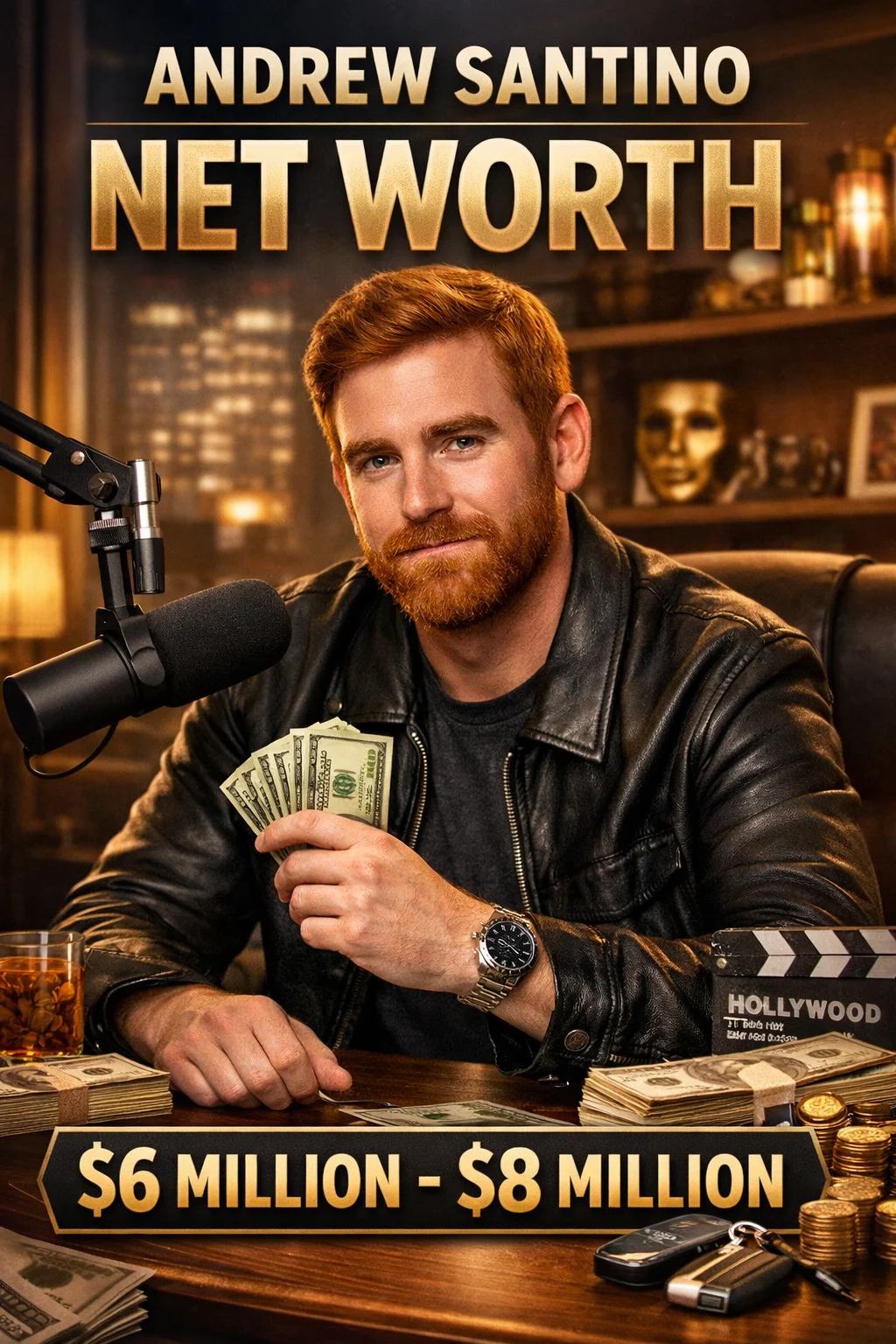
As of 2026, Andrew Santino’s net worth is estimated to be between $5 million and $8 million. This valuation reflects a multifaceted career as a stand-up comedian, actor, and successful podcaster. His financial standing is primarily driven by his long-running "Whiskey Ginger" podcast, major comedy specials, and consistent television acting roles that have built a diverse and resilient professional portfolio.
Understanding the Financial Composition of a Modern Comedian
Determining the net worth of a working entertainer like Andrew Santino requires looking beyond simple performance fees. In the modern era, comedians operate as integrated media companies. For Santino, his income is not derived from a single source but is instead a mosaic of performance revenue, digital media royalties, and acting contracts.
The term "net worth" represents the total value of assets—including liquid cash, real estate, and intellectual property—minus liabilities. For a performer, the most valuable "assets" are often the rights to their own content, such as self-produced podcast episodes and independent comedy specials. Unlike traditional celebrity wealth built on long-term investment portfolios or large-scale business exits, Santino’s wealth is largely "active," meaning it relies on the continued success and reach of his digital platforms.
The Role of Podcasting in Wealth Accumulation
The most significant shift in Santino’s financial trajectory over the last five years has been the professionalization of his podcasting network. "Whiskey Ginger," which features long-form interviews with high-profile guests, and "Bad Friends," a wildly popular collaborative show with Bobby Lee, serve as the primary engines of his digital revenue.
Podcasting generates wealth through three main channels:
- Direct Sponsorships: These are host-read advertisements that command higher rates due to the high engagement levels of his specific audience demographic.
- Platform Royalties: Income derived from YouTube monetization, where ad revenue is shared between the content creator and the platform based on viewership metrics.
- Touring Leverage: Podcasts act as a perpetual marketing machine. By maintaining a high volume of weekly content, Santino keeps his brand top-of-mind, which drastically reduces marketing costs for his live stand-up tours.
When analyzing his 2025 financial standing, it is clear that the "Bad Friends" brand, which includes massive live touring components and merchandise sales, provided a consistent baseline income that insulates him from the "feast or famine" cycle typical of traditional stand-up comedy.
Acting Roles and Traditional Media Revenue
While digital media provides volume, television acting provides prestige and scale. Andrew Santino has built a consistent acting career, appearing in well-regarded series such as Dave, I'm Dying Up Here, and Beef.
In the entertainment industry, acting income is structured through tiered contracts. A recurring role in a successful series often provides a "per-episode" fee, supplemented by residual payments. Residuals are payments made to actors for the reuse of their work (such as syndication or streaming licensing). As these shows gain traction on major streaming platforms, the residual income becomes a form of passive revenue. Because Santino has established himself as a reliable comedic actor, he occupies a "working actor" bracket that allows for higher-than-average episodic fees, significantly contributing to the upper end of his net worth estimate.
Touring and Live Performance Economics
Stand-up comedy remains the bedrock of a comedian's career, but the financial mechanics of touring have evolved. In 2025, Santino’s live shows moved from smaller clubs to mid-to-large-scale theaters. This transition is critical for wealth accumulation because it increases the gross revenue per show while allowing for a more efficient operational structure.
Touring revenue is divided into several buckets:
- Ticket Sales: The primary revenue source, split between the venue, the promoter, and the talent.
- Merchandise: Often overlooked, branded merchandise sold at venues and through online stores provides a high-margin income stream that is often more profitable than the performance itself.
- Special Filming: The sale of comedy special rights to streaming services like Netflix or Amazon Prime represents a "liquidity event." Instead of waiting for monthly residuals, these contracts provide a significant lump-sum payment in exchange for the exclusive right to distribute the recorded performance.
Estimated Revenue Breakdown
The following table categorizes the primary contributors to Santino's financial profile as of the 2025 fiscal year.
| Income Category | Primary Driver | Financial Impact |
|---|---|---|
| Digital Media | Podcasts (Whiskey Ginger, Bad Friends) | High (Recurring/Passive) |
| Live Performance | National Stand-up Tours | High (Seasonal/Volume) |
| Television | Recurring Roles/Series Regular | Medium (Contractual) |
| Content Rights | Comedy Specials/Streaming Deals | High (One-time/Licensing) |
| Merchandise | Branded Apparel & Accessories | Low to Medium (Margin-based) |
Factors Influencing Future Wealth
When forecasting the trajectory of Santino’s net worth beyond 2025, several variables come into play. First is the ownership of intellectual property. Comedians who own their own masters—the actual recording files of their specials and podcasts—retain a significantly higher percentage of long-term revenue than those who sign over rights to major studios. Santino’s tendency to produce his own digital content suggests a focus on asset retention, which is a hallmark of long-term wealth stability in the comedy world.
Second is the impact of audience loyalty. Unlike mainstream movie stars whose income may fluctuate based on the box office performance of a single film, podcast-based comedians rely on a "subscription-style" relationship with their audience. This loyal fan base provides a buffer during economic downturns, as ticket and merchandise sales tend to be more resilient among superfans than the general public.
Finally, the shift toward multi-platform distribution is a key trend. By controlling his distribution channels via YouTube and independent audio hosting, Santino avoids the "middleman" costs that historically drained the income of comedians in previous decades. This direct-to-consumer model is the primary reason why contemporary comedians are often wealthier than their predecessors who worked under the strict thumb of major television networks.
Frequently Asked Questions
Is Andrew Santino’s net worth primarily from his comedy specials?
No, while comedy specials provide significant lump-sum payments, the majority of his recurring income is derived from his successful podcast network and consistent acting work in television series.
How does "Bad Friends" affect his net worth?
"Bad Friends" functions as both a content platform and a touring brand. The show generates ad revenue, sponsorship income, and acts as a massive marketing funnel for his live comedy shows, which are high-revenue events.
Do residuals make up a large part of his income?
Residuals from television acting contribute to his wealth, but they are generally considered a supplement. The "active" income from his podcasting and live touring businesses is far more significant than the passive income from past television appearances.
Why is his net worth estimated to be in the millions?
The estimate of $5 million to $8 million accounts for his multi-year success in digital media, the high volume of live ticket sales, his acting salary, and the value of the intellectual property he retains through his own production efforts.
Can his net worth be publicly verified?
Financial figures for independent entertainers are estimations based on public market data, such as tour capacities, typical industry pay scales for actors of his standing, and estimated advertising revenue from digital media platforms. It is not an exact figure, as personal expenses, taxes, and private investments remain undisclosed.
Moving Forward: The Importance of Diversification
Andrew Santino’s financial path serves as a blueprint for the modern creative professional. The key lesson in his success is the avoidance of "single-stream reliance." By balancing the unpredictability of touring with the consistency of long-form podcasting and the prestige of professional acting, he has effectively diversified his income.
For those analyzing the financial health of creators in the entertainment industry, the takeaway remains clear: those who treat their brand as a decentralized business—managing their own content, cultivating their own community, and leveraging multiple performance mediums—are the ones who build sustainable, long-term wealth. For Santino, the focus in 2026 and beyond will likely remain on scaling these existing platforms rather than shifting to entirely new ventures.