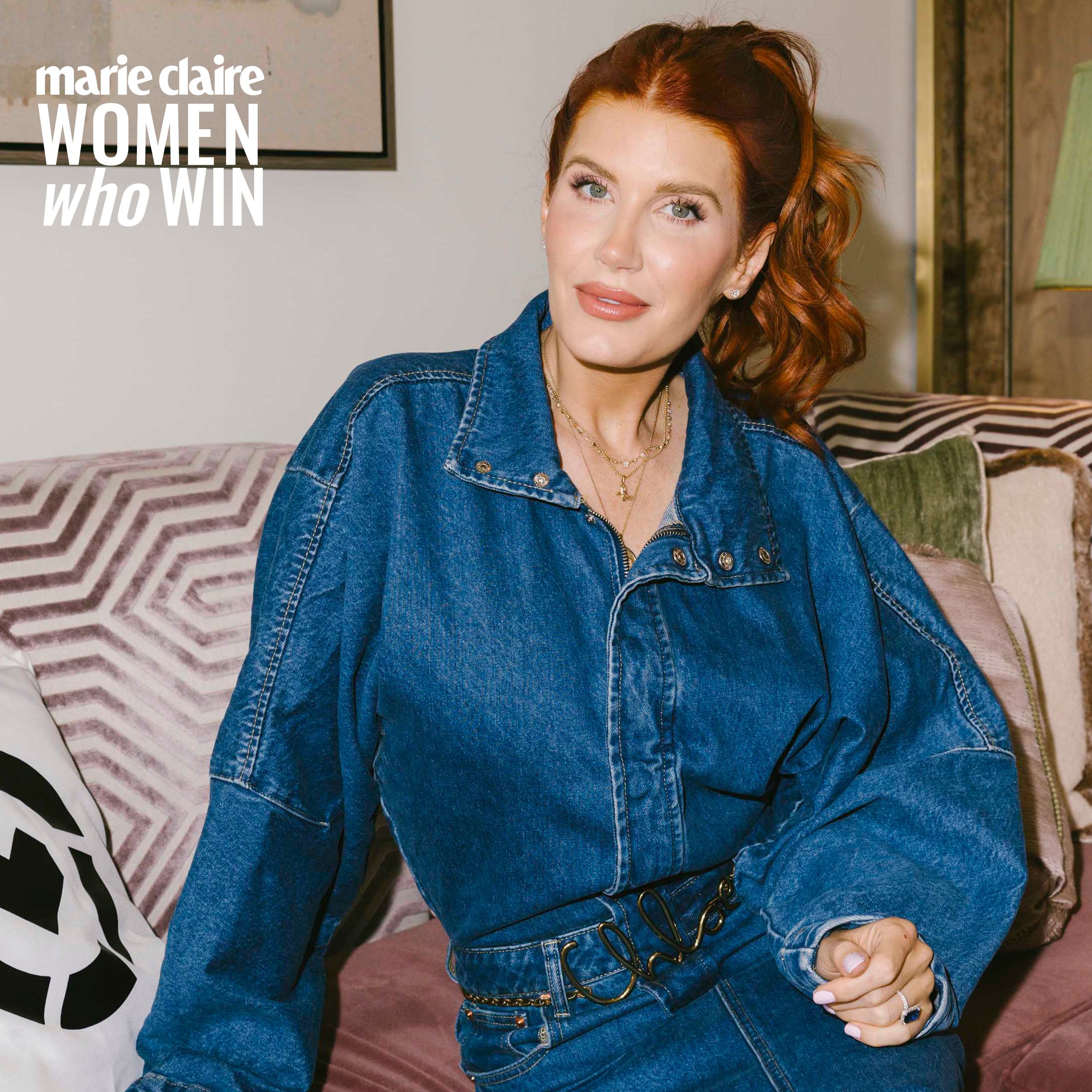
Amber Venz Box, the co-founder and President of LTK (formerly rewardStyle and LIKEtoKNOW.it), has an estimated net worth between $500 million and $800 million. The vast majority of her wealth stems from her ownership stake in LTK, a creator marketing platform valued at $2 billion following a major investment from SoftBank in late 2021.
Understanding Amber Venz Box's Net Worth and Financial Position
When evaluating the net worth of tech founders like Amber Venz Box, it is crucial to distinguish between liquid personal wealth and paper wealth tied to enterprise valuation. Venz Box’s financial status is largely anchored in her equity position within LTK, the company she co-founded with her husband, Baxter Box, in 2011.
While private companies do not publicly disclose granular shareholder caps, industry analysis and financial reporting provide a clear picture of her financial trajectory. In November 2021, SoftBank Vision Fund 2 invested $300 million into LTK at a $2 billion valuation. Because Venz Box and her husband retained majority control of the business leading up to and following this growth capital injection, their combined co-founder equity stake remained substantial.
Individually, Amber Venz Box's net worth reflects her proportional share of this closely held family stake, alongside accumulated secondary stock sales, executive compensation, real estate holdings, and private investments.
| Financial Metric / Milestone | Detail / Estimated Value | Context & Significance |
|---|---|---|
| Estimated Net Worth | $500 Million – $800 Million | Driven by majority equity in LTK and liquid secondary distributions. |
| LTK Enterprise Valuation | $2 Billion (As of SoftBank Funding) | Established during the November 2021 $300M Series B equivalent round. |
| Annual Platform Sales Volume | Over $4 Billion GMV | Gross Merchandise Value driven by creators to retail partners through LTK. |
| Primary Revenue Driver | Affiliate Commission Split & Brand Software | Platform charges brands performance fees and splits commissions with creators. |
| Co-Founder Partnership | Amber Venz Box & Baxter Box | Retained majority voting power and control through early growth phases. |
The Origin Story: Monetizing Fashion Content
To understand how Amber Venz Box accumulated her fortune, one must examine the operational bottleneck she identified in the early creator economy. In the late 2000s, Venz Box worked as a Dallas-based personal stylist, jewelry designer, and fashion blogger on her platform, VenzEdits.
She routinely published curated outfit ideas and style guides for her readers. While clients traditionally paid her an hourly fee for personal shopping in physical stores, they began using her free blog posts to purchase items independently online. This shift eliminated her service fees while benefiting retail stores directly.
Recognizing that her digital content was driving store traffic and e-commerce conversions without financial compensation, Venz Box sought a technological solution. Existing affiliate marketing networks were designed for desktop banner ads and large publishers, requiring manual link creation that was cumbersome for independent bloggers.
In 2011, alongside her then-boyfriend Baxter Box, an engineer and venture developer, she launched rewardStyle. The platform provided digital publishers and fashion bloggers with an intuitive suite of tools to convert product images into trackable, commission-earning affiliate links.
How LTK Generates Revenue: The Business Model
The enterprise value supporting Amber Venz Box's net worth relies on a scalable, high-margin business model operating at the intersection of retail e-commerce, digital advertising, and creator marketing.
1. The Dynamic Commission Architecture
rewardStyle, which officially rebranded as LTK in 2021 to unify its creator and consumer arms, operates primarily as a performance marketing intermediary. When a content creator shares a link to a sweater, handbag, or beauty product:
- The participating retailer (such as Nordstrom, Target, or Saks Fifth Avenue) sets an affiliate commission rate, typically ranging between 7% and 20% of the sale price.
- When a consumer purchases the item through the creator's link, the retailer pays the agreed commission to LTK.
- LTK keeps a platform fee (traditionally a split of the total commission) and passes the remaining majority on to the creator.
Because LTK aggregates tens of thousands of creators and thousands of retail brands, its transactional volume creates massive cash flow. The company processes billions of dollars in annual Gross Merchandise Value (GMV).
2. The Launch of LIKEtoKNOW.it and Direct Consumer Access
Initially, rewardStyle relied on third-party traffic channels such as web browsers and social media platforms. However, when Instagram emerged as the dominant platform for visual content, creators faced a critical limitation: Instagram did not allow clickable hyperlink URLs within post captions.
In 2014, Venz Box and her team solved this by creating LIKEtoKNOW.it. The service allowed users to screenshot Instagram posts containing specialized links or tags and instantly receive shoppable product details via email or within a dedicated native mobile app.
This innovation shifted LTK from an invisible back-end business-to-business (B2B) infrastructure provider into a direct-to-consumer (D2C) marketplace app. Today, the LTK app hosts millions of active shoppers who use the platform directly as a search engine for fashion, home decor, and lifestyle products, significantly boosting customer retention and reducing reliance on external ad platforms.
3. Enterprise Software and Brand Partnerships
Beyond transactional commission splits, LTK expanded into brand strategy services. Large global brands pay LTK for proprietary data insights, managed influencer campaigns, and access to enterprise analytics tools that show which creators deliver the highest Return on Ad Spend (ROAS). This recurring B2B software and agency service stream provides high-margin, predictable revenue that elevated LTK’s valuation multiple.
The $2 Billion Valuation and SoftBank Investment
For the first decade of its existence, rewardStyle was famously capital-efficient. Unlike traditional Silicon Valley tech startups that raise multiple dilutive venture capital rounds, Venz Box and her team scaled the business rapidly on positive cash flow and minimal outside debt.
That strategy changed in November 2021 when SoftBank Vision Fund 2 made a landmark $300 million minority investment in LTK, valuing the Dallas-based firm at $2 billion.
- 2011: Founded as rewardStyle by Amber Venz & Baxter Box
- 2014: Launch of LIKEtoKNOW.it (Solves Instagram monetization)
- 2017: LIKEtoKNOW.it native consumer app launches
- 2021: Rebranded to LTK; $300M investment from SoftBank Vision Fund 2 at a $2 Billion Enterprise Valuation
The cash injection achieved several strategic goals that directly impacted Venz Box’s personal equity valuation:
- Validation of Market Leadership: It established LTK as a tech unicorn within the creator economy, separating it from smaller influencer networks.
- Global Expansion: The capital accelerated technology engineering, international brand expansion, and creator recruitment across Europe, Asia, and Latin America.
- Liquidity Opportunities: Growth funding rounds of this magnitude often allow long-time founders to conduct secondary share sales, allowing them to monetize a portion of their equity while retaining voting control of the company.
Additional Assets and Financial Endeavors
While LTK accounts for the vast majority of Amber Venz Box’s wealth, her net worth is diversified across several other financial ventures and real asset investments.
- Real Estate Holdings: Amber Venz Box and Baxter Box maintain substantial real estate investments, primarily in high-end residential real estate in Dallas, Texas. Their primary residence and architectural investments have been featured in major design and lifestyle publications.
- Angel Investments: As established figures in tech and digital commerce, the couple has invested in early-stage direct-to-consumer brands, software startups, and tech-enabled platforms in the consumer space.
- Public Speaking & Brand Ambassadorships: Venz Box is a sought-after speaker at technology, fashion, and business conferences, including SXSW, Fortune Most Powerful Women, and tech industry summits, commanding executive speaker fees and board advisory advisory roles.
Common Myths Regarding Amber Venz Box's Net Worth
Discussions around influencer wealth often lead to misconceptions. Disentangling public speculation from verified business fundamentals clarifies several common misunderstandings:
Myth 1: Her net worth is based on her earnings as a fashion influencer
While Venz Box began her career as a blogger, her wealth does not come from posting personal outfits or traditional brand sponsorship deals on Instagram. Her fortune is derived almost entirely from enterprise tech ownership—specifically, taking a percentage fee of sales generated by thousands of other creators on her platform.
Myth 2: SoftBank owns the majority of LTK
The $300 million investment by SoftBank was a growth-equity minority stake. Amber Venz Box, Baxter Box, and their original executive team maintained operational control and significant equity ownership following the transaction, ensuring that founder value remained aligned with company valuation.
Key Takeaways for Business Builders and Content Creators
Amber Venz Box’s financial trajectory offers key strategic insights for digital entrepreneurs and investors analyzing the creator economy:
- Solve a Friction Point You Experience Directly: Venz Box built rewardStyle because her personal styling income was declining while her digital reach grew. Solving her own operational problem created a scalable B2B service.
- Own the Infrastructure, Not Just the Content: Content creation has high turn rates and platform risk. Building the technological layer that powers other creators generates durable, high-margin revenue.
- Control Equity Dilution Early: By prioritizing profitability and capital efficiency over early venture capital capital dilution, the founders preserved maximum equity control until securing a multi-billion-dollar valuation.
Frequently Asked Questions
How did Amber Venz Box start rewardStyle?
Amber Venz Box co-founded rewardStyle in 2011 alongside her partner Baxter Box. She created the platform to earn commissions on products she recommended on her fashion blog, VenzEdits, after noticing clients were using her site for free advice but purchasing online independently.
What is LTK's current business valuation?
LTK achieved a official private market valuation of $2 billion in November 2021 following a $300 million investment round led by SoftBank Vision Fund 2.
Does Amber Venz Box still own LTK?
Yes. Amber Venz Box serves as President and Co-Founder, while Baxter Box serves as CEO. Together with their early team, they hold significant executive ownership and voting control over the company.
How much money do influencers make on LTK?
Creator earnings vary based on audience size, niche, conversion rate, and content volume. Top-performing fashion and lifestyle creators earn millions of dollars annually in affiliate commissions on LTK, while smaller creators earn supplementary income ranging from hundreds to thousands of dollars per month.
Is LTK a publicly traded company?
No, LTK remains a privately held technology company backed by founders Amber Venz Box and Baxter Box alongside growth investor SoftBank Vision Fund 2.
Next Steps for Analyzing Creator Monetization
For digital entrepreneurs, financial analysts, and content creators looking to model performance after LTK's platform metrics:
- Study Performance Marketing Structure: Explore how modern affiliate tracking APIs integrate with consumer mobile apps to drive conversion rates higher than traditional web banners.
- Evaluate Platform Equity Models: Contrast liquid creator earnings (cash flow from sponsored content) against enterprise equity ownership (software and platform assets) to understand long-term wealth building in digital media.