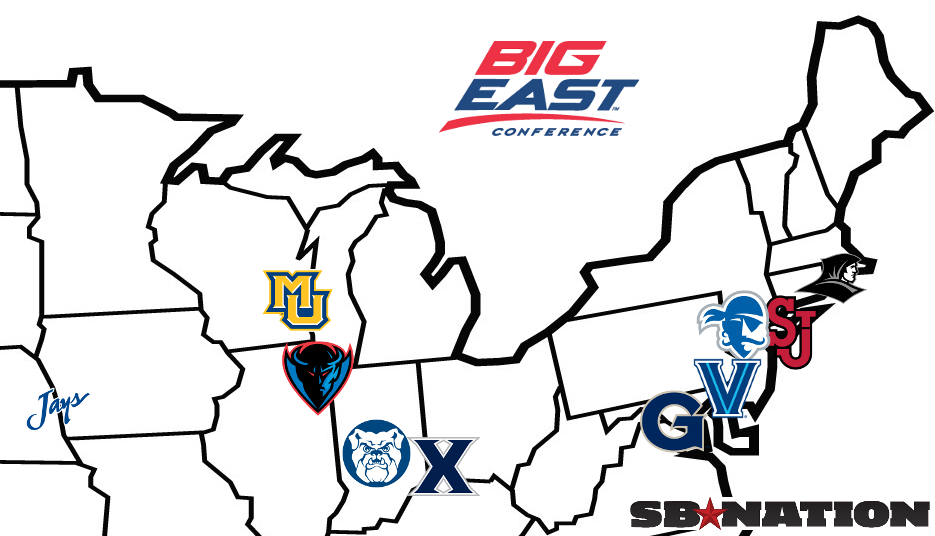
The Big East Conference currently consists of 11 member institutions: Butler, Creighton, DePaul, Georgetown, Marquette, Providence, Seton Hall, St. John's, UConn, Villanova, and Xavier. Primarily located in the Northeast and Midwest, these schools emphasize elite basketball competition, maintaining a unique identity as a premier non-FBS football power conference within the NCAA Division I landscape.
Understanding the Big East requires looking past the standard conference model. Unlike the "Power Four" conferences that are driven primarily by massive television contracts for football, the Big East is a basketball-centric collective. As of 2026, the conference remains one of the most stable and competitive entities in collegiate athletics, having successfully navigated multiple waves of national realignment. This guide provides a detailed breakdown of every member team, their history, and their role within the conference.
The Evolution of the Big East Landscape
The Big East of 2026 is the result of a significant "split" that occurred in 2013. The original conference, founded in 1979, eventually became bloated with football-focused schools. This led the "Catholic Seven"—seven non-FBS football schools—to break away, taking the Big East name with them to form a basketball-first league.
Since that reconfiguration, the conference has added Butler, Creighton, and Xavier, and welcomed back charter member UConn in 2020. This 11-team alignment has proven remarkably resilient. While other conferences have expanded to 18 or 20 teams across vast geographic distances, the Big East has maintained a compact, round-robin schedule that fosters intense rivalries and high-level regional interest.
Detailed Profiles of the 11 Big East Member Teams
University of Connecticut (UConn) Huskies
UConn is arguably the flagship program of the Big East in 2026. After a brief hiatus in the American Athletic Conference (AAC), the Huskies returned to the Big East in 2020 and immediately re-established their dominance. Under the leadership of coach Dan Hurley, the men's program achieved historic back-to-back national championships in 2023 and 2024, cementing the Big East's status as a top-tier basketball league. The women's program, led by legendary coach Geno Auriemma, remains a perennial national title contender, drawing massive viewership to the conference.
Villanova University Wildcats
Located just outside Philadelphia, Villanova was the standard-bearer for the "new" Big East following the 2013 split. The Wildcats won national championships in 2016 and 2018 under Jay Wright. In the 2026 landscape, Villanova continues to focus on "the Villanova Way," emphasizing veteran leadership and high-efficiency perimeter play. They play their home games at the Finneran Pavilion and the larger Wells Fargo Center, maintaining a strong foothold in the Philadelphia sports market.
Georgetown University Hoyas
Georgetown is one of the most storied brands in college basketball history, famously led by John Thompson Jr. in the 1980s. While the program faced a period of struggle in the early 2020s, it remains a cornerstone of the Big East identity. Based in Washington D.C., the Hoyas bring a high-profile metropolitan presence to the league. As of 2026, the program continues its efforts to return to the elite status it held when it was a fixture in the Final Four.
St. John's University Red Storm
Representing New York City, St. John's plays many of its home games at Madison Square Garden (MSG), the "Mecca of Basketball." The hire of Hall of Fame coach Rick Pitino in 2023 revitalized the program, bringing national relevance back to the Queens-based school. St. John's is vital to the Big East because it secures the conference's presence in the nation’s largest media market and ensures the Big East Tournament remains a marquee event at MSG.
Marquette University Golden Eagles
Based in Milwaukee, Marquette is a basketball powerhouse with a loyal following. The program has a rich history, including a national title in 1977. In the current era, Marquette is known for its fast-paced, modern style of play and its ability to recruit high-level talent from the Midwest. They play at the Fiserv Forum, sharing an arena with the NBA’s Milwaukee Bucks, which provides one of the best atmospheres in the conference.
Creighton University Bluejays
Creighton, located in Omaha, Nebraska, was invited to join the Big East in 2013 to provide geographic balance and high-level competition. The Bluejays have consistently exceeded expectations, known for their elite shooting and offensive efficiency. Their presence allows the Big East to tap into a passionate fan base in the Great Plains, and the CHI Health Center Omaha is routinely among the national leaders in attendance.
Xavier University Musketeers
Xavier joined the Big East alongside Creighton and Butler in 2013. Based in Cincinnati, the Musketeers brought a long history of NCAA Tournament success. Xavier’s inclusion strengthened the conference’s Midwestern footprint and created a natural rivalry with Butler and Marquette. The Cintas Center is widely regarded as one of the most intimidating home-court environments in college sports.
Providence College Friars
Providence is a charter member of the original Big East and remains one of its most passionate members. Small in size but large in impact, the Friars play at the Amica Mutual Pavilion in downtown Providence. The program has maintained consistent success through the 2020s, relying on a gritty, defensive identity that reflects the culture of the Rhode Island community.
Butler University Bulldogs
Butler gained national fame with back-to-back appearances in the National Championship game in 2010 and 2011 while members of the Horizon League. Since joining the Big East, the Bulldogs have transitioned into a consistent high-major program. Playing in the historic Hinkle Fieldhouse in Indianapolis, Butler provides the conference with a deep connection to the roots of basketball in the state of Indiana.
Seton Hall University Pirates
Seton Hall, located in South Orange, New Jersey, serves the crucial Northern New Jersey and New York City suburbs. The Pirates play their home games at the Prudential Center in Newark. Historically, Seton Hall has been a "tough out" in the Big East, known for physical play and strong guard development. They are a core member of the "Catholic Seven" that helped preserve the Big East name.
DePaul University Blue Demons
DePaul provides the Big East with a presence in Chicago, the third-largest media market in the United States. While the program has struggled to match the on-court success of its peers in recent decades, the 2026 season sees continued investment in facilities and coaching. Playing at Wintrust Arena in the South Loop, DePaul remains a critical piece of the conference’s urban-centric strategy.
Big East Membership Overview (2026)
| School | Location | Joined | Mascot | Primary Venue |
|---|---|---|---|---|
| Butler | Indianapolis, IN | 2013 | Bulldogs | Hinkle Fieldhouse |
| Creighton | Omaha, NE | 2013 | Bluejays | CHI Health Center Omaha |
| DePaul | Chicago, IL | 1979 / 2013* | Blue Demons | Wintrust Arena |
| Georgetown | Washington, D.C. | 1979 | Hoyas | Capital One Arena |
| Marquette | Milwaukee, WI | 2005 / 2013* | Golden Eagles | Fiserv Forum |
| Providence | Providence, RI | 1979 | Friars | Amica Mutual Pavilion |
| Seton Hall | Newark, NJ | 1979 | Pirates | Prudential Center |
| St. John's | Queens, NY | 1979 | Red Storm | Madison Square Garden |
| UConn | Storrs, CT | 1979 / 2020** | Huskies | Gampel Pavilion / XL Center |
| Villanova | Villanova, PA | 1980 | Wildcats | Finneran Pavilion |
| Xavier | Cincinnati, OH | 2013 | Musketeers | Cintas Center |
*DePaul and Marquette joined the "original" Big East in 2005 and were part of the 2013 reconfiguration. **UConn was a charter member, left in 2013, and rejoined in 2020.
The Strategic Importance of "Basketball-First"
The primary differentiator for Big East teams is their lack of FBS (Football Bowl Subdivision) football. While some members like UConn, Butler, and Villanova have football programs, they compete in the FCS (Football Championship Subdivision) or as independents. This allows these schools to funnel the majority of their athletic resources, coaching salaries, and marketing budgets into basketball.
In a sports landscape where the SEC and Big Ten are expanding based on football television revenue, the Big East has carved out a niche as the premier destination for schools that prioritize the hardwood. This focus has led to a high "NET" ranking for the conference collectively, often resulting in more than half of the league earning bids to the NCAA Tournament.
The Big East’s media rights deal, primarily with FOX Sports, ensures that every conference game is nationally televised. This visibility is vital for recruiting and maintains the conference's status as a "Power" league despite the lack of a major football television contract.
The Big East Tournament at Madison Square Garden
One cannot explain the Big East teams without mentioning the Big East Tournament. Held annually at Madison Square Garden in New York City, it is the longest-running conference tournament at a single site in college basketball.
For the 11 teams, the tournament is the highlight of the season. The event provides a massive financial windfall and significant "prestige points" for the member schools. The tournament's location in Manhattan reinforces the conference's identity as an urban, East Coast-centric league, even as it has expanded into the Midwest. As of 2026, the contract to keep the tournament at MSG remains the envy of other conferences, many of which rotate their tournament locations frequently.
Frequently Asked Questions
Why did the Big East split in 2013?
The split was driven by a divergence in priorities. The "football" schools (like Syracuse, West Virginia, and Pitt) wanted to maximize football revenue, while the "non-football" schools (the Catholic Seven) wanted to preserve their basketball heritage and regional rivalries. The Catholic Seven bought the "Big East" name and the right to play the tournament at Madison Square Garden, while the football schools eventually moved to the ACC or Big 12.
Is the Big East considered a "Power Conference"?
Yes. In college basketball, the Big East is universally regarded as a power conference, often outperforming the traditional football-heavy leagues in terms of NCAA Tournament wins and national titles. The term "Power Six" is frequently used in basketball circles to include the Big East alongside the ACC, Big Ten, Big 12, SEC, and (historically) the Pac-12.
Do Big East teams play football?
Some do, but not at the highest level (FBS) within the conference. UConn plays FBS football as an independent. Villanova, Georgetown, and Butler play at the FCS level in the Colonial Athletic Association or the Pioneer Football League. Most Big East schools do not have football programs at all, focusing their athletic department's identity entirely on basketball and other Olympic sports.
Who is the newest member of the Big East?
UConn is the most recent "addition" to the conference, having rejoined in 2020. Before that, the last additions were Butler, Creighton, and Xavier, who joined during the 2013 reconfiguration. There has been no membership change between 2020 and 2026, making it one of the most stable conferences in the nation.
How many teams from the Big East make the NCAA Tournament?
On average, the Big East sends between 4 and 6 teams to the NCAA Tournament annually. Because the conference plays a double round-robin (every team plays everyone else home and away), the strength of schedule is consistently high, which helps member schools qualify for "at-large" bids even if they do not win the conference tournament.
Practical Recommendation for Fans and Students
For those looking to follow or engage with Big East teams in 2026, the best course of action is to focus on the "Round Robin" season. Because the league is smaller than the 18-team super-conferences, every game carries significant weight for the final standings. If you are planning a visit, attending a game at Hinkle Fieldhouse (Butler) or Madison Square Garden (St. John's/Tournament) provides the most authentic "Big East" experience, blending historical significance with modern high-stakes competition. Fans should utilize the Fox Sports app and the official Big East website to track real-time standings and broadcast schedules, as the league's compact nature means the standings often shift dramatically in the final weeks of February.