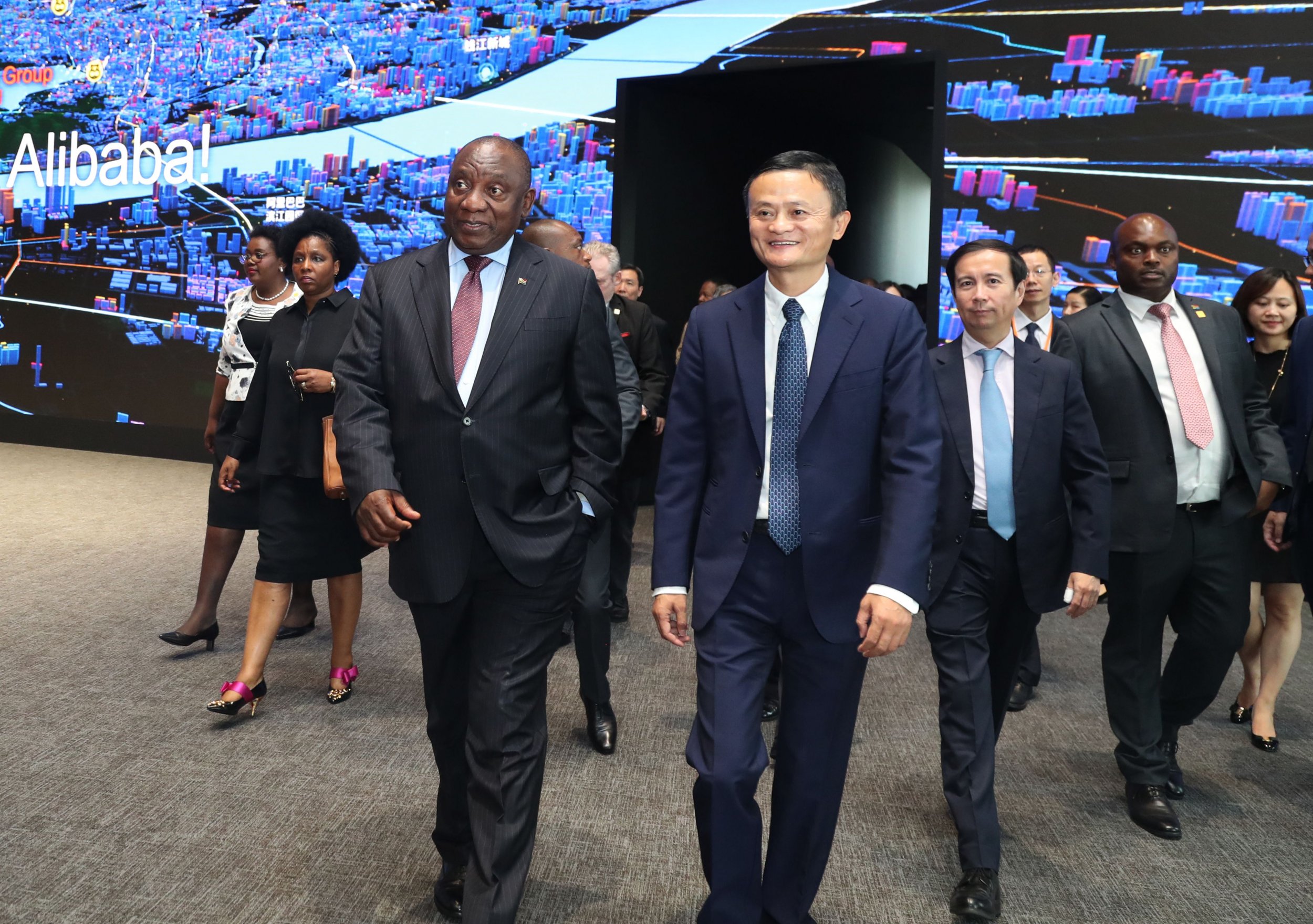
The net worth of Alibaba’s primary founders and key executives is defined largely by fluctuating global equity markets, macroeconomic conditions in China, and the shifting regulatory landscape surrounding the nation’s technology sector. Rather than representing static cash reserves, these fortunes consist primarily of complex equity holdings, institutional investments, and venture capital portfolios that rise and fall alongside the valuation of Alibaba Group Holding Limited and its various spin-off entities.
Evaluating the financial standing of Alibaba Group’s creators requires looking beyond headline-grabbing figures and understanding the economic, structural, and historical factors that shape modern wealth accumulation in the global e-commerce and cloud computing sectors.
The Genesis of Alibaba Group and Its Ownership Structure
To understand the net worth of Alibaba’s principals, one must first examine the corporate structure of the enterprise itself. Founded in 1999 by Jack Ma (Ma Yun) alongside a founding team of eighteen partners in Hangzhou, China, Alibaba started as a business-to-business (B2B) marketplace designed to connect Chinese manufacturers with global buyers. Over the subsequent two decades, the company expanded rapidly into consumer e-commerce (Taobao and Tmall), digital payments (Alipay, via Ant Group), cloud computing (Alibaba Cloud), and digital media.
Unlike traditional corporate structures where a single founder retains a controlling majority of voting shares, Alibaba implemented a unique governance framework known as the "Partnership Structure" (or the Alibaba Partnership). This system was established to preserve the company’s culture and vision without relying strictly on majority equity ownership. Consequently, while the founders and top executives own significant stakes in the company, their influence is magnified by this partnership model, which grants them the right to nominate a majority of the board of directors.
When examining the personal wealth of individuals associated with Alibaba, analysts must distinguish between direct share ownership, vested stock options, private equity holdings, and philanthropic foundations. A major portion of the reported net worth for key figures is tied directly to the American Depositary Shares (ADS) traded on the New York Stock Exchange and ordinary shares listed on the Hong Kong Stock Exchange. Therefore, public market volatility directly dictates day-to-day fluctuations in their estimated net worth.
Key Figures and Wealth Composition
The wealth tied to Alibaba is distributed among several key architects of the company, though public attention has historically centered on co-founder Jack Ma. However, a comprehensive analysis requires examining multiple stakeholders who shaped the company's trajectory.
Jack Ma: The Iconic Co-Founder
As the most recognizable face of Alibaba, Jack Ma’s net worth has historically served as a bellwether for the Chinese tech sector. His wealth is derived not only from his remaining stake in Alibaba Group but also from his substantial historical and ongoing interests in Ant Group, the financial technology affiliate that operates Alipay.
However, Ma’s net worth has experienced significant downward revisions from its peak years, driven by several distinct factors:
- Regulatory Interventions: The suspension of Ant Group's planned dual-listing IPO in late 2020 by Chinese regulators fundamentally altered the valuation multiples of financial technology firms in the region.
- Corporate Restructuring: Subsequent crackdowns on anti-competitive practices in China's tech industry led to substantial fines and mandated structural reorganizations for Alibaba.
- Stepped-Down Leadership: Having stepped down as executive chairman of Alibaba in 2019 and gradually relinquishing direct operational control, Ma has redirected a substantial portion of his focus and resources toward philanthropy, education, and agricultural technology initiatives through his personal foundation.
Joseph Tsai (Cai Chongxin) and Other Co-Founders
Co-founder and current Chairman Joseph Tsai represents another major pillar of Alibaba’s wealth distribution. Tsai’s financial portfolio is notable for its international diversification. Unlike many domestic Chinese entrepreneurs, Tsai utilized early venture capital structures that provided strong legal protections and liquidity avenues abroad. Beyond his significant equity stake in Alibaba, Tsai is widely known for acquiring the Brooklyn Nets of the National Basketball Association (NBA) and the New York Liberty of the Women's National Basketball Association (WNBA), showcasing how tech wealth transitions into global sports and entertainment assets.
Other founding members, such as Lucy Peng, Eddie Wu (who serves as CEO of Alibaba Group following recent structural reorganizations), and a cadre of early engineers and executives, hold substantial fortunes tied to the company's historical equity distribution plans. Their net worths reflect varying degrees of liquidity achieved during secondary share offerings and the landmark 2014 initial public offering on the New York Stock Exchange, which raised $25 billion and remains one of the largest IPOs in history.
Valuation Drivers and Market Context
Assessing the net worth of Alibaba’s owners requires a close look at the macroeconomic and sector-specific pressures that have influenced the company's market capitalization over time. The valuation of Alibaba Group is driven by several competing economic forces:
| Valuation Factor | Impact on Alibaba Group | Effect on Owners' Net Worth |
|---|---|---|
| Global E-Commerce Competition | Increased rivalry from domestic platforms like PDD Holdings (Pinduoduo) and Douyin has compressed core retail margins. | Puts downward pressure on stock valuation, reducing paper wealth. |
| Cloud Computing Expansion | Alibaba Cloud remains a dominant force in enterprise infrastructure within Asia, despite recent price wars. | Provides long-term growth potential and institutional investor confidence. |
| Regulatory Compliance | Implementation of strict antitrust guidelines and data security laws in mainland China. | Historically triggered sharp valuation contractions, stabilizing as compliance frameworks matured. |
| Share Repurchase Programs | Aggressive buyback initiatives executed by Alibaba management to return capital to shareholders. | Supports per-share value and helps mitigate broader market downturns. |
The Shift from Hyper-Growth to Value-Oriented Pricing
During the 2010s, Alibaba was categorized as a high-growth emerging-market tech juggernaut, commanding high price-to-earnings (P/E) multiples. During this period, the net worth of its owners scaled exponentially.
In subsequent years, the company transitioned into a mature, cash-generative conglomerate. This shift, combined with geopolitical tensions between the United States and China, led international institutional investors to re-evaluate Chinese equities. Consequently, valuation multiples compressed significantly. Even as Alibaba continued to generate billions of dollars in free cash flow, its stock price did not always reflect historical growth trajectories, directly capping the expansion of the founders' liquid net worth.
Wealth Management and Asset Diversification
For ultra-high-net-worth individuals tied to massive global enterprises, net worth is rarely kept in a single stock. The financial strategies employed by Alibaba's leadership offer insight into how massive equity positions are managed and protected against systemic risk.
Family Offices and Private Equity
Like many billionaires, key Alibaba executives utilize single-family offices to manage their private wealth, diversify away from single-stock exposure, and engage in venture capital investing. These entities invest globally across real estate, biotechnology, green energy, and early-stage artificial intelligence startups. This diversification creates a buffer against regulatory or market downturns affecting the parent company.
Philanthropy and Social Enterprise
A significant portion of wealth redistribution among Alibaba’s founders is channeled into philanthropic vehicles. Jack Ma’s philanthropic foundation focuses heavily on rural education in China, environmental conservation, and healthcare. Similarly, Joseph Tsai’s philanthropic efforts target social justice, educational access, and scientific research. These initiatives not only serve social missions but also provide structured tax and estate planning advantages typical of global wealth management.
Common Misconceptions Regarding Tech Billionaire Wealth
When analyzing the reported net worth of figures associated with Alibaba, several common misconceptions frequently distort public perception:
- Equating Net Worth with Liquid Cash: Headlines often state that an executive "lost billions" in a single day. In reality, these figures represent paper wealth based on daily stock price movements. An executive cannot liquidate billions of dollars of stock instantaneously without triggering massive market drops and regulatory restrictions.
- Overlooking Debt and Encumbrances: Prominent shareholders frequently use their company shares as collateral for personal loans, margin accounts, or private investments. True net worth must account for these liabilities, though such private financial arrangements are rarely disclosed in full detail.
- Ignoring Currency Fluctuations: Because Alibaba shares are traded in both U.S. Dollars (as ADSs) and Hong Kong Dollars, foreign exchange rates between the USD, HKD, and Chinese Yuan (CNY) introduce regular variances in reported global wealth rankings compiled by financial publications like Bloomberg and Forbes.
Comparative Overview of Tech Wealth Ecosystems
To contextualize the net worth of Alibaba’s leadership, it is helpful to compare the structural dynamics of Chinese tech wealth with counterparts in Western markets.
| Metric / Dimension | Chinese Tech Sector (e.g., Alibaba) | Western Tech Sector (e.g., US Giants) |
|---|---|---|
| Primary Regulatory Body | State Administration for Market Regulation (SAMR) / Cyberspace Administration of China (CAC) | Federal Trade Commission (FTC) / Department of Justice (DOJ) / European Commission |
| Corporate Governance | Partnership structures and heavy state integration/oversight | Dual-class share voting structures favoring individual founders |
| Liquidity Venues | Hong Kong Stock Exchange, New York Stock Exchange | NASDAQ, New York Stock Exchange |
| Public Sentiment & Policy | "Common prosperity" initiatives encouraging wealth redistribution and philanthropy | Shareholder capitalism with intense scrutiny on monopoly power and data privacy |
This comparative framework illustrates that wealth accumulation in China operates under distinct socioeconomic mandates. The concept of "common prosperity" has encouraged prominent entrepreneurs to align their financial strategies with national economic priorities, heavily emphasizing domestic innovation, technological self-reliance, and large-scale charitable contributions.
Conclusion and Next Actions
Evaluating the net worth of Alibaba’s owners requires looking past simplified media valuations and examining the intersection of equity markets, corporate governance, and regulatory policy. For researchers, investors, and financial analysts tracking these figures, the key takeaway is that personal wealth in global technology conglomerates is inherently volatile and tied to macroeconomic health.
When conducting further research into tech sector net worths, analysts should:
- Examine official regulatory filings (such as SEC Form 20-F filings for Alibaba Group) to verify actual share ownership percentages.
- Monitor quarterly earnings reports for updates on share repurchase programs and segment-specific revenue growth (particularly Alibaba Cloud and international commerce).
- Account for macroeconomic indicators, including foreign exchange rates and Chinese consumer spending indices, which dictate long-term valuation multiples.
CATEGORY_SLUG: finance-wealth
TAGS_JSON: ["Alibaba", "Net Worth", "Jack Ma", "Wealth Management"]