As of 2026, the development of Alfa Romeo vehicles featuring Ferrari-derived engines focuses on the final evolution of the 90-degree V6 architecture found in the 33 Stradale and high-performance Quadrifoglio variants. While Ferrari officially ceased engine supply to Maserati, the technical DNA of the F154 V8 remains the foundational blueprint for Alfa Romeo’s most potent combustion powerplants, now integrating hybrid assistance to meet modern emissions standards.
The relationship between Alfa Romeo and Ferrari is one of the most storied alliances in automotive history. For enthusiasts and collectors in 2026, the prospect of an "Alfa Romeo with a Ferrari engine" represents the pinnacle of Italian engineering—combining Alfa's soul-stirring design with the mechanical pedigree of Maranello. This development is not merely about raw power; it is about a specific acoustic signature, a distinct power delivery curve, and a lineage that stretches back to the Scuderia’s origins.
The Technical Genesis: From Maranello to Arese
To understand the current "Ferrari-engined" Alfas in development or production in 2026, one must look at the F154 engine family. Ferrari’s F154 is a modular, twin-turbocharged V8 engine that has powered everything from the 488 GTB to the SF90 Stradale. When Alfa Romeo launched the "Skunkworks" project for the Giulia Quadrifoglio, they didn't just borrow an engine; they adapted this architecture.
The resulting 2.9-liter 90-degree V6 is, for all intents and purposes, a Ferrari V8 with two cylinders removed. This 90-degree angle is unusual for a V6 (60 degrees is the natural balance point), but it was retained to allow the engine to be built on the same production lines as the Ferrari V8s and to keep a low center of gravity. In 2026, this engine has reached its most refined state, featuring advanced cylinder deactivation and revised turbocharger geometries that reduce lag to nearly imperceptible levels.
The 2026 Flagship: The Alfa Romeo 33 Stradale
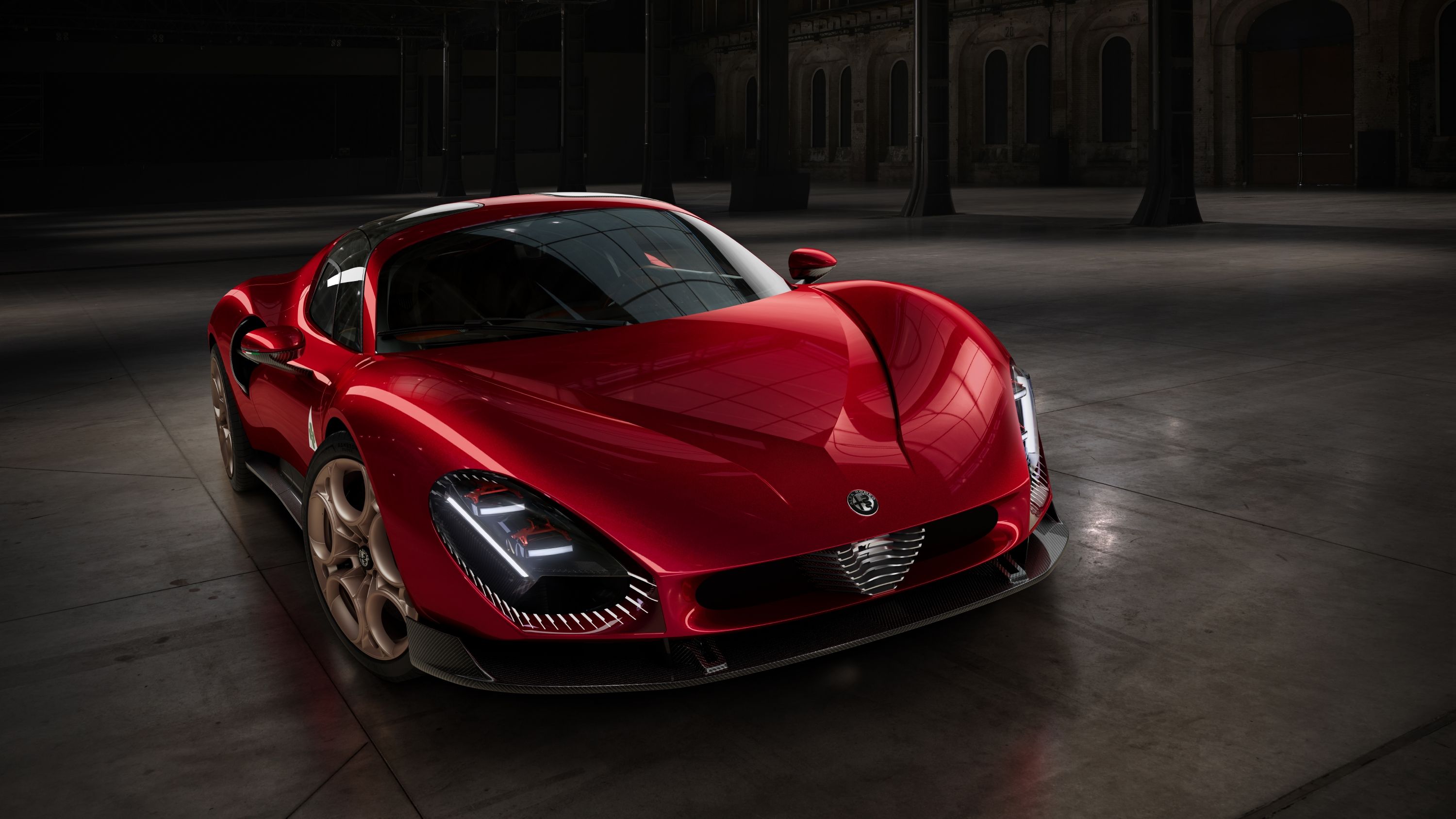
The most significant development in this niche is the 33 Stradale. While deliveries began in late 2024 and 2025, the 2026 model year represents the maturation of this halo car’s lifecycle. The 33 Stradale serves as the bridge between the internal combustion era and the electric future.
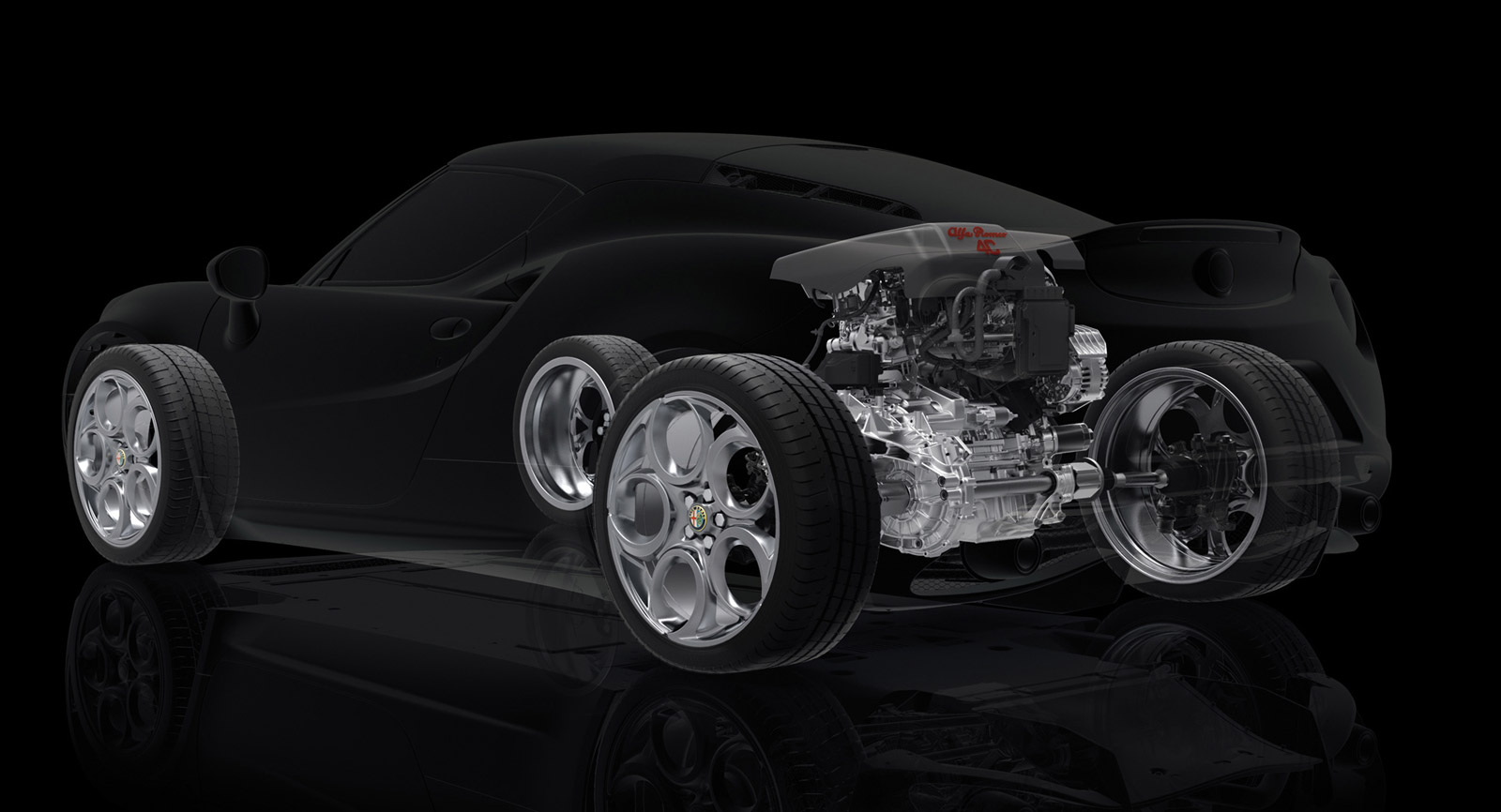
The internal combustion version of the 33 Stradale utilizes a further evolution of the twin-turbo V6. In this application, the displacement is increased to 3.0 liters, producing over 620 horsepower. This isn't just a "tuned" Giulia engine; it features bespoke cooling systems and a longitudinal mid-engine mounting configuration that mimics the layout of Ferrari’s mid-engine supercars.
Key Technical Specifications of the 33 Stradale Combustion Unit:
- Configuration: 90° V6 Twin-Turbo
- Displacement: 2,992 cc
- Valvetrain: Chain-driven DOHC, 4 valves per cylinder
- Induction: Two single-scroll turbochargers integrated into the manifold
- Transmission: 8-speed Dual-Clutch (DCT)
Why the Ferrari DNA Matters
The primary search intent for those looking into these vehicles is often the "soul" of the machine. A "Ferrari-derived" engine provides a specific mechanical character that mass-produced engines lack.
- The Rev Character: Unlike many turbocharged engines that fall flat near the redline, the Alfa-Ferrari V6 is designed to reward the driver for holding gears. In 2026, software mapping has further emphasized this "top-end" rush.
- Harmonic Balance: The 90-degree V6 produces a unique, slightly off-beat growl that distinguishes it from the clinical sound of German performance sedans.
- Thermal Management: One of the main areas of ongoing development has been heat dissipation. Ferrari’s experience with high-output turbocharged units has allowed Alfa Romeo to implement "Side-Bi-Side" cooling layouts that prevent heat soak during extended track sessions.
Future Developments: Hybridization and Beyond
In 2026, the automotive landscape is heavily influenced by Euro 7 regulations and similar global standards. Consequently, any Alfa Romeo currently "in development" with a high-performance combustion engine must incorporate electrification.
The industry is currently seeing a "P2" hybrid configuration being tested. This involves an electric motor sandwiched between the Ferrari-derived V6 and the transmission. This setup serves two purposes: it fills the torque gaps during turbo spool-up and allows the vehicle to operate in "silent mode" within urban Zero-Emission Zones. This development ensures that the Ferrari-sourced combustion heart can remain legal and viable for several more years.
Maintenance and Ownership Requirements
Owning an Alfa Romeo with a Ferrari-derived engine is not comparable to owning a standard Giulia or Stelvio. The technical depth of these machines requires a specific maintenance regimen. In 2026, authorized Alfa Romeo "Quadrifoglio Centers" are the only facilities equipped with the necessary diagnostic tools to handle the complexities of the F154-derived architecture.
| Maintenance Item | Frequency (2026 Guidelines) | Why it Matters |
|---|---|---|
| Oil Service | 5,000 miles / 12 Months | High-shear environment requires specific synthetic lubricants to protect turbo bearings. |
| Spark Plug Replacement | 15,000 miles | The high-compression, high-boost nature of the V6 leads to faster electrode wear. |
| Belt Inspection | Every 2 years | Though more durable than older Italian engines, the accessory drive operates under high tension. |
| Brake Fluid (CCB) | Every 2 years | Carbon Ceramic Brakes (standard on 33 Stradale) require hygroscopic testing of fluid. |
| Turbocharger Health Check | 30,000 miles | Inspection of wastegate actuators and oil feed lines to prevent long-term carbon buildup. |
Comparison: Alfa Romeo V6 vs. Maserati Nettuno
As of 2026, a common point of confusion is whether the Alfa Romeo engine is the same as the Maserati "Nettuno" engine. It is important to clarify that while both brands are under the Stellantis umbrella, the engines are distinct.
The Maserati Nettuno uses a "Twin Combustion" system derived from Formula 1 technology (Passive Pre-Chamber). In contrast, the Alfa Romeo V6 remains more closely related to the Ferrari F154 architecture. The Alfa engine is generally considered to have a more traditional, "raw" mechanical feel, whereas the Maserati engine is a showcase of modern combustion efficiency and high-tech ignition. For the purist seeking the "Ferrari connection," the Alfa Romeo 2.9L/3.0L V6 remains the direct descendant of Maranello’s engineering.
Identifying "Ferrari-Engined" Alfas in the 2026 Market
For buyers looking to verify if an Alfa Romeo has the "Ferrari engine" (or its derivatives), they should look for the following designations:
- Quadrifoglio (QV) Models: This includes the Giulia and Stelvio. While there is a transition toward electric platforms (Folgore/EV), the final combustion editions produced through 2025 and 2026 carry the 2.9L V6.
- Limited Editions (33 Stradale): These are the only mid-engine applications of the Ferrari-derived V6.
- GTA and GTAm: Specialized, lightweight versions of the Giulia that utilize the highest-output version of the V6 (540hp+).
Potential Issues and Troubleshooting
While these engines are masterpieces, they are complex. In 2026, common points of attention for owners include:
- Battery Sensitivity: The complex electronics and stop-start systems require a perfectly healthy battery. Many owners in 2026 use a dedicated trickle charger to prevent phantom electrical codes.
- Cylinder Deactivation Logic: In early models, the transition between 3-cylinder and 6-cylinder modes could occasionally be felt as a slight shudder. Current 2026 software updates have largely smoothened this transition.
- Fuel Requirements: These engines are strictly calibrated for 98-100 RON (Super Premium) fuel. Using lower octane can trigger immediate timing pulls and reduced performance.
The Role of "Bottega" in 2026 Development
A unique aspect of Alfa Romeo’s high-end development in 2026 is the "Bottega." This is a specialized department within Alfa Romeo—inspired by Renaissance workshops—where engineers and designers work one-on-one with clients. This department oversees the final assembly of the 33 Stradale and is currently rumored to be developing the "next" low-volume supercar.
The Bottega ensures that the integration of the Ferrari-derived engine isn't just a "drop-in" job. They hand-tune the exhaust resonance and the shift points of the DCT to ensure that every vehicle feels like a bespoke creation rather than a production-line product.
Frequently Asked Questions
Does Ferrari still manufacture engines for Alfa Romeo in 2026? Technically, no. While the engine architecture was designed by Ferrari engineers and the initial production happened in Maranello-adjacent facilities, the current production and assembly of the 2.9L and 3.0L V6 units are managed under Alfa Romeo’s technical supervision within the Stellantis group. However, the design remains a "Ferrari-derivative" in every mechanical sense.
Can I get a Ferrari engine in a standard Alfa Romeo Giulia Ti? No. The Ferrari-derived V6 is exclusive to the Quadrifoglio, GTA/GTAm, and 33 Stradale models. The "standard" Alfa Romeos typically use a 2.0L turbocharged inline-4 or, in 2026, increasingly efficient hybrid and electric powertrains.
Is the Alfa Romeo V6 reliable for daily driving? Yes, provided maintenance is strictly followed. Unlike the "engine out" services required for Ferraris of decades past, the Alfa V6 is designed for modern serviceability. However, the costs of parts and specialized labor remain significantly higher than a standard premium sedan.
Will there be any more Ferrari-powered Alfas after 2026? Alfa Romeo has committed to a transition toward electrification. It is widely expected that the 33 Stradale and the final "Final Edition" Quadrifoglio models currently in development will be the last to feature the F154-derived combustion engine without it being a secondary part of a hybrid-first system.
What is the difference between the 2.9L and 3.0L versions? The 2.9L (2,891cc) is the standard displacement for the Giulia and Stelvio Quadrifoglio, chosen originally to fit within specific Chinese tax brackets. The 3.0L (2,992cc) version used in the 33 Stradale is an evolutionary step, featuring a slightly larger bore and stroke to increase torque and peak power for supercar applications.
Practical Recommendations for Enthusiasts
If you are looking to acquire an Alfa Romeo with a Ferrari-derived engine in 2026, prioritize vehicles with a documented service history from authorized dealers. For the Giulia and Stelvio Quadrifoglio, ensure that the software is updated to the 2026 "Performance Suite," which improves the interface between the DNA drive mode selector and the active suspension. For those considering the 33 Stradale or future Bottega projects, be prepared for a long-term investment profile; these vehicles are being treated more like pieces of mechanical art than daily transportation, and their value in 2026 reflects their status as the "last of the breed" for Italian combustion excellence.