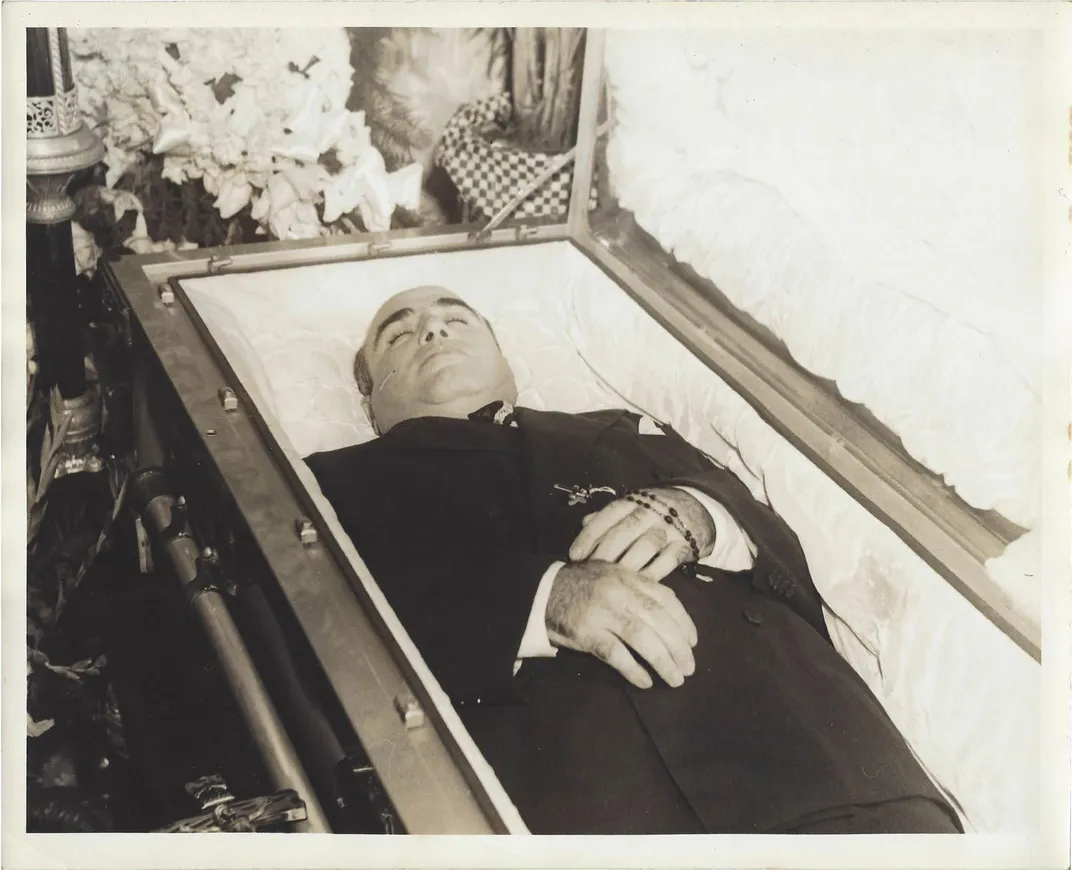
Alphonse "Al" Capone never served in the United States military. Although popular urban legends and Capone’s own fabricated press statements claimed he earned his infamous facial scars fighting in France during World War I, official military and draft records confirm he was never inducted into any branch of the armed forces. His scars actually resulted from a 1917 Brooklyn barroom brawl.
The Origin of the Myth: Why People Believe Al Capone Served
The belief that Al Capone was a military veteran is one of the most persistent myths surrounding twentieth-century American organized crime. During the 1920s, as Capone rose to national prominence as the boss of the Chicago Outfit, he actively cultivated a public persona as a legitimate businessman, civic benefactor, and patriotic American.
To explain the prominent facial scars on the left side of his jaw and neck—which led the press to dub him "Scarface," a nickname he detested—Capone frequently told reporters and civic leaders that he had received the wounds while serving overseas during the First World War.
Capone’s Self-Invented World War I Narrative
When questioned by journalists or curious acquaintances about his facial injuries, Capone routinely claimed that he had been wounded by shrapnel or machine-gun fire while fighting in France. In several variations of the story, he specifically claimed service with the 79th Infantry Division or credited his injuries to action with the famous "Lost Battalion" (part of the U.S. Army's 77th Infantry Division) during the Meuse-Argonne Offensive of 1918.
This fabricated military history served several strategic purposes for Capone:
- Public Respectability: Veterans of World War I enjoyed immense public respect in post-war America. Aligning himself with military service helped soften his image as a violent underworld figure.
- Concealing Criminal Origins: Admitting that the scars came from a sleazy tavern altercation over a crude comment to a woman would have undermined his reputation as a formidable, dignified figure.
- Patriotic Shielding: Presenting himself as a wounded war hero helped insulate him against xenophobia and anti-immigrant sentiment commonly directed at Americans of Italian descent during the 1920s Red Scare and Prohibition eras.
The Misleading "Lost Battalion" Claims
The choice of the "Lost Battalion" as a cover story was calculated. The Lost Battalion became legendary after spending days surrounded by German forces in the Argonne Forest in October 1918. Because the unit suffered severe casualties (over 60% killed, wounded, or captured), claiming to be one of its surviving members carried instant prestige.
However, military muster rolls and casualty reports maintained by the U.S. Department of War contain no record of Alphonse Capone serving in any unit attached to the 77th Division, the 79th Division, or the American Expeditionary Forces (AEF).
The Real Cause of the "Scarface" Scars
The true story behind Capone’s physical scars has nothing to do with European battlefields and everything to do with early twentieth-century New York street life.
- 1899: Born in Brooklyn, NY
- 1917: Harvard Inn Brawl (Slashed by Frank Gallucio)
- Acquires facial scars
- 1918: Registers for WWI Draft (Never Called/Inducted)
- 1919: Moves to Chicago (Joins Johnny Torrio)
- 1920s: Tells media scars were WWI combat wounds
The 1917 Harvard Inn Incident
In 1917, an 18-year-old Al Capone was working as a bouncer and bartender at the Harvard Inn, a dance hall and saloon in Coney Island, Brooklyn. The establishment was owned by Frankie Yale, a prominent Brooklyn mobster and leader of the Five Points Gang, with whom Capone was affiliated.
One evening, a young local man named Frank Gallucio entered the tavern with his sister, Lena Gallucio. Capone approached Lena and made a crude, offensive comment regarding her physical appearance. Outraged by the insult to his sister's honor, Frank Gallucio demanded an immediate apology.
When Capone reacted aggressively, Gallucio drew a pocket knife and slashed Capone across the left cheek and neck three times before fleeing the venue.
Frank Gallucio and the Aftermath
The knife cuts required multiple stitches and left three distinct permanent scars along Capone's jawline and neck. In underworld parlance, the marks were classic "blade work," making it obvious to anyone familiar with street violence that Capone had been cut in a fight.
Ironically, years later, after Capone had established control over Chicago’s bootlegging, gambling, and prostitution operations, he reconciled with Frank Gallucio. Recognizing that holding a grudge against a low-level Brooklyn figure added no value to his empire, Capone even employed Gallucio as a bodyguard during visits to New York and publicly declared the matter settled. However, Capone never publicly admitted to the press that Gallucio was the source of his famous scars.
World War I Draft Records and Capone’s Actual Timeline
While Capone never served in uniform, he did interact with the military system in one official capacity: mandatory draft registration.
Selective Service Registration in 1918
Following the U.S. entry into World War I in April 1917, Congress passed the Selective Service Act of 1917. All male residents within specified age brackets were legally required to register for the military draft.
On September 12, 1918, during the third national registration drive, 19-year-old Alphonse Capone filled out his Selective Service registration card at Local Board No. 41 in Brooklyn, New York.
| Selective Service System - Registration Card (1918) | Details |
|---|---|
| Name in Full | Alphonse Capone |
| Age in Years | 19 |
| Date of Birth | January 17, 1899 |
| Present Address | 21 Garfield Place, Brooklyn, Kings Co., NY |
| Occupation | Paper Cutter / Laborer |
| Employer | Tompkins Paper Stock Co., Brooklyn, NY |
| Nearest Relative | Mary Capone (Mother) |
| Physical Build | Medium Height, Stout Build |
| Military Status | Not Inducted / Classified 1-A (Uncalled prior to Armistice) |
According to primary records preserved by the U.S. National Archives WWI Draft Registration Records, Capone listed his occupation as a paper cutter for the Tompkins Paper Stock Company in Brooklyn—a civilian job he held briefly while balancing his street-level gang activities.
Why Capone Was Never Inducted
Capone’s draft card reflects that he was classified as eligible for military service. However, two primary factors prevented him from entering the armed forces:
- Timing of the Armistice: Capone registered in mid-September 1918. Two months later, on November 11, 1918, Germany signed the Armistice, ending hostilities in Western Europe. Draft calls were halted immediately, and millions of registered young men who had not yet been drafted were never called into service.
- Criminal Priorities: By late 1918 and early 1919, Capone was heavily involved in criminal activities under Frankie Yale. Following an investigation into a New York murder in which Capone was questioned, Yale advised Capone to relocate to Chicago. In late 1919 or early 1920, Capone moved west to join Johnny Torrio’s expanding criminal syndicate, completely bypassing any possibility of peacetime military enlistment.
Comparing Historical Facts with Common Gangster Myths
To clarify Capone's record against common historical misconceptions, the following matrix compares documented archival evidence with popular myths:
| Aspect | Popular Myth / Misconception | Verified Historical Fact | Supporting Primary Evidence |
|---|---|---|---|
| Military Service | Served in the U.S. Army during WWI in France. | Never served in any military branch. | U.S. Department of War Muster Rolls; National Archives Records |
| Origin of Scars | Shrapnel/machine-gun wounds from the "Lost Battalion." | Slashed three times with a knife during a 1917 Brooklyn bar fight. | Police reports, contemporary medical records, Frank Gallucio statements |
| WWI Draft Status | Evaded draft registration or fled to avoid military service. | Legally registered for the Selective Service draft in Brooklyn in 1918. | WWI Draft Registration Card (Local Board No. 41, Brooklyn, NY) |
| Unit Affiliation | Claimed membership in the 77th or 79th Infantry Division. | Held no military unit affiliation or service serial number. | Official U.S. Army Personnel Records |
| Rank & Discharge | Discharged as an injured war veteran with honors. | Never held military rank; received no military discharge papers. | National Personnel Records Center (NPRC) files |
Gangsters Who Did Serve vs. Mobsters Who Avoided Service
Understanding Capone’s lack of military service requires examining how American organized crime interacted with the U.S. armed forces during the First and Second World Wars.
Contrast with Gangsters Who Actually Served
While Capone manufactured a fake military history, several other high-profile American mobsters and underworld figures did serve in the U.S. armed forces during World War I and World War II:
- Charles "Lucky" Luciano: Luciano registered for the draft in 1917 during World War I. While he did not see overseas combat, he briefly served in the U.S. Army in 1918 before receiving an discharge due to a chlamydia infection.
- Meyer Lansky: Lansky attempted to enlist in the U.S. Army during World War I but was rejected due to his small stature (standing under five feet tall). During World War II, however, Lansky collaborated extensively with U.S. Naval Intelligence under Operation Underworld to protect New York docks from sabotage.
- Frank Costello: Costello was drafted into the U.S. Army in 1918 during World War I and served briefly as a private in the U.S. Army Signal Corps before being discharged following the Armistice.
- Gene Tierney / Vito Genovese Era: During World War II, numerous junior figures in organized crime were drafted or enlisted. Some served with distinction, while others used military logistics to operate black-market schemes in Europe and North Africa.
How Criminal Organizations Leveraged Patriotic PR
Capone was not the only criminal figure to use patriotic themes to improve his public image. During the 1920s and 1930s, organized crime figures frequently sponsored soup kitchens, donated to local churches, and flew American flags over their venues.
By falsely asserting that he had fought for the nation in France, Capone adopted a strategy common among public figures of his era: tapping into post-war nationalism to shield himself from civic criticism and law enforcement pressure.
Primary Historical Sources and Evidence
Historians and biographers confirm Capone's non-military status through verified public records. Researchers investigating Capone's military history rely on several official repositories:
- Historical Verification
- U.S. National Archives (NARA)
- Draft Card Records
- No AEF Unit Muster Rolls
- FBI Historical Files
- Background Investigations
- Tax Evasion Trial Dossier
- Biographical Documentation
- Bergreen & Schoenberg Biographies
- Hospital Records
- U.S. National Archives (NARA)
U.S. National Archives and Records Administration (NARA)
The National Archives holds the complete set of World War I Selective Service System draft registration cards. Capone’s physical draft card remains available for public examination via NARA’s military records division. The document lists his personal details, address at 21 Garfield Place in Brooklyn, and physical characteristics, but lacks any Army Serial Number (ASN) or enlistment date.
Law Enforcement and Federal Bureau of Investigation Files
During the 1920s and early 1930s, federal agencies—including the Bureau of Prohibition, the Internal Revenue Service (IRS), and the Bureau of Investigation (later the FBI)—compiled extensive dossiers on Capone.
The historical documents accessible via the FBI Famous Cases: Al Capone Archive detail his criminal activity, tax evasion prosecution, and eventual imprisonment at Alcatraz. Nowhere in these federal investigative files is Capone listed as a veteran, nor did his legal defense team ever present military service as a mitigating factor during his 1931 tax evasion trial.
Standard Biographies
Leading historians and biographers of Capone—including Laurence Bergreen (Capone: The Man and the Era) and Robert J. Schoenberg (Mr. Capone)—have exhaustively documented the 1917 Harvard Inn fight and Capone's deliberate creation of the World War I veteran myth. Both authors confirm that no evidence exists of Capone ever wearing a U.S. military uniform or participating in military training.
Frequently Asked Questions
Did Al Capone ever serve in the U.S. Military?
No. Al Capone never served in the U.S. Army, Navy, Marine Corps, or any other branch of the armed forces. He remained a civilian throughout his life.
How did Al Capone get his facial scars?
Capone received his facial scars in 1917 during a brawl at the Harvard Inn in Coney Island, Brooklyn. He insulted a woman named Lena Gallucio, prompting her brother, Frank Gallucio, to slash Capone across the cheek and neck three times with a pocket knife.
Why did Al Capone claim he was a World War I veteran?
Capone invented the story to conceal the embarrassing reality of being slashed in a bar brawl over an offensive remark. Claiming his scars were combat wounds from France allowed him to present himself as a patriotic war hero to the media and the public.
Did Al Capone register for the WWI draft?
Yes. Capone registered for the Selective Service draft on September 12, 1918, in Brooklyn, New York, as required by law for men his age. However, the war ended two months later with the Armistice of November 11, 1918, and he was never drafted or inducted into service.
Did any famous 1920s mobsters serve in World War I?
Yes. Mobsters such as Frank Costello and Lucky Luciano registered for the draft, and Costello served briefly in the U.S. Army Signal Corps before the 1918 Armistice. Unlike Capone, their service records are documented in military files.
Verification Guidance for Historical Researchers
When conducting historical research on twentieth-century figures, separating self-reported claims from documented evidence is essential. Public figures involved in organized crime frequently altered their personal histories to improve their public standing, avoid prosecution, or project power.
To verify claims regarding military service for historical figures:
- Cross-reference personal assertions with official military repositories such as the National Personnel Records Center (NPRC) or the U.S. National Archives.
- Check Selective Service draft cards against official unit muster rolls and enlistment registers.
- Review primary court records and government agency dossiers, which typically evaluate personal claims rigorously during background investigations and criminal proceedings.
In the case of Al Capone, archival records definitively prove that his military service was entirely fictitious—a clever piece of public relations designed to transform a barroom scar into a badge of honor.