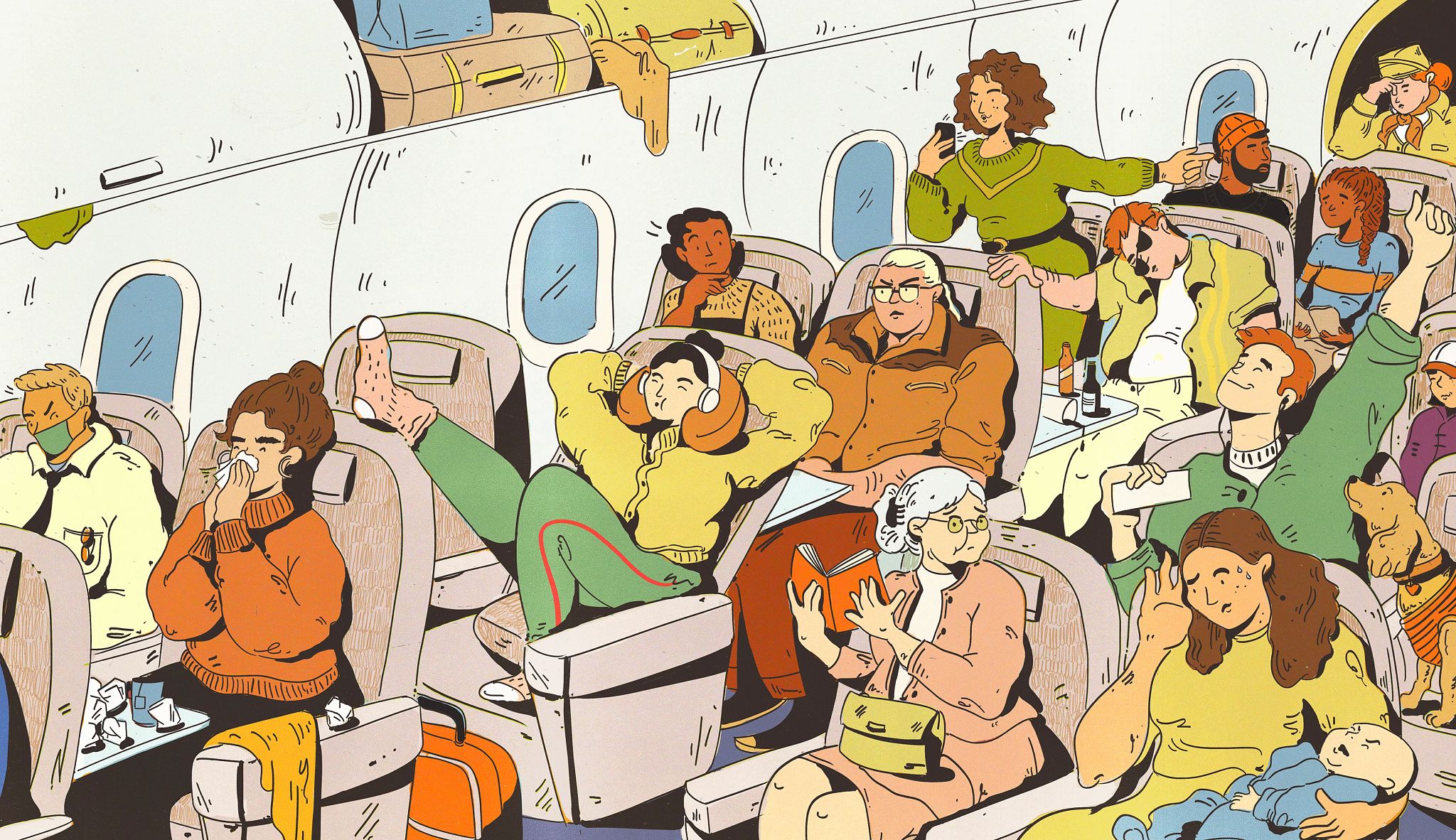
Airplane passengers are individuals transported by aircraft, necessitating a clear understanding of legal rights, safety protocols, and health management. Success as a passenger in 2026 involves navigating biometric security systems, understanding automatic refund mandates for flight disruptions, and adhering to cabin etiquette to ensure a safe, efficient, and comfortable journey for all occupants.
The experience of being an airplane passenger has undergone significant transformation. As we navigate 2026, the integration of high-speed satellite connectivity, biometric processing, and enhanced consumer protection laws has redefined the relationship between the traveler and the carrier. This guide provides an exhaustive analysis of the modern passenger’s journey, focusing on the technical, legal, and practical aspects of air travel.
The Regulatory Framework of Passenger Rights
The legal status of an airplane passenger is governed by a complex web of international treaties and domestic regulations. These laws are designed to protect travelers from predatory practices and provide recourse during operational failures.
The Contract of Carriage
When a passenger purchases a ticket, they enter into a legally binding agreement known as the Contract of Carriage. This document outlines the airline’s obligations regarding transportation, liability limits, and the passenger’s responsibilities. In 2026, most major carriers have digitized these contracts, making them accessible via mobile applications. It is essential for passengers to understand that this contract varies by airline, though it must adhere to minimum federal or international standards.
Automatic Refunds and Service Standards
A landmark shift in passenger rights occurred following the Department of Transportation (DOT) rulings in 2024, which are now fully established standards in 2026. Passengers are entitled to automatic refunds if a flight is canceled or significantly delayed—defined as more than three hours for domestic flights and six hours for international ones. These refunds must be issued in the original form of payment, moving away from the previous reliance on travel vouchers or credits that often expired before use.
International Protections (EU261 and Beyond)
For passengers traveling within or from the European Union and the United Kingdom, the EU261/2004 (and its post-Brexit UK equivalent) remains a gold standard. These regulations provide fixed compensation amounts based on flight distance for delays exceeding three hours, provided the delay was not caused by "extraordinary circumstances" such as extreme weather or air traffic control strikes. In 2026, many of these claims are processed through automated airline portals, though third-party advocacy remains a common route for complex disputes.
Security and the Biometric Journey
By 2026, the security experience for airplane passengers has transitioned from manual document checks to a predominantly biometric-driven flow. This evolution aims to reduce "friction" points while maintaining high-security standards.
Identity Management and REAL ID
In the United States, the full implementation of the REAL ID Act means that all passengers aged 18 and older must present a REAL ID-compliant driver’s license or another acceptable form of identification (such as a passport) for domestic air travel. This requirement is strictly enforced at all TSA checkpoints.
Biometric Boarding and OneID
The "OneID" initiative, championed by the International Air Transport Association (IATA), has seen widespread adoption. Passengers can now opt into biometric profiles that link their facial geometry to their passport and boarding pass. This allows for:
- Touchless Bag Drop: Automated kiosks identify the passenger via facial recognition.
- Paperless Security: TSA "Innovation Lanes" use biometrics to verify identity without the need for physical IDs in many major hubs.
- Self-Boarding Gates: Passengers walk through gates that open automatically upon facial verification, significantly speeding up the boarding process.
The TSA PreCheck and Global Entry Ecosystem
For frequent airplane passengers, Trusted Traveler Programs (TTP) are no longer a luxury but a functional necessity for efficiency. In 2026, these programs have integrated with airline loyalty apps, allowing for seamless verification. Passengers in these programs benefit from shorter wait times and reduced screening requirements, such as keeping shoes on and electronics inside bags.
Aero-medical Considerations and Passenger Health
The physiological impact of flight on the human body is a critical but often overlooked aspect of being a passenger. Modern aircraft like the Boeing 787 Dreamliner and the Airbus A350 have improved cabin environments, but risks remain.
Cabin Pressure and Hypoxia
Commercial aircraft cabins are typically pressurized to an equivalent altitude of 6,000 to 8,000 feet. At this altitude, the partial pressure of oxygen is lower than at sea level. While healthy passengers adapt easily, those with pre-existing respiratory or cardiovascular conditions may experience mild hypoxia. It is vital for passengers to consult with medical professionals if they have concerns about oxygen saturation during long-haul flights.
Deep Vein Thrombosis (DVT) Prevention
Often referred to as "Economy Class Syndrome," DVT is the formation of blood clots in deep veins, usually in the legs, due to prolonged immobility. To mitigate this risk, passengers are encouraged to:
- Perform In-Seat Exercises: Flexing the ankles and lifting the knees helps maintain circulation.
- Hydrate Aggressively: The low humidity of the cabin (often below 20%) can lead to dehydration, which thickens the blood.
- Use Compression Garments: Medical-grade compression socks are recommended for flights exceeding four hours to assist venous return.
The Eustachian Tube and Pressure Changes
The most common physical discomfort for passengers is "ear pop" during ascent and descent. This is caused by the pressure differential between the middle ear and the cabin. Utilizing the Valsalva maneuver—pinching the nose and gently blowing—can help equalize pressure. For infants, feeding during descent is the most effective way to encourage swallowing and pressure equalization.
Passenger Etiquette and Social Dynamics
As cabin densities remain high, the "social contract" between airplane passengers is essential for maintaining order and safety. The FAA and international bodies maintain a zero-tolerance policy for "Air Rage" or disruptive behavior.
Seat Recline and Personal Space
The debate over reclining seats continues in 2026. While the mechanical right to recline exists, etiquette dictates that passengers should check behind them before reclining and avoid doing so during meal services. Many airlines have introduced "pre-reclined" seats in economy sections to eliminate this point of friction entirely.
Digital Etiquette and Noise
With the ubiquity of high-speed Wi-Fi, the use of headphones is mandatory for all audio and video consumption. Voice over IP (VoIP) calls, while technically possible on many flights, are generally discouraged or prohibited by airline policy to maintain a quiet cabin environment. Passengers are expected to manage their digital footprint to avoid disturbing neighbors.
Conflict Resolution
Passengers should never attempt to self-regulate the behavior of others in a confrontational manner. If a conflict arises regarding seating, overhead bin space, or behavior, the appropriate action is to discreetly inform a flight attendant. Flight attendants are trained in de-escalation and have the legal authority to issue instructions that passengers must follow.
Technical Specifications: How Passengers Affect Flight
From a technical perspective, airplane passengers are more than just occupants; they are a critical variable in the aircraft's Weight and Balance profile.
| Factor | Description | Impact on Flight |
|---|---|---|
| Standard Weights | Airlines use FAA-approved average weights for passengers (e.g., 190-195 lbs in summer, including carry-ons). | Used to calculate takeoff trim and fuel burn. |
| Center of Gravity (CG) | The distribution of passengers throughout the cabin. | Affects the aircraft’s stability and elevator authority. |
| Electronic Interference | Signals from non-compliant personal electronic devices (PEDs). | Can potentially interfere with highly sensitive navigation equipment during low-visibility landings. |
| Oxygen Consumption | The rate at which passengers utilize the cabin's recycled and fresh air mix. | Influences the settings of the Environmental Control System (ECS). |
Safety Protocols: The Passenger’s Role in Emergencies
Every airplane passenger is a participant in the aircraft's safety ecosystem. Adherence to crew instructions is not merely a suggestion; it is a legal requirement under federal aviation regulations.
The Safety Briefing
While many passengers ignore the safety briefing, it contains critical information specific to the aircraft model, such as the location of the nearest exits (which may be behind you) and the operation of oxygen masks. In 2026, many airlines use interactive seatback screens to ensure passengers have acknowledged the safety protocols.
The "Brace" Position
In the event of an emergency landing, the brace position is designed to minimize body flailing and protect the head from impact. Passengers should familiarize themselves with the specific position recommended for their seat type (e.g., forward-facing vs. rear-facing in some business class configurations).
Evacuation Procedures
In an evacuation, the most critical rule for passengers is to leave all luggage behind. Seconds matter during a fire or structural failure, and retrieving bags from overhead bins blocks aisles and risks damaging evacuation slides.
Frequently Asked Questions
What are my rights if my flight is canceled in 2026?
In 2026, under DOT regulations, you are entitled to an automatic refund if you choose not to travel after a cancellation. If you are rebooked, the airline must provide communication and, depending on the length of the delay, vouchers for meals or lodging. For international flights, EU261 may provide additional cash compensation depending on the cause of the cancellation.
Can I fly if I have lost my physical ID?
If you have opted into a biometric traveler program or have a digital ID stored in a secure government-approved mobile wallet, you may be able to clear security at participating airports. However, it is always recommended to carry a physical backup, as not all regional airports have transitioned to full biometric identity verification.
What should I do if a passenger next to me is being disruptive?
Do not engage directly if the situation feels heated. Use the flight attendant call button or walk to the galley to speak with a crew member privately. Flight crews are trained to handle "Level 1" disruptive behavior before it escalates, and they can involve air marshals or ground law enforcement if necessary.
Are there weight limits for individual passengers?
While there are no "weight limits" for passengers in a traditional sense, the Contract of Carriage usually states that a passenger must be able to sit with the armrests down and the seatbelt fastened (with one extender if necessary). If a passenger exceeds the space of a single seat, they may be required to purchase an additional seat for safety and comfort.
How has Sustainable Aviation Fuel (SAF) affected passengers?
By 2026, many airlines have integrated SAF surcharges into ticket prices or offer passengers the option to purchase "carbon offsets" directly at checkout. While this has led to a slight increase in average ticket costs, it reflects the industry's move toward carbon neutrality.
Strategic Recommendations for the Modern Passenger
To maximize the efficiency and comfort of air travel in 2026, passengers should adopt a proactive approach to their journey. First, ensure all Trusted Traveler profiles are updated and linked to airline apps to take advantage of biometric "OneID" flows. This can reduce airport transit time by up to 40%.
Second, prioritize physical preparation by hydrating 24 hours before a flight and selecting seats based on physiological needs—aisle seats for those who need to move frequently for DVT prevention, or window seats for those who prefer to minimize contact with cabin traffic.
Finally, maintain a thorough understanding of the Contract of Carriage for your specific airline. Knowledge of your rights regarding baggage liability and flight disruptions is the most effective tool for resolving disputes and ensuring that your status as an airplane passenger is respected and protected.