Advanced welding technology underpins modern infrastructure by enabling the precise, high-integrity joining of high-strength alloys required for skyscrapers, bridges, pipelines, and renewable energy installations. Driven by automation, digital monitoring, and advanced metallurgy, these innovations ensure structural longevity, reduce defect rates, and meet rigorous safety standards under complex operational conditions.
The Evolution of Welding in Civil and Structural Engineering
The construction and maintenance of modern civil infrastructure demand structural components that can withstand extreme environmental loads, heavy dynamic traffic, and decades of weathering. Historically, field and shop welding relied heavily on manual shielded metal arc welding (SMAW) or basic gas metal arc welding (GMAW). While these traditional methods built the industrial world, they leave room for human error, operator fatigue, and micro-defects that can compromise critical structures over time.
Today, infrastructure projects face tighter tolerances, compressed schedules, and the widespread use of advanced materials such as high-strength low-alloy (HSLA) steels, quenched and tempered steels, and advanced aluminum alloys. To meet these demands, the engineering sector has integrated sophisticated technological advancements directly into the welding workflow. Automation, precision power sources, real-time data acquisition, and specialized arc control mechanisms have transformed welding from a craft trade into a high-precision digital manufacturing science.
Engineering firms and regulatory bodies now rely on these technologies not merely to accelerate project timelines, but to achieve a level of metallurgical integrity that was previously unattainable in field conditions. Understanding how these systems operate requires examining the specific technological pillars driving contemporary infrastructure development.
Core Technologies Transforming Modern Infrastructure Welding
Several distinct technological paradigms define the landscape of advanced welding today. Each addresses a specific historical limitation of manual fabrication, ranging from thermal control to operator variance.
Advanced Power Sources and Waveform Control
Modern inverter-based welding power sources utilize microprocessor control to manipulate the welding arc at frequencies measured in kilohertz. Unlike older transformer-based machines, these power sources can adjust current and voltage millions of times per second.
- Controlled Heat Input: By precisely shaping the welding waveform, operators and automated systems can minimize the heat-affected zone (HAZ), reducing the risk of metallurgical degradation or distortion in high-strength steels.
- Surface Tension Transfer (STT) and Cold Metal Transfer (CMT): These proprietary waveform variations modify metal transfer to drastically reduce spatter, eliminate the need for extensive post-weld cleanup, and allow for the joining of dissimilar metals or ultra-thin sheets to thick structural members.
Automated and Robotic Systems
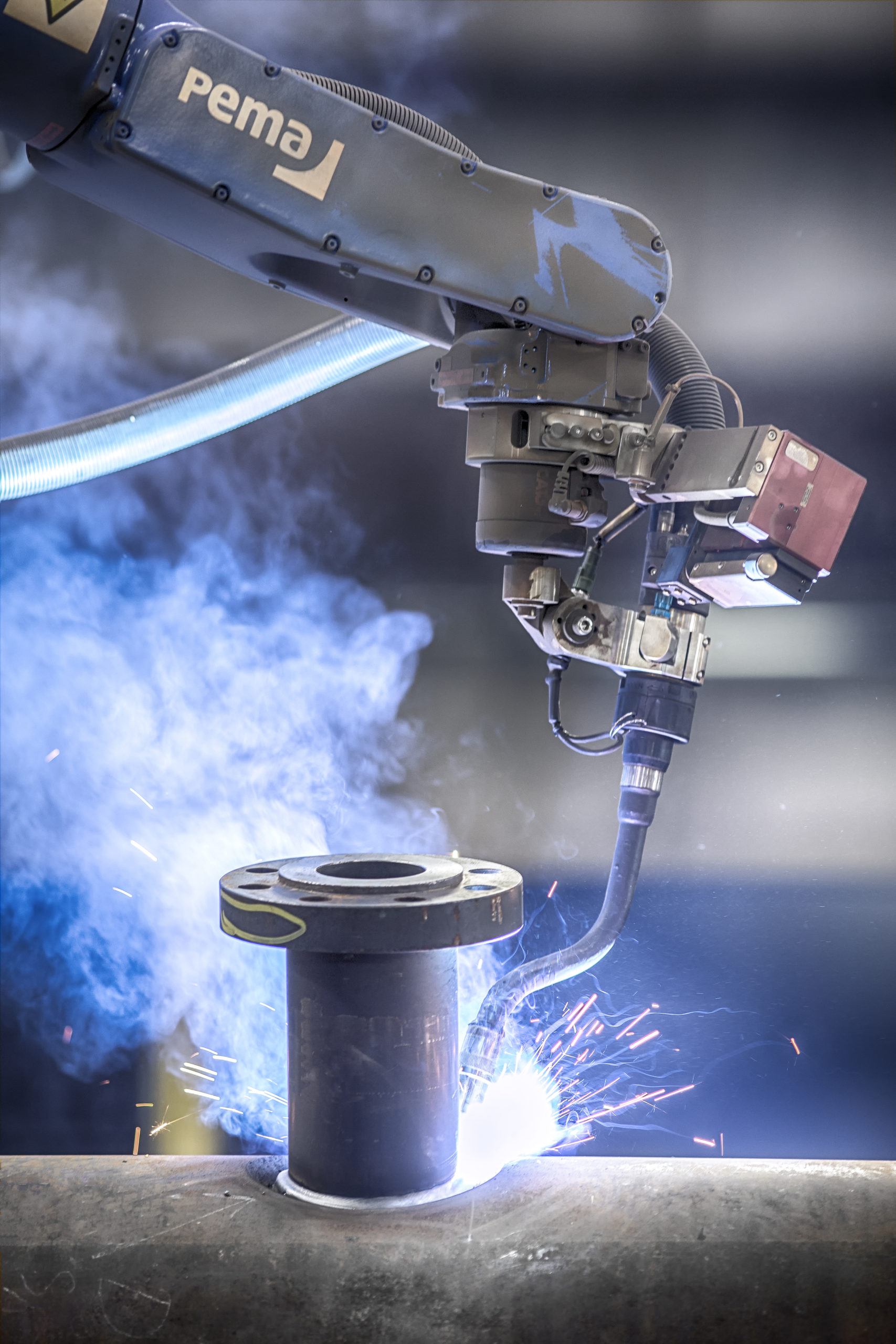
Automation has moved from automotive assembly lines into heavy civil engineering and fabrication yards. Robotic welding cells and mechanized carriages now execute long, continuous butt and fillet welds on bridge girders, offshore wind turbine towers, and penstocks.
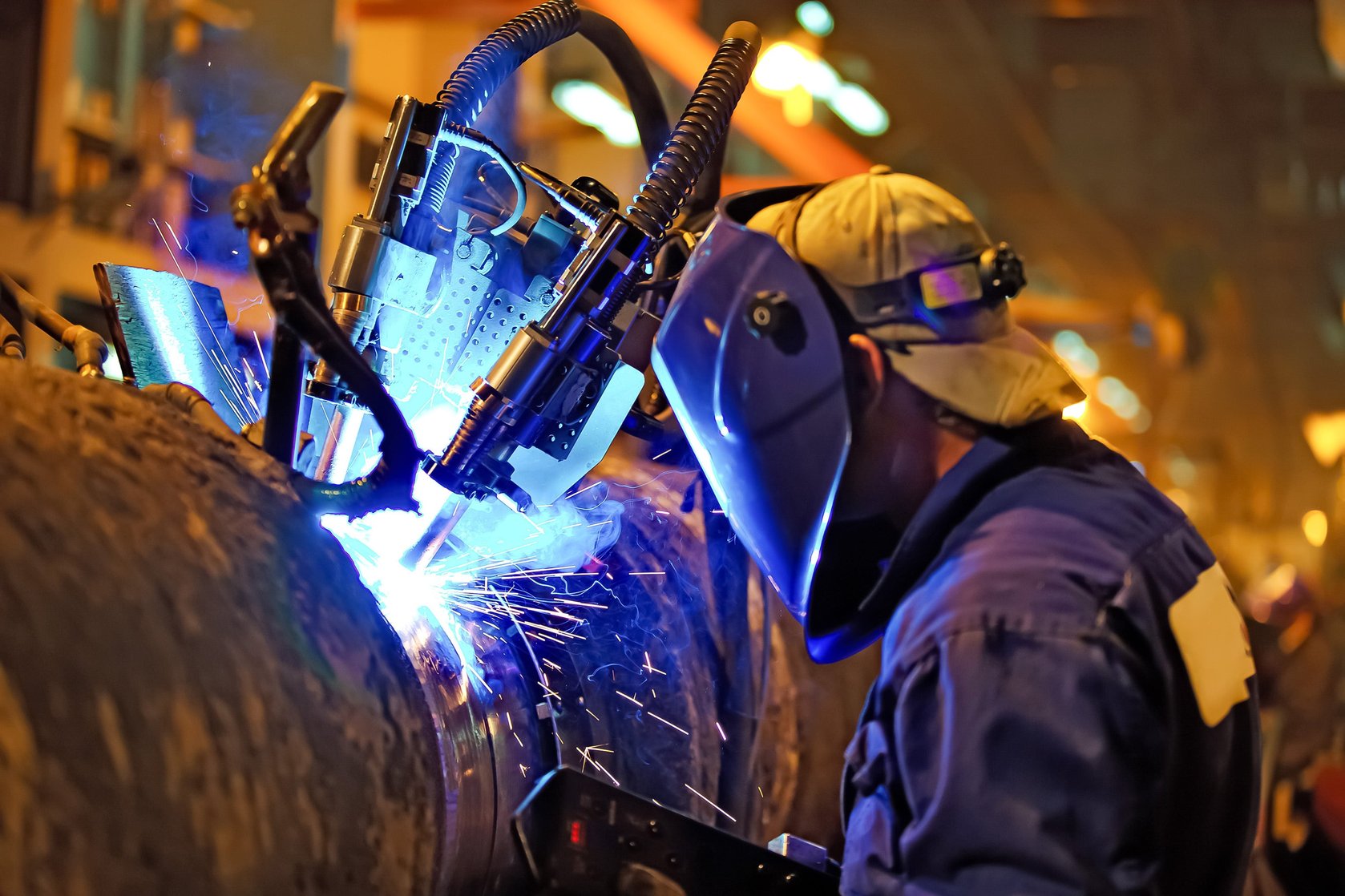
- Mechanized Tractors: Portable, track-mounted or magnetic welding tractors maintain travel speed and gun angle with absolute consistency, eliminating the variations inherent in manual welding over long spans.
- Adaptive Control: Advanced robotic systems equipped with laser vision or through-arc sensing can track joint geometry in real time, automatically adjusting parameters to compensate for joint fit-up discrepancies or thermal expansion during multi-pass welding.
High-Density Energy Sources: Laser and Electron Beam Welding
For thick-section components or critical applications requiring minimal distortion, high-density energy sources are increasingly deployed.
- Laser Beam Welding (LBW): Utilizing a focused coherent light beam, LBW achieves high-aspect-ratio welds (deep and narrow) with exceptional speed. It is increasingly used in structural hollow sections and specialized architectural steel components.
- Hybrid Laser-Arc Welding (HLAW): By combining a fiber laser with a traditional arc welding process (such as GMAW), HLAW bridges the gap between deep penetration and gap-bridging capability, making it highly effective for heavy plate fabrication in bridge construction.
Applications Across Critical Infrastructure Sectors
Advanced welding technology is not applied uniformly; its selection depends heavily on the specific engineering challenges and regulatory frameworks of each infrastructure sector.
Bridges and Overpasses
Bridges are subjected to cyclic fatigue loading from heavy vehicular traffic over decades. Advanced welding techniques ensure that critical fatigue details—such as rib-to-deck joints in orthotropic steel decks—achieve smooth transitions and optimal microstructures. Non-destructive examination (NDE) methods, paired with automated welding logs, provide verifiable quality records for department of transportation (DOT) audits.
Pipelines and Energy Transmission
Oil, gas, and hydrogen transmission pipelines require circumferential field welds executed under adverse weather conditions. Advanced gas tungsten arc welding (GTAW) root passes combined with mechanized GMAW fill and cap passes provide the high toughness and resistance to cracking necessary for high-pressure service. Furthermore, automated ultrasonic testing (AUT) is deployed immediately following the weld to verify structural soundness before pipeline burial.
Renewable Energy Installations
The transition toward renewable energy relies heavily on massive offshore wind turbine foundations, known as monopiles and jackets. These structures utilize thick steel plates rolled and welded into massive cylinders. Advanced submerged arc welding (SAW) variants, including multi-wire systems, deposit weld metal at high deposition rates while maintaining Charpy V-notch toughness values required for subsea, sub-zero operating environments.
| Technology | Primary Infrastructure Application | Key Advantage | Main Limitation |
|---|---|---|---|
| Advanced GMAW / Waveform Control | Structural steel framing, seismic-resistant frames | Reduced spatter, precise heat input control | Requires specialized operator training |
| Mechanized Submerged Arc Welding (SAW) | Offshore wind monopiles, heavy pressure vessels | High deposition rates, deep penetration | Restricted primarily to flat and horizontal positions |
| Hybrid Laser-Arc Welding (HLAW) | Orthotropic bridge decks, shipbuilding | High travel speeds, minimal thermal distortion | High initial capital equipment cost |
| Automated Orbital GTAW | Nuclear piping, high-purity water systems | Exceptional root pass integrity, repeatable quality | Strict joint preparation and fit-up tolerances |
Quality Assurance, Digital Monitoring, and Standards
The integration of advanced welding technology brings a parallel shift in how weld quality is monitored and certified. Traditional visual inspection and random radiographic testing are increasingly supplemented by digital data logging and advanced non-destructive evaluation.
Real-Time Process Monitoring
Modern welding systems record amperage, voltage, travel speed, and shielding gas flow rate for every single pass. This creates a digital digital twin or historical record of the weld. If an out-of-parameter condition occurs—such as a momentary drop in shielding gas pressure—the system can instantly flag the defect location, allowing for targeted inspection or repair rather than blanket rejection.
Codes and Regulatory Compliance
Infrastructure projects operate under strict governance by bodies such as the American Welding Society (AWS), the American Institute of Steel Construction (AISC), and the International Organization for Standardization (ISO). Advanced welding procedures must undergo rigorous Procedure Qualification Records (PQR) and Welding Procedure Specifications (WPS) testing to prove that the mechanical properties of the weldment match or exceed the base metal.
Operational Challenges and Economic Considerations
Despite clear technical benefits, the adoption of advanced welding technology involves distinct challenges that project managers and engineering firms must navigate.
- Capital Expenditure: High-end automated systems, laser sources, and precision inverter power units require substantial upfront investment compared to conventional transformer setups.
- Skills Gap: Operating, programming, and maintaining digitally controlled welding systems requires cross-disciplinary expertise combining traditional metallurgy with basic robotics, software navigation, and troubleshooting.
- Fit-Up Sensitivity: Advanced processes like laser welding and high-speed automated GMAW demand tight mechanical fit-up tolerances. Poor joint preparation that a manual welder might bridge can cause critical defects in automated setups.
Project teams must perform comprehensive cost-benefit analyses, factoring in long-term labor savings, reduced rework rates, extended infrastructure lifespans, and lower liability insurance premiums associated with automated quality control.
Practical Guidance for Project Implementation
Integrating advanced welding technologies into a civil or structural engineering project requires a structured, multi-phase approach to ensure technical success and return on investment.
- Assess Project Requirements: Evaluate the metallurgy, plate thicknesses, environmental exposure, and regulatory code requirements governing the structure.
- Select the Appropriate Process: Match the joint geometry and production environment to the right technology—such as opting for mechanized GMAW for long shop welds or portable inverter systems for tight field-access areas.
- Qualify Procedures Early: Conduct pre-production trial welds and laboratory testing (tensile, bend, and impact tests) well before ground breaks or fabrication begins.
- Invest in Workforce Training: Partner with equipment manufacturers or certified training institutions to ensure operators, inspectors, and maintenance personnel understand the specific software and hardware interfaces.
- Establish Digital Traceability: Implement software protocols to store welding parameters and NDE results in a centralized project database for seamless auditing and compliance verification.
Frequently Asked Questions
How does advanced welding technology improve structural safety in bridges?
Advanced welding utilizes precise waveform control and automated tracking to reduce internal defects, porosity, and micro-cracking in high-stress joints. By minimizing the heat-affected zone, the metal retains its original mechanical strength and fatigue resistance, preventing catastrophic structural failures under heavy cyclic traffic loads.
What is the difference between conventional GMAW and waveform-controlled welding?
Conventional gas metal arc welding uses a constant voltage power source with fixed wire feed speeds, which can result in inconsistent arc stability and high spatter. Waveform-controlled welding uses high-speed microprocessors to modulate the current and voltage dynamically, tailoring the metal droplet transfer for optimal penetration, reduced heat input, and cleaner welds.
Can advanced welding systems be used effectively in outdoor field conditions?
Yes, though process selection is critical. While delicate processes like laser welding are generally restricted to controlled shop environments, ruggedized multi-process inverters, mechanized tractors, and specialized shielding gas setups are engineered specifically to withstand harsh outdoor weather on construction sites and pipeline spreads.
What role do non-destructive testing (NDT) methods play alongside advanced welding?
NDT methods such as phased array ultrasonic testing (PAUT) and digital radiography verify the internal soundness of completed welds without damaging the structure. When paired with real-time digital welding logs, NDT provides complete traceability and confidence that welds meet stringent engineering codes.
How do rising automation trends impact the demand for skilled welders?
Automation shifts the welder's role from manual execution to system programming, parameter monitoring, and quality oversight. While physical labor demands decrease for repetitive tasks, the need for technicians who understand welding metallurgy, machine operation, and troubleshooting is higher than ever.
Conclusion
Advanced welding technology remains a vital cornerstone of contemporary infrastructure engineering, bridging the gap between ambitious architectural designs and physical longevity. By replacing manual variability with digital precision, metallurgy-driven power sources, and automated deposition, the construction and energy sectors can build safer, more resilient structures. Adopting these tools requires balancing upfront capital costs and training requirements against the immense long-term gains in structural integrity, efficiency, and regulatory compliance.